
Inspired by Max’s blog, ‘Old Steam Ships’ –
this is my story based on facts about the tragic
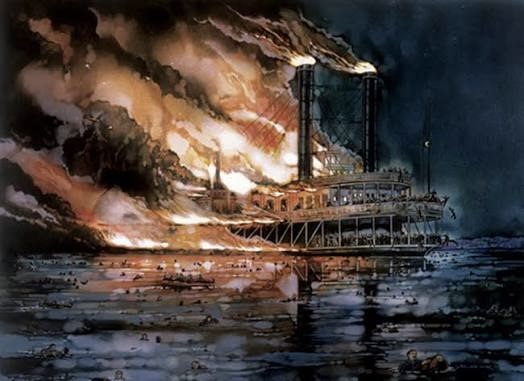
boiler accident on the steamboat Pennsylvania
which killed Henry Clemens, younger brother
of Samuel Clemens, AKA Mark Twain.
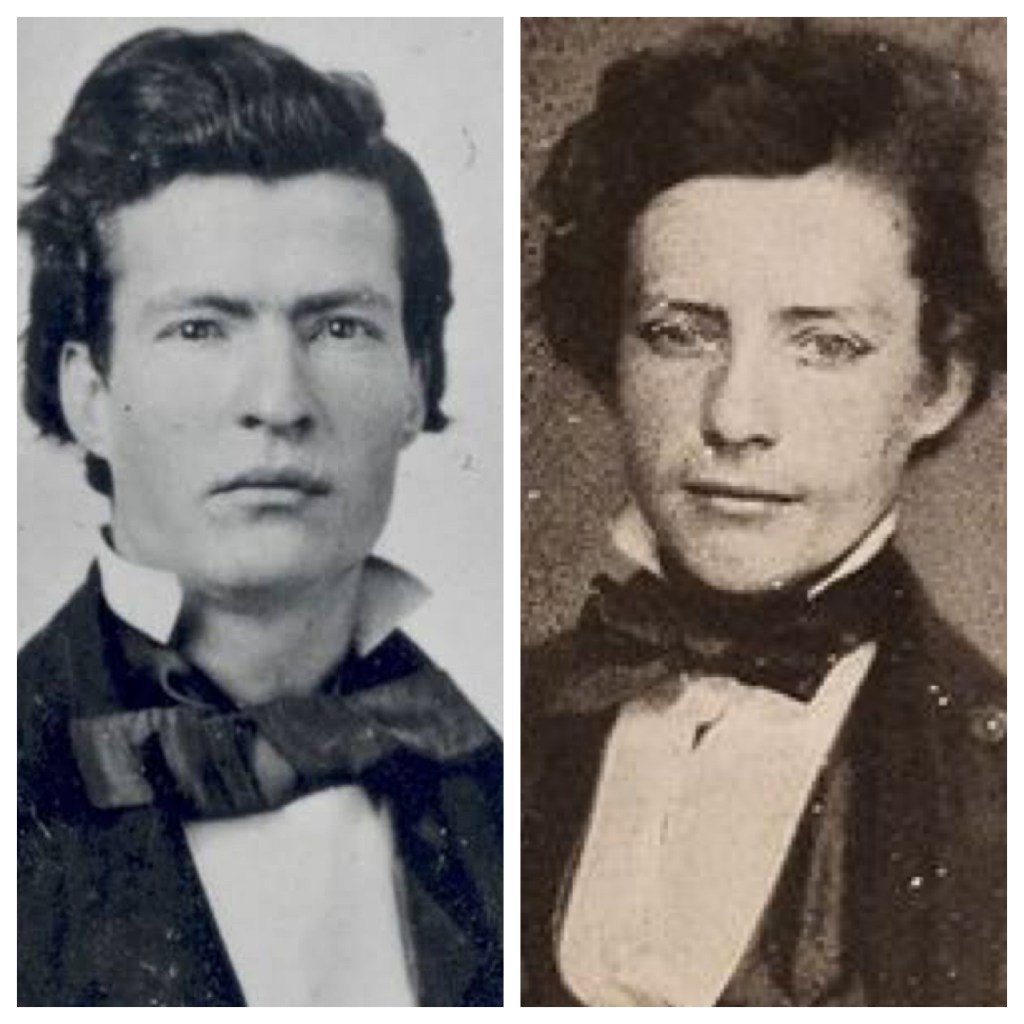
This is the last known photo of Henry, age 20.
© Brittanica
Hartford, Connecticut, 1907
Henry,
I don’t rightly know why I’m writing to a dead man, except that I’ve been writing tall tales to strangers my whole life and it seems only decent, once in a while, to write something true to somebody who’d know a lie if he saw one. You always could. You caught me out more times than Ma ever did, and you never told on me, which I have always considered the finest kind of brotherly loyalty a man can practice.
It has been forty-nine years. I have crossed oceans since then, buried a wife, buried children too, God help me, and outlived enough friends to fill a cemetery of my own choosing. And still, most nights, when the house has gone quiet and the lamp is the only thing awake besides me, I am twenty-two years old again, standing in a hot exposition hall in Memphis that had been fitted up with cots, looking down at what the Pennsylvania had left of you.
You’ll remember I wasn’t even supposed to be aboard her by then. Pilot Bill Brown and I had had our falling-out, and I’d been put off onto the A.T. Lacey, trailing a day behind you like a jilted sweetheart following a wedding party at a polite distance. I remember standing on that other boat’s deck and hearing, before I could see it, the sound a boiler makes when something goes horribly wrong and knowing, in the low animal part of a man that does the knowing before the thinking catches up, that it was her. That it was you.
I found you laid out among the others, breathing still, burned in a way I will not describe because you were there and do not need the reminder, and I was told there was hope. For six days I was, I think, useful …. I sat by you, I fetched, I hoped out loud so that maybe you’d hear it and do likewise. And then on the sixth night the doctors gave you, as I have always believed, too generous a dose of morphine, a merciful miscalculation that finished what the steam had started. I have made my peace with that, as much as a man can make peace with anything. But how impotent a man was I, unable to prevent this, which is a particularly bitter flavor of helplessness I would not wish on Satan himself.
I dreamed of you before it happened. Weeks before, in St. Louis, I dreamed you were laid out in a metal coffin in our sister’s parlor, wearing one of my suits, with a bouquet of white flowers on your chest and one red rose set in the center of it. I told myself it was nothing, the way a man tells himself a great many things are nothing right up until they are proven to be everything. In the end, when I came to view you, you were indeed in a metal coffin, in a suit that was …. I checked, I made myself check …. mine. Someone had set a bouquet of white flowers on your chest. As I stood there, a woman came in and laid a single red rose in the center of it, because the arrangement had seemed to her to need one. I have never been able to make light of that, not once, not even in forty-nine years of making light of everything else God ever handed me. Some doors a humorist simply does not open.
I expect you’d tell me, if you could, that it wasn’t my doing …. not the falling-out with Bill Brown, not the berth I lost, not the boiler, not the morphine dose. You were always the reasonable one; I was the one who needed reasoning with. But I have carried you like a stone in my coat pocket every day since, not because it was my fault but because you were the good one, Henry, the steady one, the one our mother didn’t have to worry after, and it has never once seemed a fair trade that the current swept off the good one and left the family scoundrel to do the living for both of us. I have tried to live loud enough for two men. I don’t know that I’ve managed it. I don’t know that anybody could.
I am an old man now, or near enough, with more sorrows behind me than I ever thought a body could carry and still walk upright, and I find that of all of them you are the one I return to, the first stone laid in a wall that time only kept building higher. I write books full of boys on rafts and rivers because the river gave me you for twenty years and then took you in an afternoon, and I have never once figured out how to feel about a thing that generous and that cruel at the same time.
Your brother, Sam
© Beliefnet
NAR©2026
Nancy’s Notes: I tried to keep my story grounded in what’s actually documented …. the falling-out with pilot Bill Brown that got Samuel Clemens bumped to a trailing steamboat, the six days at Henry’s bedside in Memphis, and the dream Clemens himself recounted later in life of seeing Henry laid out in a metal coffin with a bouquet and a single red rose, which he said came eerily true. I hope the voice sounds convincingly like Clemens’ own late-life reflectiveness rather than his broad comic register, since a letter to a dead brother calls for something a bit more reflective than Tom Sawyer and Huckleberry Finn.
This is “Henry Twain” by Rookin
Everything on The Elephant’s Trunk was created by me, unless otherwise indicated. Thanks for your consideration. NAR©2017-present.



Excellent writing Nancy.
LikeLiked by 1 person
Thank you, my dear friend.
LikeLiked by 1 person
You’re very welcome dear friend
LikeLiked by 1 person
I’d never heard that Sam had a brother. And now I’ll never forget. So well related, Nancy!
LikeLiked by 1 person
Nor I, and I feel exactly the same way. Thanks very much, Liz. So pleased this one left its mark. ☺️
LikeLiked by 1 person
Nancy, this is wonderful. You did Samuel Clemens well.
LikeLiked by 1 person
Lois, this has been a truly humbling experience. Never in my dreams did I expect such a warm and positive reaction to my story. I poured my heart into it and I am being rewarded by many beautiful comments. Thank you so very much.
LikeLiked by 1 person
You deserve every single reward you get, Nancy. You knock me out every day with your stories and your poems–most of the types of which I never heard of! Kudos to you, girl! Mucho kudos!!!
LikeLiked by 1 person
☺️ ❤️
LikeLiked by 1 person
This is magnificent sister! Absolutely one of your best, and you certainly got the tears.
LikeLiked by 1 person
I feel so grateful after reading all these wonderful comments! The story of the Clemens Brothers broke my heart; I had to dig deep and do the best I could to respect Samuel’s grief and honor young Henry’s memory. It was a privilege for me and I am delighted to know how profoundly my story affected you. Thank you with my whole heart, my sister. ❤️
LikeLiked by 1 person
💕
LikeLiked by 1 person
This is the best one yet…it does sound like Twain… wonderful tribute to both of the brothers. Thanks so much Nancy…I know this one couldn’t have been easy.
LikeLiked by 1 person
The story of the Clemens Brothers broke my heart, Max, and that was my impetus. Can you imagine the amount of grief and guilt Samuel bore for the rest of his life? Seeing his brother’s body ravaged by fire must have been a nightmare, yet he steeled himself against the horrors and went on to write some of the greatest and most beloved works in American literature, stories steeped in adventure and tinged with humor and satire. I am a big fan of research … always have been … and this story begged to be uncovered and told. Thanks for laying the groundwork so beautifully for me. I’m very pleased to know you felt my story so strongly.
LikeLiked by 1 person
I can’t imagine what the man went through after all of that. It was so terrible…I know he must have felt guilt the rest of his life. Not his fault… just life but I would feel guilty. Your story is pretty much how I think he probably was in real life. His books are gold…I love them. Life on the Mississippi is a great non-fiction as well.
LikeLiked by 1 person
Thanks again, Max! ☺️
LikeLiked by 1 person
Thank you Nancy…you have helped me so much. I’m posting one Monday but the one I post Friday…may be up your alley. Happy 4th Nancy! I’m heading off to a couple of parties.
LikeLiked by 1 person
The stories that I don’t know about Sam and his brother Henry could fill a whole encyclopedia, great research, Nancy.
LikeLiked by 1 person
The story of the Clemens Brothers really touched my heart. I knew Samuel spent time on Mississippi steamboats as a young man, but I had no knowledge of his brother; learning about Henry became my starting off point. I’m sure you’ll agree that research is fun, especially when spurred on by something as deeply moving as this tragic event. Many thanks for your wonderful comments, Jim.
LikeLiked by 1 person
I think you captured his voice perfectly Nance – something I am sure he would have wanted to say – what a tragedy so young 💔
LikeLiked by 1 person
How he carried on after this immeasurable loss is the truest mark of his great character. I have renewed respect for Samuel. Thanks very much, Ange. ☺️
LikeLiked by 1 person
💜
LikeLiked by 1 person
This is delectable! I love the voice the intimacy- everything. So well done!
LikeLiked by 1 person
Becoming Samuel Clemens was exhausting …. and so deeply fulfilling. I’ll never be able to read his works again without thinking about the pain he endured for most of his life. Thanks so much, Jodi.
LikeLiked by 1 person
This is a great post Nancy, you nailed the feelings.
LikeLiked by 1 person
Thank you, Ernie. The grief and guilt Samuel carried for the rest of his life must have been, at times, unbearable. I greatly appreciate your lovely comments.
LikeLiked by 1 person
One of your bestest ever … magnificently penned, capturing the heartache Samuel must have felt superbly my dear friend … 📃🥰😎💕
LikeLiked by 1 person
I am honored and humbled by your gracious words, my dear friend. It was a privilege to write Samuel’s story. My sincere thanks. ☺️ 🥰
LikeLiked by 1 person
Your story was brilliant my friend 📖🥰
LikeLiked by 1 person
Thanks again, dear Ivor. I’m touched by your kindness. ☺️
LikeLiked by 1 person
Absolutely beautiful, Nancy. A fitting tribute to them both.
LikeLiked by 1 person
Sam carried this grief, and a certain amount of guilt, for the rest of his life. Thanks for reading and sharing your thoughts, Clive. I am most appreciative.
LikeLiked by 1 person