
Today in Jim Adams’ post entitled ‘The Seven Seas’,
he has asked us to write about a song that features nautical
terms, words connected with ships, sailing or navigation.
Written for Song Lyric Sunday, this is my choice.
Tag: Song Lyric Sunday
Old Grey Whistle Test – May 30, 1975
Today in Jim Adams’ post ‘Emphasis On Album Acts’,
he has gone with a theme suggested by
“the only deadhead in the hameau” which
is to write about a song that was played on
the BBC’s ‘The Old Grey Whistle Test’ TV show.
Written for Song Lyric Sunday, here is my choice.
Here Comes The Sun
Written for Song Lyric Sunday. This week in his post,
“Best of the Best”, Jim Adams has asked his readers
to write about a song that won the Brit Award for
Outstanding Contribution to Music. Here is my choice.
Keeping It Casual
This week Jim Adams has asked his readers in his post,
“Recognizing and Celebrating the Most Outstanding Album”, to write
about a song that won the Brit Award for Album of the Year.
Written for Song Lyric Sunday, here is my choice.
Too-ra-loo-ra, Too-ra-loo-rye-ay
This week Jim Adams has asked his readers
in his post, “An Annual Celebration”, to write about
a song that won the Brit Award for Best Song of the Year.
Written for Song Lyric Sunday, here is my choice.
Finding Tranquility
This week Jim Adams has asked his readers
in his post “Sprouting and Thriving” to write about
a song that won a Grammy award for Best New Artist.
Written for Song Lyric Sunday, here is my choice.
Man, It’s A Hot One
Written for Song Lyric Sunday. This week Jim Adams
has asked his readers in his post “Songs That Matter” to write
about a song that won a Grammy Award for Record of the Year.
Today’s gorgeous graphic was created by Kevin @
No Theme Thursday. Here’s my musical choice.
It Was 20 Years Ago Today
Written for Song Lyric Sunday. This week Jim Adams has asked
his readers in his post ‘Most Prestigious Award Category’ to write about
a song from an album that won a Grammy Award for ‘Album of the
Year’. My choice today is “Sgt. Pepper’s Lonely Hearts Club Band”
from the Beatles’ Grammy Award-winning album of the same name.
The Beach Girls
Written for Song Lyric Sunday. This week Jim Adams has
asked his readers in his post “Do It Again” to write about a song
by children of famous singers who also became famous.
This theme was suggested by Barbara (ghostmmnc) at teleportingweena.wordpress.com. This is my choice.
Family Affair
Written for Song Lyric Sunday. This week Jim Adams
has asked his readers in his post ‘Quality Time’ to write about
a song dealing with parenting or a child/parent relationship.
This theme was my suggestion and here is my reply.
Intoxicating Me
It’s Sunday and that means it’s time for Song Lyric Sunday!
This week Jim Adams has asked his readers in his post “Spirits”
to write about a song that mentions drinks or cocktails.
Theme suggested by Di at pensitivity101.wordpress.com. Here is my reply.

Pull up a stool and start running a tab, because we’re diving into a very popular topic in the music world: booze.
Drinking is practically a worldwide pastime. After all, Benjamin Franklin is credited with saying, “Beer is proof that God loves us and wants us to be happy.” Frank Sinatra once said, “Alcohol may be man’s worst enemy, but the Bible says to love your enemy.” And then, there’s the greatest quote about alcohol by the legendary comic actor W.C. Fields: “I spent half my money on gambling, alcohol and wild women. The other half I wasted”!
Whether it’s beer or wine or the hard stuff, there are countless songs about drinking. Some of these songs are upbeat, while others are dark. Some are joyous while others are sorrowful. Regardless, many have resonated with fans spanning multiple generations.
I’m not much of a drinker; while I do occasionally enjoy a glass of wine 🍷, a very dirty martini with extra olives🍸 , a spicy Bloody Mary 🍹 or an ice cold Stella Artois 🍺 on a hot summer day, more than one of any of those libations would wipe me out.
I took some time to explore songs about drinking through a variety of different lenses, from love ballads to cautionary tunes of heartache and everything in between. At the end of it all, when it comes to drinking, most people just want to unwind, have a good time and forget about whatever troubles they’re dealing with.
Not so my featured song today … a classic jazz number from 1938 called “You Go To My Head” which artfully compares the effects of love and drink. There are quite a few versions of the song and I’ve heard most of them; none, in my opinion, come close to Billie Holiday.
Born April 7, 1915 in Philadelphia, Pennsylvania, Billie Holiday was a superstar of her day. She first rose to prominence in the 1930’s with a unique style that reinvented the conventions of modern singing and performance. More than 80 years after making her first recording, Billie’s legacy continues to embody what is elegant and cool in contemporary music. Billie’s complicated life and genre-defining autobiography “Lady Sings the Blues” made her a cultural icon. The evocative, soulful voice which she boldly put forth as a force for good, turned any song she sang into her own. Today, Billie Holiday is remembered for her musical masterpieces, her songwriting skills, creativity and courageous views on inequality and justice. To read more about the extraordinary life of Billie Holiday, please follow this link.
Three different recordings of “You Go to My Head” by J. Fred Coots and Haven Gillespie made the Top 20 list in 1938: Billie Holiday’s version was one of them. Written after a long night at a local speakeasy, the song’s melody can be played as bright and effervescent or as introspective and melancholy. The song has been featured in the movies Laura (1944) and The Big Sleep (1946).
I’ve been in love with “You Go To My Head” since the first time I heard it as a young teenager. It’s a sophisticated jazz piece about love and booze … a very unusual choice for a 13 or 14 year old girl who didn’t know anything about either subject. Somehow I knew this song was much more than a ditty about drinks and love. It’s also the first song with an adult theme which I memorized and practiced singing. I’m sure no matter how many times I performed this song later in life, I never sounded as cool and classy as Billie Holiday.
This is “You Go To My Head” by Billie Holiday
LYRICS
You go to my head
And you linger like a haunting refrain
And I find you spinning round in my brain
Like the bubbles in a glass of champagne
You go to my head
Like a sip of sparkling burgundy brew
And I find the very mention of you
Like the kicker in a julep or two
The thrill of the thought
That you might give a thought to my plea
Casts a spell over me
Still I say to myself, “Get a hold of yourself”
Can’t you see that it never can be?
You go to my head
With a smile that makes my temperature rise
Like a summer with a thousand Julys
You intoxicate my soul with your eyes
Though I’m certain that this heart of mine
Hasn’t a ghost of a chance in this crazy romance
You go to my head
You go to my head
Source: Musixmatch
Songwriters: J. Fred Coots/Haven Gillespie
You Go to My Head lyrics © Wb Music Corp., Toy Town Tunes Inc, Toy Town Tunes, Inc., John F. Coots Jr. Trust Music
Producer(s): John Hammond, Bernie Hanighen
Vocal: Billie Holiday
Composer, Lyricist: J.F. Coots/H. Gillespie
Guitar: Danny Barker
Drums: Cozy Cole
Re-Mastering Engineer(s): Seth Foster, Mark Wilder
Piano: Billy Kyle
Saxophone: Babe Russin
Clarinet: Buster Bailley
Trumpet: Charlie Shavers
Big thanks to Jim Adams for hosting another great Song Lyric Sunday this week and to Di for a terrific theme suggestion! Be sure to follow the links and check out their sites.
Thanks for stopping by. See you on the flip side. 😎
NAR©2024
All text, graphics and videos are copyright for The Sicilian Storyteller, The Elephant’s Trunk and The Rhythm Section and is not for use by anyone without permission. NAR©2017-present.
Getting the Knack
Written for Song Lyric Sunday. This week Jim Adams
has asked his readers in his post, ‘Significance of Names’,
to write about a song with a person’s name in the title.
When you’re 17, raging hormones and unrequited young love can be a combustible combination. And for the American rock band The Knack (named after the British comedy film The Knack … And How To Get It), they provided the spark for their first #1 song and the biggest single of 1979 – “My Sharona”.
Though lead singer Doug Fieger was 25 at the time, he purposefully cast himself in the role of a sex-crazed adolescent for the song. “It was a conscious effort for me to come at it from the point of view of my remembered teenage self,” Fieger once said. “I wanted to tell the story from that place where it’s more raw and direct.”
Lead guitarist Berton Averre came up with the famous intro guitar riff, inspired by the intro and beat of Elvis Costello’s song “Pump It Up” and “Going To A Go-Go” by Smokey Robinson & The Miracles. If you want to hear what inspired Berton Averre, check out those two songs on YouTube. It was pretty obvious to me.
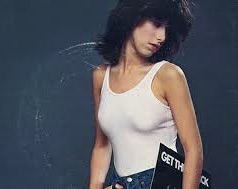
But the real inspiration for the song was one Sharona Alperin (see photo above).
In 1978, when The Knack was on the rise in the Los Angeles pop scene, Doug Fieger was introduced to Sharona Alperin, a dark-haired 17-year-old beauty who worked as a clerk in a clothing shop. Fieger said, “It was love at first sight. Literally. I broke up with my girlfriend and chased Sharona for a year.”
Though Alperin was in a relationship and put Fieger off, it didn’t stop him from pursuing her. “Doug made it very clear he was in love with me,” Alperin said. “It wasn’t like my boyfriend and the world didn’t know. I always say that he was my groupie, I wasn’t his.” Indeed, it was a strange dynamic.
In late 1978, The Knack signed with Capitol, home of their favorite band, the Beatles. “My Sharona” was released a few weeks later, taking over the airwaves in 1979, and has remained a staple in classic rock radio. It has also appeared in several movies, including Reality Bites and Super 8.
Fieger and Alperin finally did get together and had a four year run as a couple. They remained friendly and even 30 years later Fieger called Sharona the love of his life. Fieger died from cancer in 2010 at age 57. Alperin is a now a successful real estate agent in Beverly Hills. Her website’s welcome page (mysharona.com, of course) features the familiar drum beat and guitar riff.
Of the song, Alperin has said, “Michelle, Yoko, Roxanne – there are so many great songs named after women in history. I feel incredibly fortunate that I’ve had this experience. It’s a really exciting adventure that never leaves me.”
“My Sharona” remained at #1 on the Billboard Hot 100 singles chart for six weeks; it was also #1 on Billboard‘s 1979 Top Pop Singles year-end chart. It was certified gold by the Recording Industry Association of America, representing one million copies sold, and was Capital Records’ fastest gold status debut single since the Beatles’ “I Want To Hold Your Hand” in 1964. “My Sharona” has since gone on to sell more than 10 million copies as of 2010.
This is “My Sharona” by The Knack.
LYRICS
Ooh, my little pretty one, pretty one
When you gonna give me some time, Sharona?
Ooh, you make my motor run, my motor run
Gun it coming off of the line, Sharona
Never gonna stop, give it up, such a dirty mind
I always get it up for the touch of the younger kind
My, my, my, I, yi, woo!
M-m-m-my Sharona
Come a little closer, huh, ah, will ya, huh?
Close enough to look in my eyes, Sharona
Keeping it a mystery gets to me
Running down the length of my thighs, Sharona
Never gonna stop, give it up, such a dirty mind
I always get it up for the touch of the younger kind
My, my, my, I, yi, woo!
M-m-m-my Sharona
M-m-m-my Sharona
When you gonna give to me, g-give to me?
Is it just a matter of time, Sharona?
Is it j-just destiny, d-destiny
Or is it just a game in my mind, Sharona?
Never gonna stop, give it up, such a dirty mind
I always get it up for the touch of the younger kind
My, my, my, I, yi, woo!
M-m-m-my, my, my, I, yi, woo!
M-m-m-my Sharona
M-m-m-my Sharona
M-m-m-my Sharona
M-m-m-my Sharona
Mmh, ohh, my Sharona
Mmh, ohh, my Sharona
Mmh, ohh, my Sharona
Source: Musixmatch
Songwriters: Doug Fieger/Burton Averre
My Sharona lyrics © Wise Brothers Music Llc, Eighties Music

© RisMedia
For fans of the popular TV show “Monk”, you’ll remember that Sharona Fleming was Adrian Monk’s nurse and assistant during the first three seasons. Monk was in a catatonic state for three and a half years following the murder of his wife, Trudy, until Sharona began taking care of him. A detective with OCD, Monk (played by award-winning actor Tony Shalhoub) was able to resume work because of Sharona’s care. Monk once remarked, “When she found me, I was drowning”. Sharona Fleming was portrayed by actress Bitty Schram. Here are some clips from “Monk”.
Big thanks to Jim Adams for hosting another great Song Lyric Sunday this week. Be sure to follow the link and check out Jim’s site.
Thanks for stopping by. See you on the flip side. 😎
NAR©2024
All text, graphics and videos are copyright for The Sicilian Storyteller, The Elephant’s Trunk and The Rhythm Section and is not for use by anyone without permission. NAR©2017-present.
Land of the Ice and Snow
Written for Song Lyric Sunday. This week Jim Adams has asked his
readers to write about a song by a band they wish was still together.
Honestly, I would be very surprised if I’m the only one who chose my featured group and song for Jim Adams’ Song Lyric Sunday theme “Can’t Always Get What You Want”. That’s ok, though; it just reinforces my thoughts and feelings about this iconic group and the incredible music they recorded over the years.
On January 31, 1969, my then boyfriend/now husband and I went to the concert mecca of the Lower East Side of Manhattan – the Fillmore East – where we saw Iron Butterfly perform. The warm-up group was a relatively unknown band from England that totally blew our minds. The name of that band was Adam and the Ants. Wait … I’m kidding! Just checking to see if you’re paying attention.
The name of the band was Led Zeppelin.
Formed in 1968, Led Zeppelin went on to become one of the most influential, innovative, and successful groups in modern music, having sold more than 300 million albums worldwide. The band rose from the ashes of The Yardbirds when Jimmy Page brought in John Bonham, John Paul Jones, and Robert Plant to tour as The New Yardbirds. In 1969, Led Zeppelin released its self-titled debut album, produced by Jimmy Page. It marked the beginning of a 12-year reign during which the group was widely considered to be the biggest and most innovative rock band in the world. In the world; that, my friends, is no small potatoes.
Zeppelin developed their style by drawing from a variety of influences including blues and folk music. With a heavy guitar-driven sound, they are cited as one of the forerunners of hard rock and heavy metal music. Zeppelin has been credited as significantly impacting the nature of the music industry, particularly in the development of album-oriented rock and stadium rock.
Shortly after the tragic death of the band’s drummer John Bonham in 1980, the group disbanded. In a statement released by the group, they explained that they couldn’t go on without their friend. After the break-up, Led Zeppelin had four brief reunions in 1985, 1988, 1995, and 2007. After the gig in 2007, there were rumors about a reunion tour but Robert Plant has continued his touring with American bluegrass-country singer/fiddler/producer Alison Krauss. Plant told the group that he was too busy and they would have to wait. That was 17 years ago. If you’re anticipating a reunion, I wouldn’t hold my breath. But, we can dream.
Led Zeppelin’s catalogue is huge and choosing one song was not easy. In the end, I decided to skip the obvious ones and go with one of my favorites.
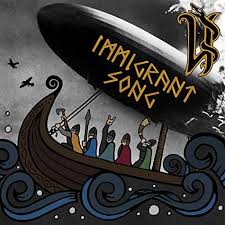
“Immigrant Song” is a classic rock anthem that showcases the band’s signature sound. From the band’s 1970 album Led Zeppelin III, the track has surpassed its original context and now serves as a powerful and evocative anthem for the enduring struggles of mythical conflict. The song’s driving riff and powerful lyrics draw inspiration from Norse mythology, with references to Valhalla and war-making. To this day, the song remains a beloved track among fans of Led Zeppelin and rock music in general.
This is “Immigrant Song” by Led Zeppelin.
LYRICS
Ah-ah, ah!
Ah-ah, ah!
We come from the land of the ice and snow
From the midnight sun where the hot springs flow
The hammer of the gods
Will drive our ships to new lands
To fight the horde, sing and cry
Valhalla, I am coming
On we sweep with threshing oar
Our only goal will be the western shore
Ah-ah, ah!
Ah-ah, ah!
We come from the land of the ice and snow
From the midnight sun where the hot springs flow
How soft your fields so green
Can whisper tales of gore
Of how we calmed the tides of war
We are your overlords
On we sweep with threshing oar
Our only goal will be the western shore
So now you’d better stop and rebuild all your ruins
For peace and trust can win the day despite of all your losing
Ooh-ooh, ooh-ooh, ooh-ooh
Ooh-ooh, ooh-ooh, ooh-ooh
Ahh, ah
Ooh-ooh, ooh-ooh, ooh-ooh
Ooh-ooh, ooh-ooh, ooh-ooh
Ooh-ooh, ooh-ooh, ooh-ooh
Source: LyricFind
Songwriters: Jimmy Page/Robert Plant
Immigrant Song lyrics © Warner Chappell Music, Inc
Big thanks to Jim Adams for hosting another great Song Lyric Sunday this week. Be sure to follow the link and check out Jim’s site.
Thanks for stopping by. See you on the flip side. 😎
NAR©2024
All text, graphics and videos are copyright for The Sicilian Storyteller, The Elephant’s Trunk and The Rhythm Section and is not for use by anyone without permission. NAR©2017-present.
The Big O
Written for Song Lyric Sunday. This week Jim Adams has asked his
readers to write about a song by an artist who is no longer living.
Sadly, there’s an endless list of artists who fit the bill for today’s theme from Jim Adams, aptly (and brilliantly) titled “Turn Me On, Dead Man”. There are so many greats to choose from, I decided to go with someone who consistently touches my heart every time I hear him sing …. The Big O.
Roy Orbison was born April 23, 1936, in Vernon, Texas to a working-class family, growing up immersed in musical styles ranging from rockabilly and country to zydeco, Tex-Mex and the blues. His dad gave him a guitar for his sixth birthday and he wrote his first song, “A Vow of Love”, when he was 8 years old. In high school, Orbison played the local circuit with a group called the Teen Kings. When their song “Ooby Dooby” came to the attention of Sun Records’ producer Sam Phillips, Orbison was invited to cut a few tracks. In addition to a highly collectible album called Roy Orbison at the Rockhouse, their collaboration yielded a re-recording of “Ooby Dooby” that became Orbison’s first minor hit.
After Roy Orbison landed a record deal with the Nashville-based label Monument in 1960, he began perfecting the sound that would define his career. His big break came after he tried to pitch his composition “Only the Lonely” to both Elvis Presley and the Everly Brothers and was turned down by both. Deciding to record the song himself, Orbison used his vibrato voice and operatic style to create a recording unlike anything Americans had heard at the time. Reaching as high the #2 spot on the Billboard singles chart, “Only the Lonely” has since been deemed a pivotal force in the development of rock music. Between 1960 and 1965, Orbison recorded nine Top 10 hits and another ten that broke into the Top 40, including “Running Scared,” “Crying,” “It’s Over” and “Oh, Pretty Woman“.
As distinctive as his three-octave voice was, Roy Orbison’s unglamorous style has been described as “geek chic.” Stricken with both jaundice and bad eyesight as a child, Orbison had sallow skin, a shy demeanor and wore thick eyeglasses. On a fateful day during his 1963 tour with the Beatles, Orbison left his glasses on the plane before a show, which forced him to wear his prescription sunglasses for that night’s show. Although he considered the incident “embarrassing”, the look became an instant trademark.
Roy Orbison’s unhip underdog look suited his music well, as his lyrics were marked by incredible vulnerability. At a time when rock music went hand-in-hand with confidence and machismo, Orbison dared to sing about insecurity, heartache and fear. His stage persona went a long way toward challenging the traditional ideal of aggressive masculinity in rock & roll.
Although the first half of the 1960s saw the rise of Roy Orbison’s star, the second half of the decade brought harder times. Tragedy struck when Orbison’s wife, Claudette, was killed in a motorcycle accident in 1966, and again when his two eldest sons died in a house fire in 1968. Following those incidents, a devastated Orbison failed to generate many hits and with the rise of the psychedelic movement in rock & roll, the market for rockabilly had all but dried up.
In 1980, however, Roy Orbison experienced a return to his musical career when the Eagles invited him to join them on their “Hotel California” tour. That same year, he rekindled his relationship with country music fans by performing a memorable duet with Emmylou Harris on “That Lovin’ You Feeling Again,” which went on to win a Grammy. When Van Halen covered “Oh, Pretty Woman” in 1982, rock fans were reminded that gratitude for the song was owed to Roy Orbison. By the late 1980s, Orbison had staged a successful comeback, joined the all-star supergroup The Traveling Wilburys alongside Tom Petty, Bob Dylan, George Harrison and Jeff Lynn, was inducted into the Nashville Songwriters Hall of Fame and initiated into the Rock & Roll Hall of Fame.
On December 6, 1988, Roy Orbison died of a heart attack. His posthumously- released comeback album, Mystery Girl, reached #5 on the charts, becoming the highest-charting solo album of his career. Although he was only 52 years old when he died, Roy Orbison lived to see his rightful place in music history restored.
My featured song for today is Roy Orbison’s deeply moving hit “Crying”. Recorded and released in 1961, “Crying” tells the story of the one who got away, that old flame that’s so very hard to forget. It’s a beautiful song with a haunting melody, perfect for Orbison’s octaves-spanning voice. “Crying” reached #1 on the US Cashbox chart for one week on October 7, 1961. On the rival Billboard Hot 100 it peaked at #2 where “Hit the Road Jack” by Ray Charles kept it from #1. Despite not reaching the summit in the latter publication, Billboard ranked the record as the #4 song of 1961. In 2002, “Crying” was honored with a Grammy Hall of Fame Award. In 2010, Rolling Stone magazine ranked it 69th on their list of the 500 greatest songs of all time.
There’s no other song by Roy Orbison that touches my heart and soul as deeply as “Crying”. There are also a number of videos for “Crying” but none quite like this.
Here is Roy Orbison with “Crying”.
LYRICS
I was alright for a while, I could smile for a while
Then I saw you last night, you held my hand so tight
When you stopped to say, “Hello”
You wished me well, you couldn’t tell
That I’d been crying over you
Crying over you then you said, “So long”
Left me standing all alone
Alone and crying,
Crying, crying, crying
It’s hard to understand
That the touch of your hand
Can start me crying
I thought that I was over you
But it’s true, so true
I love you even more than I did before
But darling what can I do?
For you don’t love me and I’ll always be
Crying over you
Crying over you
Yes, now you’re gone
And from this moment on
I’ll be crying, crying, crying, crying,
Crying, crying, over you
Source: LyricFind
Songwriters: Joe Melson/Roy Orbison
Crying lyrics © Barbara Orbison Music Company, BMG Rights Management, Orbi-Lee Music, R-Key Darkus, Sony/ATV Music Publishing LLC
Big thanks to Jim Adams for hosting another great Song Lyric Sunday this week. Be sure to follow the link and check out Jim’s site.
Thanks for stopping by. See you on the flip side. 😎
NAR©2024
All text, graphics and videos are copyright for The Sicilian Storyteller, The Elephant’s Trunk and The Rhythm Section and is not for use by anyone without permission. NAR©2017-present.
Remembering Roberta
Written for Song Lyric Sunday. This week Jim Adams has asked his
readers to choose a song that makes them think about life. Here’s mine.
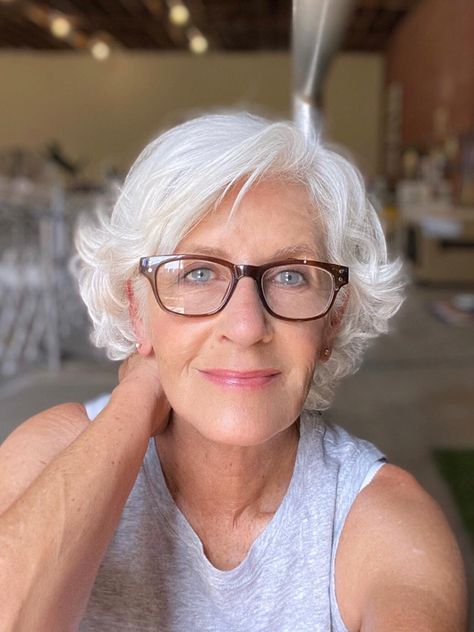
To talk about my featured song, I first need to tell you about my friend, Roberta. She and I had been friends since our sons attended nursery school together, some 44 years ago. Even back then in her early 30s, Roberta had a shock of gorgeous silver-white hair that was always perfectly yet casually coiffed. Just like my grandmother, Roberta’s hair color changed when she was in her 20s and I never saw her with a different color or style.
Roberta’s laugh was one of a kind …. some might call it a cackle …. and you heard her long before you saw her! She rarely took life too seriously and was very forthcoming with her opinions, whether you wanted to hear them or not. I guess you could call her a ‘free spirit’; she lived very much in the moment, often arriving late for appointments because she ran into someone who needed a friend to talk to.
There was never any doubt where you stood with Roberta. If she was pissed off about something, you knew it. She’d speak her mind, clear the air and never mention the issue again. Done and forgotten. But not just forgotten …. forgiven as well. She didn’t hold a grudge; I always thought that was an admirable trait. And she didn’t lie. If anything, she was too honest and her ‘bluntness’ could turn people off. She really didn’t care what people thought about her; life was not a popularity contest. As I said, people always knew exactly how Roberta felt.
She was a devout Catholic, attending Mass every weekend, but she was never showy about it. Roberta and her husband Martin were in charge of the church’s food pantry …. collecting food for families in need …. and not just during the holidays or when a crisis hit but every day of the year …. however, the holidays were very important to Roberta, especially Christmas. That was when she amped up the drive for food, clothes and gifts for needy families in the area, especially the children. In all the years I knew Roberta, I don’t remember anyone else heading up the food pantry except her. She and Martin were special people, far from saints but doing God’s work in an unassuming way.
It came as a terrible blow to everyone when Roberta became dangerously ill almost overnight in August 2014 and was diagnosed with West Nile Virus (for which there is no vaccine or cure although most people recover with proper care). Roberta had an extremely virulent case and within days she lapsed into a coma and never regained consciousness. At one point, she was the only documented case of “death by West Nile Virus” in Westchester County, NY.
The day I visited Roberta at the nursing home was one I will never forget. Had it not been for her name on the door and her glorious mane of white hair, I would not have recognized my longtime friend; the virus left her body terribly swollen, facial features almost fused together. I sat by her bedside, held her hand and sang a song I had sung many times before. And as I sang to my friend, I saw her eyelid barely flutter and her finger quiver ever so slightly and no one will ever convince me that she was unaware of my presence. Four months later, during Christmas week, Roberta died. It was the perfect time for her to take her leave.
The song I sang to my friend that day in the nursing home was “What A Wonderful World”.
According to Wikipedia, “What A Wonderful World” was written by Bob Thiele and George David Weiss. It was first recorded by Louis Armstrong and released as a single in 1967. In April 1968, it topped the pop chart in the UK but performed poorly in the United States because the president of ABC Records disliked the song’s arrangement and refused to promote it. (There’s more on Wiki about that and it’s pretty interesting.) After the song was heard in the 1987 film Good Morning, Vietnam, it was reissued as a single in 1988 and rose to #32 on the Billboard Hot 100. Louis Armstrong’s recording was inducted into the Grammy Hall of Fame in 1999.
Every time I hear this song, I remember Roberta and our last visit together. This is “What A Wonderful World” by Louis Armstrong.
LYRICS
I see trees of green
Red roses too
I see them bloom
For me and you
And I think to myself
What a wonderful world
I see skies of blue
And clouds of white
The bright blessed day
The dark sacred night
And I think to myself
What a wonderful world
The colors of the rainbow
So pretty in the sky
Are also on the faces
Of people going by
I see friends shaking hands
Saying, “How do you do?”
They’re really saying
I love you
I hear babies cry
I watch them grow
They’ll learn much more
Than I’ll ever know
And I think to myself
What a wonderful world
Yes, I think to myself
What a wonderful world
Ooh, yes
Source: LyricFind
Songwriters: George David Weiss/Robert Thiele
What a Wonderful World lyrics © BMG Rights Management, Concord Music Publishing LLC, Kanjian Music, Tratore
Big thanks to Jim Adams for hosting another great Song Lyric Sunday this week. Be sure to follow the link and check out Jim’s site.
Thanks for stopping by. See you on the flip side. 😎
NAR©2024
All text, graphics and videos are copyright for The Sicilian Storyteller, The Elephant’s Trunk and The Rhythm Section and is not for use by anyone without permission. NAR©2017-present.
Flying … or … Volare
Written for Song Lyric Sunday. This week Jim Adams has asked his
readers to choose a song they remember from their childhood.

Music has always been a huge part of my life since my days growing up in The Bronx. Every self-respecting Italian family has a finished basement … one wide open room with a kitchen, eating area, a space for family activities, a TV area, a bathroom and closed-off workshop. Our television was one of those big console units which also included a radio and stereo with a storage cabinet and looked something like this:

When my sister and I listened to our music, my mother would either be cooking or in her sewing area and Dad would be at the kitchen table working on a crossword puzzle. He claimed he didn’t like our music but he never actually left the room when it was on. However, on Saturday afternoons my father commandeered the radio so he could listen to his favorite Italian show called “Pasquale C.O.D.” I remember it being just like WMCA … the station I listed … only in Italian. Pasquale was the DJ who’d talk about everything from food to politics and play the top hits from Italy and the US.
In 1958 there was a song we heard often and it became a family favorite; it got to be so popular, it wasn’t just limited to Dad’s Italian station. People all around the world could hear Domenico Modugno singing his hit “Nel blu, dipinto di blu“, more commonly known as “Volare”. Modugno composed the music and, along with Franco Migliacci, wrote the lyrics. The single was released on February 1, 1958.
The song spent five non-consecutive weeks atop the Billboard Hot 100 in August and September 1958, and subsequently became Billboard’s #1 single for the year. In 1959, at the 1st Annual Grammy Awards, Modugno’s recording became the first ever Grammy winner for both Record of the Year and Song of the Year. For more info about “Volare”, you can click HERE.
Here is “Nel blu, dipinto di blu (Volare)” by Domenico Modugno. This one’s for you, Dad.
LYRICS
I think a dream like this will never come back
Penso che un sogno così non ritorni mai più
I painted my hands and face blue
Mi dipingevo le mani e la faccia di blu
Then suddenly I was kidnapped by the wind
Poi d’improvviso venivo dal vento rapito
And I began to fly in the infinite sky
E incominciavo a volare nel cielo infinito
Flying oh, oh
Volare oh, oh
Singing oh, oh
Cantare oh, oh
In the blue painted blue
Nel blu dipinto di blu
Happy to be up there
Felice di stare lassù
And I flew, I flew happily higher than the sun
E volavo, volavo felice più in alto del sole
And even higher
Ed ancora più su
While the world slowly disappeared far away down there
Mentre il mondo pian piano spariva lontano laggiù
Sweet music played just for me
Una musica dolce suonava soltanto per me
Flying oh, oh
Volare oh, oh
Singing oh, oh
Cantare oh, oh
In the blue painted blue
Nel blu dipinto di blu
Happy to be up there
Felice di stare lassù
But all dreams fade away in the dawn
Ma tutti i sogni nell’alba svaniscon perché
When the moon sets, it takes them with it
Quando tramonta la luna li porta con sé
But I continue to dream in your beautiful eyes
Ma io continuo a sognare negli occhi tuoi belli
Which are blue like a sky studded with stars
Che sono blu come un cielo trapunto di stelle
Flying oh, oh
Volare oh, oh
Singing oh, oh
Cantare oh, oh
In the blue of your blue eyes
Nel blu degli occhi tuoi blu
Happy to be down here
Felice di stare quaggiù
And I continue to fly happily higher than the sun
E continuo a volare felice più in alto del sole
And even higher
Ed ancora più su
While the world slowly disappears in your blue eyes
Mentre il mondo pian piano scompare negli occhi tuoi blu
Your voice is sweet music that plays for me
La tua voce è una musica dolce che suona per me
Flying oh, oh
Volare oh, oh
Singing oh, oh
Cantare oh, oh
In the blue of your blue eyes
Nel blu degli occhi tuoi blu
Happy to be down here
Felice di stare quaggiù
In the blue of your blue eyes
Nel blu degli occhi tuoi blu
Happy to be down here
Felice di stare quaggiù
With you
Con te
Source: LyricFind
Songwriters: Domenico Modugno/Franco Migliacci
Nel blu, dipinto di blu lyrics © Downtown Music Publishing, Peermusic Publishing
There were more than 100 different recordings of “Volare” worldwide but my favorite from 1960 was the version by Italian-American pop singer Bobby Rydell (Ridarelli). Even my dad thought he sounded pretty good! His recording reached #4 on the Hot 100 during the summer of 1960, #22 in the UK and #3 in Canada. Here is Bobby Rydell’s version.
Of course, we couldn’t go flying without the wonderful Il Volo (flight) and their rendition of “Volare”. These young vocal sensations came on the scene long after my father passed away; I wonder what he’d think of them. Here is Il Volo.
Big thanks to Jim Adams for hosting another great Song Lyric Sunday this week. Be sure to click the link and check out Jim’s site.
Thanks for stopping by. See you on the flip side. 😎
NAR©2024
All text, graphics and videos are copyright for The Sicilian Storyteller, The Elephant’s Trunk and The Rhythm Section and is not for use by anyone without permission. NAR©2017-present.
Give Us A Smile
Written for Song Lyric Sunday. This week Jim has asked his
readers to choose a song that reminds them of themselves.

When I read the theme for today’s SLS, I had a pretty good idea what my song was going to be. It’s been one of my favorite songs for a long time. And while it may sound melancholy, it’s message is one of the most uplifting ever written.
Who am I? Just an average person who has been blessed many times over in my life. I had so much fun as a young adult, going to concerts almost every weekend and meeting many extraordinary performers. I have a terrific husband, wonderful adult children and four grandkids. We live in a beautiful town with great neighbors who happen to be our best friends. The only thing I can complain about is the arthritis that has plagued me for the past 24 years. There have been times when the pain really brought me down and healing from surgeries seemed impossible but here I am, still standing. (No, that’s not my song!)
My featured song today is a real classic but some of you may think Michael Jackson was the one who made it popular; it’s much older than that. The music for today’s song was originally written and orchestrated by none other than silent film star Charlie Chaplin, starting as an instrumental for the soundtrack to his 1936 film Modern Times. And instead of being entirely a silent movie, it was the first time Chaplin’s voice was heard on a film. The idea for the movie came about from the Great Depression of 1929; messages of hope were essential to keeping people optimistic despite their circumstances. In 1954, John Turner and Geoffrey Parsons added lyrics to the song based on lines and themes from Chaplin’s Modern Times and gave it the title known around the world as “Smile”.
I know how fortunate I am; hell, Bill and I made it through a horrific rollover back in 2001 and he beat bladder cancer 6 years ago. 2024 hasn’t been a stellar year so far with my brother-in-law’s death and this god-awful spine surgery but we keep going and looking to each other for a smile. I’m an emotional person and wear my heart on my sleeve. Tears come easily but so does laughter. I love to have fun and make people laugh. And each laugh begins with a smile.
This is Tony Bennett.
LYRICS
Smile though your heart is aching
Smile even though it’s breaking
When there are clouds in the sky, you’ll get by
If you smile through your fears and sorrow
Smile and maybe tomorrow
You’ll see the sun come shining through for you
Light up your face with gladness
Hide every trace of sadness
Although a tear may be ever so near
That’s the time you must keep on trying
Smile, what’s the use of crying
You’ll find that life is still worthwhile
If you just smile
That’s the time you must keep on trying
Smile, what’s the use of crying
You’ll find that life is still worthwhile
If you just smile
Writer(s): Music – Charles Chaplin; Lyrics – Geoffrey Parsons, John Turner
Publisher: Tratore
Lyrics licensed and provided by LyricFind
Here is a clip from Modern Times, Chaplin’s last silent film.
Big thanks to Jim Adams for hosting another great Song Lyric Sunday this week. Be sure to follow the link and check out his site.
Thanks for stopping by. See you on the flip side. 😎
NAR©2024
All text, graphics and videos are copyright for The Sicilian Storyteller, The Elephant’s Trunk and The Rhythm Section and is not for use by anyone without permission. NAR©2017-present.
Just Because
Today at Song Lyric Sunday, Jim has asked his readers
to choose a song by their favorite band; here is mine.
If you were here last Sunday and read my post, you might recall I wrote that this week and last week could end up being interchangeable … and that is the case. The band this week remains the same but the song has changed, although last week’s song could have worked very nicely for this week’s prompt. In fact, just about any of my favorite group’s songs from their vast catalog could have qualified for today’s prompt. I’m not picky.
It’s a well-known fact to everyone who knows me … and that includes you, the people who read my posts … that my favorite group is the Beatles. While my attraction to them during the British Invasion was more of a crazed teenybopper-ish, Beatlemania thing, my love and appreciation for their music has continued to grow throughout the years.
The Beatles have been referred to as a phenom and their music as groundbreaking. No other group has been able to come close to their sound, musicality, artistry, lyrical or harmonic skills. The Beatles are the total package and their music will still be playing long after you and I are gone.
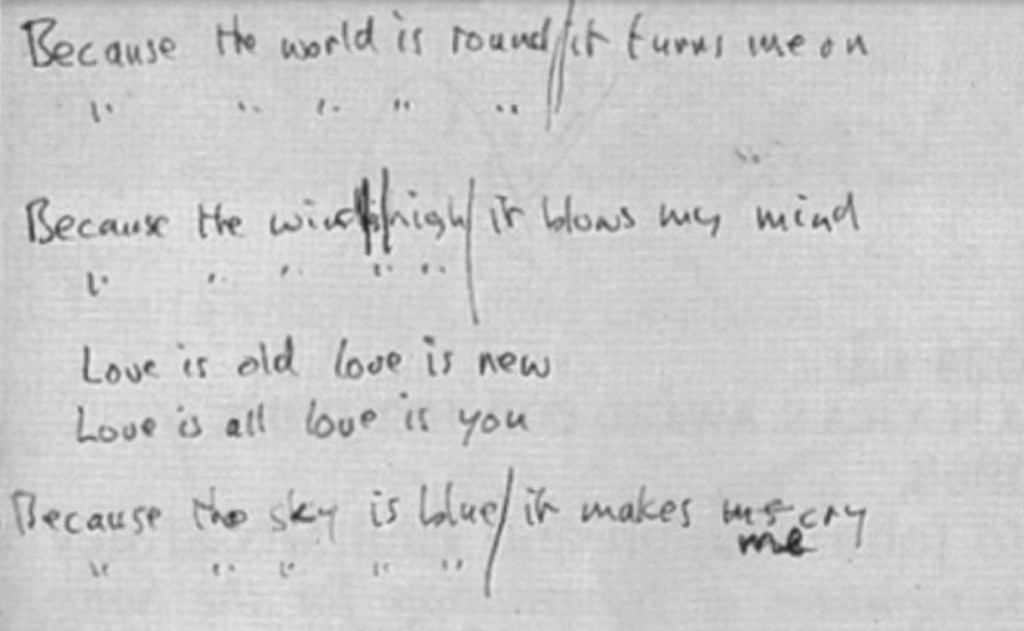
Now, onto the Beatles song I have selected today … from the album Abbey Road, my pick is “Because”. The lyrics are deep, poetic and simply wonderful while the harmony is lush, often heartbreakingly beautiful. The unexpected chords and accidentals are so brilliant, I feel like saying “I saw what you did there and it was very special!”
Composed primarily by John Lennon, “Because” was the final track to be recorded for Abbey Road. The song was inspired by Beethoven’s “Moonlight Sonata” and features the Beatles’ distinctive three-part vocal harmonies.
The story surrounding the song’s creation has to do with John’s wife, Yoko Ono, who is a classically trained pianist. One day in 1969, she was playing “Moonlight Sonata” on the piano in their house and John asked if she could play the chords backwards (a little trick the Beatles were familiar with by playing tapes backwards). Yoko did as she was asked and John wrote “Because” around the backward chords.
The band gathered at Abbey Road Studio on Friday, August 1, 1969, to record the main backing track, which required 23 takes. George Martin played electric harpsichord, John Lennon played guitar, George Harrison utilized a Moog synthesizer, and Paul McCartney played bass. Ringo Starr kept time on cymbals, but they were only heard in the others’ headphones; no percussion appears on the final mix. The Beatles returned to play the vocal tracks three days later. These takes were then layered to sound like nine voices.
This approach took extensive rehearsal, and more than five hours of extremely focused recording to capture correctly. George Harrison and Paul McCartney both said it was their favorite track on Abbey Road. Engineer Geoff Emerick said, “They knew they were doing something special and they were determined to get it right.”
A remixed version of the song with the instrumentation removed (isolated vocals) so as to highlight the three-part harmony was released on 1996’s Anthology 3.
From Abbey Road, here is “Because” by the Beatles.
And from Anthology 3, here is the isolated vocals version of “Because”; those harmonies are sweet!
Lyrics
Ah, because the world is round, it turns me on
Because the world is round,
ah Because the wind is high, it blows my mind
Because the wind is high, ah Love is old, love is new
Love is all, love is you Because the sky is blue, it makes me cry
Because the sky is blue, ah, ah, ah, ah
Source: Musixmatch
Composers/Lyricists: John Lennon, Paul McCartney
Because lyrics © Sony/ATV Tunes LLC, Universal Music Publishing Pty. Ltd.
Big thanks to Jim Adams for hosting another great Song Lyric Sunday this week. Be sure to check out Jim’s site.
Thanks for stopping by. See you on the flip side. 😎
~ Nancy
NAR©2024
All text, graphics and videos are copyright for The Sicilian Storyteller, The Elephant’s Trunk and The Rhythm Section and is not for use by anyone without permission. NAR©2017-present.
Who The Hell Was Bessie?
Today at Song Lyric Sunday, Jim has asked us to choose
a song that begins with the same letter as our first name.
For me that would be the letter N. Here is my song.
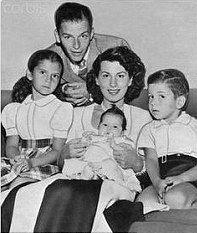
Frank Sinatra Jr; in front Tina Sinatra, 1948
When I say “here is my song” I really mean MY song. From the time I was a baby and able to understand a few words, this song was special to me. As I got older it became even more special … particularly when my dad would sing it. There are a lot of memories attached to this song; I honestly thought it was written for me and that Frank Sinatra was singing it directly to me. You may recall from another of my posts that my dad hated Sinatra; this may be the only song by Frank that Dad liked. My sister Rosemarie really hated my song because she didn’t like any of HER songs; she’d whine that her songs weren’t as pretty and personal as mine and she’d get annoyed every time it was played. But the thing she hated the most was the line “sorry for you, she has no sister”! I guess I can’t blame her for that!
Have you figured out what my song is? Since it was made popular by Frank Sinatra most people wrongly assumed the song was composed specifically for his daughter. Well, that was a pretty big clue so you must know the answer by now! My song choice for today’s Song Lyric Sunday is “Nancy (With the Laughing Face)”.
The music for the song was composed in 1942 by Jimmy Van Heusen with lyrics written by comedian/lyricist Phil Silvers; it was originally called “Bessie (With the Laughing Face)”. Bessie? Who the hell was Bessie? Well, back in 1942 there was a famous lyricist named Johnny Burke who was married to our mysterious Bessie. Jimmy Van Heusen and Phil Silvers wrote the song for their friend Johnny Burke as a surprise for his wife Bessie’s birthday.
All the women at Bessie Burke’s birthday party loved the song so much, they started requesting that it be sung at their parties as well. Apparently Frank Sinatra wasn’t at any of those parties because when his friends Jimmy Van Heusen and Phil Silvers sang the song as “Nancy (With the Laughing Face)” at little Nancy Sinatra’s birthday party, Frank broke down and cried, thinking it had been written especially for his daughter! Johnny Burke, Jimmy Van Heusen and Phil Silvers wisely didn’t correct him.
In 1944, Frank Sinatra recorded the song as “Nancy (With the Laughing Face)” and it became a fan favorite. When I was born several years later, the song became a favorite in our house as well.
This is “Nancy” by Frank Sinatra
Lyrics
If I don’t see her each day, I miss her
Gee, what a thrill each time I kiss her
Believe me, I’ve got a case
On Nancy with the laughin’ face
She takes the winter and makes it summer
But summer could take some lessons from her
Picture a tomboy in lace
That’s Nancy with the laughin’ face
Did you ever hear mission bells ringin’?
Well, she’ll give you the very same glow
When she speaks you would think it was singin’
Just hear her say hello
I swear to goodness you can’t resist her
Sorry for you, she has no sister
No angel could replace
Nancy with the laughin’ face
Keep Betty Grable, Lamour and Turner
She makes my heart a charcoal burner
It’s heaven when I embrace
My Nancy with the laughin’ face
Source: LyricFind
Songwriters: Jimmy Van Heusen/Phil Silvers
Nancy lyrics © Barton Music Corporation, Imagem U.S. LLC, Universal Music Publishing Group
Big thanks to Jim Adams for hosting another great Song Lyric Sunday this week. Be sure to check out Jim’s site.
Thanks for stopping by. See you on the flip side. 😎
NAR©2024
All text, graphics and videos are copyright for The Sicilian Storyteller, The Elephant’s Trunk and The Rhythm Section and is not for use by anyone without permission. NAR©2017-present.
Driving All Night
Today at Song Lyric Sunday the theme is to choose a song beginning
with the same letter as my last name, which is R. Here is my feature.
Before you could send a text or call someone in their car, there was no way to communicate with a driver unless you had a certain telepathic love that could convey from a distance your desire to be with that person, something you might call – oh, I don’t know – maybe something like radar love.
In the song “Radar Love”, the MC has been driving all night but keeps pushing the pedal because he just knows that his baby wants him home. In his rush to be with her, he drives recklessly and dies in a car accident. Tragic, isn’t it? But perhaps all is not lost, as the song suggests …. the MC and his lover continue to have a radar love connection in the afterlife.
“Radar Love” was written in 1973 by the Dutch group, Golden Earring. Members at the time were lead vocalist Barry Hay, bass and keyboardist Rinus Gerritsen, Cesar Zuiderwijk on drums & percussion and George Kooymans, vocals and lead guitar. The single version reached #9 on the Record World chart, #10 on Cash Box and #13 on Billboard in the US. It hit the Top 10 in many countries, including the UK, Canada, Australia, Canada, Germany, and Spain.
Like other famous songs of the era such as “Bohemian Rhapsody” and “Stairway To Heaven”, “Radar Love” was composed as a suite with several distinctive and quite different sections. According to radar-love.net, the song has been covered more than 500 times.
This is “Radar Love” by Golden Earring
LYRICS
I’ve been drivin’ all night, my hand’s wet on the wheel
There’s a voice in my head that drives my heel
It’s my baby callin’, says I need you here
And it’s a half past four and I’m shiftin’ gear
When she is lonely and the longing gets too much
She sends a cable comin’ in from above
Don’t need no phone at all
We’ve got a thing that’s called radar love
We’ve got a wave in the air, radar love
The radio is playing some forgotten song
Brenda Lee’s “Coming On Strong”
The road has got me hypnotized
And I’m speedin’ into a new sunrise
When I get lonely and I’m sure I’ve had enough
She sends her comfort comin’ in from above
We don’t need no letter at all
We’ve got a thing that’s called radar love
We’ve got a light in the sky, radar love
No more speed, I’m almost there
Gotta keep cool now, gotta take care
Last car to pass, here I go
And the line of cars drove down real slow
And the radio played that forgotten song
Brenda Lee’s “Coming On Strong”
And the newsman sang his same song
Oh one more radar lover gone
When I get lonely and I’m sure I’ve had enough
She sends her comfort comin’ in from above
We don’t need no letter at all
We’ve got a thing that’s called radar love
We’ve got a light in the sky
We’ve got a thing that’s called radar love
We’ve got a thing that’s called radar love
Writers: Barry Hay, George Kooymans
Publishers: Lyrics©Sony/ATV Music Publishing LLC, Warner Chappell Music, Inc.
Big thanks to Jim Adams for hosting another great Song Lyric Sunday this week. Be sure to check out Jim’s site.
Thanks for stopping by. See you on the flip side. 😎
NAR©2024
All text, graphics and videos are copyright for The Sicilian Storyteller, The Elephant’s Trunk and The Rhythm Section and is not for use by anyone without permission. NAR©2017-present.
Charlie’s Good Tonight, Ain’t He?
Today’s theme at Song Lyric Sunday is
all about songs that feature great drums.
Here are my drumtastic songs.
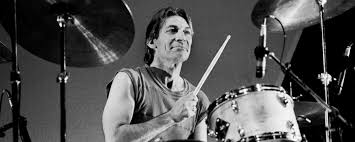
Much like last week’s group which needed no introduction, the same is true for today’s. If you are a fan who tends to remember little things about your favorite groups, then you’ll have no trouble making the connection between the title of my post and the group I’m featuring today …. The Rolling Stones. Oh, sorry! What I should have said is ‘the drummer I’m featuring today …. Charlie Watts’.
“Charlie’s good tonight, ain’t he?” Mick Jagger famously said those words on the classic Stones’ live album Get Yer Ya Ya’s Out recorded November 27 & 28, 1969 at Madison Square Garden. But some may argue that the late, great Charlie Watts was good every night …. and I’d agree!
Everyone loved Charlie. He was, of course, a highly regarded drummer but he was much more. A true gentleman, he was reserved and diplomatic, soft spoken, a teetotaler and a sharp dressed man. He was a loyal bandmate, husband and father who hated touring and being away from home. He didn’t have a drum kit at home because the noise was too much for his wife so the only times he played were at the studio or while performing.
Charlie Watts was the Rolling Stones’ drummer for 60 years when he passed away in August 2021 at the age of 80. A blues enthusiast enlisted by the band’s founder, Brian Jones, Charlie was a solid presence in that most turbulent of bands. A man blessed with infinite patience, he claimed on the occasion of the Stones’ 25th anniversary that his career had been “5 years of work and 20 years of hanging around”. Nice job if you can get it! And when it came to work, Charlie always delivered.
I’ve chosen two songs for you today which I believe showcase Charlie’s talents very well. The first one is from 1969 and is a biography loosely based on American Albert DeSalvo who confessed to being the Boston Strangler. We all know the song as “Midnight Rambler”. Keith Richards has referred to this number as “a blues opera” adding that nobody else but he and Mick Jagger could have written it.
One notable 1969 performance (running just over nine minutes) is the video I’ve selected to play today. It was captured for the 1970 album Get Yer Ya-Ya’s Out! and was re-released on the 1971 compilation album Hot Rocks 1964-1971. This rendition features Mick Taylor on lead guitar, in addition to Jagger, Richards, Wyman and Watts. Seeing this song performed live at MSG was like a blues marathon and featured one of the finest moments between Mick at the front of the stage and Charlie at the rear …. an unforgettable show.
Live audio from MSG, this is “Midnight Rambler” by the Rolling Stones.
Lyrics
I’m a-talkin’ ’bout the midnight rambler
Everybody got to go
Well I’m a-talkin’ ’bout the midnight gambler
The one you never seen before
I’m sighin’ down the wind so sadly
A-listen and you’ll hear me moan
Well I’m a talkin’ ’bout the midnight gambler
And everybody got to go
(Yeah c’mon)
Talkin’ ’bout the midnight gambler
The one you never seen before
I’m talkin’ ’bout the midnight rambler
Did you see me jump the garden wall
I don’t give you a hoot of warning
A-dressed up in my black cat cloak
I don’t see the light of the morning
I’ll split the time the cock’rel crows
I’m tellin’ ’bout the midnight rambler
Well, honey, it’s no rock ‘n’ roll show
Well, I’m a-talkin’ ’bout the midnight gambler
And everybody got to go
Oh, don’t do that
Well, you heard about the Boston
Honey, it’s not one of those
Talkin’ ’bout the midnight, shit!
Did you see me jump bedroom door
I’m called the hit and run raper, in anger
Or just a knife sharpened, tippy toe
Or just a shoot ’em dead, brainbell jongleur
Everybody got to go
If you ever meet the midnight rambler
And he’s prowlin’ down your marble hall
And he’s pouncin’ like a proud black panther
You should say, I told you so
If you listen for the midnight rambler
Play it easy, easy, as you go
I’ll go smash down all your plate glass windows
Put my fist through your stairway doors
Well I’m a-talkin’ bout the midnight rambler
The one you never seen before
Well I’m a-talkin’ bout the midnight rambler
And did you see me jump your garden wall
And if you ever catch the Midnight Rambler
Steal your mistress from under your nose
Go easy with your cold fanged anger
I’ll stick my knife right down your throat baby, and it hurts
Source: LyricFind
Songwriters: Keith Richards / Mick Jagger
Midnight Rambler lyrics © Abkco Music Inc.
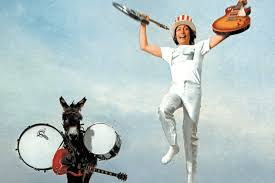
My second song today is an all-time favorite. There’s no denying that the Stones have recorded a lot of great tunes, many of which have gone on to be hits. Some fall into the category of classic mega-hits; this is one of those tunes. Brian Jones is on this recording, bringing the exotic sitar, but it’s Charlie Watts that’s the jittery heartbeat of this enduring piece of rock history.
The song is “Paint It Black“, a major chart success for the Stones, remaining 11 weeks (including two at #1) on the US Billboard Hot 100, and 10 weeks (including one atop the chart) on the Record Retailer chart in the UK. It was the band’s third #1 single in the US and sixth in the UK. The song also topped charts in Canada and the Netherlands.
“Paint It Black” was inducted into the Grammy Hall of Fame in 2018 and Rolling Stone magazine ranked the song #213 on their list of the 500 Greatest Songs of All Time. In 2011, the song was added to the Rock and Roll Hall of Fame’s list of “The Songs that Shaped Rock & Roll.
This is the legendary “Paint It Black” by the Rolling Stones. Lyrics are provided on screen.

Big thanks to Jim Adams for hosting another great Song Lyric Sunday this week. Be sure to check out Jim’s site.
Thanks for stopping by. See you on the flip side. 😎
NAR©2024
All text, graphics and videos are copyright for The Sicilian Storyteller, The Elephant’s Trunk and The Rhythm Section and is not for use by anyone without permission. NAR©2017-present.
The Who??
Today’s theme at Song Lyric Sunday is
all about songs that feature keyboards.

Well, kids, it’s been a while since I featured anything by The Beatles so it’s time to rectify that oversight right now. One of the things that’s so great about headlining The Beatles is everyone knows them so we can skip the foreplay and go right for the action. No introductions required.
There are a lot of great Beatles’ songs that feature keyboards; I’ve chosen two of my favorites with prominent piano throughout …. and it’s some mighty fine playing, too.
My first song up today is “Lady Madonna”. This bluesy number, written in 1967 by Paul McCartney, was recorded just prior to the group’s trip to India to study meditation with Maharishi Mahesh Yogi. It was also their final release on Parlophone/Capitol; from “Hey Jude” onward (another great keyboard piece), The Beatles released all their subsequent singles and albums on their own Apple Records label.
The original concept for “Lady Madonna” was obviously the Virgin Mary but the song quickly became symbolic of every woman, a tribute to the mother figure and women in general. Paul said “I think women are very strong, they put up with a lot of shit, they put up with the pain of having a child, of raising it, cooking for it … they are basically skivvies* a lot of their lives so I always want to pay tribute to them”. *A female servant who does all the dirty work in the house.
“Lady Madonna” was released in the UK on March 15, 1968, with George Harrison’s “The Inner Light” as the B side. It entered the charts at #5 and a week later climbed to the top. It remained there for a second week and spent 8 weeks altogether on the chart. In the US it was released on March 18, 1968, and peaked at #4.
This is “Lady Madonna” by The Beatles
Lyrics
Lady Madonna, children at your feet
Wonder how you manage to make ends meet
Who finds the money when you pay the rent?
Did you think that money was heaven sent?
Friday night arrives without a suitcase
Sunday morning creeping like a nun
Monday’s child has learned to tie his bootlace
See how they run
Lady Madonna, baby at your breast
Wonders how you manage to feed the rest
See how they run
Lady Madonna lying on the bed
Listen to the music playing in your head (head)
Tuesday afternoon is never ending
Wednesday morning papers didn’t come
Thursday night, your stockings needed mending
See how they run
Lady Madonna, children at your feet
Wonder how you manage to make ends meet
Source: Musixmatch
Songwriters: Paul McCartney / John Lennon
Lady Madonna lyrics © Sony/ATV Tunes Llc, Harrisongs Ltd, Mpl Communications Inc
Personnel
Paul McCartney: vocals, piano, bass, handclaps
John Lennon: backing vocals, lead guitar, handclaps
George Harrison: backing vocals, lead guitar, handclaps
Ringo Starr: drums, handclaps
Ronnie Scott, Bill Povey: tenor saxophones
Harry Klein, Bill Jackman: baritone saxophones
🎹🎹🎹🎹🎹🎹🎹🎹
The second song I’ve chosen is “For No One”. Also written by Paul McCartney, it is best described as his meditation on the end of a love affair. This song was a critically acclaimed masterpiece and one of the highlights of the Revolver album. It’s a song about rejection and emptiness. The breakup of a relationship has always been a rich area to explore in a song, an emotion most people have experienced.
Originally titled “Why Did It Die?”, “For No One” was written in March 1966 while Paul was on a ski vacation in Switzerland with his then girlfriend, Jane Asher. Something tells me Paul had a premonition about the trajectory of his relationship with Jane when he wrote this one. Just saying.
Upon his return from Switzerland, Paul sang the melody for George Martin, who wrote it down. At the recording session was Paul, George Martin and a French horn player named Alan Civil, the principal horn player in the Philharmonia Orchestra. Neither Paul nor George Martin played the French horn nor were they experienced in transcribing music for it. Civil took one look at what Paul had created and George Martin had written down and thought it was rudimentary, at best. There were a few notes that were higher than usual for the French horn and he was unsure what it would sound like. Fortunately, there was no need for concern as the result was incredibly memorable. When Revolver was released, Alan Civil was given credit on the sleeve of the record …. one of a scant few session musicians to receive such a distinction on a Beatles’ record. The stunning French horn solos in “For No One” are arguably the most striking feature of the song.
This may be the only Beatles’ song which does not include John Lennon and George Harrison. I’m really not sure why; I searched for info on that and came up empty. If any reader knows for certain why John and George were not included on the recording, please fill us in. This song was 100% Paul’s baby. I’m guessing John and George not being present had nothing to do with differing opinions and everything to do with Paul wanting only the absolute essential personnel involved. Even Ringo was little more than window dressing.
Recording sessions were held on three separate days in May, 1966; “For No One” was released in the UK on August 5, 1966 and on August 8, 1966 in the US. Since The Beatles never performed any songs from the Revolver album live, “For No One” never saw a concert stage until Paul began his solo touring days.
This is “For No One” by The Beatles. Poetry at work as we hear the abrupt and unexpected ending of “For No One”; there really could be no other way.
Lyrics
Your day breaks, your mind aches
You find that all her words of kindness linger on
When she no longer needs you
She wakes up, she makes up
She takes her time and doesn’t feel she has to hurry
She no longer needs you
And in her eyes, you see nothing
No sign of love behind the tears
Cried for no one
A love that should have lasted years
You want her, you need her
And yet you don’t believe her
When she says her love is dead
You think she needs you
And in her eyes, you see nothing
No sign of love behind the tears
Cried for no one
A love that should have lasted years
You stay home, she goes out
She says that long ago she knew someone
But now he’s gone, she doesn’t need him
Your day breaks, your mind aches
There will be times when all the things she said will fill your head
You won’t forget her
And in her eyes, you see nothing
No sign of love behind the tears
Cried for no one
A love that should have lasted years
Source: LyricFind
Songwriters: John Lennon / Paul McCartney
For No One lyrics © Kobalt Music Publishing Ltd., Royalty Network, Songtrust Ave, Sony/ATV Music Publishing LLC, Universal Music Publishing Group, Warner Chappell Music, Inc, Word Collections Publishing
Personnel
Paul McCartney: vocals, bass, piano, clavichord
Ringo Starr: drums, tambourine, maracas
Alan Civil: French horn
Big thanks to Jim Adams for hosting another great Song Lyric Sunday. Be sure to check out his site.
Thanks for stopping by. See you on the flip side. 😎
NAR©2024
All text, graphics and videos are copyright for The Sicilian Storyteller, The Elephant’s Trunk and The Rhythm Section and is not for use by anyone without permission. NAR©2017-present.
She’ll Only Come Out At Night
Today’s theme at Song Lyric Sunday is all about songs
that feature the saxophone
There’s only one musical duo who can say they are the number one selling duo in music history. That twosome is Daryl Hall and John Oates.
Beginning as two devoted disciples of earlier soul greats, Hall & Oates are today soul survivors in their own right. They have become such a musical influence on future generations of popular artists that they are the most sampled performers today and their impact can be heard everywhere from boy band harmonies to rap-rock fusion.
Signed to Atlantic in the early 1970s, Hall & Oates had a noteworthy start to their career. Their 1973 album, Abandoned Luncheonette yielded the Top 10 single, “She’s Gone,” which also went to #1 on the R&B charts. The duo recorded one more album with Atlantic, War Babies (produced by Todd Rundgren) before they signed to RCA. Their tenure at RCA would catapult Daryl and John to international superstardom.
From the mid-’70s to the mid-’80s, they would score six #1 singles from six multi-platinum albums. The era would also produce an additional 8 Top 10 singles. By 1984, the Recording Industry Association of America (R.I.A.A.) recognized Daryl Hall and John Oates as the number one selling duo of all time, a record they still hold today.
In 1985 singer Paul Young covered the Daryl-written Voices album track “Every Time You Go Away,” scoring a #1 hit and helping to establish the song as a modern standard. That same year, Daryl and John participated in the historic “We Are the World” session, reopened the legendary Apollo Theatre in the company of their heroes David Ruffin & Eddie Kendricks of the Temptations, and closed the globally broadcast Live Aid show in Philadelphia.
Across the succeeding decades, Daryl and John have continued to record and tour both individually and together, while their self-composed songs have evolved from current hits to timeless classics. In 2003, Daryl Hall and John Oates were inducted into the Songwriters Hall of Fame, followed by their 2014 induction into the Rock and Roll Hall of Fame.
Demonstrating the duo’s massive popularity across decades, generations and listening formats, in 2020 Daryl and John celebrated a milestone 1 billion streams of “You Make My Dreams (Come True).” Ubiquitous in films, commercials and playlists, the song encapsulates the essential and enduring appeal of Daryl Hall & John Oates.
Unfortunately, Hall and Oates are in the middle of a legal battle. Daryl Hall has filed a lawsuit stemming from Oates’ attempt to sell off his share of their joint venture, Whole Oats Enterprises LLP, which would violate the terms of a business agreement the duo had forged. The move quickly prompted a judge to temporarily block the sale while legal proceedings and a previously initiated arbitration continue.
One thing cannot be denied, despite their legal troubles: their music makes people feel good …. always has, always will.
The song I have chosen today which features a saxophone prominently throughout is their 1982 mega-hit, “Maneater”, a song about a very seductive woman who uses men to satisfy her expensive tastes. Much like the line “Her mind is Tiffany twisted” in the Eagles song “Hotel California”, the lyrics to “Maneater” use a luxury brand to develop the character as she is described as “a she-cat tamed by the purr of a Jaguar”, referring to the car.
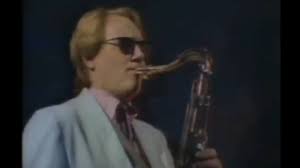
The song was a showcase for Hall & Oates’ sax player Charles “Mr. Casual” DeChant who appears in the video during his solo. The song spent four weeks at #1 in the US, making it the biggest US hit of the 80s to feature a sax solo.
This is one of several Hall & Oates songs that Daryl Hall’s long-time girlfriend Sara Allen had a hand in writing. According to Hall, his original lyric had some additional words in the chorus after “she’s a maneater”. Allen convinced him to end the line there, which Hall says made the song come together.
“Maneater” was used on the soundtrack to the Julia Roberts/Richard Gere movie “Runaway Bride”, the story of a woman with the reputation for jilting her fiancés at the altar.
“Maneater” is featured on Hall & Oates’ 11th studio album “H2O”. It reached #1 on the Billboard Hot 100 chart on December 18, 1982. It remained in the top spot for four weeks, longer than any of the duo’s five other number-one hits.
This is “Maneater” by Daryl Hall and John Oates, featuring Charles DeChant on saxophone.
Lyrics
She’ll only come out at night
The lean and hungry type
Nothing is new
I’ve seen her here before
Watching and waiting
Ooh, she’s sitting with you
But her eyes are on the door
So many have paid to see
What you think you’re getting for free
The woman is wild
A she-cat tamed by the purr of a Jaguar
Money’s the matter
If you’re in it for love
You ain’t gonna get too far
Oh-oh, here she comes
Watch out, boy, she’ll chew you up
Oh-oh, here she comes
She’s a man-eater
Oh-oh, here she comes
Watch out, boy, she’ll chew you up
Oh-oh, here she comes
She’s a man-eater, oh-oh
I wouldn’t if I were you
I know what she can do
She’s deadly, man
And she could really rip your world apart
Mind over matter
Ooh, the beauty is there
But a beast is in the heart
Oh-oh, here she comes
Watch out, boy, she’ll chew you up
Oh-oh, here she comes
She’s a man-eater
Oh-oh, here she comes
Watch out, boy, she’ll chew you up
Oh-oh, here she comes
She’s a man-eater, oh-oh
Hey!
Ooh!
Oh-oh, here she comes (here she comes)
Watch out, boy, she’ll chew you up
Oh-oh, here she comes (watch out)
She’s a man-eater
Oh-oh, here she comes (she’s a man-eater)
Ooh, she’ll chew you up
Oh-oh, here she comes (here she comes)
She’s a man-eater
Oh-oh, here she comes (watch out)
She’ll only come out at night, ooh
Oh-oh, here she comes (here she comes)
She’s a man-eater, oh-oh
Oh-oh, here she comes (she’s a man-eater)
The woman is wild, ooh
Oh-oh, here she comes (here she comes)
Watch out, boy, watch out, boy
Oh-oh, here she comes
Oh, watch out, watch out, watch out, watch out
Oh-oh, here she comes (watch out)
Yeah-yeah, she’s a man-eater
Oh-oh, here she comes (she’s a man-eater)
She’s watching and waiting, ooh
Oh-oh, here she comes
Oh, she’s a man-eater
Source: Musixmatch
Songwriters: Daryl Hall / Sara Allen / John Oates
Maneater lyrics © Unichappell Music Inc., Hot Cha Music Co., Geomantic Music, Hot Cha Music Co
Big thanks to Jim for hosting another great Song Lyric Sunday and to Willow for coming up with a terrific theme.
Thanks for stopping by. See you on the flip side. 😎
NAR©2024
All text, graphics and videos are copyright for The Sicilian Storyteller, The Elephant’s Trunk and The Rhythm Section and is not for use by anyone without permission. NAR©2017-present.
You Don’t Have To Say You Love Her
Today’s theme at Song Lyric Sunday is all about songs that were
played on the UK shows Top of the Pops or Ready, Steady, Go!
Our theme was suggested by Willow of WILLOWDOT21.

Ah, I see the tables have been turned. Isn’t that interesting? Well, as a Yank I know absolutely nothing about either of these English shows in today’s theme but I am taking the high road and not grousing as some of my UK friends did when faced with my theme suggestion of “songs by American Idol contestants”. Just saying. 😎 😉
Before breaking out on her own, Dusty Springfield was a member of The Springfields with her brother Tom. The group had five Top 10 hits in the UK and one in the US (“Silver Threads and Golden Needles”). Dusty’s first single as a solo artist, “I Only Want To Be With You”, written by Mike Hawker and Ivor Raymonde, launched her Hall of Fame career and became the first hit by a British artist since the Beatles started their run.
Released in November 1963, three weeks after the Springfields’ final concert, “I Only Want to Be With You” was a global success, reaching #4 in the UK, #12 in the US, #6 Australia and #21 Canada. In the US, Dusty Springfield was the second artist of the British Invasion, after the Beatles, to have a hit, entering the Billboard chart at #77 in the last week of January 1964 (the Beatles having “She Loves You” at #69 and “I Want To Hold Your Hand” at #3).
Today’s song is about a girl who has finally found the guy of her dreams – or at least she thinks so. It’s very much a teenage crush song in the same vein as many of the girl group songs Springfield loved. When she came to the US and began her solo career, Dusty took more of a pop/R&B direction inspired by groups like the Shirelles and the Crystals.
Dusty Springfield performed this song on the first ever episode of the British TV show Top Of The Pops on January 1, 1964. The Rolling Stones, the Dave Clark Five and the Hollies were on that show as well. Springfield also performed this song twice in 1963 on the first season of the British TV series Ready, Steady, Go! She handled hosting duties on some early episodes of the show and interviewed the Beatles on the program.
Dusty Springfield is also my favorite female pop singer of all time.
Now, let’s watch the video of Dusty Springfield performing on Top Of The Pops. This is “I Only Want To Be With You”.
LYRICS
I don’t know what it is that makes me love you so
I only know I never want to let you go
‘Cause you started something, oh, can’t you see?
That ever since we met you’ve had a hold on me
It happens to be true, I only want to be with you
It doesn’t matter where you go or what you do
I want to spend each moment of the day with you
Well, look what has happened with just one kiss
I never knew that I could be in love like this
It’s crazy but it’s true, I only want to be with you
You stopped and smiled at me
Asked if I’d care to dance
I fell into your open arms
And I didn’t stand a chance
Now, listen, honey, I just want to be beside you everywhere
As long as we’re together, honey, I don’t care
‘Cause you started something, oh, can’t you see?
That ever since we met you’ve had a hold on me
No matter what you do, I only want to be with you
Oh, you stopped and you smiled at me
Asked if I’d care to dance
I fell into your open arms
I didn’t stand a chance
Now hear me darling, I just want to be beside you everywhere
As long as we’re together, honey, I don’t care
‘Cause you started something, oh, can’t you see?
That ever since we met you’ve had a hold on me
No matter what you do, I only want to be with you
I said, no matter, no matter what you do
I only want to be with you
Source: LyricFind
Songwriters: Ivor Raymonde / Michael Hawker
I Only Want to Be With You lyrics © Hipgnosis Songs Group, Sony/ATV Music Publishing LLC, Warner Chappell Music, Inc
Big thanks to Jim for hosting another great Song Lyric Sunday and to Willow for coming up with a terrific theme.
Thanks for stopping by. See you on the flip side. 😎
NAR©2024
All text, graphics and videos are copyright for The Sicilian Storyteller, The Elephant’s Trunk and The Rhythm Section and is not for use by anyone without permission. NAR©2017-present.
Five’ll Get Ya Ten
Today’s theme at Song Lyric Sunday is all about songs
that have been preserved in the National Recording Registry.
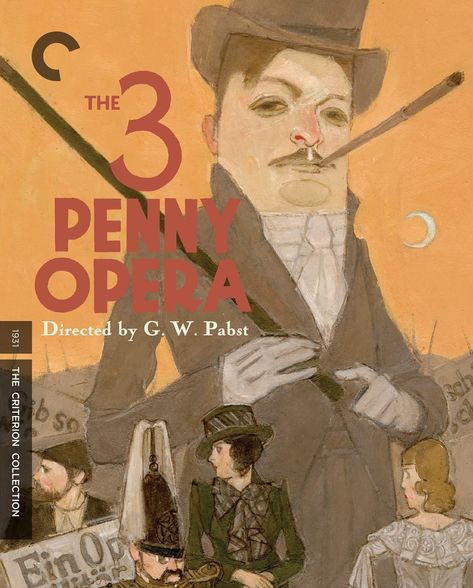
The National Recording Registry is a list of audio recordings selected for preservation by the head of the U.S. Library of Congress in consultation with the National Recording Preservation Board. Every year, 25 recordings that are deemed to be, in the words of the National Recording Preservation Act of 2000, “culturally, historically, or aesthetically significant” are added to the registry. The selections include music, speeches, radio broadcasts, interviews, audiobooks, podcast episodes, and other recorded sounds. To be eligible for inclusion on the registry, a recording must be at least 10 years old.
The instant I saw my featured song listed in the National Recording Registry, I stopped looking. Being one of my top five favorite songs, it was pointless to go any further.
My song choice for today’s theme is “Mack the Knife” by Bobby Darin. The song tells the story of a knife-wielding criminal of the London underworld along with a few prostitutes, some other colorful characters, missing money and cement bags (for the weight, naturally).
Released in 1959 by Bobby Darin, “Mack the Knife” was originally written in 1928 for Die Dreigroschenoper (Threepenny Opera), the German “play with music” composed by Kurt Weill with lyrics by Bertolt Brecht. But the history of “Mack the Knife” begins long before Brecht and Weill wrote the song. Their inspiration goes all the way back to 1728, to a British play called “The Beggar’s Opera” written by John Gay to mock the ruling classes. And Gay had some good precedents for the idea of writing an opera with a violent thief as the protagonist. After all, the Brits had already seen satirical anti-heroes ranging from Shakespeare’s Richard III to John Milton’s fabulously dangerous Satan in “Paradise Lost”.
When Brecht and Weill had great success with their German opera in the 1930s, people said it was an amazing play for the period – the pair of socialists successfully satirized serious enemies (like the Nazis, who banned the play in 1933) and made some sharp political points for their time. But a full 30 years later, Bobby Darin’s version of “Mack the Knife” became the most popular song in the U.S. – a jazzy little serial-killer socialist-opera ditty at the top of the charts.
Bobby Darin’s version of “Mack The Knife” is undoubtedly the most famous hit …. a cool, finger-snapping song about the notorious killer, thief and arsonist, MacHeath (AKA Mack the Knife). Bobby’s recording became a #1 hit in the US and UK and earned him two Grammy Awards – one for Record of the Year and another for Best New Artist. Bobby Darin was inducted into the Rock & Roll Hall of fame in 1990 and also won the Grammy Lifetime Achievement Award in 2010.
“Mack the Knife” is the 14th most popular song in Billboard Hot 100 history and was ranked #255 on Rolling Stone‘s list of the 500 Greatest Songs of All Time. It was inducted into the National Recording Registry in 2015. And it appears prominently on my playlist.
Here is the one and only Bobby Darin with the iconic “Mack The Knife”.
Lyrics
Oh, the shark, babe, has such teeth, dear
And it shows them pearly white
Just a jackknife has old MacHeath, babe
And he keeps it, ah, out of sight
You know when that shark bites with his teeth, babe
Scarlet billows start to spread
Fancy gloves, oh, wears old MacHeath, babe
So there’s never, never a trace of red
Now on the sidewalk, huh, huh, whoo sunny morning, un huh
Lies a body just oozin’ life, eek
And someone’s sneakin’ ’round the corner
Could that someone be Mack the Knife?
There’s a tugboat, huh, huh, down by the river don’tcha know
Where a cement bag’s just a-drooppin’ on down
Oh, that cement is just, it’s there for the weight, dear
Five’ll get ya ten, old Macky’s back in town
Now did ya hear ’bout Louie Miller? He disappeared, babe
After drawin’ out all his hard-earned cash
And now MacHeath spends just like a sailor
Could it be our boy’s done somethin’ rash?
Now Jenny Diver, ho, ho, yeah, Sukey Tawdry
Ooh, Miss Lotte Lenya and old Lucy Brown
Oh, the line forms on the right, babe
Now that Macky’s back in town
I said Jenny Diver, whoa, Sukey Tawdry
Look out to Miss Lotte Lenya and old Lucy Brown
Yes, that line forms on the right, babe
Now that Macky’s back in town
Look out, old Macky’s back
Source: LyricFind
Songwriters: Bertolt Brecht/Kurt Weill/Marc Blitzstein
Mack the Knife lyrics © ACUM Ltd., BMG Rights Management, Reservoir Media Management, Inc, Warner Chappell Music, Inc.
NB: Our friend Macky was a multi-tasking criminal … thief, arsonist, murderer, pimp; Jenny Diver, Lucy Brown and Suky Tawdry were all prostitutes. Lotte Lenya was in reality the wife of the composer, Kurt Weill and her name was attached to a character in an off-Broadway production. Louie Miller represents a would-be client of one of the prostitutes, who is murdered by MacHeath after drawing out money.
This is a clip from the “Threepenny Opera” movie featuring “Mack The Knife” in its original German .… quite a startling contrast to Bobby Darin’s version.
And just for fun, there’s this. I love these guys:
Big thanks to Jim for hosting another great Song Lyric Sunday and offering up a terrific theme this week; it gave me the opportunity to feature one of my greatest musical idols who I have admired and respected for more than 60 years.
Thanks for stopping by. See you on the flip side. 😎
NAR©2024
All text, graphics and videos are copyright for The Sicilian Storyteller, The Elephant’s Trunk and The Rhythm Section and is not for use by anyone without permission. NAR©2017-present.
Rockin’ In Isolation
Today’s theme at Song Lyric Sunday is all about songs with the lyrics “eerie, ghost, haunting, paranormal or spooky” as suggested by Di of pensitivity101.

There are any number of songs along these lines .… the pop hit “Spooky” by the Classic IV, the golden standard “Ghost Of A Chance” by Ella Fitzgerald or the classic cowboy legend “Ghost Riders In The Sky” by Johnny Cash, just to name three. However, I remembered a song from just four years ago and had it simmering on the back burner.
Today seemed like the right day to serve it up.
Since 2017, the Rolling Stones had been on the No Filter Tour but had to stop touring in 2020 due to the COVID 19 pandemic. They remotely performed at Global Citizen’s Together At Home concert on April 18, 2020, helping raise money for healthcare workers and the World Health Organization during the crisis.
The Stones had been working on new music in the recording studio before lockdown and one particular track really resonated with what we were all living through. On April 23, 2020, the band released “Living In A Ghost Town” online as a single for digital download and streaming. It was based on 2019 recording sessions and finished remotely, making this their first original material since 2012 and their first release since the 2016 cover album Blue & Lonesome. The band fast-tracked releasing the song due to its relevance to social distancing. While the original storyline of the song was about being a ghost after a plague, Jagger changed some of the lyrics to refer to the pandemic.
On July 3, 2020, “Living In A Ghost Town” topped the German singles chart; this made the Rolling Stones the oldest artists ever to reach #1 on the chart! It also signified the longest gap between two #1 singles in Germany since “Jumpin’ Jack Flash” made it to the top slot in 1968. The song only reached #61 on the UK singles chart but fared much better in the US, peaking at #6 on Billboard’s Bubbling Under Hot 100 singles and #3 on Billboard’s Hot Rock & Alternative songs.
Recorded in Los Angeles, London and in isolation, my feature song today is “Living In A Ghost Town” by the Rolling Stones.
Lyrics
Whoa, oh
Whoa, oh
I’m the ghost
Living in a ghost town
I’m a ghost
Living in a ghost town
You can look for me
But I can’t be found
You can search for me
I had to go underground
Life was so beautiful
Then we all got locked down
Feel a like ghost
Living in a ghost town, yeah
Once this place was humming
And the air was full of drumming
The sound of cymbals crashing
Glasses were all smashing
Trumpets were all screaming
Saxophones were blaring
Nobody was caring if it’s day or night (Whoa, oh)
Whoa, oh
I’m a ghost
Living in a ghost town
I’m going nowhere
Shut up all alone
So much time to lose
Just staring at my phone
Every night I am dreaming
That you’ll come and creep in my bed
Please let this be over
Not stuck in a world without end
Whoa, oh
Whoa, oh
Whoa, oh
Whoa, oh
Preachers were all preaching
Charities beseeching
Politicians dealing
Thieves were happy stealing
Widows were all weeping
No beds for us to sleep in
Always had the feeling
It will all come tumbling down
I’m a ghost
Living in a ghost town
You can look for me
But I can’t be found
Whoa, oh
We’re all living in a ghost town (Whoa, oh)
Oh, living in a ghost town (Whoa, oh)
We were so beautiful (Whoa, oh)
I was your man about town (Whoa, oh)
Living in this ghost town (Whoa, oh)
Ain’t having any fun (Whoa, oh)
If I want a party (Whoa, oh)
It’s a party of one
Whoa, oh
Whoa, oh
Source: Musixmatch
Songwriters: Michael Phillip Jagger/Keith Richards
Big thanks to Jim for hosting another great Song Lyric Sunday and to Di for her excellent theme suggestion.
Thanks for stopping by. See you on the flip side. 😎
NAR©2024
All text, graphics and videos are copyright for The Sicilian Storyteller, The Elephant’s Trunk and The Rhythm Section and is not for use by anyone without permission. NAR©2017-present.
John and Cynthia and Yoko and May: Strained Affairs
Written for Jim’s Song Lyric Sunday where the theme
this week is all about songs that incorporate whistling

“I didn’t mean to hurt you; I’m just a jealous guy.”
For all his jokes, frenetic antics and mugging for the camera, John Lennon was a quiet and insecure man, an ardent peace-lover whose young life was filled with much sadness, great depth and many demons. He was brilliant, an extraordinary talent and, all too often, he demonstrated a sharp-tongued mean spirit and jealous streak.
According to George Harrison, his friend John could be a “saint or a total bastard”.
With a sea-faring, mostly AWOL father and a free-spirited mother whose accidental death traumatized him for years, John was raised by his Aunt Mimi and Uncle George. His mother’s memory would later serve as a major creative inspiration.
John Lennon met Cynthia Powell in 1957, when they were students at the Liverpool College of Art. Although Powell was intimidated by Lennon’s attitude and appearance, she heard that he was obsessed with the French actress Brigitte Bardot, so she dyed her hair blonde. Lennon asked her out, but when she said that she was engaged, he shouted, “I didn’t ask you to fuckin’ marry me, did I?” She often accompanied him to Quarrymen gigs and travelled to Hamburg with Paul McCartney’s girlfriend to visit him. Recalling his reaction when he learned that Cynthia was pregnant, Lennon said, “There’s only one thing for it Cyn. We’ll have to get married.” And they did; their son Julian was born a few months later.
Cynthia attributed the start of the marriage breakdown to John’s use of LSD and she felt that he slowly lost interest in her. When the group travelled by train to Wales in 1967, a policeman did not recognize Cynthia and stopped her from boarding. I guess no one .… including John …. bothered to ID her! She later recalled how the incident seemed to symbolize the end of their marriage. After spending a holiday in Greece, Cynthia arrived home to find John sitting on the floor with Yoko Ono in bathrobes; she left the house to stay with friends, feeling shocked and humiliated. A few weeks later, she received notice that Lennon was seeking a divorce on the grounds of adultery while she was away in Greece and he wanted custody of Julian. After negotiations, Lennon capitulated and agreed to let Cynthia divorce him.
John and Yoko were married and they became even more inseparable; to the surprise and consternation of everyone within the Beatles’ organization, Yoko accompanied John to the recording studio …. an undeniable first. She was a quiet but constant presence and John only had eyes for her.
After a couple of years, May Pang entered their lives as their personal assistant. About three years later, Ono confided in Pang that her marriage to Lennon had become strained and she suggested Pang reach out to John as a “sexual distraction” for him. Pang agreed; she and John soon left for Los Angeles, beginning an 18-month period John later called his “lost weekend”. ” Pang encouraged Lennon to develop regular contact with Julian, whom he had not seen for two years, as well as his former bandmates and friends.
Much to Yoko Ono’s chagrin, the “diversion” turned into a relationship. John and May Pang considered buying a house together and he refused to accept Yoko’s telephone calls. He finally agreed to meet Yoko, who claimed she had found a cure for smoking. After the meeting with Yoko, John failed to return home or call Pang. When Pang telephoned the next day, Ono told her that Lennon was unavailable because he was exhausted after a hypnotherapy session. Two days later, Lennon told Pang that his separation from Ono was now over, causing Pang to speculate that Lennon had been brainwashed (!) as a result of his hypnotherapy.
What a convoluted mess among such allegedly forward-thinking people! John and Yoko remained married until his death in 1980; they are the parents of musician Sean Lennon. Yoko Ono never remarried.
“I didn’t want to hurt you, I’m just a jealous guy.”
Those haunting lyrics from John Lennon’s timeless song, “Jealous Guy”, uncover the darker side of his iconic relationship with Yoko Ono. They are words that have rung true to anybody with insecurities and obsessions …. likely why it’s one of Lennon’s most enduring tracks. It’s also my favorite Lennon solo piece.
John Lennon began writing the song in 1968 as “Child of Nature” while with the Beatles during their spiritual retreat in India. The demo of “Child of Nature” featured Lennon’s double-tracked vocal and an acoustic guitar. Early the following year, he revisited the song as “On the Road to Rishikesh” during the Get Back sessions. Eventually, the lyrics were scrapped and replaced by the now well-known “Jealous Guy” lyrics for Imagine.
In “Jealous Guy”, John sings of his envious streak that would often result in tumult between him and Yoko; he admitted that jealousy would regularly dictate how irrational he’d behave either around her or without her. The song was never released as a single during John’s lifetime. It became an international hit in a version by Roxy Music in early 1981, the year after John’s death.
“Jealous Guy” is one of the most commonly recorded Lennon songs, with at least 92 cover versions. In November 1988, the single peaked in the United States at #22 on the Hot Adult Christian chart and reached #80 on the Billboard Hot 100 in conjunction with the release of the documentary film “Imagine: John Lennon”.
This is “Jealous Guy” by John Lennon
Lyrics
… I was dreaming of the past
And my heart was beating fast
I began to lose control
I began to lose control
… I didn’t mean to hurt you
I’m sorry that I made you cry
Oh no, I didn’t want to hurt you
I’m just a jealous guy
… I was feeling insecure
… You might not love me anymore
… I was shivering inside
I was shivering inside
… I didn’t mean to hurt you
I’m sorry that I made you cry
Oh no, I didn’t want to hurt you
I’m just a jealous guy
… I didn’t mean to hurt you
I’m sorry that I made you cry
Oh no, I didn’t want to hurt you
I’m just a jealous guy
… I was trying to catch your eyes
Thought that you was trying to hide
… I was swallowing my pain
I was swallowing my pain
… I didn’t mean to hurt you
I’m sorry that I made you cry
Oh no, I didn’t want to hurt you
I’m just a jealous guy
I’m just a jealous guy
I’m just a jealous guy
Source: Musixmatch
Songwriter: John Winston Lennon
Jealous Guy lyrics © Lenono Music
Bonus track. This is “Child of Nature” (Esher Demo) by The Beatles. (Esher is the town in England where George Harrison’s home Kinfauns was located and where the demos were recorded.)
Released November 22, 1968
Composer/Lyricist: John Lennon
Producer(s): George Harrison, John Lennon, Paul McCartney, Ringo Starr
Studio Personnel: Giles Martin, Mixer
Very big thanks to Jim Adams for hosting another great weekly Song Lyric Sunday.
Thanks for stopping by. See you on the flip side. 😎
NAR©2024
All text, graphics and videos are copyright for The Sicilian Storyteller, The Elephant’s Trunk and The Rhythm Section and is not for use by anyone without permission. NAR©2017-present.
Strings Attached
Today’s theme at Song Lyric Sunday is all about songs that mention toys. Thanks to Barbara from teleportingweenaghostmmnc for the suggestion.

“Come, I want to show you my playroom” He stands, holding out his hand. I let him lead me back out to the corridor. On the right of the double doors, where we came in, another door leads to a staircase. We go up to the second floor and turn right. Producing a key from his pocket, he unlocks yet another door and takes a deep breath. “You can leave anytime. It’s fine, whatever you decide.” I tell him to just open the damn door. He opens the door and stands back to let me in. I gaze at him once more. I so want to know what’s in there. Taking a deep breath, I walk in. The first thing I notice is the smell of leather. Suspended from the ceiling is an iron grid, eight foot square at least, and from it hang all manner of ropes, chains, shackles. There’s a startling assortment of paddles, whips, riding crops and funny-looking feathery implements. And it feels like I’ve time-traveled back to the sixteenth century and the Spanish Inquisition.” ~ Excerpts from Chapters 6 & 7, Fifty Shades of Grey, Book 1
The book gets even more interesting …. so I’m told.
There are toys and then there are toys.
There’s a classic soul ballad that speaks to the powerlessness of love. The lyrics describe a person who is willing to do whatever their partner wants them to and be completely under their control. It’s a sensual, titillating, smooth song about the all-encompassing nature of love. But is it “love” or something else, something more? The singer expresses that he would do anything to make his partner happy and would go to any lengths to remain in the relationship. He is a toy, a puppet in her hands.
I wonder if there’s a “safe word” mentioned in the lyrics of this song. “Red” is a common safe word, while “pickle” and “radish” are also popular …. so I’m told. In this song the safe word would probably be “string”, but I’m just speculating.
My featured song for today is “I’m Your Puppet“, a song written by Dan Penn and Spooner Oldham. The best known version is the one recorded by James & Bobby Purify which reached #5 on the US R&B chart and #6 on the Billboard Hot 100 in 1966. The single was nominated for a Grammy Award for Best R&B Performance by a Duo or Group with Vocals in 1967. The song was featured on their 1967 album, James & Bobby Purify.
The duo released a re-recorded version as a single in 1976 which reached #12 on the UK Singles Chart. The single ranked #46 on the Billboard Year-End Hot 100 singles of 1976.
It’s been a long time since I heard this song but when the theme of “toys” was suggested, it was the first song I thought of – not “Red Rubber Ball” or “Pinball Wizard” or even “Puff The Magic Dragon”. And after listening …. really listening and reading the lyrics …. my eyebrows raised a few times. What’s going on here? Is it the sweet and charming song I thought it was almost 60 years ago? You be the judge.
From the album James & Bobby Purify, this is “I’m Your Puppet”.
Lyrics
Pull the string and I’ll wink at you, I’m your puppet
I’ll do funny things if you want me to, I’m your puppet
I’m yours to have and to hold
Darling you’ve got full control of your puppet
Pull another string and I’ll kiss your lips, I’m your puppet
Snap your finger and I’ll turn you some flips, I’m your puppet
Listen, your every wish is my command
All you gotta do is wiggle your little hand
I’m your puppet, I’m your puppet
I’m just a toy, just a funny boy
That makes you laugh when you’re blue
I’ll be wonderful, do just what I’m told
I’ll do anything for you
I’m your puppet, I’m your puppet
Pull them little strings and I’ll sing you a song, I’m your puppet
Make me do right or make me do wrong, I’m your puppet
Treat me good and I’ll do anything
I’m just a puppet and you hold my string, I’m your puppet
Darling, darling, pull the strings, let me sing you a song any day
I’m your puppet baby, you can sing for me all night long
Honey, yeah
Source: LyricFind
Songwriters: Dan Penn / Spooner Oldham
I’m Your Puppet lyrics © Sony/ATV Music Publishing LLC
Big thanks to Jim for hosting another great Song Lyric Sunday.
Thanks for stopping by. See you on the flip side. 😎
NAR©2024
All text, graphics and videos are copyright for The Sicilian Storyteller, The Elephant’s Trunk and The Rhythm Section and is not for use by anyone without permission. NAR©2017-present.
How Green Was My River
Today’s theme at Song Lyric Sunday is all about songs
that reached #2 on the charts but never got to #1.
Be sure to stop by and read Jim’s post, “Fell Short“.
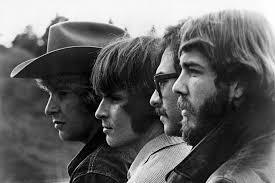
On November 21, 1968, I had the pleasure of seeing the debut performance of Creedence Clearwater Revival at the Fillmore East in NYC; I was actually there for the headliners, Deep Purple, but that’s another story. This post is all about CCR.
Here’s one indisputable fact: Creedence Clearwater Revival was one of the biggest commercial successes of the late 1960s and early ’70s. During a time when psychedelic rock, R&B, Motown soul, funk and metal were all on the rise, CCR’s unique blend of driving ’50s-style R&R and classic Americana imagery made them one of the biggest standouts of the era. With John Fogerty’s singular voice and songwriting skill, CCR was in a league all its own, and audiences on both sides of the Atlantic responded by making them a huge draw for albums, singles, and live performances.
Here’s another indisputable fact: Creedence Clearwater Revival has had the most #2 singles on the Billboard Hot 100 without ever having a #1 hit. Somehow, the band that defined their generation wasn’t able to ever sit atop the singles mountain. If nothing else, CCR’s lack of #1 singles is a testament to how fickle the Hot 100 chart can be and how lucky an artist has to be in order to score a #1 hit. Month after month for years on end, CCR would throw classic song after classic song out into the world, scoring nine top ten hits and five #2 singles without ever cracking the top of the chart.
The lack of a #1 hit never seemed to affect the band’s popularity, however, as they landed two #1 albums with Green River and Cosmo’s Factory. The band continued to sell out large venues as a live act, and its last top 10 hit ‘Sweet Hitch-Hiker’ came even as the band was falling apart. No one could say that CCR wasn’t popular enough to get a #1 song, but for whatever reason, they could never quite scale the mountain.
After Proud Mary and Bad Moon Rising stalled out at #2, John Fogerty believed he had the perfect answer: the title track to the band’s upcoming album Green River. But while the album went all the way to #1, the song “Green River” once again got stuck at #2.
To add insult to injury, CCR was beaten out at #1 by a group that wasn’t even a real band! The Archies were based on the characters from the Archie Comics series, which had its own cartoon series on CBS at the time. Manager Don Kirshner originally created The Monkees but was frustrated that the members began taking control of the project. Cartoons couldn’t talk back so Kirshner got session musicians and songwriters to fill in the rest. Just in case you’re wondering, The Monkees have three #1 hits with ‘I’m A Believer’, ‘Last Train To Clarksville’, and ‘Daydream Believer’.
FYI – the remaining two CCR songs that stalled at #2 were both double-A sides: “Travelin’ Band/Who’ll Stop The Rain” and “Lookin’ Out My Back Door/Long As I Can See The Light”. They were beat out by Simon & Garfunkel’s “Bridge Over Troubled Waters” and Marvin Gaye/Tammi Terrell’s “Ain’t No Mountain High Enough”, respectively.
From July 1969 this is Credence Clearwater Revival with “Green River’ from the album of the same name.
LYRICS
Well, take me back down where cool water flows, y’all
Oh, let me remember things I love
Stoppin’ at the log where catfish bite
Walkin’ along the river road at night
Barefoot girls dancin’ in the moonlight
I can hear the bullfrog callin’ me, oh
Wonder if my rope’s still hangin’ to the tree
Love to kick my feet way down the shallow water
Shoo fly, dragon fly, get back to your mother
Pick up a flat rock, skip it across Green River
Well
Up at Cody’s camp I spent my days, Lord
With flat car riders and cross-tie walkers
Old Cody Junior took me over
Said, “You’re gonna find the world is smoldering
And if you get lost, come on home to Green River”
Well
Come on home
WRITERS: John Cameron Fogerty
PUBLISHERS: Lyrics © CONCORD MUSIC PUBLISHING LLC
Although the band members were only together for four years, they managed to accomplish more than many artists do in their entire career – releasing seven studio albums (five of which were on the Billboard Top Ten), and a seemingly endless string of memorable singles (including nine Top Ten hits). The group also performed a historic headlining set at Woodstock and toured the world before disbanding in 1972. In 1993 they were inducted into the R&R Hall of Fame. CCR’s music endures today, on the radio and regularly in films and TV shows. Having sold over 30 million albums in the US alone, Creedence received a rare Diamond certification from the RIAA in 2016, marking 10 million units in sales for their 1976 compilation album, Chronicle: The 20 Greatest Hits.
Big thanks to Jim for hosting another great Song Lyric Sunday.
Thanks for stopping by and checking out my posts here on Song Lyric Sunday.
See you on the flip side. 😎
All text, graphics and videos are copyright for The Sicilian Storyteller, The Elephant’s Trunk and The Rhythm Section and is not for use by anyone without permission. NAR©2017-present.
Ground Control To Major Bowes: Not The Original Amateur Hour
Today’s theme at Song Lyric Sunday is about songs by performers on American Idol.
In case you’re wondering about the title of today’s post, The Original Amateur Hour began on radio in 1934 as “Major Bowes’ Amateur Hour” and ran until the 1946 death of its creator, Major Bowes. Ted Mack, a talent scout who had directed the show under Bowes, revived it in 1948 for ABC Radio and the DuMont Television Network. The show lasted on radio until 1952 and until 1970 on television, where it ran on all four major networks, ending as a Sunday afternoon CBS staple. A success in the early days of television, the program set the stage for numerous programs seeking talented stars, from The Gong Show to Star Search to American Idol to America’s Got Talent.

On June 11, 2002 a new type of TV show aired. Some called it reality TV while others dubbed it a talent show; critics and TV executives alike said it was “unparalleled in broadcasting history …. the most impactful show in the history of television”. As a lover of music and talent and competition, which is what this show was all about, I called it fabulous! For 15 years my husband and I watched together each week as contestants auditioned, performed and were either sent on to the next round or sent packing.
The show, of course is American Idol and the only reason we stopped watching regularly after 15 years was our overall dislike of the new panel of judges. After 22 years, the show is still alive and well and making Simon Cowell and Ryan Seacrest a ton of money! Here’s something you may not know!
Idol has spawned 345 Billboard chart-toppers and a platoon of pop idols while remaining a TV ratings institution. For an unprecedented eight consecutive years, from the 2003-04 television season through the 2010-11 season, either its performance show or results show was ranked #1 in US television ratings – not bad at all for a little talent show.
While there are many American Idol winners who have gone on to become major music stars, I have often felt not winning (while spirit-crushing at the time) was just the impetus a young singer needed to become a household name; Adam Lambert, Jennifer Hudson, Katharine McPhee, Chris Daughtry, Clay Aiken and Kelly Pickler are perfect examples of artists whose loss on Idol was exactly what they needed to jumpstart their careers. Such is the case for my featured performer today, one of my personal favorite also-rans from American Idol.
Haley Reinhart first rose to prominence after placing third in the 10th season of American Idol. In July 2011, Reinhart signed a recording deal with Interscope Records. Her debut album, Listen Up!, was released on May 22, 2012, to critical acclaim and she subsequently became the first AI alumna to perform at Lollapalooza. She is the only Season 10 contestant who has over one million views on six of her YouTube performance videos: her renditions of Adele’s “Rolling In the Deep”, Elton John’s “Bennie and the Jets”, Ben E. King’s “I (Who Have Nothing)” and her version of “House of the Rising Sun”. In addition, her performance of Billie Holiday’s “God Bless The Child” hit one million views in March 2014 and the video of her American Idol audition performance of the Beatles’ “Oh! Darling” also reached one million views in March 2016. Reinhart was the only contestant in Season 10 who received three standing ovations from the judges in consecutive weeks for “House of the Rising Sun”, “I (Who Have Nothing)” and Led Zeppelin’s “What Is and What Should Never Be”.
Haley Reinhart garnered widespread recognition in 2015 for performing and touring with Scott Bradlee’s Postmodern Jukebox, my favorite part of her career so far. Her most notable collaboration with the band on a jazz cover of Radiohead’s “Creep” spent 58 consecutive weeks on Billboard’s Jazz Digital Songs chart and received high praise from critics. In the same year, she gained additional notice when her cover of Elvis Presley’s “Can’t Help Falling In Love” which was used in a television commercial, became a viral sensation, peaked at #16 on the US Adult Contemporary chart and was later certified Platinum by the Recording Industry Association of America on July 31, 2023. Reinhart won a Cannes Lion for Entertainment and a Clio Award for the song in 2016. Additionally, she made her voice acting debut as Bill Murphy in the Netflix animated comedy, “F Is For Family” on December 18, 2015. She reprised the role as a main cast member in the series’ second, third, fourth, and fifth seasons.
Let’s get back to “Bennie and Jets”. E! Online ranked Reinhart’s cover of as the series’ 14th best performance. TVLine ranked the performance as the 6th best in Idol history and BuzzFeed ranked it 1st on their list of the “17 Most Iconic American Idol Performances of All Time.”
I’ve never really cared for “Bennie and the Jets” but what do I know?! Since Haley Reinhart’s performance garnered so much praise and coverage, I’m featuring it today. You’ll see the judges thought it was ”A-M-A-Z-I-N-G!”
Live from American Idol’s results night, this is Haley Reinhart with “Bennie and the Jets”.
LYRICS
Hey kids, shake it loose together
The spotlight’s hitting something
That’s been known to change the weather
We’ll kill the fatted calf tonight
So stick around
You’re gonna hear electric music
Solid walls of sound
Say, Candy and Ronnie, have you seen them yet
Ohh, but they’re so spaced out, B-b-b-b Bennie and the Jets
Oh but they’re weird and they’re wonderful
Oh Bennie she’s really keen
She’s got electric boots a mohair suit
You know I read it in a magazine
Oh oh, B-b-b-b Bennie and the Jets
Bennie, Bennie and the Jets
Hey kids, plug into the faithless
Maybe they’re blinded
But Bennie makes them ageless
We shall survive, let us take ourselves along
Where we fight our parents out in the streets
To find who’s right and who’s wrong
Say, Candy and Ronnie, have you seen them yet
Ohh, but they’re so spaced out, B-b-b-b Bennie and the Jets
Oh but they’re weird and they’re wonderful
Oh Bennie she’s really keen
She’s got electric boots a mohair suit
You know I read it in a magazine
Oh oh, B-b-b-b Bennie and the Jets
Bennie, Bennie and the Jets
Hey kids, plug into the faithless
Maybe they’re blinded
But Bennie makes them ageless
We shall survive, let us take ourselves along
Where we fight our parents out in the streets
To find who’s right and who’s wrong
Say, Candy and Ronnie, have you seen them yet
Ohh, but they’re so spaced out, B-b-b-b Bennie and the Jets
Oh but they’re weird and they’re wonderful
Oh Bennie she’s really keen
She’s got electric boots a mohair suit
You know I read it in a magazine
Oh oh, B-b-b-b Bennie and the Jets
Bennie, Bennie, Bennie, Bennie and the Jets
Bennie and the Jets
Source: LyricFind
Songwriters: Bernie Taupin / Elton John
Bennie and the Jets lyrics © Universal Music Publishing Group
This is Haley Reinhart performing “Oh! Darling”, her audition for American Idol. Steven Tyler is obviously a fan!
And here is Haley the way I like her best .… singing Radiohead’s “Creep” with Postmodern Jukebox.
Big thanks to Jim for hosting another great Song Lyric Sunday and for allowing be to take up residence here for the last 10 weeks. I had a great time coming up with the themes but even I got tired of seeing my name week after week on Jim’s SLS posts, I can just imagine how you feel!
Thanks for stopping by. See you on the flip side. 😎
NAR©2024
All text, graphics and videos are copyright for The Sicilian Storyteller, The Elephant’s Trunk and The Rhythm Section and are not for use by anyone without permission. NAR©2017-present.
 The Elephant's Trunk