The Motown Sound has something extra-special about it. Berry Gordy, Jr. knew people would be listening on their car stereos and transistor radios and he was going to do what it took to make songs sound good and memorable. Even if you couldn’t put your finger on it, when a Motown song came on, baby, you knew it. Still do.
Motown’s first great girl group, TheMarvelettes, consisted of four school friends who were only 14 and 15 years old; some of their early hits were written by the girls themselves. When I was 14, I was busy practicing writing my signature as Mrs. George Harrison! What were you doing at 14?
“Please Mr. Postman”, recorded in 1961, was one of the first #1 singles by an all-female vocal group and is easily Motown’s best single to date – a song with a killer tune and a lyrical hook which listeners around the world instantly latched on to.
Despite their successful start, the group was eclipsed in popularity by the Supremes, with whom they shared an intense rivalry. The Marvelettes made a comeback in 1966 with several hits but struggled and stopped performing together in 1969. The group disbanded for good in 1970.
Kudos to TheMarvelettes for paving the way for future girl groups!
Here now is the fantastic sound of “Please Mr. Postman” by TheMarvelettes” with a young Marvin Gaye playing the drums.
And this is what was on the B Side: “So Long Baby”
Thanks for joining me today for a dose of Monday Motown Magic.
The theme today at Jim Adams’ Song Lyric Sunday is to write about a duet(s) featuring two prominent performers.
Three years ago, Sir Tom Jones …. quite possibly the Sexiest Man Ever …. and Helene Fischer …. Die Königin der deutschen Popmusik (The Queen of German Pop Music) …. got together on Helene’s show where the duo put on an unforgettable performance that has been viewed over 21 million times on YouTube. Backed by a brass band and a dazzling stage show, they treated the audience to a seductive duet, proving that Tom Jones’ voice is still worthy of the halls of fame. Even in his 80s, Tom is leaving fans in awe with his unbelievably strong and silky smooth voice. Not many performers can stand up to that.
Helene Fischer became one of the most popular musical artists in Germany after making her recording debut in 2006. She consistently racked up hits in Germany, Austria, and Switzerland before her 2013 album “Farbenspiel” (“Play of Colors”) became one of the most successful in German history. She followed it with still more number one records, including a four-week stay at the top of the album chart with 2017’s “Helene Fischer”.
Today’s song was released in 1999 in several European countries; the following year it was issued across the rest of Europe where the track served as the second single from Jones’ 34th album, ”Reload”. Commercially, it reached number one in France and Switzerland while becoming a top-three hit in Austria, Germany, Iceland, Italy, Spain, the United Kingdom.
Here is the Sexiest Man Ever along with the Queen of German Pop Music with their sizzling duet, “Sex Bomb”.
LYRICS
Spy on me, baby, use satellite Infrared to see me move through the night Aim, gonna fire, shoot me right I’m gonna like the way, the way that you fight
Now you found the secret code I use To wash away my lonely blues And I can’t deny or lie ‘Cause you’re the only one who makes me fly
Sex bomb, sex bomb, you’re my sex bomb And you can give it to me when I need to be turned on Sex bomb, sex bomb, you’re my sex bomb And, baby, you can turn, turn me on (woo)
Hey!
Don’t get me wrong, ain’t gonna do you no harm This bomb’s for lovin’, you can shoot it far I’m your main target, come and help me ignite Lovestruck, holding you tight
Make me explode, although you know The route to go to sex me slow Yes, I must react to claims of those Who say that you are not all that
Sex bomb, sex bomb, you’re my sex bomb And you can give it to me when I need to come along Sex bomb, sex bomb, you’re my sex bomb And, baby, you can turn me on (yeah)
Sex bomb, sex bomb, you’re my sex bomb And you can give it to me when I need to come along Sex bomb, sex bomb, you’re my sex bomb And, baby, you can turn me on (oh right)
You can give me more and more, counting up the score You can turn me upside down and inside out You can make me feel the real deal I can give it to you any time because you’re mine
Sex bomb, sex bomb, you’re my sex bomb And you can give it to me when I need to come along Sex bomb, sex bomb, you’re my sex bomb And, baby, you can turn me, baby, you can turn me on
Sex bomb, sex bomb, you’re my sex bomb And you can give it to me when I need to come along Sex bomb, sex bomb, you’re my sex bomb Baby, you can turn me on
Baby, you can turn me on And, baby, you can turn me on Baby, you can turn me on And, baby, you can turn me on
“Europa (Earth’s Cry, Heaven’s Smile)” Written by: Santana/Coster Recorded: 1976 Producer: David Rubinson Engineer(s): David Rubinson, Fred Catero Assistant Engineer: Susie Foote
Released: March 26, 1976
Available on: Amigos
Personnel: Carlos Santana – lead guitar Neal Schon – rhythm guitar David Brown – bass Greg Rolie – keyboards Michael Schrieve – drums Armando Peraza – percussion Jose Chepito Areas – timbales
Upon seeing a friend suffering a bad experience while high on mescaline, Santana composed a piece titled “The Mushroom Lady’s Coming to Town“. This precursor contained the first lick to “Europa“. The piece was put away and not touched for some time. When Santana was touring with Earth, Wind & Fire in Manchester, England, he played the tune, this time with songwriter Tom Coster who helped him with some of the chords, and a new song was born. It was renamed as “Europa (Earth’s Cry Heaven’s Smile)”.
The track was featured in the 2004 film “Shall We Dance?” and has become one of Santana’s most beloved songs with its combination of Latin rhythms, blues and jazz influences.
This is Santana with “Europa”
May your Saturday be smooth sailing. Thanks for stopping by.
Sixty-two years after the Beatles released ‘Love Me Do” – the first of many songs written by John Lennon and Paul McCartney – their offspring have come together to bring back their tune-making magic.
Sean Ono Lennon and James McCartney have joined forces on a song cowritten by them and released by McCartney called “Primrose Hill”. Named for a public park in London, this is the first-ever collaboration by Lennon & McCartney, Part 2. And if any song could sound just like taking a bittersweet stroll in the park with nothing but longing memories, then this one pretty much captures it.
There’s instantly something familiar about it but it never seems to fall into Beatles mimicry. Nor does it ever reach the heights of Beatles transcendence …. I mean, how could it?
Let me know what you think of this rebirth of Beatles music.
This is “Primrose Hill”, co-written by Lennon & McCartney, 2nd Generation.
Welcome to Birthday Thursdays! Each week I will feature someone from the world of music whose birthday falls on this day. There won’t be any chit chat from me, no facts and figures – just some great tunes (and an occasional surprise). Check it out right here every Thursday and enjoy the music.
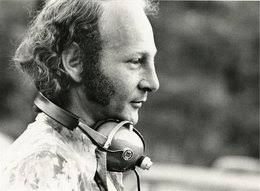
Happy Birthday to Paul A. Rothchild (Record Producer) Born April 18, 1935 inBrooklyn, New York
Written for Glyn’s Mixed Music Bag #16,where we are asked to write abouta song by a group or solo singer beginning with the letter G or H.
Besides my husband, during my lifetime I’ve been madly in love with three other men: George Harrison, Daryl Hall and Rick Springfield. They were all so very talented, gorgeous and sexy! I would cut out their pictures from music magazines, make scrapbooks, hang posters in my bedroom and mail them letters. My missives were never answered but I’m sure that’s only because they were so busy making music. I would imagine myself as Mrs. Harrison or Hall or Springfield, which got weird because by the time Daryl Hall and Rick Springfield were dominating the billboard charts I had been married for about 10 years! Things could have gotten strained between me and my husband during that time but they didn’t because he’s a very understanding, realistic man and didn’t feel threatened at all. It also didn’t hurt that I had about as much chance of meeting Daryl or Rick as I did winning the Miss Universe pageant.
Well, dear George has passed away but Daryl and Rick are very much alive and I bet they’re kicking themselves for not answering my letters seeing as how I’m now such a bigshot storyteller, poet and music blogger! I saw Rick recently on TV and I must say I was shocked; maybe it was the lighting but he really hasn’t aged well and someone should gift him with a jar of Crepe Erase. But Daryl is another story; he still sounds fantastic, looks gorgeous and is one big hunk of burning love. And what’s more …. Daryl’s Garage where he does live shows and podcasts is 90 minutes from where I live and his house in Connecticut is only one hour away. (We stalkers fans have to stay on top of things like that!) I just might get my “I ❤️ Daryl Hall Tank Top” autographed after all!
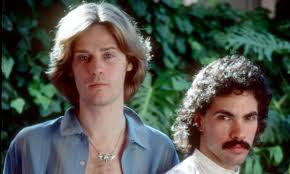
Since the letters for Glyn’s April MMB are G and H, I immediately wrote about George Harrison last week. Unfortunately, Rick Springfield is out of luck and will have to wait another 6 months before I can write about him. But no worries! You can all breathe a sigh of relief because today is all about Daryl Hall (and some other guy named John Oates).
Did you know that Daryl Hall & John Oates are the number-one selling duo in music history? They’re bigger than Simon & Garfunkel, Sonny & Cher, Ike & Tina Turner, Sam & Dave, The Righteous Brothers, Loggins & Messina and The Everly Brothers. (The statistics are impressive and are readily available on Wiki, if you’re interested.) During their time together (starting in 1970), they released 18 studio albums and 63 singles. They also broke up their act and got back together numerous times until October 2022 when they officially called it quits; sadly, they are currently in the middle of an ugly legal battle. But what sweet music they made together!
When the original version of this song first came out, I was a newlywed and I thought this was possibly the sexiest, most titillating and steamy subject for a song I’d ever heard. It’s the story of an affair between a married man and his equally married lover who meet every day at the same café where they hold hands and whisper sweet words of love. They know their affair is wrong but it’s much too strong to stop.
Some of you may recall that I wrote about this song a while back for Jim Adams’ Song Lyric Sunday; it’s just so nice, I had to feature it twice! You may also remember that the original singer of this song is a guy named Billy Paul who recorded his song in 1972. So why feature a cover of someone else’s song and not an original Hall & Oates song? Because it’s a great song and after all these years, I still “have a thing going on” for Daryl Hall.
For all the obvious reasons, here is my pick of the day by Hall & Oates …. from 2003 it’s “Me And Mrs. Jones”.
Well, no offense John Oates, but three’s a crowd and for me there’s only room for Daryl. He’s certainly come a long way and still has plenty of mileage left in a career that’s taken him from the streets of Philly to the halls of R&R in Cleveland. And the best is yet to come …. especially for me. My hubby, who isn’t the least bit threatened by the likes of Daryl Hall, is taking me to see him live, up-close and personal at the Mohegan Sun arena in July! Now, I just need to find that old tank top …. and you better believe I will wear it!
Thanks to Glyn for another great Mixed Music Bag and thank you for stopping by.
See you on the flip side. 😎
PS: I almost forgot! For all you purists reading this right now, I simply could not leave without playing one Hall & Oates original; after all, they are the #1 selling duo in music history! This song debuted on the Billboard Top 40 on February 5, 1977 at #38 and by the end of March it had become Hall & Oates’ first of six #1 singles on the Billboard Hot 100. At the end of 1977, Billboard ranked it as the 23rd biggest hit of the year. From the album Bigger Than Both Of Us, here is Hall & Oates’ first #1 hit, “Rich Girl”.
One of the biggest hits in 1970 for the Canadian group The Guess Who was a song that seemingly warned against getting involved with American women. However, songwriter Burton Cummings said that it was simply his way of saying he preferred Canadian girls. Whatever the meaning, Lenny Kravitz tapped into the song’s magnetism and added some guitar theatrics in his 1999 remake that has since become a cover version that stands alongside the original. The song was, of course, “American Woman”.
The single version by The Guess Who reached #1 and held on for three weeks on both the US Billboard Hot 100 and the Canadian RPM magazine singles chart. Kravitz covered the song for the soundtrack of “Austin Powers: The Spy Who Shagged Me”. When it was released as a single, it reached #49 on the US Billboard Hot 100. The Guess Who joined Kravitz and his band for a live performance of “American Woman” at the 1999 MuchMusic Video Awards in Toronto.
From 1970, here are The Guess Who with “American Woman”
And this is how it sounded when Lenny Kravitz released his version in 1999.
That’s today’s Twofer Tuesday! Thanks for stopping by.
The Motown Sound has something extra-special about it. Berry Gordy, Jr. knew people would be listening on their car stereos and transistor radios and he was going to do what it took to make songs sound good and memorable. Even if you couldn’t put your finger on it, when a Motown song came on, baby, you knew it. Still do.
Smokey Robinson was the lead singer of a band called The Miracles …. five teenaged friends from Detroit, Michigan. He produced, wrote and sang several of Motown’s most memorable hits including the label’s first smash song, “Shop Around” in 1960. A year later, “Please Mr. Postman”, by The Marvelettes, was the label’s first No. 1 song. It would not be the last.
Let’s begin today’s musical journey with The Miracles’ first smash hit – a song about a mother giving advice to her grown son on how to find a woman worthy of being a girlfriend or wife.
From 1960, written by Smokey Robinson and Berry Gordy, here’s “Shop Around” by The Miracles.
And this is what was on the B side – “Who’s Lovin’ You”. That’s right …. this was not originally done by the Jackson 5!
Thanks for joining me today for Monday Motown Magic.
The theme today at Jim Adams’ Song Lyric Sunday is to write about songs with the words “hot, burning, fire or blazing”.
If reports in recent years are to be believed, former Journey singer Steve Perry and keyboardist Jonathan Cain don’t have much of a personal relationship anymore, but when they first met nearly 43 years ago, the situation was very different.
Journey, originally known as the Golden Gate Rhythm Section, was formed in San Francisco in 1973; the name was officially changed to Journey in 1975, shortly after signing with Columbia Records. The band’s early sound was influenced by jazz and fusion music. They gradually shifted towards a more pop-oriented sound in the late 1970s. Steve Perry joined Journey as their lead vocalist in 1977 and became one of the band’s most recognizable members. Jonathan Cain was hired in January 1981 and it wasn’t long before he and Perry began writing together.
One of the first things they did was a song called “Who’s Crying Now.” Steve Perry said the chorus popped into his head while driving to Los Angeles, which he recorded on his mini cassette player. Once Steve Perry arrived in LA, he went straight to Jonathan Cain’s house to play his work in progress. Perry had come up with most of the melodies and rhythms but was stumped on the lyrics. Perry said, “Jonathan just like zeroed in on it. We had the beginning, we had the middle, he helped do the lyrics with me .… and it was done!”
“Who’s Crying Now” tells the sad and age-old tale of good love gone bad. The song, the first single from Journey’s album Escape, helped the LP achieve sales of over nine million copies. The song charted at #46 in the UK Singles Chart, the band’s highest charting single in the UK until “Don’t Stop Believin'”. Billboard praised “Who’s Crying Now” as one of Journey’s “strongest and classiest records” and one of the most appealing love songs of 1981. Escape remains their only #1 album.
In 1996, Steve Perry suffered a hip injury while hiking in Hawaii and was unable to perform. The diagnosis was degenerative bone disease and a hip replacement was required but Perry was reluctant to rush into the surgery and touring was postponed indefinitely. While Perry kept putting off the inevitable surgery, the other members of the band waited nearly 17 months after the initial diagnosis before presenting him with an ultimatum: If he did not undergo hip replacement surgery so the tour could proceed upon his recovery, the band would hire a replacement singer. Still hesitant to undergo surgery, and now upset at his bandmates, Perry announced in 1988 that he was permanently leaving Journey. No one loves the idea of surgery but Steve Perry made a big mistake making his band mates wait so long.
The position of lead singer went to Steve Augeri who was then sidelined with a chronic throat infection. The very hard-working singer-musician-songwriter Jeff Scott Soto temporarily stepped into the role of lead singer until Arnel Pineda signed on as frontman in 2007. Pineda, a vocalist for a Filipino cover band, was hired as a result of a video he posted on YouTube and is still Journey’s current lead vocalist. Hey …. sometimes you just gotta give it a shot!
According to the Recording Industry Association of America, Journey has sold 52 million albums in the US, making them the 11th-best selling band. Their worldwide sales have reached over 100 million records globally, making them one of the world’s best-selling bands of all time. A 2005 USA Today opinion poll named Journey the fifth-best US rock band in history. In 2017 Journey was inducted into the Rock and Roll Hall of Fame. They are without a doubt a truly great band and, IMO, Steve Perry’s voice is one of the best in the business.
Thanks for hanging with me at Jim’s place.
See you on the flip side. 😎
Now let’s listen to “Who’s Crying Now” and Steve Perry’s phenomenal voice. From 1981salbum Escape, this is Journey.
Lyrics
It’s been a mystery But still they try to see Why something good can hurt so bad Caught on a one-way street The taste of bittersweet Love will survive somehow, somewhere
One love, feeds thefire One heart, burns desire I wonder who’s crying now? Two hearts, born to run Who’ll be the lonely one? I wonder who’s crying now?
So many stormy nights So many wrong or rights Neither could change their headstrong ways And in a lover’s rage They turn another page The fighting is worth the love they save
One love, feeds the fire One heart, burns desire I wonder who’s crying now? Two hearts, born to run Who’ll be the lonely one? I wonder who’s crying now?
Only so many tears you can cry ‘Til the heartache is over And now you can say your love Will never die
Whoa ooh ooh, ooh ooh
One love, feeds the fire One heart, burns desire I wonder who’s crying now? Two hearts, born to run Who’ll be the lonely one? I wonder who’s crying now?
Lead Vocal, Composer, Lyricist: Steve Perry Background Vocal, Keyboards, Composer, Lyricist: Jonathan Cain Background Vocal, Bass: Ross Valory Background Vocal, Guitar: Neal Schon Drums: Steve Smith Producer(s): Mike Stone, Kevin Elson Engineer: Wally Buck
“Norwegian Wood (This Bird Has Flown)” Written by: Lennon-McCartney Recorded: October 1965 Producer: George Martin Engineer: Norman Smith
Released: December 3, 1965 (UK), December 6, 1965 (US)
Available on: Rubber Soul Anthology 2
Personnel: John Lennon – vocals, acoustic rhythm guitar Paul McCartney – harmony vocals, bass George Harrison – sitar, 12-string acoustic guitar Ringo Starr – bass drum, tambourine
The first time George Harrison saw a sitar was on the set of Help; a group of Indian musicians had been recruited to add an authentic ambiance to the restaurant scenes. Back in London after the filming, George found a store called Indian Goods; inside was an inexpensive sitar which he bought and began playing around with. While recording “Norwegian Wood”, George felt it needed something in addition to the guitars. He picked up his sitar and “just sort of found the notes”. When the recording was played back, everyone agreed the sitar brought the whole piece together.
From 1965’s Rubber Soul, here are the Beatles with “Norwegian Wood”
Thanks for stopping by. May your Saturday be smooth sailing.
The son of Bob Dylan shares what his father has passed on to him and what he’s passing on to his children …. his passion for great songs.
Jakob Luke Dylan was born in New York City on December 9, 1969 to Bob Dylan and Sara Lownds. He began is music career in various indie bands before rising to fame as the lead singer and primary songwriter for the rock band The Wallflowers. He has written hit songs such as “6th Avenue Heartache” and “One Headlight”, which is listed at #58 on Rolling Stone’s list of the “100 Greatest Pop Songs”, and for which he won two Grammy Awards. More recently, Jakob Dylan has released two solo albums – “Seeing Things” and “Women + Country”; the latter became Dylan’s highest-charting album since The Wallflowers’ 1996 breakthrough “Bringing Down The Horse“, peaking at #12 on the Billboard 200.
This is Jakob Dylan and The Wallflowers with “One Headlight”
Welcome to Birthday Thursdays! Each week I will feature someone from the world of music whose birthday falls on this day. There won’t be any chit chat from me, no facts and figures – just some great tunes (and an occasional surprise). Check it out right here every Thursday and enjoy the music.
Happy Birthday to Joss Stone Born April 11, 1987 inDover, UK
“Son Of A Preacher Man”
“Midnight Train To Georgia”
“I Put A Spell On You” Jeff Beck featuring Joss Stone
Written for Glyn’s Mixed Music Bag #15, where we are asked to write about a song by a group or solo artist beginning with the letter G or H.
This was a no-brainer for me; not only does my featured performer’s first name start with the letter G, his last name starts with the letter H. It’s almost as if I had a sign from the heavens, divine intervention. Yes, as soon as I saw this week’s MMB challenge, I knew who and what I would write about. And if you know me or follow my blogs then you know, too! As the title of my post says “It’s The (Not So) Quiet Beatle” so, unless you’ve been in a 50-year-long coma or stranded on a desert island since infancy, you’ve already figured out that my featured artist today is George Harrison, the multi-talented musician born February 25, 1943 in Liverpool.
George was the youngest of four children born to Harold, a bus conductor, and Louise, a shop assistant. His earliest musical influences included Cab Calloway, Hoagy Carmichael, Carl Perkins, Elmore James and Lonnie Donegan. One day while riding his bicycle, George heard Elvis Presley’s “Heartbreak Hotel” playing from a nearby house and the song piqued his interest in Rock & Roll. At first his father was apprehensive about George’s interest in pursuing a music career but he was willing to let his son give it a go. He bought him his first guitar and had one of his friends teach George how to play a couple of old songs; like many others at the time, George started a skiffle* group with his brother and a friend. At the age of 14 George met Paul McCartney on the bus to school and the pair bonded over their shared love of music. Paul introduced George to John Lennon and the rest, my friends, is the stuff that dreams are made of. [*a genre of folk music with influences from American folk music, blues, country, bluegrass and jazz]
While there’s a plethora of songs to choose from George’s days with the Beatles, I will be focusing on a few songs from his prolific solo career. These songs may be lesser known but they will all be fun, clever, amusing and uniquely special …. just like George. As he said, “Didn’t want to be a star, wanted just to play guitar in this cockamamie business”.
I hope you enjoy my selections today.
Chris O’Dell is probably the most well-known woman in Beatledom. Not only did she land a job at Apple Studios, she was an assistant and facilitator to the Beatles and other acts including Derek & the Dominos, the Rolling Stones, Dylan, Santana etc., etc. Besides Freda Kelly (the Beatles’ personal secretary), Chris O’Dell knew more about the guys in the band than their own wives. She was on the roof during that famous concert; not just anyone got invited to the roof! You had to be really popular and Chris O’Dell had that market cornered as a super-groupie, something she proudly wrote about in her bio. She was such a favorite among the rock stars, she had songs written about her …. like this one which George Harrison wrote in Los Angeles in April 1971 while waiting for O’Dell to ‘pay him a visit‘ 😉😉 at his rented home. For whatever reason, she never showed and George wrote a light-hearted number which provides insight into the Los Angeles music scene at the time. Chris O’Dell went on to write her memoirs in a book called “Miss O’Dell”, named after George’s song. George recorded several versions of the song but this one is my favorite. The string of numbers you hear George reciting at the end of the song was Paul McCartney’s actual phone number.
From George Harrison’s album “Living In A Material World”, this is “Miss O’Dell”. I dare you not to smile.
This next song was George Harrison’s humorous send-up of the “He’s So Fine”/”My Sweet Lord” silly little plagiarism court case. The lyrics have a playful reference to the case (“My expert tells me it’s OK”) and, at one point, Eric Idle chimes in with some very funny Motown song references. In case you’re not familiar with the legal goings-on, in 1981 George Harrison was ordered to pay $587,000 for ‘subconsciously plagiarizing’ the Chiffons’ 1963 hit single “He’s So Fine” during the creation of his own song “My Sweet Lord”. Harrison reflected in his biography “I wasn’t consciously aware of the similarity to ‘He’s So Fine’.” I don’t think the law suit had much of a negative impact on George’s pocket or popularity.
From 1976 (and featuring a full cast of characters), this is the funny, campy, in-your-face “This Song” from George Harrison’s album “Thirty Three And 1/3”.
My last song today is from George Harrison’s 1987 album “Cloud Nine”. “When We Was Fab”, one of the first songs cowritten by George and Jeff Lynne, looks back to his Beatles days and contains various musical and lyrical references to the 1960s, including quotations from songs by Bob Dylan and Smokey Robinson. This beauty of a tune harkens back to several well-know Beatles songs, particularly from their psychedelic period. Beatles drummer Ringo Starr is fittingly behind the kit on this recording and is prominently featured in the video. Pay attention to this one; there’s a lot of little things going on that are easy to miss.
From “Cloud Nine”, this is “When We Was Fab”.
I hope you enjoyed a look at a different side of George Harrison …. the funny, sharp-witted, clever and not-so-quiet side that he enjoyed in this cockamamie business.
Thanks to Glyn and his Mixed Music Bag weekly prompts. See you next time.
The Motown Sound has something extra-special about it. Berry Gordy, Jr. knew people would be listening on their car stereos and transistor radios and he was going to do what it took to make songs sound good and memorable. Even if you couldn’t put your finger on it, when a Motown song came on, baby, you knew it. Still do.
Not every story is a success. The early history of Motown Records is filled with promising newcomers who didn’t find immortality along the lines of the Supremes or the Temptations. A guy with the unlikely name of Henry Lumpkin is one example, a young singer and composer who bore more than a passing resemblance to Chubby Checker physically and Ben E. King vocally. Henry had one good song under his belt …. “What Is A Man (Without A Woman)”, cowritten by himself and Carolyn Strong, produced by Brian Holland and Robert Bateman. Poor Henry never charted and by the end of 1962 he was off the Motown roster. Mostly forgotten by all but the most hardcore soul enthusiasts, Henry Lumpkin was one of many early Motown discoveries who deserved better than he got, or at least better luck than he found, with his records.
From January 1962, here’s a funky, gritty dance number by Henry Lumpkin. This is “What Is A Man (Without A Woman)” …. an excellent question!
And this is what was on the B side – “Don’t Leave Me” (cowritten by Smokey Robinson and Berry Gordy)
Thanks for joining me today for a little Monday Motown Magic.
If anyone needs convincing that the Beatles knew a good song when they heard one, consider this: the band began featuring “Money (That’s What IWant)” in their live act in Germany as early as August 1960 …. just a year after the Barrett Strong release in the United States. “Money” became a Top 30 pop success in the U.S. for Barrett Strong but it was not a hit in the UK. The Beatles recorded the song in 1963 and its inclusion in their second album, With The Beatles, brought “Money” to a larger audience than ever before.
You remember Barrett Strong from yesterday’s Monday Motown Magic post? Well, here he is with “Money” from August 1959. I told you you’d know this song!
And this is what the Beatles’ recording of “Money” sounded like
The Motown Sound has something extra-special about it. Berry Gordy, Jr. knew people would be listening on their car stereos and transistor radios and he was going to do what it took to make songs sound good and memorable. Even if you couldn’t put your finger on it, when a Motown song came on, baby, you knew it. Still do.
I’d like to wrap-up this feature of Tamla songs by showcasing the artist who recorded the label’s third single – Barrett Strong, with the little-distributed and (now) highly collectable “Let’s Rock.” This song may be new to many of you but if you check out tomorrow’s Twofer Tuesday, you’ll get to hear another of his songs, one you’re sure to recognize. Just like other recording artists, Barrett Strong …. together with Norman Whitfield …. went on to co-write many of the most indelible songs in Motown history. Barrett Strong passed away just two months ago at the age of 81.
If you’d like to hear more of these early Tamla recordings, leave me a comment; perhaps we’ll revisit them at a later date.
From 1959, this is “Let’s Rock” by Barrett Strong.
And this is what was on the B side …. “Do The Very Best You Can”
“Bridge Over Trouble Water“ Written by: Paul Simon Recorded: January 1970 Producer(s): Paul Simon, Art Garfunkel, Roy Halee Engineer: Roy Halee
Released: January 26, 1970
Available on: Bridge Over Trouble Water
Personnel: Paul Simon – lead vocals, acoustic guitar, percussion Art Garfunkel – lead vocals, percussion Los Incas – Peruvian instruments Joe Osborn – bass guitar Larry Knechtel – piano Fred Carter Jr. – guitar Pete Drake – Dobro, pedal steel guitar Hal Blaine – drums Jimmie Haskell & Ernie Freeman – strings Jon Faddis, Randy Brecker, Lew Soloff & Alan Rubin – brass
Paul Simon said he wrote “Bridge Over Trouble Water” very quickly, so much so that he later asked himself: “Where did that come from? It doesn’t seem like me.”
Simon wrote it as “a little hymn“, a song about providing comfort to a person in need. Garfunkel and producer Roy Halee thought it was more epic than a little hymn and convinced Simon to write a third verse. When done, Paul Simon thought it was too long, too slow and too orchestral to be a hit single.
However, Clive Davis at Columbia Records disagreed; he identified the commercial appeal of the song and it was included on the 1970 album of the same name – their fifth and final LP.
Paul Simon told his partner Art Garfunkel that he’d like him to sing the song alone, the “white choirboy way“. At first, Garfunkel felt the song was not right for him, as he liked Simon’s falsetto on the demo version, and suggested that Simon sing instead. At the suggestion of Garfunkel and Roy Halee, Simon wrote an extra verse and a “bigger” ending, adding harmony in the final verse.
Ultimately, Paul Simon became jealous of the reaction from audiences and the attention Art Garfunkel was getting every time they performed the song and thought how the song really should have been his. Well, Paul’s the one who made the suggestion; now he was regretting it. These feelings of jealousy and animosity would contribute strongly to their eventual split. So much for the peaceful little hymn.
In the US, “Bridge Over Troubled Water” reached #1 on the Billboard Hot 100 chart in February 1970, and stayed there for six weeks. It was the biggest single of the year. It also reached #1 in the UK in 1970. It was certified gold for selling over one million copies in the US and more than six million copies worldwide, making it one of the best-selling singles ever.
Here is one of the most beautiful songs ever recorded, Simon & Garfunkel’s “Bridge Over Trouble Water”.
Lyrics
When you’re weary Feeling small When tears are in your eyes I’ll dry them all I’m on your side Oh, when times get rough And friends just can’t be found
Like a bridge over troubled water I will lay me down Like a bridge over troubled water I will lay me down
When you’re down and out When you’re on the street When evening falls so hard I will comfort you I’ll take your part Oh, when darkness comes And pain is all around
Like a bridge over troubled water I will lay me down Like a bridge over troubled water I will lay me down
Sail on silver girl Sail on by Your time has come to shine All your dreams are on their way See how they shine Oh, if you need a friend I’m sailing right behind
Like a bridge over troubled water I will ease your mind Like a bridge over troubled water I will ease your mind
Welcome to Birthday Thursdays! Each week I will feature someone from the world of music whose birthday falls on this day. There won’t be any chit chat from me, no facts and figures – just some great tunes (and an occasional surprise). Check it out right here every Thursday and enjoy the music.
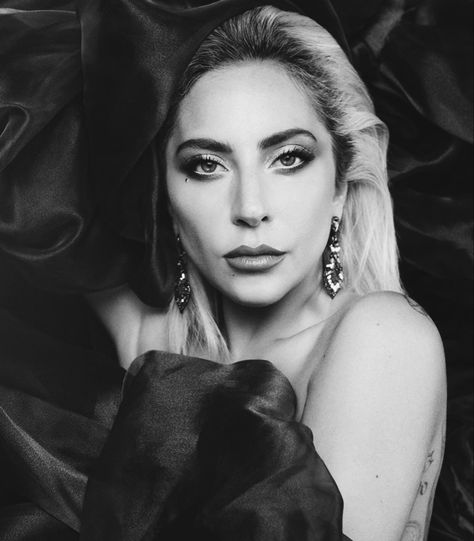
Happy Birthday to Lady Gaga Born March 28, 1986 in New York City
“Poker Face”
From “A Star Is Born” this is Gaga and Bradly Cooper with “Shallow”
What do Bruce Springsteen, Frank Sinatra, Jon Bon Jovi, Zakk Wilde, Count Basie, Southside Johnny, Tony Bennett, Dankig, Ricky Nelson and Paul Simon all have in common? I’ll give you a few minutes to mull that over.
OK, time’s up.
So, what do all those guys have in common? They are all from the illustrious Garden State …. New Jersey, USA. Yes, they are all Jersey Boys. However, they are not the Jersey Boys; that distinction goes to the Four Seasons, my featured group for this week and one of the best-selling bands of all time.
Evolved from a Newark, New Jersey vocal group called the Varietones and briefly known as the Four Lovers, the Four Seasons developed a harmony-based style that shared the same Italian American doo-wop origins as New York’s Dion and the Belmonts.
Frankie Valli, best known for his soaring falsetto, was the band’s lead singer, alongside Bob Gaudio on keyboards and vocals, Tommy DeVito on lead guitar and vocals and Nick Massi on electric bass and vocals. And no drums. “But Nancy” you ask, bewildered, “aren’t the Four Seasons known for their kickass drumming?” Yes, kids, that’s true and there’s a very good explanation. Read on.
The only member of the Four Seasons who played drums was Frankie Valli and he’ll tell you himself he wasn’t very good at it. Since they never had a member of the group to sit behind the kit, they always used session drummers. The most popular studio drummer at the time was Buddy Saltzman who, from 1955 through 1968 was the most used studio drummer in recording history. Let me repeat that: from 1955 through 1968, Buddy Saltzman was the most used studio drummer in recording history. Saltzman once said, “All I ever wanted to do was play drums and provide for my family.” Without a doubt, Buddy Saltzman fulfilled his goals in spades and in the process he helped create some of the coolest and longest-lasting music of the twentieth century.
Bob Gaudio, along with producer Bob Crewe, became the Four Season’s chief songwriter as the group cranked out R&B and R&R hits, first for Vee Jay and then for Philips Records. Among the top-10 hits from the group’s golden period was the song I’m showcasing today – “Dawn (Go Away)” from 1964.
“Dawn” was the group’s first record on the Philips label and would have been a runaway #1 hit in the US if not for those pesky Beatles. “Dawn” entered the Top 40 on February 8, 1964 and climbed to #3 the week of February 22, behind “I Want To Hold Your Hand” and “She Loves You”. It stayed at #3 for three weeks when it was bumped to #4 by “Please Please Me”. By March 28 it was at #5 as “Twist And Shout” entered the Top 5. On April 4, “Dawn” was out of the Top 10 and the Beatles held all five top positions. Boy! Talk about tough competition! In February 1964, 60% of the singles sold in the US were by the Beatles; the second-biggest seller was the Four Seasons. I wonder what Frankie Valli was thinking during that time.
Written by Bob Gaudio and Sandy Linzer, “Dawn” was called a self-deprecating song, with Frankie Valli constantly telling the girl that he’s not good enough for her: “Think what the future would be with a poor boy like me.” As Frankie Valli explained, “We sang songs about men and their situations with women, and about how things don’t always go the way you want them to.”
I chose to feature “Dawn (Go Away)” today to highlight the impact of the British Invasion on American artists and because it’s a damn fine song but a big reason for going with “Dawn” is Buddy Saltzman, the previously mentioned session drummer. Buddy’s really kicking it in this song; he accented the recording with bombastic around-the-kit fills as well as the softer ghost notes while never using a cymbal once. I don’t have to tell you to listen for the drums; they’re in your face in the best possible way …. Buddy Saltzman’s way.
There’s a ton more to be said about the Four Seasons but I’d much rather listen to their music.
From 1964, this is “Dawn (Go Away)”
In 1967 Frankie Valli began a parallel solo career. Due to the competition from groups from the UK, his popularity and that of the group declined in the mid 60s but rebounded in the 70s when both Valli and the Four Seasons had #1 singles before being relegated to the oldies circuit.
So where are the band members now? Incredibly, Frankie Valli celebrated his 89th birthday last year and is still performing! Bob Gaudio turned 81 in 2023 and is generally retired but still appears at various Four Seasons-related events. Tommy DeVito died in 2020 at the age of 92 after battling COVID. He had quit the group in 1970 but reunited with the band on several occasions. Nick Massi passed away from cancer on Christmas Eve in 2000, age 73.
The story of the Four Seasons was dramatized in the long-running Tony Award-winning Broadway musical Jersey Boys. The group’s original line-up was inducted into the Rock and Roll Hall of Fame in 1990, the Vocal Group Hall of Fame in 1999 and the New Jersey Hall of Fame in 2017. They are one of the best-selling musical groups of all time, having sold an estimated 100 million records worldwide.
That’s my story and I’m not even going to bore you about the time I met Frankie Vallie 20 years ago on the set of “The Sopranos”. He was Rusty Millio; this episode should have been called “Rusty (Go Away)”.
Thanks to Glyn for hosting another month of Mixed Music Bag.
Frequently, the trick of cover songs is to take the bombastic and quiet it down, ‘acoustify‘ a track, if you will. Jimi Hendrix does the opposite here, morphing folkie Bob Dylan into a churning R&R freight train, fueled by the urgent guitar licks that only Hendrix could pull off. Jimi was a super-fan of Dylan and recorded a number of pristine covers, but years later, “All Along The Watchtower” remains the cream of the crop and the song’s definitive remake version.
But first, from 1967, here is Bob Dylan with “All Along The Watchtower”
You’re gonna wanna raise the volume for this, then stand back. Here’s Hendrix with his amped-up cover of “Watchtower”.
The Motown Sound has something extra-special about it. Berry Gordy, Jr. knew people would be listening on their car stereos and transistor radios and he was going to do what it took to make songs sound good and memorable. Even if you couldn’t put your finger on it, when a Motown song came on, baby, you knew it. Still do.
Before Motown, there was Tamla. Berry Gordy realized that the way to make money was to produce his own records for his own label. In 1959 he founded Tamla Records with an $800 loan from his family; he added the Motown label later that year. The Tamla label remained in operation until being merged with Motown’s main line at the end of 1986. Tamla’s second release was “Merry-Go-Round” by Eddie Holland in 1959.
Charismatic and handsome with a good voice, Eddie Holland had a promising career as a singer except one big problem kept him behind the scenes …. stage fright. His time as a singer may have been short-lived but, as part of the team of Holland-Dozier-Holland, Eddie realized a long and successful career in songwriting and production.
Let’s have a listen now to Tamla Label’s Eddie Holland with “Merry-Go-Round”.
And this is what was on the B side …. “It Moves Me”
The topic today at Song Lyric Sundayis to write about a song(s) dealing with children and/or families, two themes that clearly go hand-in-hand.
We have a serious tune today, a classic song that’s a lesson and a warning to parents everywhere. The song sends a powerful message which needs to be heeded before everything slips away and is lost forever. Sounds ominous, doesn’t it?
My featured performer today is Harry Chapin, born in NYC in 1942 and cousin of Mary Chapin Carpenter. Music was always in Harry’s life and his three siblings also became musicians. His wife, Sandy, was a writer and today’s song is based on a poem which she wrote. At first, Harry wasn’t crazy about the poem but after the birth of his son, he decided to give it another look.
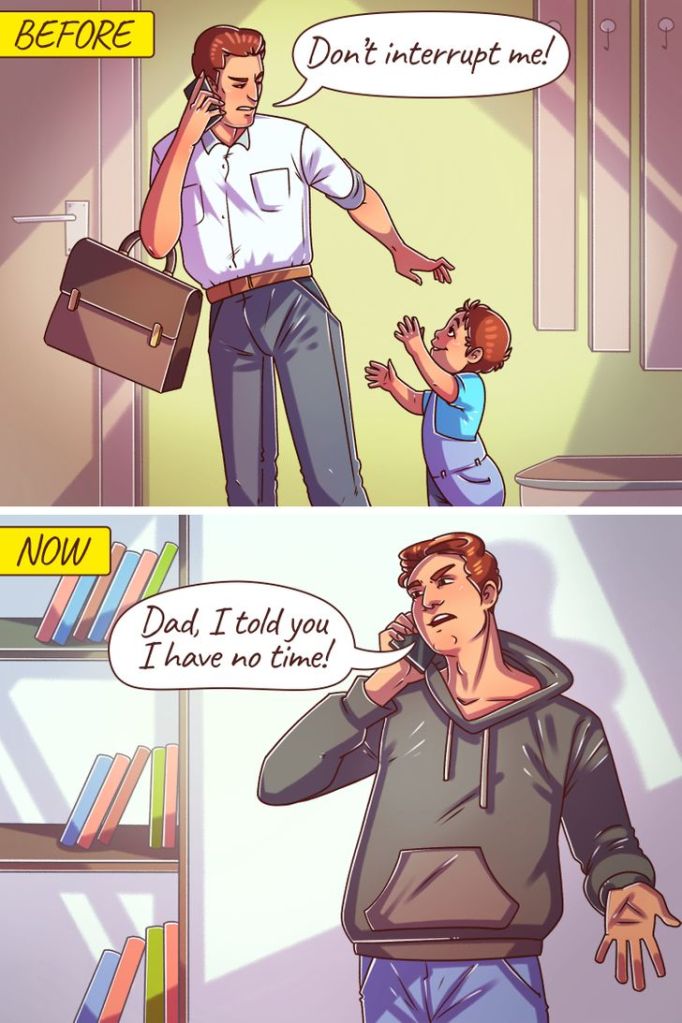
The result was a song of regret, the sad tale of a man who only had time for his work and put everything before the needs of his young son who emulated his dad and eventually grew up to be “just like him”. That song is “Cat’s In The Cradle” which was a huge hit for Harry Chapin in 1974, being his only #1 song. It was nominated for a Grammy in 1975 and was inducted into the Grammy Hall Of Fame in 2011.
Music magazine Cash Box called “Cat’s In The Cradle” a “lyrical delight, atender story of a father and his son and a perfect representation of how roles change in the relationship over the years”. Record World said that the song “deals with the preoccupations plaguing parenthood” and that it “bridges the generation gap by pointing up mutual faults”.
The chorus of the song repeats the phrase “Cat’s in the cradle,” which is a reference to a child’s nursery rhyme about a cat sleeping in a cradle. The phrase serves as a metaphor for the passing of time and the changing relationship between father and son.
Sadly, on July 16, 1981, Harry Chapin died at the age of 38. He was killed in an accident on the Long Island Expressway when his Volkswagen Rabbit was rear-ended by a tractor trailer truck. He was on his way to perform at a benefit concert when the accident occurred. In addition to being a singer, songwriter and multi-instrumentalist, Harry Chapin was a philanthropist and hunger activist. As a dedicated humanitarian who fought to end world hunger, he was a key participant in the creation of the Presidential Commission on World Hunger in 1977. In 1987 he was posthumously awarded the Congressional Gold Medal for his humanitarian work.
There are many different videos for “Cat’s In The Cradle” but this is my favorite. Let’s have a listen to Harry Chapin.
In keeping with the theme today of children and/or dfamilies, here is Harry Chapin’s daughter, Jen, performing his song.
Heavy metal band Ugly Kid Joe also released their own cover; while staying faithful to the original, they chose to remove the apostrophe from the title. Interpreted literally, there is more than one cat in their cradle. This is Ugly Kid Joe with “Cats In The Cradle”.
Lyrics
My child arrived just the other day He came to the world in the usual way But there were planes to catch, and bills to pay He learned to walk while I was away And he was talking ‘fore I knew it, and as he grew He’d say “I’m gonna be like you, dad” “You know I’m gonna be like you”
And the cat’s in the cradle and the silver spoon Little boy blue and the man in the moon “When you coming home, dad?” “I don’t know when” But we’ll get together then You know we’ll have a good time then
My son turned ten just the other day He said, thanks for the ball, dad, come on let’s play Can you teach me to throw, I said-a, not today I got a lot to do, he said, that’s okay And he, he walked away, but his smile never dimmed It said, I’m gonna be like him, yeah You know I’m gonna be like him
And the cat’s in the cradle and the silver spoon Little boy blue and the man in the moon “When you coming home, dad?” “I don’t know when” But we’ll get together then You know we’ll have a good time then
Well, he came from college just the other day So much like a man I just had to say Son, I’m proud of you, can you sit for a while? He shook his head, and they said with a smile What I’d really like, dad, is to borrow the car keys See you later, can I have them please?
And the cat’s in the cradle and the silver spoon Little boy blue and the man in the moon “When you coming home, son?” “I don’t know when” But we’ll get together then, dad You know we’ll have a good time then
I’ve long since retired, my son’s moved away I called him up just the other day I said, I’d like to see you if you don’t mind He said, I’d love to, dad, if I can find the time You see, my new job’s a hassle, and the kids have the flu But it’s sure nice talking to you, dad It’s been sure nice talking to you And as I hung up the phone, it occurred to me He’d grown up just like me My boy was just like me
And the cat’s in the cradle and the silver spoon Little boy blue and the man in the moon “When you coming home, son?” “I don’t know when” But we’ll get together then, dad We’re gonna have a good time then
“Because“ Written by: Lennon/McCartney Recorded: August 1, 4 & 5, 1969 Producer: George Martin Engineers: Geoff Emerick, Phil McDonald
Released: September 26, 1969 (UK), October 1, 1969 (US)
Available on: Abbey Road Anthology 3 Love
Personnel: John Lennon: vocals, lead guitar Paul McCartney: vocals, bass George Harrison: vocals, Moog synthesizer George Martin: electric spinet Baldwin harpsichord Ringo Starr: handclaps (for timing purposes)
The ballad “Because” features a tightly woven, lush harmony vocal performance between John Lennon, Paul McCartney and George Harrison, overdubbed three times to make nine voices in all.
The story has been told that this song is actually “Moonlight Sonata” by Ludwig van Beethoven played backwards, which is a gross simplification, but it’s safe to say Beethoven’s famous piece certainly served as an inspiration for the song. And it certainly wasn’t the first time the Beatles experimented with recording music (and lyrics) backwards.
It took 23 attempts over a 3-day period to achieve a finished product everyone was happy with. That’s not terribly long when you’re aspiring for perfection.
Here, in my opinion, is the perfect ballad by the Beatles. This is “Because”.
Lyrics
Aah Because the world is round It turns me on Because the world is round
Aah Because the wind is high It blows my mind Because the wind is high
Aah Love is old, love is new Love is all, love is you
Because the sky is blue It makes me cry Because the sky is blue Aah
Welcome to Birthday Thursdays! Each week I will feature someone from the world of music whose birthday falls on this day. There won’t be any chit chat from me, no facts and figures – just some great tunes (and an occasional surprise). Check it out right here every Thursday and enjoy the music.
Happy Birthday to Eddie Money Born March 21, 1949 in Brooklyn, New York
This is something that I can’t say very often so I’m going to say it loud and clear:
I’M A LITTLE TOO YOUNGto remember sitting around the radio listening to the tunes of my featured group but I’m well familiar with them and their many songs just the same. They were extremely important in the development and acceptance of R&R music; it’s a known fact this group strongly influenced the Beatles, Simon and Garfunkel, the Hollies, the Beach Boys, the Bee Gees and other groups; in fact, their records are included in John Lennon’s personal juke box.
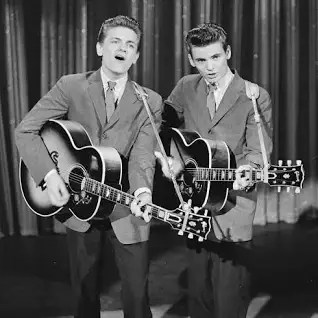
I’m talking about the Everly Brothers, the American rock duo known for their steel-string acoustic guitar playing and close harmony singing. The duo, consisting of Don and Phil, grew up in a musical family in Knoxville, Tennessee; they combined elements of R&R, country and pop, becoming pioneers of country rock.
The brothers began writing and recording their own music in 1956 and their first hit song, “Bye Bye Love”, came in 1957, written by Felice and Boudleaux Bryant. That song hit #1 later in the year and additional hits quickly followed, including “Wake Up, Little Susie” and “All I Have To Do Is Dream”. When Phil and Don enlisted in the US Marine Corps Reserve in 1961, their output dropped off; additional hit singles continued through 1962, with “That’s Old Fashioned (That’s The Way Love Should Be)” being their last top-10 hit.
No need to drag out your old transistor radio; I’ve got those top three Everly Brothers tunes right here. Let’s go in order, starting with “Bye, Bye Love”. Here are Phil & Don, the Everly Brothers.
“Wake Up, Little Susie”
“All I Have To Do Is Dream”
Thanks for joining me today and thanks to Glyn for hosting Mixed Music Bag.
John Lennon had thousands of admirers and imitators. But he was the first to admit that he had his own rock icons that he looked up to – Buddy Holly, The Ronettes, Arthur Alexander, the Everly Brothers …. and Rosie & The Originals who first took this song to #5 on the Billboard chart in 1961. Lennon said it was one of his favorite songs and when he recorded a cover in 1973 said, “send my love to Rosie, wherever she may be!” Rosie was actually Rosie Hamlin; she was only 15 years old when she recorded the song but said Lennon’s cover version was her favorite. The 1961 original was part of John Lennon’s personal juke box.
From 1961, this is Rosie & The Originals with “Angel Baby”
With his rendition of “Angel Baby”, here is John Lennon
The Motown Sound has something extra-special about it. Berry Gordy, Jr. knew people would be listening on their car stereos and transistor radios and he was going to do what it took to make songs sound good and memorable. Even if you couldn’t put your finger on it, when a Motown song came on, baby, you knew it. Still do.
Before Motown, there was Tamla. Berry Gordy realized that the way to make money was to produce his own records for his own label. In 1959 he founded Tamla Records with an $800 loan from his family; he added the Motown label later that year. The Tamla label remained in operation until being merged with Motown’s main line at the end of 1986. Tamla’s first release was Marv Johnson’s “Come To Me” in January 1959.
An R&B singer, songwriter and pianist, Marv Johnson achieved early success in the US but ultimately became more popular overseas, especially in the UK and Australia. Let’s listen to a couple of his tunes; from 1959, this is “Come To Me”, Tamla Label’s first release.
The topic today at Jim Adams’ Song Lyric Sundayis to write about songs dealing with war and/or peace .… subjects that have been plaguing the world since the beginning of time.
Bill and I are pretty patriotic people; still, we were very relieved when he failed the draft physical. He and his identical twin brother were numbers 8 & 9 when they were called up; if not for them both having a pilonidal cyst, they surely would have been drafted and shipped off to Vietnam. It was the first and last “F” Bill ever got in his life. Let me just add …. Bill and I have total respect for all veterans – those who served and came home, those who died. Bill’s older brother served in the Navy, his sister’s husband was a marine and our fathers were in the US Army; Bill’s dad never left The States whereas my dad fought in the Battle of the Bulge. It was literally the luck of the draw.
Here are four songs about war and peace which were the soundtrack of our lives from the late 60s and early 70s.
From his 1969 video, this is Edwin Starr singing “War”. Originally written under the Motown label and first performed by The Temptations, “War” was later re-released as a single with Edwin Starr on vocals. This version has become the most popular protest song ever.
LYRICS
War, huh, yeah What is it good for? Absolutely nothing, uhh War, huh, yeah What is it good for? Absolutely nothing Say it again, y’all War, huh (good God) What is it good for? Absolutely nothing, listen to me, oh War, I despise ‘Cause it means destruction of innocent lives War means tears to thousands of mother’s eyes When their sons go off to fight And lose their lives
I said, war, huh (good God, y’all) What is it good for? Absolutely nothing, just say it again War (whoa), huh (oh Lord) What is it good for? Absolutely nothing, listen to me
It ain’t nothing but a heartbreaker (War) Friend only to The Undertaker Oh, war it’s an enemy to all mankind The thought of war blows my mind War has caused unrest Within the younger generation Induction then destruction Who wants to die? Oh
War, huh (good God y’all) What is it good for? Absolutely nothing Say it, say it, say it War (uh-huh), huh (yeah, huh) What is it good for? Absolutely nothing, listen to me
It ain’t nothing but a heartbreaker (War) It’s got one friend that’s The Undertaker Oh, war, has shattered many a young man’s dreams Made him disabled, bitter and mean Life is much too short and precious To spend fighting wars each day War can’t give life It can only take it away, oh
War, huh (good God y’all) What is it good for? Absolutely nothing, say it again War (whoa), huh (oh Lord) What is it good for? Absolutely nothing, listen to me
It ain’t nothing but a heart breaker (War) Friend only to The Undertaker, woo Peace, love and understanding, tell me Is there no place for them today? They say we must fight to keep our freedom But Lord knows there’s got to be a better way, oh
War, huh (God y’all) What is it good for? You tell me (nothing) Say it, say it, say it, say it War (good God), huh (now, huh) What is it good for? Stand up and shout it (nothing)
Here are the Animals with “We Gotta Get Out Of This Place”. Though the song never mentions war, it was quickly adopted by U.S. soldiers during the Vietnam War and was the most requested on Armed Forces Radio, according to the late radio personality Adrian Cronauer, whose life inspired the 1987 film “Good Morning, Vietnam”.
LYRICS
In this dirty old part of the city Where the sun refused to shine People tell me there ain’t no use in tryin’ Now my girl you’re so young and pretty And one thing I know is true You’ll be dead before your time is due, I know Watch my daddy in bed a-dyin’ Watched his hair been turnin’ grey He’s been workin’ and slavin’ his life away Oh yes I know it
(Yeah!) He’s been workin’ so hard (Yeah!) I’ve been workin’ too, baby (Yeah!) Every night and day (Yeah, yeah, yeah, yeah!)
We gotta get out of this place If it’s the last thing we ever do We gotta get out of this place ’cause girl, there’s a better life for me and you
Now my girl you’re so young and pretty And one thing I know is true, yeah You’ll be dead before your time is due, I know it Watch my daddy in bed a-dyin’ Watched his hair been turnin’ grey, yeah He’s been workin’ and slavin’ his life away I know he’s been workin’ so hard
(Yeah!) I’ve been workin’ too, baby (Yeah!) Every day baby (Yeah!) Whoa! (Yeah, yeah, yeah, yeah!)
We gotta get out of this place If it’s the last thing we ever do We gotta get out of this place Girl, there’s a better life for me and you Somewhere baby, somehow I know it We gotta get out of this place If it’s the last thing we ever do We gotta get out of this place Girl, there’s a better life for me and you Believe me baby I know it baby You know it too
This is “Peace Train”by Cat Stevens. His Majikat – Earth Tour was recorded during his last legendary North American tour in 1976. This was the ultimate tour for Cat Stevens before he quit the music business and changed his name to Yusuf Islam. He didn’t perform on stage again for nearly thirty years.
LYRICS
Now I’ve been happy lately Thinking about the good things to come And I believe it could be Something good has begun Oh, I’ve been smiling lately Dreaming about the world as one And I believe it could be Someday it’s going to come
‘Cause out on the edge of darkness There rides the peace train Oh, peace train take this country Come take me home again
Now I’ve been smiling lately Thinkin’ about the good things to come And I believe it could be Something good has begun
Oh, peace train sounding louder Glide on the peace train Ooh-ah, ee-ah, ooh-ah Come on now, peace train Yes, peace train holy roller Everyone jump upon the peace train Ooh-ah, ee-ah, ooh-ah Come on now, peace train
Get your bags together Go bring your good friends too Because it’s getting nearer It soon will be with you Now come and join the living It’s not so far from you And it’s getting nearer Soon it will all be true
Oh, peace train sounding louder Glide on the peace train Ooh-ah, ee-ah, ooh-ah Come on now peace train Peace train
Now I’ve been crying lately Thinkin’ about the world as it is Why must we go on hating? Why can’t we live in bliss?
‘Cause out on the edge of darkness There rides a peace train Oh, peace train take this country Come take me home again
Oh, peace train sounding louder Glide on the peace train Ooh-ah, ee-ah, ooh-ah Come on now, peace train Yes, peace train holy roller Everyone jump upon the peace train Ooh-ah, ee-ah, ooh-ah Come on, come on, come on Yes, come on, peace train Yes, it’s the peace train
Ooh-ah, ee-ah, ooh-ah Come on now, peace train Oh, peace train Ooh-ah, ee-ah, ooh-ah
Here’s the Plastic Ono Band with what has become the anthem for peace activists …. “Give Peace A Chance”. The song was written by John Lennon and Yoko Ono during their 1969 weeklong ‘BED-IN’ peace advertising campaign in Montreal, Canada. The film features the original recording of “Give Peace A Chance” and includes John and Yoko appearing at the National Peace Rally in Bryant Park, New York on April 22, 1972. It concludes with impromptu gatherings of fans in Liverpool, London, New York, etc. after John’s shooting on December 8, 1980. Since the lyrics are part of the video, I did not print them.
Welcome to Birthday Thursdays! Each week I will feature someone from the world of music whose birthday falls on that day. There won’t be any chit chat from me, no facts and figures – just some great tunes (and an occasional surprise). Check it out right here every Thursday and enjoy the music.
Happy Birthday to Quincy Jones Born March 14, 1933 in Chicago, Illinois
Quincy Jones Talks About Frank Sinatra
Live in the studio – Frank Sinatra & The Quincy Jones Orchestra with “Teach Me Tonight”
“I Can’t Stop Loving You” – Quincy Jones at The BBC, 2016
Live with The Quincy Jones Band – “The ‘Ironside’ Theme”
“Celebrating Quincy Jones/Featuring Kati Brien – “The Midnight Sun Never Sets”
“Summertime” – Featuring Miles Davis with Quincy Jones & Orchestra
For Glyn’s Mixed Music Bag #11, Monthly Challenge Week 11 where we are asked to write about a song by a group or solo artist beginning with the letter E or F.
Today I’m going out on the proverbial limb by doing something completely different. We’re going long-hair, and I’m not talking about hard rock metal bands. Sit up straight and pay attention, boys and girls; we’re going classical!
In his seven-section Requiem, the French composer Gabriel Fauré distilled some of the most beautiful melodies he ever composed. The creation was a musical tribute to his father who died in 1885, three years before work on the piece began.
As with much of Western classical music, Requiem owes its roots to Christian faith. Traditionally, it is a prayerful lament for the dead; however, Fauré’s Requiem was altogether different because, unlike his contemporaries, Fauré had no clear religious beliefs.
In place of the somber nature of most requiems, Fauré’s is noted for its calm, serene and peaceful outlook. Anyone looking for morose themes is barking up the wrong tree. Instead, here you will find musical solace in a work that focuses not on the morbid, but on the restful and fear-free nature of death.
Of all seven sections of Fauré’s Reqiuem, the Pie Jesu, Agnus Dei and In Paradisum emerge as the most glorious, filled with rich, soulful melodies. The work garnered the praise of many other composers who thought it divine. It was performed at Fauré’s own funeral in 1924.
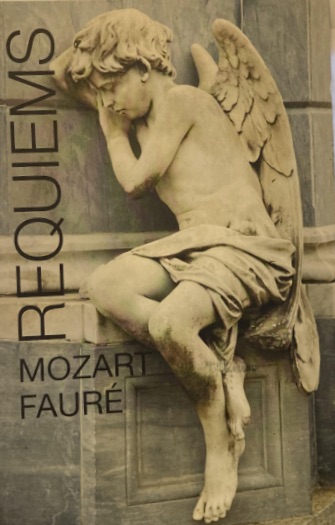
I’ve been a member of choirs all my life and have sung Fauré’s Requiem countless times, especially during Holy Week leading up to Easter. Since we are rapidly approaching that time of the season, I will be attending a performance of both Faure and Mozart’s Requiems presented by the Taconic Opera this Sunday, March 17. It just so happens that my son David will be singing lead tenor. I am incredibly and unceasingly proud of him.
Please bear in mind …. you don’t have to be a classic music buff or at all religious to listen/enjoy a requiem, especially one as breathtaking as Fauré’s. Here are the Pie Jesu (Pious Jesus) , Agnus Dei (Lamb of God) and In Paradisum(Into Paradise).
This is VOICES8 performing Faure’s “Pie Jesu”
This is “Agnus Dei” performed by Netherlands Radio Chorus / Rotterdam Philharmonic Orchestra
Performed by the Winchester Cathedral Choir, this is “In Paradisum”
I hope you have enjoyed today’s change of pace. You can check out Taconic Opera here if you are so inclined.












 The Elephant's Trunk