Inspired by Max’s blog, ‘Old Steam Ships’ –
“When Two Ships Shattered A City” – the
story of the Halifax Explosion of Dec. 6, 1917.
The narrator is invented; the framework is real.
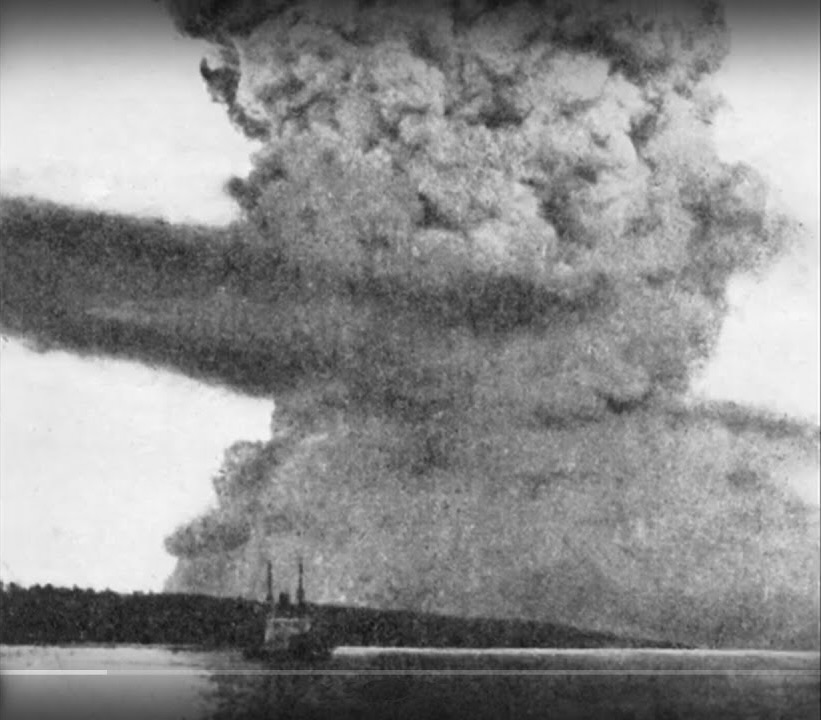
For twenty minutes, Halifax watched a ship burn. People gathered along the waterfront and stood at their windows to see what was happening. Almost none of them knew that the ship carried roughly 2,500 tons of explosives. The Halifax Explosion was the largest man-made eruption in history prior to the development of atomic weapons, resulting in 2,000 deaths, more than 9,000 injuries, and the decimation of an entire town. This is my story of Rosie and Hannah Lonecloud, two actual Mi’kwaq sisters from Halifax.
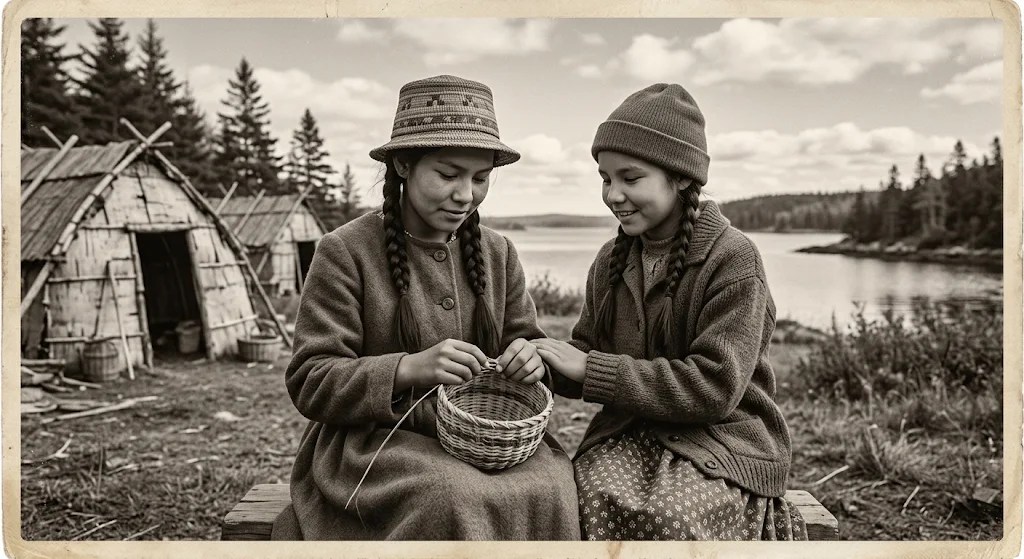
Created by Me & Gemini
My grandmother always believed in preserving the stories of my people and passing them on so they would be remembered for generations to come. I am writing this down because the people who could have told it better are gone, and the cove is quiet under the smokestacks, and somebody should say out loud that we were there.
Turtle Grove …. Kepe’kek in the tongue of the Mi’kmaq. The town people called it Tufts Cove, after a man who got a piece of paper about it a long time before any of us were born. The paper said the land was his, and that it belonged to whoever bought it from his people, and somewhere in all that buying and selling, we turned into trespassers on the shore where our grandparents’ grandparents had pitched their wigwams every summer. In the warm months, some families still lived in wigwams by the water. In winter we lived in the small wooden houses we’d built ourselves, crooked and patched, with stovepipes that smoked when the wind came off the Narrows.
For as long as I could remember, someone was trying to move us. The neighbors wrote letters to Ottawa. Men in good coats came and stood at the edge of the grove with their hands behind their backs and looked at us the way you look at a fallen tree you mean to have hauled off. As if a people who had lived by salt water for a thousand years could just pick up and go live by a pond because it would be easier on the eyes of the folks on the hill. The old people said no. Jerry Lonecloud said no, louder and in better English than most of us, and he wrote letters back, and he went to see people in offices. He was a big man in every way that mattered …. a showman, a healer, a man who knew every plant in the woods and every story that went with it. His girls were my friends. Rosie was the bold one. Hannah laughed at everything, especially at Rosie.
That December their father was away in Kentville. He travelled a lot for his work. I remember Rosie saying he’d be back soon and that he’d promised to bring them something, and Hannah saying that he always promised and he always did, so there was no point being impatient. That was the kind of thing Hannah said.
The morning of the sixth was cold and very clear. The kind of clear where the harbor looks like hammered tin and you can see every rope on every ship. The war had filled the harbor with ships. We were used to them. Grey ones and black ones, ships with guns, ships riding low with cargo, all of them sliding past the grove on their way in or out of Bedford Basin.
I was outside with a bucket when the shouting started on the water. Two ships had come together in the Narrows, not far off our shore at all. One of them was burning. At first it was just smoke, black and then blacker, and then there were little bursts of fire on the deck, popping like a stove full of green wood, and blue and orange colors none of us had ever seen. People came out of their houses to watch. All along both shores, people came to their windows and their doorways and the ends of the wharves to watch. It was something to see. That’s the worst of it, I think, even now. It was beautiful, and we all came out to look at it.
A boy came running up from the water, one of the Paul boys, shouting for his mother. I don’t know who had told him to run, or what he knew, but he ran like he knew something. I remember thinking he looked foolish. I remember standing there with my bucket, thinking that.
Then the world went white.
I have tried my whole life to describe it and I can’t. It wasn’t a sound so much as a blow, as if the sky had been a lid and someone had struck it with a hammer the size of the harbor. I was off my feet and then I was on the ground some distance from where I’d been standing, and I couldn’t hear anything at all, and the air was full of things …. boards, glass, branches, iron …. a whole shower of it coming down out of a sky that had gone the color of a plum. And then the rain started. Not water. Black rain, oily, warm, falling on everything and everyone, so that when I looked at my hands they were black, and when I looked up, the people stumbling around me were black from head to foot and I could not tell who anyone was.
The houses were gone … not broken …. gone. Where there had been a row of crooked little homes with smoking stovepipes there was a field of sticks. The trees of the grove, the trees that gave the place its name, were snapped in half or stripped bare. The schoolhouse where the little ones went was a heap. Somewhere a child was screaming and I couldn’t hear it, I could only see the shape of the mouth.
And then the water came.
The harbor drew back first. The water went out from the shore like a breath going in, and then it came back as a wall. It came up over the beach and over the place where the wigwams stood in summer, and it took what the blast had left. Boards, stoves, blankets, people. It came up the shore farther than any tide ever had, and when it went back it took things with it into the Narrows that we never saw again.
I don’t know how long I lay there. When my hearing began to come back, it came back as a ringing, and then under the ringing, the sounds of people calling names.
We looked for each other all that day. Some of us were hurt so badly we couldn’t walk. Some of us were cut all over from glass and didn’t even know it until we saw the blood mixed in with the black. Halifax was on fire. Richmond, the whole north end, was gone. We could see the smoke pouring up over there and we understood, slowly, that no one was coming for us. Everyone was digging out their own.
Nine of us died. That’s the number in the books, though the books never knew how many of us there were to begin with. Nine is a small number, the way people write about the explosion …. nearly two thousand dead across the city, but there were only about twenty of us. Nine out of twenty. Nearly half of everyone I knew.
Rosie and Hannah were among them.
Their father came home at dusk. He had heard in Kentville that something terrible had happened in Halifax, and he’d come as far as he could and then walked the rest. I saw him coming along the shore in the last of the light. He was walking fast and then he was walking slower, and I knew that he could see it …. that there was nothing where his house had been, nothing where the grove had been, only people sitting in the black wreckage with blankets around their shoulders. I wanted to run to him but I couldn’t move. Someone else went to him. I watched him understand. I will not write what that looked like. Some things belong only to the person they happened to.
He went the next days to identify his girls. He was a man who had spent his life telling the stories of our people to anyone who would listen …. to museum men, to newspaper men, to crowds who came to see him perform …. and now he had to stand in a room and tell some clerk their names.
The next day a blizzard came, as if the sky hadn’t finished with us.
After the explosion, nobody rebuilt Kepe’kek.
Not the government, which had wanted us gone. Not the neighbors, who had written letters. And not us, because we were scattered …. to hospitals, to relatives, to whatever reserve would take us, to anywhere that had a roof. The men in good coats didn’t need to move us after all. The harbor had done what their letters couldn’t. I have heard people say the explosion destroyed Turtle Grove. That’s true, but it isn’t the whole truth. Turtle Grove had been dying for years from paper cuts …. letters and grants and complaints and orders. The explosion just finished it.
I went back once, many years later, when I was a grown woman with children of my own. There was a generating station by then, with its great stacks, and houses up the hill, and nothing at all to show that we had ever been there. I stood near the water where I thought the wigwams used to be. The harbor was grey and ordinary. A ship went by.
I said their names …. Rosie, Hannah …. and the others. I said them to the water, because the water took some of them, and to the ground, because my grandmother said the land remembers who loved it.
I hope she was right. I’m writing this in case she wasn’t.
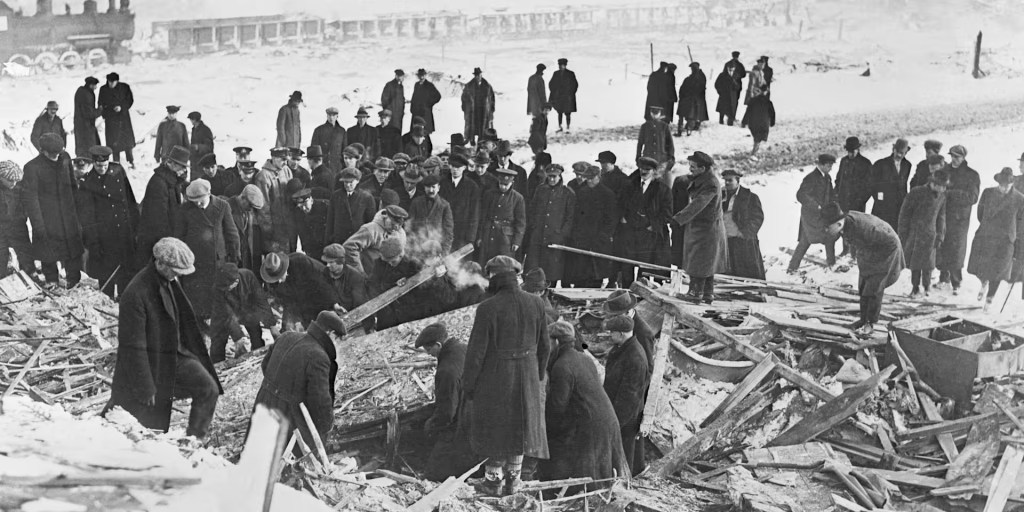
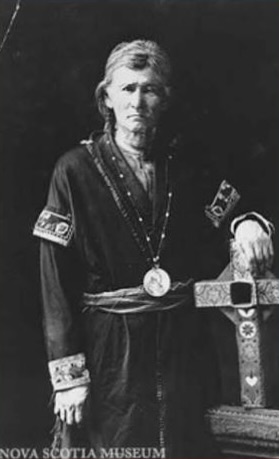
© Nova Scotia Museum
NAR©2026
This is “The Day the Sky Fell – The Halifax Explosion of 1917” by Fort Ahmerst
Everything on The Elephant’s Trunk was created by me, unless otherwise indicated, and may not be used without permission. Thanks for your consideration. NAR©2017-present.

