Written for Song Lyric Sunday –
“The Transition Follows
What Was Built Before It”
This week at Jim Adams’ Song Lyric Sunday, the theme is “The Transition Follows What Was Built Before It”. Our challenge is to write about a song that was written explicitly as a segue.
There is something special about the immersive listening experience that a full-length album can provide, especially when it’s ordered in the right way. I have found that a lot of my favorite releases over the years have fallen under this category, where one song will flow perfectly into the next. There were times when I initially didn’t even realize this transition has happened until I found I was suddenly listening to a new track. This can happen in the context of an entire album, but I’ve noticed that it occurs quite a bit more often in two- or three-song groupings, even when the rest of the album may not follow this same flow. With that in mind, here are two of my favorite musical segues.
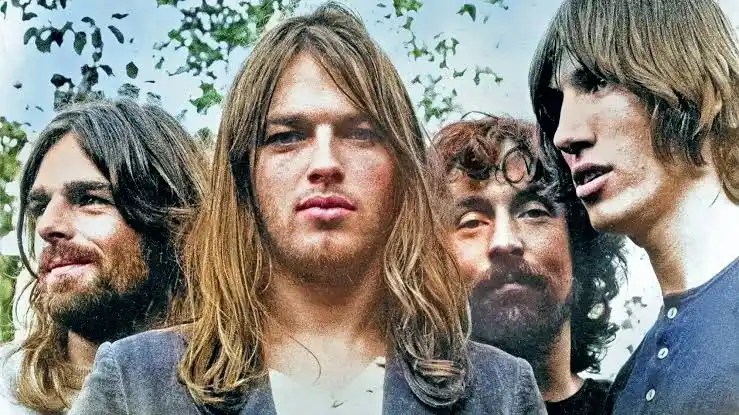
Pink Floyd’s medley of “Another Brick In the Wall, Parts 1 & 2” and “The Happiest Days of Our Lives” is a powerful rock protest against abusive and rigid schools. The tracks are part of the 1979 rock opera, The Wall, which follows a troubled rock star named Pink. Written by bassist Roger Waters, “The Happiest Days of Our Lives” attacks teachers who emotionally and physically abused children to hide their own personal frustrations. Part 1 of “Another Brick In the Wall” deals with the loss of Pink’s father in WWII; Part 2 shows how cruel teachers add another painful “brick” to the emotional wall Pink builds around himself.
A group of students from the Islington Green School in London was added to sing the chorus; the school’s music teacher agreed to help in exchange for free studio time for the school orchestra. On the album, “The Happiest Days of Our Lives” flows directly into Part 2; a schoolmaster’s voice yells the famous line, “If you don’t eat your meat, you can’t have any pudding!” right before the main beat drops.
Pink Floyd’s 1980–1981 The Wall Tour was one of the most ambitious and logistically complex rock spectacles in music history. Driven by Roger Waters’ literal desire to separate the band from the audience, they built and collapsed a massive barrier right on stage. The wall grew to 30 feet high and 160 feet wide and was made from approximately 420 custom-designed, reinforced cardboard bricks, each about 5 feet wide and 21/2 feet tall. As the band played the first half of the album, an 80-man crew acting as stagehands meticulously placed the bricks using hydraulic lifts. To keep up with the album’s pacing, Pink Floyd played a then-unreleased instrumental track called “The Last Few Bricks” just to give the crew enough time to finish.
In 1980, the song was officially banned by the South African government after black school children adopted the lyrics as an anthem to protest racial inequality in apartheid-era schools.
This is “Another Brick In The Wall Pt. 1”, “The Happiest Days Of Our Lives” and “Another Brick In The Wall Pt. 2” by Pink Floyd
↪️ ↪️ ↪️ ↪️ ↪️ ↪️ ↪️ ↪️
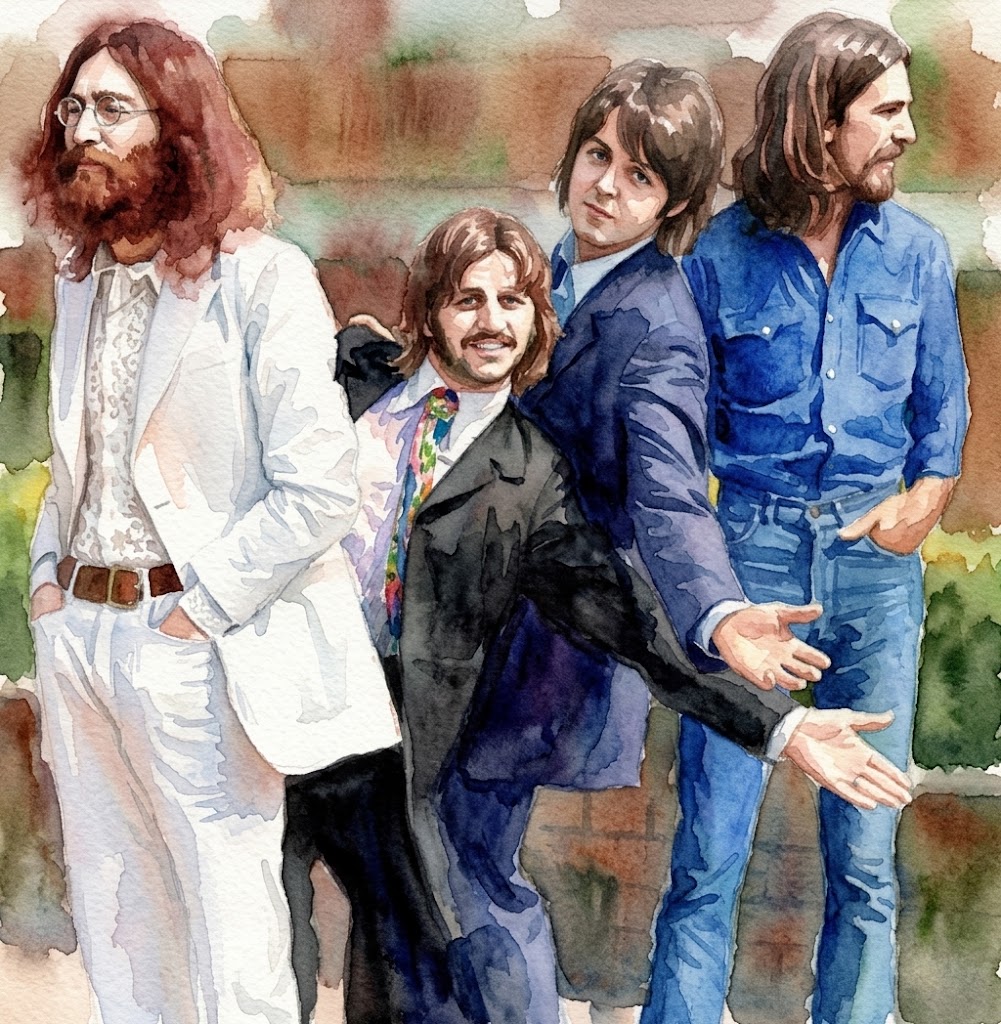
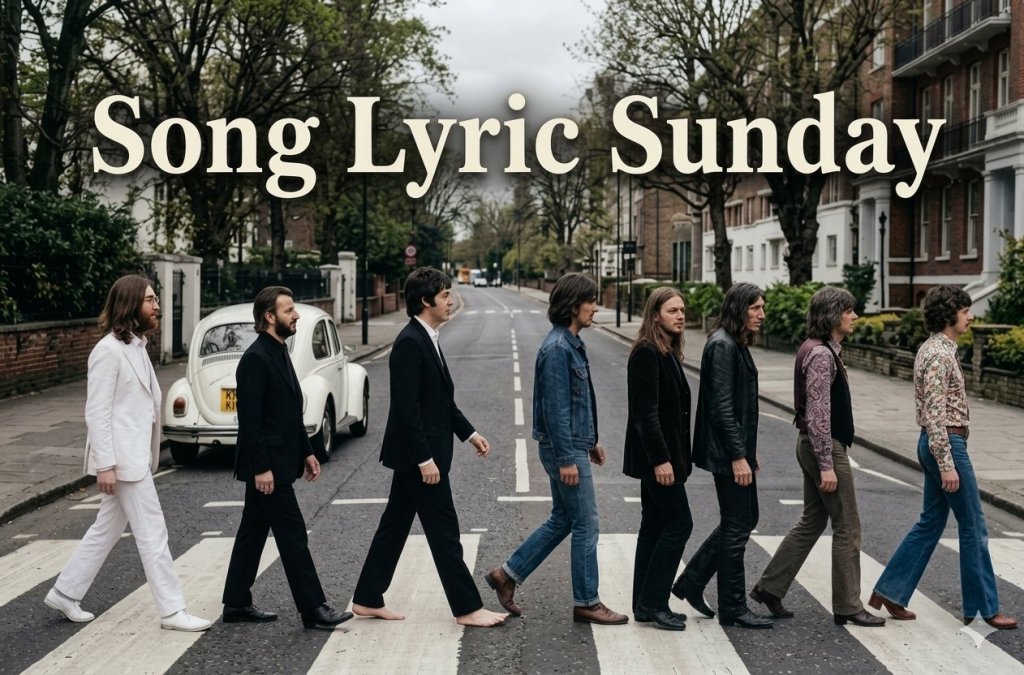
The medley known as “The Long One” on Side Two of the Beatles’ 1969 album Abbey Road was an ambitious creation designed to turn unfinished musical fragments into a grand finale. As relations withing the band grew strained, Paul McCartney and producer George Martin stitched together several short, incomplete songs and ideas written by McCartney and John Lennon; instead of separate tracks, the songs segue seamlessly to form a continuous suite that acts as the band’s collective swan song. While the individual segments of the Abbey Road medley began as unfinished musical leftovers, they carry highly specific meanings that reflect financial frustration, colorful Liverpudlian folklore, and a bittersweet farewell. Here is a breakdown of the 9 tracks that comprise the medley:
“You Never Give Me Your Money” was written by Paul McCartney and is a direct attack on manager Allen Klein. The “funny paper” refers to the complex legal documents and empty financial promises choking the band at the time. The song then shifts to nostalgia, recalling the “magic feeling” of their early days before fame made everything complicated.
John Lennon wrote the dreamlike track “Sun King”, which features gorgeous harmonies. The lyrics fade into a fictional mix of Spanish, Italian, and Portuguese gibberish consisting of silly words and Liverpool schoolboy slang strung together.
“Mean Mr. Mustard” was inspired by a real newspaper story about a cheap miser who hid his money to avoid spending it. Lennon wrote this character sketch during the Beatles’ 1968 trip to India.
The “Polythene Pam“ track was inspired by a combination of a real fan from the Cavern Club days who used to eat polythene plastic, and an eccentric encounter John had in Jersey with a woman dressed in plastic.
“She Came In Through the Bathroom Window” is based on an actual break-in at Paul’s house. A group of obsessed fans used a ladder to climb into his bathroom window and stole several items, including a framed photograph.
“Golden Slumbers“ is about sheet music which McCartney found at his stepsister’s house featuring a 17th-century poem by Thomas Dekker. Unable to read the music, Paul composed his own melody for this lullaby.
The track “Carry That Weight“ reflects the heavy emotional and financial burden the Beatles felt while trying to keep Apple Corps afloat amid their fracturing friendships. It features a reprise of the “You Never Give Me Your Money” melody to tie the themes together.
“The End” serves as a deliberate final statement. It is famous for featuring the only drum solo Ringo Starr ever recorded with the Beatles, followed by a rotating sequence of guitar solos by Paul, George, and John. It closes with the iconic, philosophical couplet: “And in the end, the love you take is equal to the love you make.”
The last track, “Her Majesty”, is a 23-second song which was originally slotted between “Mean Mr. Mustard” and “Polythene Pam” before being cut to the very end of the album as a hidden track. This little ode to Queen Elizabeth II is a tongue-in-cheek, mildly irreverent “love song” to the monarch. The Beatles grew up in the 1950s during the start of Elizabeth’s reign, and McCartney later admitted that they essentially viewed her as a “babe” and had schoolboy crushes on her.
This is “The Long One”, the medley from Abbey Road by The Beatles
Big thanks to Jim Adams for hosting another great Song Lyric Sunday this week and every week. Be sure to follow his link and check out his site.
Thanks for stopping by and listening to some great music today. I hope you enjoyed the theme for this week as well as the information and music I featured.
That’s all she wrote, kids. See you on the flip side. 😎
NAR©2026
Everything on The Elephant’s Trunk was created by me, unless otherwise indicated, and may not be used without permission. Thank you for your consideration. NAR©2017-present.
 The Elephant's Trunk
Two great choices for the theme. I’d have been extremely disappointed if you hadn’t gone with The Beatles!
LikeLike
I, too, chose “The Long One” from side 2 of Abbey Road for my SLS prompt response. I liked the way you wrote a brief description of each of the component songs of the medley.
I had also thought about using Pink Floyd if I hadn’t gone with the Beatles, but I had The Dark Side of the Moon album in mind, rather than The Wall. I was specifically thinking of Brain Damage” / “Eclipse,” the album’s inseparable climactic finale, which were commonly performed together in concert.
LikeLike
these tracks are awesome! I almost chose that beatles song!
LikeLike