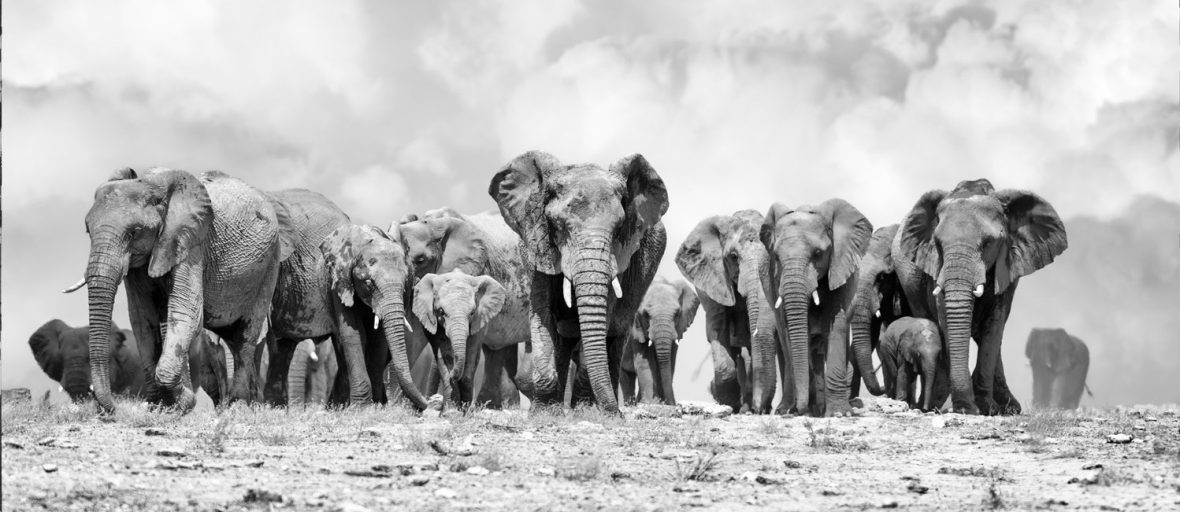
Inspired by Max’s blog, ‘Old Steam Ships’ –
this is my story based on facts about the SS Eastland
disaster in the voice of Harry B. Thayer, President
of Western Electric, who chartered the ship
for 2,500 employees and their families
for a company picnic. Thanks, Max!

Bottom – Western Electric Hawthorne Plant
© chicagology
I was at my desk on LaSalle Street when the telephone rang …. not the ordinary jangle of business, but something jolting, pitched higher …. a clerk’s voice cracking on the word overturned, and for a moment I could not place the word inside a sentence that also held the word Eastland, also held the word river.
They had asked for a boat, my people. Five of them, chartered, to carry the whole of Hawthorne Works …. the coil winders, the girls from the cord board, the men from the relay room, their wives, their children dressed in white for the picnic …. across the lake to Michigan City. A holiday. I had signed nothing that put anyone in danger. I want that understood. I had signed vacation schedules. I had signed a bonus for attendance.
By the time I reached the bridge at Clark Street the boat was already lying on her side in twenty feet of water, tied to her own dock, never having left it, and that detail undid me more than any other …. that she went down without ever going anywhere, that the last free morning of eight hundred forty-four lives ended between one gangplank and the next.
I did not go down to the river. I want that understood too. Younger men, stronger stomachs, went down to the river. I went where a president is useful. I went to create rooms. I opened the halls at Hawthorne and called them bureaus, because bureau is a word that can hold a family’s grief and still function, still take down a name, a description, a last-seen-wearing, without breaking under the weight of what it was recording.
We set up tables. We set up telephones. We set up men with soft voices and heavy notebooks to write down the color of a coat, the initials on a locket, whether the girl in question had been laughing when she boarded, because someone always needed to know that she had been happy and laughing.
I sent for cots. I sent for coffee. I sent for the company doctors. Then I sent for more doctors, and I stood at the door of the Second Regiment Armory where they had begun to lay the dead out in rows for identification, and I made myself walk the rows once, only once, because a man who asks others to do a thing should know the size of the thing he is asking.
I signed the checks for coffins. I signed the checks for flowers. I signed a note to every foreman: tell your department gently. I do not know if gently is a thing that can be done with news like this, but I asked for it anyway, the way you ask for calm seas knowing the lake does not listen.
At night I made lists. Not of blame …. I want that understood as well, though I know the lists others were making, of rivets and ballast and a boat top-heavy with lifeboats added for a law that never asked if she could bear the weight of her own safety …. I made lists of who still needed finding. Of bureaus still needed in Cicero, in the old country parishes, in the tenements where English was the second language and grief needed no language at all.
I could not make the boat come back up in time. I could not put two hundred fifty-six infants, children, and teenagers back on dry land laughing as only children can do in anticipation of something as joyful as a picnic. What I could do, I did: I opened doors, and manned them, and kept a record, and paid what could be paid, and stood at armories, and answered telephones, and tried to act normal in the aftermath of an unfathomable catastrophe.
I was a man with a ledger, a man who held a door open, a man who was not on the boat. I carried that, the way you carry the one lucky accident of your life into every room you enter afterward, quietly, gratefully, and with a tremendous amount of eternal sorrow.
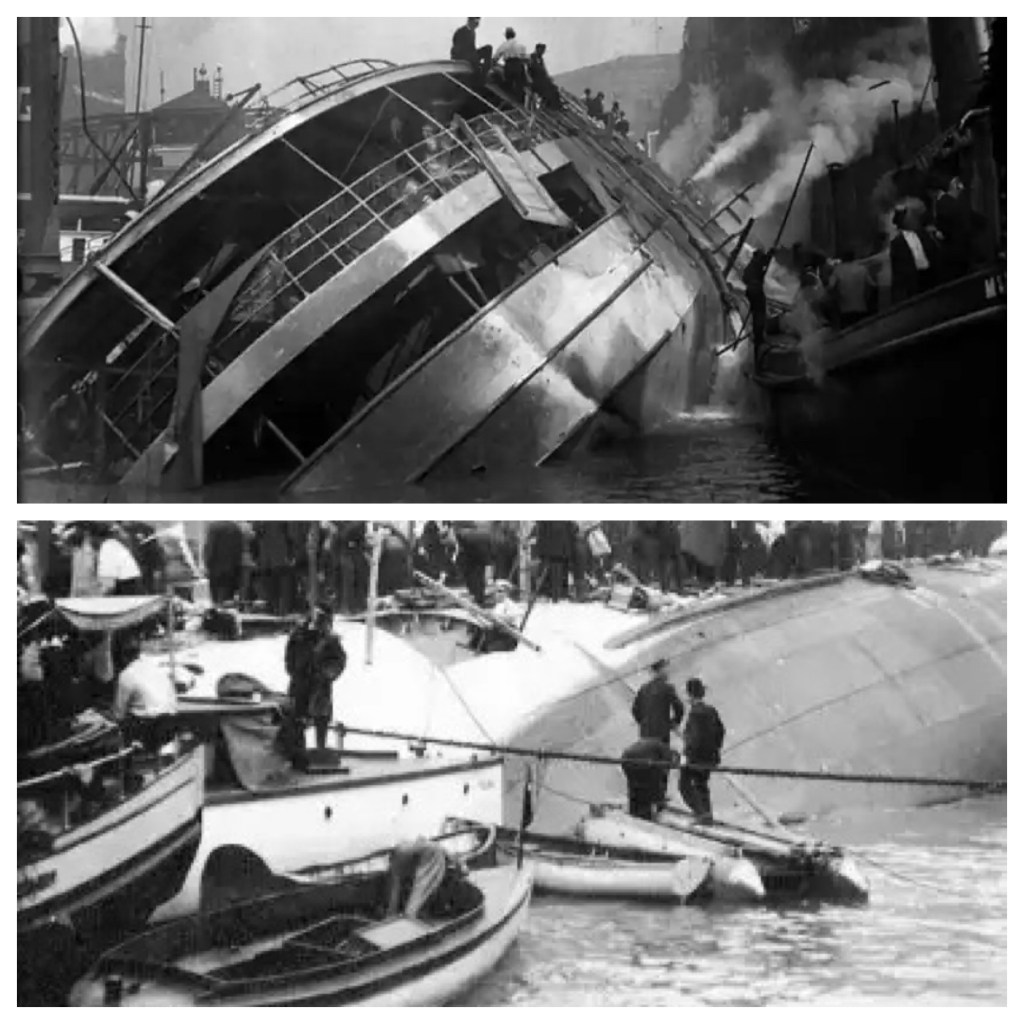
Bottom – Eastland capsized
Images courtesy Max @ Old Steam Ships
NAR©2026
Nancy’s Notes: The Eastland disaster doesn’t get nearly the attention it deserves given the scale of the loss, and Harry B. Thayer’s particular vantage point …. all that responsibility, none of the danger, none of the choices that led to it … needed to be told. The facts about the ship written here are true and accurate; Thayer’s thoughts and words were created by me.
This is “The Eastland” by Lee Murdock
Everything on The Elephant’s Trunk was created by me, unless otherwise indicated. Thanks for your consideration. NAR©2017-present.



What a terrifying story!
LikeLiked by 1 person
It’s truly awful to think about. Thank you, D.
LikeLiked by 1 person
A wonderful way to remind us of this lamentable yet oft forgotten event.
LikeLiked by 1 person
Thank you for reading and sharing your thought, my friend.
LikeLike
I liked your take on this story, Nancy concentration on the perspective of Harry B. Thayer who served as the President of the Chicago company Western Electric Hawthorne Works when the ship sank.
LikeLiked by 1 person
Thanks very much, Jim. Deciding the approach to take for these stories is the most difficult part; once I know that, I can dive into the research and writing part of it, which I love. Max does a great job informing our readers about the ship and the accident; for me to tell it again would be, I think, somewhat boring. Thanks for confirming that I took the right approach. Much appreciated.
LikeLiked by 1 person
Thank you so much… the company were giving their employees something nice and this happens. It really is just awful. I compared it to the earlier Empress of Ireland sinking…but no I shouldn’t have…this was faster, much faster than 14 minutes it took for the Empress. This one was so sudden and quick. Being 20 feet from shore made it even worse. It’s still the single deadliest disaster in Chicago’s history. I don’t know why it’s not more well known. Again Nancy…great story!
LikeLiked by 1 person
Thanks for these great comments, Max. This horrendous tragedy seems almost unbelievable to me; how could something like this happen? Those poor people on the boat and on shore must have been absolutely frantic. This reminded me in some ways of the General Slocum. My grandfather was working construction at the time of that awful accident; the rescue was so difficult, construction and sanitation crews were called in to assist fire and police. I’ll never forget my grandfather’s stories about that day.
I enjoyed using the voice of Harry Thayer and giving our readers a different perspective. I’m sure he carried this weight around for the rest of his life.
LikeLiked by 1 person
Oh wow….I have the General Slocum in my draft folder. Any story you remember that you wouldn’t mind sharing…I’d be happy to share them in the post….more than happy to share. I only found that one around 2 weeks ago.
I thought that was perfect with his voice. He had to feel just terrible…he didn’t cause any of it…but yes he probably did carry it around. It’s easy to imagine the Titanic, Empress or others that were far away from land…but this?
LikeLiked by 1 person
I’ll be perfectly honest with you, Max. If you feature the Gen. Slocum, I’ll be writing about my grandfather in my follow up story. I’m sure you can understand that I want to keep his stories for my own use. Thanks.
BTW – Right now I’m watching the brand new Rick Beato interview on YT with Billy Joel; this is after Billy’s 2025 illness. You must watch it. It’s incredible!
LikeLike
You know what Nancy, I didn’t even think of that. I totally understand I would do the same thing.
I plan to watch that because I saw the video he made right after about not having Paul McCartney or Mick Jagger on and the reason. They should go to his show. More than many of the shows they are on.
LikeLiked by 1 person
Total music with Rick Beato. We don’t need chicken nuggets! 😂
LikeLiked by 1 person
What a tragedy- all those lives lost so close to the shore – what was to be a great day out turned into a nightmare.
LikeLiked by 1 person
Absolutely horrendous …. being so close and unable to get out or help. It seems unbelievable. This remains Chicago’s greatest tragedy, even worse than the Great Fire. Thanks for reading and sharing your thoughts, Ange. ☺️
LikeLiked by 1 person
💜
LikeLiked by 1 person