This week Jim Adams has asked his readers
in his post “Sprouting and Thriving” to write about
a song that won a Grammy award for the Best New Artist.
Written for Song Lyric Sunday, here is my choice.
Category: Music Blog
Finding Tranquility
This week Jim Adams has asked his readers
in his post “Sprouting and Thriving” to write about
a song that won a Grammy award for Best New Artist.
Written for Song Lyric Sunday, here is my choice.
Saints & Sinners
This is Week 47 of Glyn’s Mixed Music Bag and we are
being asked to choose a song by a group or solo artist whose
name begins with the letters U, V or W. This is my choice.
Man, It’s A Hot One
Written for Song Lyric Sunday. This week Jim Adams
has asked his readers in his post “Songs That Matter” to write
about a song that won a Grammy Award for Record of the Year.
Today’s gorgeous graphic was created by Kevin @
No Theme Thursday. Here’s my musical choice.
White Soul At Half-Speed
This is Week 46 of Glyn’s Mixed Music Bag and we are
being asked to choose a song by a group or solo artist whose
name begins with the letters U, V or W. This is my choice.
It Was 20 Years Ago Today
Written for Song Lyric Sunday. This week Jim Adams has asked
his readers in his post ‘Most Prestigious Award Category’ to write about
a song from an album that won a Grammy Award for ‘Album of the
Year’. My choice today is “Sgt. Pepper’s Lonely Hearts Club Band”
from the Beatles’ Grammy Award-winning album of the same name.
Gypsies, Demons and Wizards, Oh My!
This is Week 45 of Glyn’s Mixed Music Bag and we are
asked to choose a song by a group or solo artist whose
name begins with the letters U, V or W. This is my choice.
The Beach Girls
Written for Song Lyric Sunday. This week Jim Adams has
asked his readers in his post “Do It Again” to write about a song
by children of famous singers who also became famous.
This theme was suggested by Barbara (ghostmmnc) at teleportingweena.wordpress.com. This is my choice.
ROAD HOGS
This is Week 44 of Glyn’s Mixed Music Bag and we are
being asked to choose a song by a group or solo artist whose
name begins with the letters S or T. This is my choice.
Family Affair
Written for Song Lyric Sunday. This week Jim Adams
has asked his readers in his post ‘Quality Time’ to write about
a song dealing with parenting or a child/parent relationship.
This theme was my suggestion and here is my reply.
Stroke Me
This is Week 43 of Glyn’s Mixed Music Bag and we are
being asked to choose a song by a group or solo artist whose
name begins with the letters S or T. This is my choice.
Intoxicating Me
It’s Sunday and that means it’s time for Song Lyric Sunday!
This week Jim Adams has asked his readers in his post “Spirits”
to write about a song that mentions drinks or cocktails.
Theme suggested by Di at pensitivity101.wordpress.com. Here is my reply.

Pull up a stool and start running a tab, because we’re diving into a very popular topic in the music world: booze.
Drinking is practically a worldwide pastime. After all, Benjamin Franklin is credited with saying, “Beer is proof that God loves us and wants us to be happy.” Frank Sinatra once said, “Alcohol may be man’s worst enemy, but the Bible says to love your enemy.” And then, there’s the greatest quote about alcohol by the legendary comic actor W.C. Fields: “I spent half my money on gambling, alcohol and wild women. The other half I wasted”!
Whether it’s beer or wine or the hard stuff, there are countless songs about drinking. Some of these songs are upbeat, while others are dark. Some are joyous while others are sorrowful. Regardless, many have resonated with fans spanning multiple generations.
I’m not much of a drinker; while I do occasionally enjoy a glass of wine 🍷, a very dirty martini with extra olives🍸 , a spicy Bloody Mary 🍹 or an ice cold Stella Artois 🍺 on a hot summer day, more than one of any of those libations would wipe me out.
I took some time to explore songs about drinking through a variety of different lenses, from love ballads to cautionary tunes of heartache and everything in between. At the end of it all, when it comes to drinking, most people just want to unwind, have a good time and forget about whatever troubles they’re dealing with.
Not so my featured song today … a classic jazz number from 1938 called “You Go To My Head” which artfully compares the effects of love and drink. There are quite a few versions of the song and I’ve heard most of them; none, in my opinion, come close to Billie Holiday.
Born April 7, 1915 in Philadelphia, Pennsylvania, Billie Holiday was a superstar of her day. She first rose to prominence in the 1930’s with a unique style that reinvented the conventions of modern singing and performance. More than 80 years after making her first recording, Billie’s legacy continues to embody what is elegant and cool in contemporary music. Billie’s complicated life and genre-defining autobiography “Lady Sings the Blues” made her a cultural icon. The evocative, soulful voice which she boldly put forth as a force for good, turned any song she sang into her own. Today, Billie Holiday is remembered for her musical masterpieces, her songwriting skills, creativity and courageous views on inequality and justice. To read more about the extraordinary life of Billie Holiday, please follow this link.
Three different recordings of “You Go to My Head” by J. Fred Coots and Haven Gillespie made the Top 20 list in 1938: Billie Holiday’s version was one of them. Written after a long night at a local speakeasy, the song’s melody can be played as bright and effervescent or as introspective and melancholy. The song has been featured in the movies Laura (1944) and The Big Sleep (1946).
I’ve been in love with “You Go To My Head” since the first time I heard it as a young teenager. It’s a sophisticated jazz piece about love and booze … a very unusual choice for a 13 or 14 year old girl who didn’t know anything about either subject. Somehow I knew this song was much more than a ditty about drinks and love. It’s also the first song with an adult theme which I memorized and practiced singing. I’m sure no matter how many times I performed this song later in life, I never sounded as cool and classy as Billie Holiday.
This is “You Go To My Head” by Billie Holiday
LYRICS
You go to my head
And you linger like a haunting refrain
And I find you spinning round in my brain
Like the bubbles in a glass of champagne
You go to my head
Like a sip of sparkling burgundy brew
And I find the very mention of you
Like the kicker in a julep or two
The thrill of the thought
That you might give a thought to my plea
Casts a spell over me
Still I say to myself, “Get a hold of yourself”
Can’t you see that it never can be?
You go to my head
With a smile that makes my temperature rise
Like a summer with a thousand Julys
You intoxicate my soul with your eyes
Though I’m certain that this heart of mine
Hasn’t a ghost of a chance in this crazy romance
You go to my head
You go to my head
Source: Musixmatch
Songwriters: J. Fred Coots/Haven Gillespie
You Go to My Head lyrics © Wb Music Corp., Toy Town Tunes Inc, Toy Town Tunes, Inc., John F. Coots Jr. Trust Music
Producer(s): John Hammond, Bernie Hanighen
Vocal: Billie Holiday
Composer, Lyricist: J.F. Coots/H. Gillespie
Guitar: Danny Barker
Drums: Cozy Cole
Re-Mastering Engineer(s): Seth Foster, Mark Wilder
Piano: Billy Kyle
Saxophone: Babe Russin
Clarinet: Buster Bailley
Trumpet: Charlie Shavers
Big thanks to Jim Adams for hosting another great Song Lyric Sunday this week and to Di for a terrific theme suggestion! Be sure to follow the links and check out their sites.
Thanks for stopping by. See you on the flip side. 😎
NAR©2024
All text, graphics and videos are copyright for The Sicilian Storyteller, The Elephant’s Trunk and The Rhythm Section and is not for use by anyone without permission. NAR©2017-present.
Change Is In The Wind
This is Week 42 of Glyn’s Mixed Music Bag and we are
being asked to choose a song by a group or solo artist whose
name begins with the letters S or T. This is my choice.

It’s 1990. The Berlin Wall has just come down. The Soviet Union is on the verge of collapse. A heavy metal band from West Germany releases a power ballad called “Wind of Change.” The song becomes the soundtrack to the peaceful revolution sweeping Europe — and one of the biggest rock singles ever. According to some fans, it’s the song that ended the Cold War.
Looking back to 1970, the working-class town of Hannover, Germany, was decidedly not a bastion of R&R music, but Klaus Meine and brothers Rudolf and Michael Schenker changed the way the world perceived Hannover … and even the rest of Germany. As originators of the hard rock band the Scorpions, the trio created top ten hits and generated worldwide attention through both their musical talent and controversial album covers. By 1994, with 15 albums to their credit, the band was deemed “the greatest German rock export”.
Singer Klaus Meine first performed in a band called the Mushrooms. His budding musical career was interrupted, however, by a stint in the German Army. Upon his return to civilian life at age 23, he met a 16-year-old guitarist named Michael Schenker who, four years earlier, had started playing guitar for a young German band. Together they formed a band called Copernicus.
Soon after forming Copernicus, Michael Schenker got an offer from his brother Rudolf to join a band called the Scorpions. Although Rudolf was the Scorpions original singer, he extended the invitation to Meine after seeing his work with Copernicus. On December 31, 1970, rhythm guitarist Rudolf Schenker, lead guitarist Michael Schenker, and singer Klaus Meine kicked off what would become an international R&R force for decades.
The band’s success inspired the release of a live album and a one-hour video movie about the tour titled Worldwide Live. They took part in a record-breaking rock festival in Brazil called Rock in Rio, where they played for 350,000 people. The German rockers went on to play behind the Iron Curtain in Budapest in 1987, thus becoming one of the first Western bands to venture into the Eastern Bloc.
The Scorpions continued to break international, geographical, and political boundaries. The band returned to the Soviet Union in 1989 to play in the Moscow Music Peace Festival at Lenin Stadium. They performed in front of 100,000 people, and the experience provided the inspiration for their super hit single on the Crazy World album —”Wind of Change” which took Crazy World to mega-platinum status. During the Persian Gulf War, troops adopted “Wind of Change” as their anthem.
The single reached #1 in 13 countries and won the ASCAP Award as one of the most performed songs of 1992. Soon after the Berlin Wall fell, the Scorpions played to more than 300,000 fans in the Roger Waters’ production of Pink Floyd’s The Wall —Live in Berlin ’90. By 1994, Crazy World stood as the best-selling rock album in Germany … ever; with estimated sales of 14 million copies sold worldwide, it is one of the best-selling singles of all time.
This is “Wind of Change” by the Scorpions, 1989
From Crazy World this is “Wind of Change”, 1991
LYRICS
I follow the Moskva
Down to Gorky Park
Listening to the wind of change
An August summer night
Soldiers passing by
Listening to the wind of change
The world is closing in
Did you ever think
That we could be so close, like brothers
The future’s in the air
I can feel it everywhere
Blowing with the wind of change
Take me to the magic of the moment
On a glory night
Where the children of tomorrow dream away (dream away)
In the wind of change
Walking down the street
Distant memories
Are buried in the past forever
I follow the Moskva
Down to Gorky Park
Listening to the wind of change
Take me to the magic of the moment
On a glory night
Where the children of tomorrow share their dreams (share their dreams)
With you and me
Take me to the magic of the moment
On a glory night (the glory night)
Where the children of tomorrow dream away (dream away)
In the wind of change (the wind of change)
The wind of change
Blows straight into the face of time
Like a stormwind that will ring the freedom bell
For peace of mind
Let your balalaika sing
What my guitar wants to say
Take me to the magic of the moment
On a glory night
Where the children of tomorrow share their dreams (share their dreams)
With you and me (with you and me)
Take me to the magic of the moment
On a glory night
Where the children of tomorrow dream away (dream away)
In the wind of change (in the wind of change)
Written by: Klaus Meine
Lyrics © BMG Rights Management
Lyrics Licensed & Provided by LyricFind
Big thanks to Glyn Wilton for hosting Mixed Music Bag every week. Please be sure to follow the link and check out Glyn’s site.
Thanks for joining me today and spinning some tunes.
See you on the flip side. 😎
NAR©2024
All text, graphics and videos are copyright for The Sicilian Storyteller, The Elephant’s Trunk and The Rhythm Section and are not to be used without permission. NAR©2017-present.
Getting the Knack
Written for Song Lyric Sunday. This week Jim Adams
has asked his readers in his post, ‘Significance of Names’,
to write about a song with a person’s name in the title.
When you’re 17, raging hormones and unrequited young love can be a combustible combination. And for the American rock band The Knack (named after the British comedy film The Knack … And How To Get It), they provided the spark for their first #1 song and the biggest single of 1979 – “My Sharona”.
Though lead singer Doug Fieger was 25 at the time, he purposefully cast himself in the role of a sex-crazed adolescent for the song. “It was a conscious effort for me to come at it from the point of view of my remembered teenage self,” Fieger once said. “I wanted to tell the story from that place where it’s more raw and direct.”
Lead guitarist Berton Averre came up with the famous intro guitar riff, inspired by the intro and beat of Elvis Costello’s song “Pump It Up” and “Going To A Go-Go” by Smokey Robinson & The Miracles. If you want to hear what inspired Berton Averre, check out those two songs on YouTube. It was pretty obvious to me.
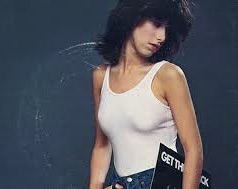
But the real inspiration for the song was one Sharona Alperin (see photo above).
In 1978, when The Knack was on the rise in the Los Angeles pop scene, Doug Fieger was introduced to Sharona Alperin, a dark-haired 17-year-old beauty who worked as a clerk in a clothing shop. Fieger said, “It was love at first sight. Literally. I broke up with my girlfriend and chased Sharona for a year.”
Though Alperin was in a relationship and put Fieger off, it didn’t stop him from pursuing her. “Doug made it very clear he was in love with me,” Alperin said. “It wasn’t like my boyfriend and the world didn’t know. I always say that he was my groupie, I wasn’t his.” Indeed, it was a strange dynamic.
In late 1978, The Knack signed with Capitol, home of their favorite band, the Beatles. “My Sharona” was released a few weeks later, taking over the airwaves in 1979, and has remained a staple in classic rock radio. It has also appeared in several movies, including Reality Bites and Super 8.
Fieger and Alperin finally did get together and had a four year run as a couple. They remained friendly and even 30 years later Fieger called Sharona the love of his life. Fieger died from cancer in 2010 at age 57. Alperin is a now a successful real estate agent in Beverly Hills. Her website’s welcome page (mysharona.com, of course) features the familiar drum beat and guitar riff.
Of the song, Alperin has said, “Michelle, Yoko, Roxanne – there are so many great songs named after women in history. I feel incredibly fortunate that I’ve had this experience. It’s a really exciting adventure that never leaves me.”
“My Sharona” remained at #1 on the Billboard Hot 100 singles chart for six weeks; it was also #1 on Billboard‘s 1979 Top Pop Singles year-end chart. It was certified gold by the Recording Industry Association of America, representing one million copies sold, and was Capital Records’ fastest gold status debut single since the Beatles’ “I Want To Hold Your Hand” in 1964. “My Sharona” has since gone on to sell more than 10 million copies as of 2010.
This is “My Sharona” by The Knack.
LYRICS
Ooh, my little pretty one, pretty one
When you gonna give me some time, Sharona?
Ooh, you make my motor run, my motor run
Gun it coming off of the line, Sharona
Never gonna stop, give it up, such a dirty mind
I always get it up for the touch of the younger kind
My, my, my, I, yi, woo!
M-m-m-my Sharona
Come a little closer, huh, ah, will ya, huh?
Close enough to look in my eyes, Sharona
Keeping it a mystery gets to me
Running down the length of my thighs, Sharona
Never gonna stop, give it up, such a dirty mind
I always get it up for the touch of the younger kind
My, my, my, I, yi, woo!
M-m-m-my Sharona
M-m-m-my Sharona
When you gonna give to me, g-give to me?
Is it just a matter of time, Sharona?
Is it j-just destiny, d-destiny
Or is it just a game in my mind, Sharona?
Never gonna stop, give it up, such a dirty mind
I always get it up for the touch of the younger kind
My, my, my, I, yi, woo!
M-m-m-my, my, my, I, yi, woo!
M-m-m-my Sharona
M-m-m-my Sharona
M-m-m-my Sharona
M-m-m-my Sharona
Mmh, ohh, my Sharona
Mmh, ohh, my Sharona
Mmh, ohh, my Sharona
Source: Musixmatch
Songwriters: Doug Fieger/Burton Averre
My Sharona lyrics © Wise Brothers Music Llc, Eighties Music

© RisMedia
For fans of the popular TV show “Monk”, you’ll remember that Sharona Fleming was Adrian Monk’s nurse and assistant during the first three seasons. Monk was in a catatonic state for three and a half years following the murder of his wife, Trudy, until Sharona began taking care of him. A detective with OCD, Monk (played by award-winning actor Tony Shalhoub) was able to resume work because of Sharona’s care. Monk once remarked, “When she found me, I was drowning”. Sharona Fleming was portrayed by actress Bitty Schram. Here are some clips from “Monk”.
Big thanks to Jim Adams for hosting another great Song Lyric Sunday this week. Be sure to follow the link and check out Jim’s site.
Thanks for stopping by. See you on the flip side. 😎
NAR©2024
All text, graphics and videos are copyright for The Sicilian Storyteller, The Elephant’s Trunk and The Rhythm Section and is not for use by anyone without permission. NAR©2017-present.
Lucky, Otis, Charlie, Nelson and Lefty
This is Week 41 of Glyn’s Mixed Music Bag and we are
being asked to choose a song by a group or solo artist whose
name begins with the letters S or T. This is my choice.
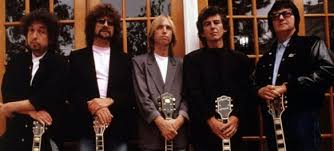
Bob Dylan, Jeff Lynne, Tom Petty, George Harrison and Roy Orbison. Five musical giants on their own; together, a seemingly unstoppable supergroup. In their all-too-short career together, they created some incredible music, had a great time and brought a lot of joy into our lives.
They are, of course, the beloved American-British group known as the Traveling Wilburys. Formed out of friendship and spontaneity, the Traveling Wilburys would never have referred to themselves as a supergroup. Though comprised of some of the biggest names in modern music, the band was much more nonchalant than that.
It all began in 1988, when George Harrison and co-producer Jeff Lynne were tasked with recording a B-side for George’s Cloud Nine album. In need of a place to record on the fly, the two, along with friends Roy Orbison and Tom Petty, were invited over to Bob Dylan’s home studio. The resulting track was “Handle With Care,” a collaborative effort which was just too good to use as a B-side. George later said, “I liked the song so much and the way that it turned out with all these people on it that I just carried it around in my back pocket for ages thinking, ‘Well, what can I do with this thing?’ And the only thing I could think of to do was to record another nine. Make an album.”
As each member of the Wilburys was busy with their own projects, the five friends found a ten-day time frame in which to write and record an album together. Posing as a band of half-brothers (each with his own Wilbury moniker), the group enlisted Monty Python’s Michael Palin to write a fictional history of the group for the LP’s liner notes. George Harrison was “Nelson Wilbury,” Bob Dylan was “Lucky“, Roy Orbison was “Lefty“, Tom Petty was “Charlie T, Jr.”, and Jeff Lynne was “Otis”. Although not an official member of the Traveling Wilburys, Jim Keltner was the session drummer and percussionist on both their albums and was given the nickname “Buster Sidebury”. Traveling Wilburys Vol. 1 was released in October 1988 to wide critical and commercial acclaim.After hitting #3 on the Billboard Top 200 chart, the certified double platinum album earned a Grammy for Best Rock Performance by a Duo or Group.
Sadly, Roy Orbison passed away in December of 1988. The band reunited for one more album, dedicating it to their late friend, and wryly titling the 1990 LP, Traveling Wilburys Vol. 3. In 2007, a retrospective box set, The Traveling Wilburys Collection, was released. Proving the timeless appeal of the Wilburys’ music, the deluxe title hit #1 in six territories and peaked at #9 on the Billboard 200. At the time, The Traveling Wilburys Collection held the record of having the highest debut of a box set in the United States, as well as the biggest first week in sales for a box set in the UK.
The world lost an incredible talent when George Harrison died on November 29, 2001; on October 2, 2017, Tom Petty passed away. Now only Bob Dylan and Jeff Lynne remain. The Wilburys never toured and were only together for a brief, magical time; however, the member’s mutual admiration for each other and genuine joy in the studio still shine through in their recordings.
This is the Wilburys’ largest selling single, “Handle With Care”
One of my favorite Wilburys songs is “The Wilbury Twist“, the final track on their 1990 album Traveling Wilburys Vol. 3. The song was also released in March 1991 as a single from that album and shows off the very humorous side of the group. The original music video featured cameos from many contemporary celebrities including Jimmy Nail, Woody Harrelson, Whoopi Goldberg, Fred Savage, Milli Vanilli, Cheech Marin, John Candy, Eric Idle. and others. The band and special cameos were filmed at the Wilshire Ebell Theatre in Los Angeles.
Here is “The Wilbury Twist”
For my last song, I’ve chosen the one that is probably the best known. The video was filmed in Los Angeles in December 1988. Set in a moving passenger car pulled by a steam locomotive, it features the guys playing guitars and Jim Keltner playing the brushes. Roy Orbison had died after recording his vocals but before the video was made, so a shot of a guitar sitting in a rocking chair and a photo of him are shown when his vocals are heard. In the US, the single peaked at #63 on the Billboard Hot 100 chart and at #2 on the Album Rock Tracks chart. In the UK, the single peaked at #52 on the UK Singles Chart.
This is “End of the Line”
Big thanks to Glyn for hosting Mixed Music Bag every week. Please be sure to follow the link and check out Glyn’s site.
Thanks for joining me today and spinning some tunes.
See you on the flip side. 😎
NAR©2024
All text, graphics and videos are copyright for The Sicilian Storyteller, The Elephant’s Trunk and The Rhythm Section and are not to be used without permission. NAR©2017-present.
Land of the Ice and Snow
Written for Song Lyric Sunday. This week Jim Adams has asked his
readers to write about a song by a band they wish was still together.
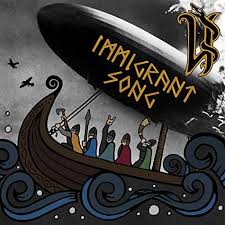
Honestly, I would be very surprised if I’m the only one who chose my featured group and song for Jim Adams’ Song Lyric Sunday theme “Can’t Always Get What You Want”. That’s ok, though; it just reinforces my thoughts and feelings about this iconic group and the incredible music they recorded over the years.
On January 31, 1969, my then boyfriend/now husband and I went to the concert mecca of the Lower East Side of Manhattan – the Fillmore East – where we saw Iron Butterfly perform. The warm-up group was a relatively unknown band from England that totally blew our minds. The name of that band was Adam and the Ants. Wait … I’m kidding! Just checking to see if you’re paying attention.
The name of the band was Led Zeppelin.
Formed in 1968, Led Zeppelin went on to become one of the most influential, innovative, and successful groups in modern music, having sold more than 300 million albums worldwide. The band rose from the ashes of The Yardbirds when Jimmy Page brought in John Bonham, John Paul Jones, and Robert Plant to tour as The New Yardbirds. In 1969, Led Zeppelin released its self-titled debut album, produced by Jimmy Page. It marked the beginning of a 12-year reign during which the group was widely considered to be the biggest and most innovative rock band in the world. In the world; that, my friends, is no small potatoes.
Zeppelin developed their style by drawing from a variety of influences including blues and folk music. With a heavy guitar-driven sound, they are cited as one of the forerunners of hard rock and heavy metal music. Zeppelin has been credited as significantly impacting the nature of the music industry, particularly in the development of album-oriented rock and stadium rock.
Shortly after the tragic death of the band’s drummer John Bonham in 1980, the group disbanded. In a statement released by the group, they explained that they couldn’t go on without their friend. After the break-up, Led Zeppelin had four brief reunions in 1985, 1988, 1995, and 2007. After the gig in 2007, there were rumors about a reunion tour but Robert Plant has continued his touring with American bluegrass-country singer/fiddler/producer Alison Krauss. Plant told the group that he was too busy and they would have to wait. That was 17 years ago. If you’re anticipating a reunion, I wouldn’t hold my breath. But, we can dream.
Led Zeppelin’s catalogue is huge and choosing one song was not easy. In the end, I decided to skip the obvious ones and go with one of my favorites.
“Immigrant Song” is a classic rock anthem that showcases the band’s signature sound. From the band’s 1970 album Led Zeppelin III, the track has surpassed its original context and now serves as a powerful and evocative anthem for the enduring struggles of mythical conflict. The song’s driving riff and powerful lyrics draw inspiration from Norse mythology, with references to Valhalla and war-making. To this day, the song remains a beloved track among fans of Led Zeppelin and rock music in general.
This is “Immigrant Song” by Led Zeppelin.
LYRICS
Ah-ah, ah!
Ah-ah, ah!
We come from the land of the ice and snow
From the midnight sun where the hot springs flow
The hammer of the gods
Will drive our ships to new lands
To fight the horde, sing and cry
Valhalla, I am coming
On we sweep with threshing oar
Our only goal will be the western shore
Ah-ah, ah!
Ah-ah, ah!
We come from the land of the ice and snow
From the midnight sun where the hot springs flow
How soft your fields so green
Can whisper tales of gore
Of how we calmed the tides of war
We are your overlords
On we sweep with threshing oar
Our only goal will be the western shore
So now you’d better stop and rebuild all your ruins
For peace and trust can win the day despite of all your losing
Ooh-ooh, ooh-ooh, ooh-ooh
Ooh-ooh, ooh-ooh, ooh-ooh
Ahh, ah
Ooh-ooh, ooh-ooh, ooh-ooh
Ooh-ooh, ooh-ooh, ooh-ooh
Ooh-ooh, ooh-ooh, ooh-ooh
Source: LyricFind
Songwriters: Jimmy Page/Robert Plant
Immigrant Song lyrics © Warner Chappell Music, Inc
Big thanks to Jim Adams for hosting another great Song Lyric Sunday this week. Be sure to follow the link and check out Jim’s site.
Thanks for stopping by. See you on the flip side. 😎
NAR©2024
All text, graphics and videos are copyright for The Sicilian Storyteller, The Elephant’s Trunk and The Rhythm Section and is not for use by anyone without permission. NAR©2017-present.
A Hoboken Skinny Malink
This is Week 40 of Glyn’s Mixed Music Bag and we are
being asked to choose a song by a group or solo artist whose
name begins with the letters S or T. This is my choice.

With the exception of children, I have yet to meet anyone who has not heard of Frank Sinatra or listened to one of his songs, even in passing. And if you don’t know who Frank Sinatra is, you will probably recognize the names of some of the superstars who sang with him on his highly successful Duets album, artists such as Anita Baker, Tony Bennett, Bono, Natalie Cole, Gloria Estefan, Aretha Franklin, Kenny G, Julio Iglesias, Liza Minnelli, Carly Simon, Barbra Streisand and Luther Vandross. Frank also recorded with popular music sensations Stevie Wonder, Chrissie Hynde, Gladys Knight, Willie Nelson, Elvis, Nancy Sinatra and countless others. And at the age of 54, Sinatra was collaborating with Bob Gaudio, the renowned producer/songwriter behind the genius of the Four Seasons.
Surely some of those names will ring a bell …. and it they don’t, Google them and look up Frank Sinatra while you’re at it because today’s post is a little different. I’m not going to spend my time writing about Frank; instead, I’m going to feature some rare videos by the people who knew him the best followed by a couple of my favorite Sinatra songs. Sit back and enjoy the videos.
Quincy Jones talks about Frank Sinatra and racism in Las Vegas:
Dionne Warwick and Larry King reminisce about Frank Sinatra and Solid Gold:
The best Frank Sinatra story you will ever hear, told by comedian and Frank’s frequent warm-up act, Tom Dreesen:
Dennis Miller tells some funny stories about dinner with Sinatra:
And saving the best for last, this is Richard Burton’s speech about Frank Sinatra:
Now for some music. It would be impossible to play all the Sinatra songs I love so I’m going with four which I think are top notch musically and showcase his incredible talents. Frank was incomparable, as you’ll see in this next video.
This is a live recording of a 1962 concert at Monaco’s Royal Hall; in attendance were Prince Rainier and Princess Grace. The performance was the second night of a two-night charity event to raise money for the United World Colleges Fund. Frank isn’t just singing this song; he’s acting out the story of a guy in a bar who’s hit rock bottom because his girl has left him and the only one around who’ll listen at 2:45 in the morning is the bartender. This is superb storytelling put to music.
Here’s “One For My Baby” live from Monaco, just Frank and a piano.
What kind of New Yorker would I be if I didn’t include Frank’s iconic tribute to my home town? Fuhgeddaboudit! This is “New York, New York”.
Here is an absolutely gorgeous song that recounts the type of girls with whom the singer had relationships at various years in his life. I love this song by Frank; it’s the incredibly lovely and melancholy “It Was A Very Good Year”.
My last song has become synonymous with Frank Sinatra. Other people may have recorded it …. maybe the composer Paul Anka …. but other than him I can’t think of anyone else, not that it matters. I’m really not interested in who else sang it. Even though it’s been said that Sinatra hated this song, it will always belong to him.
Live from Madison Square Garden in NYC, this is “My Way”.
In his six decade career, Frank Sinatra won 11 Grammy Awards, an Oscar for “From Here To Eternity”, and an Emmy Award for “Frank Sinatra: A Man and His Music”. He was honored at the Kennedy Center Honors in 1983, was awarded the Presidential Medal of Freedom by Ronald Reagan in 1985, and the Congressional Gold Medal in 1997. Sinatra possessed one of the best voices of the 20th century. His voice had a broad range and he knew how to make the most of its power, joy, sentimentality, humor and sensuality. He has sold over 150 million records, making him one of the bestselling recording artists of all time. Ironically, he never learned how to read music but had a great ear, a remarkable sense of phrasing and an innate feeling for music. He has left behind an unparalleled catalogue and legacy of music and film.
Big thanks to Glyn for hosting Mixed Music Bag every week. Please be sure to follow the link and check out Glyn’s site.
Thanks for joining me today and spinning some tunes.
See you on the flip side. 😎
NAR©2024
All text, graphics and videos are copyright for The Sicilian Storyteller, The Elephant’s Trunk and The Rhythm Section and are not to be used without permission. NAR©2017-present.
The Big O
Written for Song Lyric Sunday. This week Jim Adams has asked his
readers to write about a song by an artist who is no longer living.
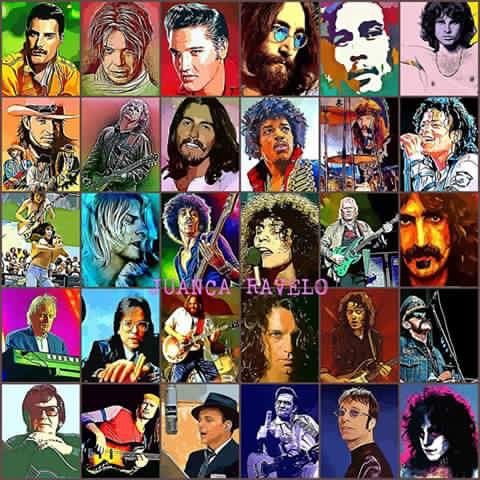
Sadly, there’s an endless list of artists who fit the bill for today’s theme from Jim Adams, aptly (and brilliantly) titled “Turn Me On, Dead Man”. There are so many greats to choose from, I decided to go with someone who consistently touches my heart every time I hear him sing …. The Big O.
Roy Orbison was born April 23, 1936, in Vernon, Texas to a working-class family, growing up immersed in musical styles ranging from rockabilly and country to zydeco, Tex-Mex and the blues. His dad gave him a guitar for his sixth birthday and he wrote his first song, “A Vow of Love”, when he was 8 years old. In high school, Orbison played the local circuit with a group called the Teen Kings. When their song “Ooby Dooby” came to the attention of Sun Records’ producer Sam Phillips, Orbison was invited to cut a few tracks. In addition to a highly collectible album called Roy Orbison at the Rockhouse, their collaboration yielded a re-recording of “Ooby Dooby” that became Orbison’s first minor hit.
After Roy Orbison landed a record deal with the Nashville-based label Monument in 1960, he began perfecting the sound that would define his career. His big break came after he tried to pitch his composition “Only the Lonely” to both Elvis Presley and the Everly Brothers and was turned down by both. Deciding to record the song himself, Orbison used his vibrato voice and operatic style to create a recording unlike anything Americans had heard at the time. Reaching as high the #2 spot on the Billboard singles chart, “Only the Lonely” has since been deemed a pivotal force in the development of rock music. Between 1960 and 1965, Orbison recorded nine Top 10 hits and another ten that broke into the Top 40, including “Running Scared,” “Crying,” “It’s Over” and “Oh, Pretty Woman“.
As distinctive as his three-octave voice was, Roy Orbison’s unglamorous style has been described as “geek chic.” Stricken with both jaundice and bad eyesight as a child, Orbison had sallow skin, a shy demeanor and wore thick eyeglasses. On a fateful day during his 1963 tour with the Beatles, Orbison left his glasses on the plane before a show, which forced him to wear his prescription sunglasses for that night’s show. Although he considered the incident “embarrassing”, the look became an instant trademark.
Roy Orbison’s unhip underdog look suited his music well, as his lyrics were marked by incredible vulnerability. At a time when rock music went hand-in-hand with confidence and machismo, Orbison dared to sing about insecurity, heartache and fear. His stage persona went a long way toward challenging the traditional ideal of aggressive masculinity in rock & roll.
Although the first half of the 1960s saw the rise of Roy Orbison’s star, the second half of the decade brought harder times. Tragedy struck when Orbison’s wife, Claudette, was killed in a motorcycle accident in 1966, and again when his two eldest sons died in a house fire in 1968. Following those incidents, a devastated Orbison failed to generate many hits and with the rise of the psychedelic movement in rock & roll, the market for rockabilly had all but dried up.
In 1980, however, Roy Orbison experienced a return to his musical career when the Eagles invited him to join them on their “Hotel California” tour. That same year, he rekindled his relationship with country music fans by performing a memorable duet with Emmylou Harris on “That Lovin’ You Feeling Again,” which went on to win a Grammy. When Van Halen covered “Oh, Pretty Woman” in 1982, rock fans were reminded that gratitude for the song was owed to Roy Orbison. By the late 1980s, Orbison had staged a successful comeback, joined the all-star supergroup The Traveling Wilburys alongside Tom Petty, Bob Dylan, George Harrison and Jeff Lynn, was inducted into the Nashville Songwriters Hall of Fame and initiated into the Rock & Roll Hall of Fame.
On December 6, 1988, Roy Orbison died of a heart attack. His posthumously- released comeback album, Mystery Girl, reached #5 on the charts, becoming the highest-charting solo album of his career. Although he was only 52 years old when he died, Roy Orbison lived to see his rightful place in music history restored.
My featured song for today is Roy Orbison’s deeply moving hit “Crying”. Recorded and released in 1961, “Crying” tells the story of the one who got away, that old flame that’s so very hard to forget. It’s a beautiful song with a haunting melody, perfect for Orbison’s octaves-spanning voice. “Crying” reached #1 on the US Cashbox chart for one week on October 7, 1961. On the rival Billboard Hot 100 it peaked at #2 where “Hit the Road Jack” by Ray Charles kept it from #1. Despite not reaching the summit in the latter publication, Billboard ranked the record as the #4 song of 1961. In 2002, “Crying” was honored with a Grammy Hall of Fame Award. In 2010, Rolling Stone magazine ranked it 69th on their list of the 500 greatest songs of all time.
There’s no other song by Roy Orbison that touches my heart and soul as deeply as “Crying”. There are also a number of videos for “Crying” but none quite like this.
Here is Roy Orbison with “Crying”.
LYRICS
I was alright for a while, I could smile for a while
Then I saw you last night, you held my hand so tight
When you stopped to say, “Hello”
You wished me well, you couldn’t tell
That I’d been crying over you
Crying over you then you said, “So long”
Left me standing all alone
Alone and crying,
Crying, crying, crying
It’s hard to understand
That the touch of your hand
Can start me crying
I thought that I was over you
But it’s true, so true
I love you even more than I did before
But darling what can I do?
For you don’t love me and I’ll always be
Crying over you
Crying over you
Yes, now you’re gone
And from this moment on
I’ll be crying, crying, crying, crying,
Crying, crying, over you
Source: LyricFind
Songwriters: Joe Melson/Roy Orbison
Crying lyrics © Barbara Orbison Music Company, BMG Rights Management, Orbi-Lee Music, R-Key Darkus, Sony/ATV Music Publishing LLC
Big thanks to Jim Adams for hosting another great Song Lyric Sunday this week. Be sure to follow the link and check out Jim’s site.
Thanks for stopping by. See you on the flip side. 😎
NAR©2024
All text, graphics and videos are copyright for The Sicilian Storyteller, The Elephant’s Trunk and The Rhythm Section and is not for use by anyone without permission. NAR©2017-present.
Sultry Rhythm Redefined
This is Week 39 of Glyn’s Mixed Music Bag and we are
being asked to choose a song by a group or solo artist whose
name begins with the letters Q or R. This is my choice.

Roxy Music became a successful act in Europe and Australia during the 1970s with the success of their 1972 self-titled debut studio album. The band was formed in England in 1970 by Bryan Ferry … who became the lead vocalist and principal songwriter … and bassist Graham Simpson. The other longtime members are Phil Manzanera (guitar), Andy Mackay (saxophone and oboe), and Paul Thompson (drums and percussion). Other members included Brian Eno (synthesizer and “treatments“) and Eddie Jobson (synthesizer and violin).
In 2011, Roxy Music played a series of 40th-anniversary shows and in 2019, was inducted into the Rock & Roll Hall of Fame. In 2022, the group re-formed for a tour to mark the 50th anniversary of their debut studio album.
My featured song today is “Avalon” from their final studio album of the same name; it was certified Platinum in the United States on December 2, 1992 … exactly ten years after its release in 1982.
On the cover photo of the album Avalon, we see the back of a knight’s helmet; resting on his hand is a falcon. They look out over clouds and what seems like the rising sun to a strip of land in the distance – a goal so prized it might as well be Avalon, the paradise where the knight could find rest. And comfort. Even, perhaps, love.
Bryan Ferry was always a ladies man, that is, a man who lived for love. The dark suit, the white shirt, the hair cut just so across the forehead. It’s all atmosphere, all sensuality. The ethereal saxophone. The rhythm that redefined “sultry”.
This is “Avalon” by Roxy Music.
Lyrics
Now the party’s over, I’m so tired
Then I see you coming, out of nowhere
Much communication, in a motion
Without conversation, or a notion
Avalon
When the samba takes you, out of nowhere
With the background fading, out of focus
Yes the picture’s changing, every moment
And your destination, you don’t know it
Avalon
When you bossa nova, there’s no holding
But you have me dancing, out of nowhere
Avalon
Avalon
(Ooh, ooh, yeah)
Avalon
Avalon (Ooh)
Avalon (Ooh)
Avalon (Ooh)
Avalon (Ooh)
Avalon (Ooh)
Avalon
Avalon
Avalon (Ooh)
Avalon
Source: Musixmatch
Songwriters: Bryan Ferry
Avalon lyrics © BMG Rights Management (UK) Limited
Big thanks to Glyn for hosting Mixed Music Bag every week. Please be sure to follow the link and check out Glyn’s site.
Thanks for joining me today and spinning some tunes.
See you on the flip side. 😎
NAR©2024
All text, graphics and videos are copyright for The Sicilian Storyteller, The Elephant’s Trunk and The Rhythm Section and are not to be used without permission. NAR©2017-present.
Remembering Roberta
Written for Song Lyric Sunday. This week Jim Adams has asked his
readers to choose a song that makes them think about life. Here’s mine.
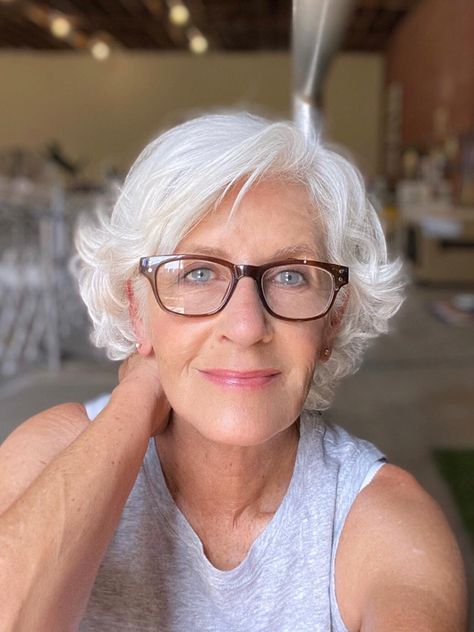
To talk about my featured song, I first need to tell you about my friend, Roberta. She and I had been friends since our sons attended nursery school together, some 44 years ago. Even back then in her early 30s, Roberta had a shock of gorgeous silver-white hair that was always perfectly yet casually coiffed. Just like my grandmother, Roberta’s hair color changed when she was in her 20s and I never saw her with a different color or style.
Roberta’s laugh was one of a kind …. some might call it a cackle …. and you heard her long before you saw her! She rarely took life too seriously and was very forthcoming with her opinions, whether you wanted to hear them or not. I guess you could call her a ‘free spirit’; she lived very much in the moment, often arriving late for appointments because she ran into someone who needed a friend to talk to.
There was never any doubt where you stood with Roberta. If she was pissed off about something, you knew it. She’d speak her mind, clear the air and never mention the issue again. Done and forgotten. But not just forgotten …. forgiven as well. She didn’t hold a grudge; I always thought that was an admirable trait. And she didn’t lie. If anything, she was too honest and her ‘bluntness’ could turn people off. She really didn’t care what people thought about her; life was not a popularity contest. As I said, people always knew exactly how Roberta felt.
She was a devout Catholic, attending Mass every weekend, but she was never showy about it. Roberta and her husband Martin were in charge of the church’s food pantry …. collecting food for families in need …. and not just during the holidays or when a crisis hit but every day of the year …. however, the holidays were very important to Roberta, especially Christmas. That was when she amped up the drive for food, clothes and gifts for needy families in the area, especially the children. In all the years I knew Roberta, I don’t remember anyone else heading up the food pantry except her. She and Martin were special people, far from saints but doing God’s work in an unassuming way.
It came as a terrible blow to everyone when Roberta became dangerously ill almost overnight in August 2014 and was diagnosed with West Nile Virus (for which there is no vaccine or cure although most people recover with proper care). Roberta had an extremely virulent case and within days she lapsed into a coma and never regained consciousness. At one point, she was the only documented case of “death by West Nile Virus” in Westchester County, NY.
The day I visited Roberta at the nursing home was one I will never forget. Had it not been for her name on the door and her glorious mane of white hair, I would not have recognized my longtime friend; the virus left her body terribly swollen, facial features almost fused together. I sat by her bedside, held her hand and sang a song I had sung many times before. And as I sang to my friend, I saw her eyelid barely flutter and her finger quiver ever so slightly and no one will ever convince me that she was unaware of my presence. Four months later, during Christmas week, Roberta died. It was the perfect time for her to take her leave.
The song I sang to my friend that day in the nursing home was “What A Wonderful World”.
According to Wikipedia, “What A Wonderful World” was written by Bob Thiele and George David Weiss. It was first recorded by Louis Armstrong and released as a single in 1967. In April 1968, it topped the pop chart in the UK but performed poorly in the United States because the president of ABC Records disliked the song’s arrangement and refused to promote it. (There’s more on Wiki about that and it’s pretty interesting.) After the song was heard in the 1987 film Good Morning, Vietnam, it was reissued as a single in 1988 and rose to #32 on the Billboard Hot 100. Louis Armstrong’s recording was inducted into the Grammy Hall of Fame in 1999.
Every time I hear this song, I remember Roberta and our last visit together. This is “What A Wonderful World” by Louis Armstrong.
LYRICS
I see trees of green
Red roses too
I see them bloom
For me and you
And I think to myself
What a wonderful world
I see skies of blue
And clouds of white
The bright blessed day
The dark sacred night
And I think to myself
What a wonderful world
The colors of the rainbow
So pretty in the sky
Are also on the faces
Of people going by
I see friends shaking hands
Saying, “How do you do?”
They’re really saying
I love you
I hear babies cry
I watch them grow
They’ll learn much more
Than I’ll ever know
And I think to myself
What a wonderful world
Yes, I think to myself
What a wonderful world
Ooh, yes
Source: LyricFind
Songwriters: George David Weiss/Robert Thiele
What a Wonderful World lyrics © BMG Rights Management, Concord Music Publishing LLC, Kanjian Music, Tratore
Big thanks to Jim Adams for hosting another great Song Lyric Sunday this week. Be sure to follow the link and check out Jim’s site.
Thanks for stopping by. See you on the flip side. 😎
NAR©2024
All text, graphics and videos are copyright for The Sicilian Storyteller, The Elephant’s Trunk and The Rhythm Section and is not for use by anyone without permission. NAR©2017-present.
Girl Power
This is Week 38 of Glyn’s Mixed Music Bag and we are
being asked to choose a song by a group or solo artist whose
name begins with the letters Q or R. This is my choice.

Perhaps the best remembered of the “girl groups” of the early ’60s were Veronica (Ronnie) Bennett, her sister Estelle and their cousin Nedra Talley, also known as the Ronettes. In towering black beehive hairdos and dark eye makeup, the Ronettes were a classic mid-sixties girl group with a sultry twist – vulnerable but tough, sexy but sweet.
A trio of sassy, glamorous young women from the Washington Heights section of New York City, the Ronettes exemplified the girl group ideal, exuding both youthful innocence and worldly sensuality. They were the perfect vehicle for the eccentric, visionary producer Phil Spector, who combined his innovative “Wall of Sound” production techniques with the Ronettes’ rich voices to create such teen classics as “Be My Baby,” “Baby I Love You,” and “Walking in the Rain”. To attain the “Wall of Sound”, Spector’s arrangements called for large ensembles (including some instruments not generally used for ensemble playing, such as electric and acoustic guitars), with multiple instruments doubling or tripling many of the parts to create a fuller, richer tone.
Lead singer Ronnie’s romantic relationship with Phil Spector began in 1963 as an affair while Phil was married. He divorced his wife in 1965 and married Ronnie in 1968, becoming controlling, paranoid and abusive during their relationship. Notorious behavior included making Ronnie drive with a life-size dummy of himself alongside her; he kept her imprisoned in their house and threatened her with murder. She eventually escaped in 1972 and he eventually did commit murder, shooting actress Lana Clarkson in 2003 (click the link for the sordid details). On May 29, 2009, Phil Spector was sentenced to 19 years to life and died in a prison hospital in January 2021.
Ronnie Spector and her bandmates spent 15 years battling Phil for royalties they were owed, eventually successfully; in 2000 a New York court ruled that Phil owed them $2.6m. This decision was reversed in 2002 after judges found that the record deal the group initially signed meant that Phil Spector had rights to the recordings, but in 2006 the New York state supreme court awarded the group a lump sum and ordered Phil to continue paying them yearly royalties. There were further legal complaints later that decade, with Phil accused of withholding royalty payments.
Although the Ronettes are now known almost exclusively for their work with Spector, they actually got their start a few years earlier. As young teenagers, the girls began harmonizing together and won one of the famed Apollo Theater’s talent contests. Ronnie said she, Estelle and Nedra liked to play up their hot image; in 1961, their looks and moves got them hired as dancers at New York’s fashionable Peppermint Lounge, ground zero of the then-current Twist craze. They got a record deal with Colpix and recorded their first single, “I Want A Boy”, credited to Ronnie and the Relatives. The next single “I’m On the Wagon”, listed the girls as the Ronettes. Between their other activities, the girls found themselves in the recording studio backing artist such as Bobby Rydell, Del Shannon and Joey Dee.
There are conflicting stories as to how Phil Spector and the Ronettes actually met but after hearing the girls, Phil was hot to produce a record with them. Spector was taken with Ronnie’s hard but sweet sound and saw the “bad girls” in beehives as an act he could build an image around. Up until that time, girl groups rarely had an identity and never had their photos on the sleeves of their 45s. That changed with the Ronettes.
The first single on Spector’s Philles label in July 1963 was a classic – the Barry/Greenwich/Spector “Be My Baby”. Ronnie’s seductive vocal delivery, along with her now legendary “woh-oh-oh-oh” and Spector’s “Wall of Sound” drove the single to chart success. By October, 1963 it was at #2 and became an international hit as it reached #4 on the English Charts.
The Ronettes’ career took off after they recorded “Be My Baby“. The following January, the group began its first tour of England, where they spent time with the Beatles and the Rolling Stones. The Stones opened for the Ronettes on that tour, and the Ronettes would open for the Beatles on their 1965 tour of U.S. stadiums.
The Ronettes split up in 1967, the victims of changing musical tastes and Phil Spector’s shifting interests and controlling behavior. After leaving Phil in ’72, Ronnie formed a new Ronettes lineup before beginning a solo career.
In 2006, the Library of Congress inducted “Be My Baby” into the United States National Recording Registry. It’s safe to say there was no other girl group like the Ronettes.
Ronnie Spector, 1943-2022. Rest In Peace, Ronnie. ❤︎
From 1963, here are the Ronettes with their classic “Be My Baby”.
Lyrics
The night we met I knew I needed you so
And if I had the chance I’d never let you go
So won’t you say you love me?
I’ll make you so proud of me
We’ll make ’em turn their heads every place we go
So won’t you, please (be my, be my baby)
Be my little baby? (My one and only baby)
Say you’ll be my darlin’ (be my, be my baby)
Be my baby now (my one and only baby)
Whoa-oh-oh-oh
I’ll make you happy, baby, just wait and see
For every kiss you give me, I’ll give you three
Oh, since the day I saw you
I have been waiting for you
You know I will adore you ’til eternity
So won’t you, please (be my, be my baby)
Be my little baby? (My one and only baby)
Say you’ll be my darlin’ (be my, be my baby)
Be my baby now (my one and only baby)
Whoa-oh-oh-oh
So come on and, please (be my, be my baby)
Be my little baby? (My one and only baby)
Say you’ll be my darlin’ (be my, be my baby)
Be my baby now (my one and only baby)
Whoa-oh-oh-oh
Be my little baby? (My one and only baby)
Oh-oh-oh (be my, be my baby)
Oh (my one and only baby)
Whoa-oh-oh-oh (be my, be my baby)
Oh-oh-oh (My one and only baby)
Oh (be my, be my baby)
Source: LyricFind
Songwriters: Ellie Greenwich / Jeff Barry / Philip Spector
Be My Baby lyrics © Abkco Music Inc., Sony/ATV Music Publishing LLC, Universal Music Publishing Group
Big thanks to Glyn for hosting Mixed Music Bag every week. Please be sure to follow the link and check out Glyn’s site.
Thanks for joining me today and spinning some tunes.
See you on the flip side. 😎
NAR©2024
All text, graphics and videos are copyright for The Sicilian Storyteller, The Elephant’s Trunk and The Rhythm Section and are not to be used without permission. NAR©2017-present.
Flying … or … Volare
Written for Song Lyric Sunday. This week Jim Adams has asked his
readers to choose a song they remember from their childhood.
Music has always been a huge part of my life since my days growing up in The Bronx. Every self-respecting Italian family has a finished basement … one wide open room with a kitchen, eating area, a space for family activities, a TV area, a bathroom and closed-off workshop. Our television was one of those big console units which also included a radio and stereo with a storage cabinet and looked something like this:

When my sister and I listened to our music, my mother would either be cooking or in her sewing area and Dad would be at the kitchen table working on a crossword puzzle. He claimed he didn’t like our music but he never actually left the room when it was on. However, on Saturday afternoons my father commandeered the radio so he could listen to his favorite Italian show called “Pasquale C.O.D.” I remember it being just like WMCA … the station I listed … only in Italian. Pasquale was the DJ who’d talk about everything from food to politics and play the top hits from Italy and the US.
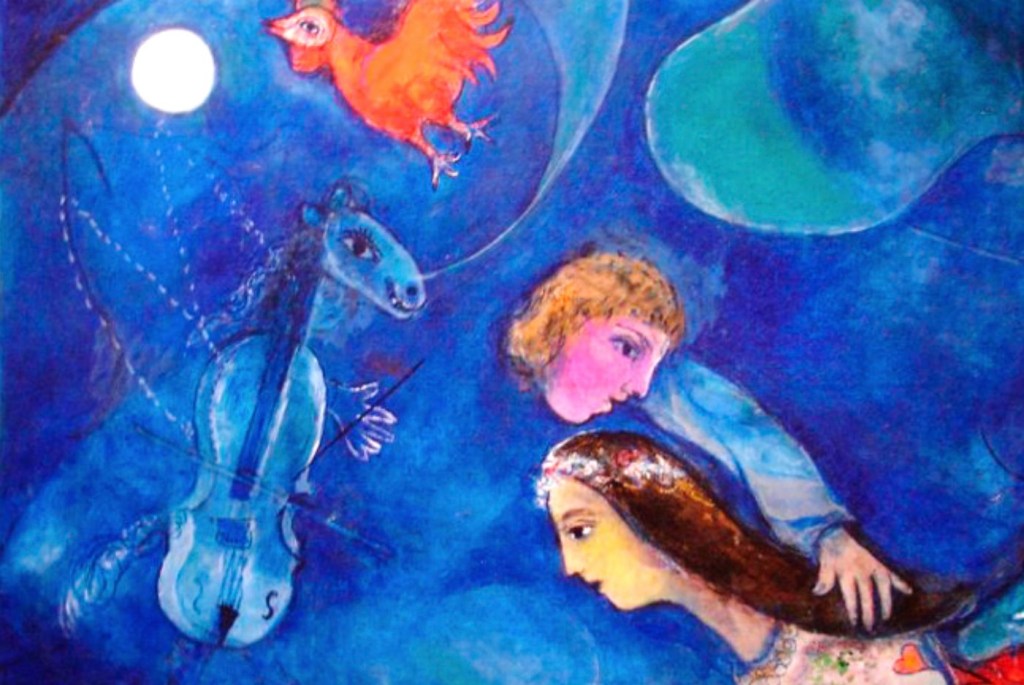
In 1958 there was a song we heard often and it became a family favorite; it got to be so popular, it wasn’t just limited to Dad’s Italian station. People all around the world could hear Domenico Modugno singing his hit “Nel blu, dipinto di blu“, more commonly known as “Volare”. Modugno composed the music and, along with Franco Migliacci, wrote the lyrics. The single was released on February 1, 1958.
The song spent five non-consecutive weeks atop the Billboard Hot 100 in August and September 1958, and subsequently became Billboard’s #1 single for the year. In 1959, at the 1st Annual Grammy Awards, Modugno’s recording became the first ever Grammy winner for both Record of the Year and Song of the Year. For more info about “Volare”, you can click HERE.
Here is “Nel blu, dipinto di blu (Volare)” by Domenico Modugno. This one’s for you, Dad.
LYRICS
I think a dream like this will never come back
Penso che un sogno così non ritorni mai più
I painted my hands and face blue
Mi dipingevo le mani e la faccia di blu
Then suddenly I was kidnapped by the wind
Poi d’improvviso venivo dal vento rapito
And I began to fly in the infinite sky
E incominciavo a volare nel cielo infinito
Flying oh, oh
Volare oh, oh
Singing oh, oh
Cantare oh, oh
In the blue painted blue
Nel blu dipinto di blu
Happy to be up there
Felice di stare lassù
And I flew, I flew happily higher than the sun
E volavo, volavo felice più in alto del sole
And even higher
Ed ancora più su
While the world slowly disappeared far away down there
Mentre il mondo pian piano spariva lontano laggiù
Sweet music played just for me
Una musica dolce suonava soltanto per me
Flying oh, oh
Volare oh, oh
Singing oh, oh
Cantare oh, oh
In the blue painted blue
Nel blu dipinto di blu
Happy to be up there
Felice di stare lassù
But all dreams fade away in the dawn
Ma tutti i sogni nell’alba svaniscon perché
When the moon sets, it takes them with it
Quando tramonta la luna li porta con sé
But I continue to dream in your beautiful eyes
Ma io continuo a sognare negli occhi tuoi belli
Which are blue like a sky studded with stars
Che sono blu come un cielo trapunto di stelle
Flying oh, oh
Volare oh, oh
Singing oh, oh
Cantare oh, oh
In the blue of your blue eyes
Nel blu degli occhi tuoi blu
Happy to be down here
Felice di stare quaggiù
And I continue to fly happily higher than the sun
E continuo a volare felice più in alto del sole
And even higher
Ed ancora più su
While the world slowly disappears in your blue eyes
Mentre il mondo pian piano scompare negli occhi tuoi blu
Your voice is sweet music that plays for me
La tua voce è una musica dolce che suona per me
Flying oh, oh
Volare oh, oh
Singing oh, oh
Cantare oh, oh
In the blue of your blue eyes
Nel blu degli occhi tuoi blu
Happy to be down here
Felice di stare quaggiù
In the blue of your blue eyes
Nel blu degli occhi tuoi blu
Happy to be down here
Felice di stare quaggiù
With you
Con te
Source: LyricFind
Songwriters: Domenico Modugno/Franco Migliacci
Nel blu, dipinto di blu lyrics © Downtown Music Publishing, Peermusic Publishing
There were more than 100 different recordings of “Volare” worldwide but my favorite from 1960 was the version by Italian-American pop singer Bobby Rydell (Ridarelli). Even my dad thought he sounded pretty good! His recording reached #4 on the Hot 100 during the summer of 1960, #22 in the UK and #3 in Canada. Here is Bobby Rydell’s version.
Of course, we couldn’t go flying without the wonderful Il Volo (flight) and their rendition of “Volare”. These young vocal sensations came on the scene long after my father passed away; I wonder what he’d think of them. Here is Il Volo.
Big thanks to Jim Adams for hosting another great Song Lyric Sunday this week. Be sure to click the link and check out Jim’s site.
Thanks for stopping by. See you on the flip side. 😎
NAR©2024
All text, graphics and videos are copyright for The Sicilian Storyteller, The Elephant’s Trunk and The Rhythm Section and is not for use by anyone without permission. NAR©2017-present.
Over the Rainbow
This is Week 37 of Glyn’s Mixed Music Bag and we are
being asked to choose a song by a group or solo artist whose
name begins with the letters Q or R. This is my choice.

Disillusioned and fed up with the chaotic state of Deep Purple in the mid-’70s, guitarist Ritchie Blackmore made the stunning announcement in May 1975 that he was quitting the group he had founded and led for over seven years in order to start from scratch.
Teaming up with up-and-coming American vocalist Ronnie James Dio, Blackmore built Rainbow around the singer’s former band, Elf. Featuring bassist Craig Gruber, keyboard player Mickey Lee Soule, and drummer Gary Driscoll, the group’s 1975 debut Ritchie Blackmore’s Rainbow was quickly embraced by European fans and yielded their first hit single, “Man on the Silver Mountain”.
Blackmore and Dio were dissatisfied with the album’s sound, however, and decided to re-vamp Rainbow (by then sufficiently established to do without Blackmore’s name) by drafting bassist Jimmy Bain, keyboard player Tony Carey, and former Jeff Beck Group drummer Cozy Powell. It was with this lineup that they entered Musicland studios in February 1976 to record the landmark Rising opus – once voted the greatest heavy metal album of all time in a 1981 Kerrang! magazine readers’ poll. Capturing Blackmore and Dio at the peak of their creative powers, Rising chronicled both the guitarist’s neo-classical metal compositions at their most ambitious and the singer’s growing fixation with fantasy lyrical themes – a blueprint he would adopt for his entire career thereafter. Following its release, the band embarked upon a successful world tour, culminating in a sold-out European jaunt which spawned a best-selling live album entitled On Stage, released in 1977.
By the time they returned with the equally acclaimed Long Live Rock ’n’ Roll album, Rainbow had established themselves as one of Europe’s best-selling groups and top concert draws. But the volatile relationship between Blackmore and Dio had already begun to deteriorate, as the American-born singer became increasingly frustrated with standing in the guitarist’s shadow. To make matters worse, Blackmore had been so impressed with Long Live Rock ’n’ Roll’s success as a single, that he began to consider altering the band’s sound in order to pursue a more mainstream hard rock approach … a change in which Dio was not interested. A chance meeting with Tony Iommi of Black Sabbath (recently split for good from unreliable frontman Ozzy Osbourne) helped Dio make up his mind and he officially quit Rainbow in early 1979 to join Black Sabbath.
Rainbow A.D. (After Dio) had two more frontmen … Brit Graham Bonnet and American Joe Lynn Turner; however that’s another story for another time … and no less tumultuous. Blackmore was a very difficult person to work with, or so I’ve read.
“Man On the Siver Mountain”, Rainbow’s first hit with Ronnie James Dio, has been described by Blackmore as “a semi-religious song with the man on the silver mountain as a kind of God figure people are crying out to. It’s about spiritual enlightenment, reaching the top and calling on your inner strength … like finding inner peace and confidence. The man on the silver mountain I think is finding my higher self.”
I wouldn’t know anything about that; I just think it’s an awesome metal track. Here is “Man On the Silver Mountain” by Rainbow.
Lyrics
I’m a wheel, I’m a wheel
I can roll, I can feel
And you can’t stop me turning
Cause I’m the sun, I’m the sun
I can move, I can run
But you’ll never stop me burning
Come down with fire
Lift my spirit higher
Someone’s screaming my name
Come and make me holy again
I’m the man on the silver mountain
I’m the man on the silver mountain
I’m the day, I’m the day
I can show you the way
And look I’m right beside you
I’m the night, I’m the night
I’m the dark and the light
With eyes that see inside you
Come down with fire
Lift my spirit higher
Someone’s screaming my name
Come and make me holy again
I’m the man on the silver mountain
I’m the man on the silver mountain
Come down with fire
Lift my spirit higher
Someone’s screaming my name
Come and make me holy again
I’m the man on the silver mountain
I’m the man on the silver mountain
Just look at me and listen
I’m the man, the man, give you my hand
Come down with fire
Lift your spirit higher
I’m the man on the silver mountain
I’m the man on the silver mountain
I’m the night and the light
I’m the black and the white
The man on the silver mountain
Source: LyricFind
Songwriters: Ritchie Blackmore / Ronnie Dio
Man on the Silver Mountain lyrics © Sony/ATV Music Publishing LLC, Warner Chappell Music, Inc
Big thanks to Glyn for hosting Mixed Music Bag every week. Please be sure to follow the link and check out Glyn’s site.
Thanks for joining me today and spinning some tunes.
See you on the flip side. 😎
NAR©2024
All text, graphics and videos are copyright for The Sicilian Storyteller, The Elephant’s Trunk and The Rhythm Section and are not to be used without permission. NAR©2017-present.
Give Us A Smile
Written for Song Lyric Sunday. This week Jim has asked his
readers to choose a song that reminds them of themselves.

When I read the theme for today’s SLS, I had a pretty good idea what my song was going to be. It’s been one of my favorite songs for a long time. And while it may sound melancholy, it’s message is one of the most uplifting ever written.
Who am I? Just an average person who has been blessed many times over in my life. I had so much fun as a young adult, going to concerts almost every weekend and meeting many extraordinary performers. I have a terrific husband, wonderful adult children and four grandkids. We live in a beautiful town with great neighbors who happen to be our best friends. The only thing I can complain about is the arthritis that has plagued me for the past 24 years. There have been times when the pain really brought me down and healing from surgeries seemed impossible but here I am, still standing. (No, that’s not my song!)
My featured song today is a real classic but some of you may think Michael Jackson was the one who made it popular; it’s much older than that. The music for today’s song was originally written and orchestrated by none other than silent film star Charlie Chaplin, starting as an instrumental for the soundtrack to his 1936 film Modern Times. And instead of being entirely a silent movie, it was the first time Chaplin’s voice was heard on a film. The idea for the movie came about from the Great Depression of 1929; messages of hope were essential to keeping people optimistic despite their circumstances. In 1954, John Turner and Geoffrey Parsons added lyrics to the song based on lines and themes from Chaplin’s Modern Times and gave it the title known around the world as “Smile”.
I know how fortunate I am; hell, Bill and I made it through a horrific rollover back in 2001 and he beat bladder cancer 6 years ago. 2024 hasn’t been a stellar year so far with my brother-in-law’s death and this god-awful spine surgery but we keep going and looking to each other for a smile. I’m an emotional person and wear my heart on my sleeve. Tears come easily but so does laughter. I love to have fun and make people laugh. And each laugh begins with a smile.
This is Tony Bennett.
LYRICS
Smile though your heart is aching
Smile even though it’s breaking
When there are clouds in the sky, you’ll get by
If you smile through your fears and sorrow
Smile and maybe tomorrow
You’ll see the sun come shining through for you
Light up your face with gladness
Hide every trace of sadness
Although a tear may be ever so near
That’s the time you must keep on trying
Smile, what’s the use of crying
You’ll find that life is still worthwhile
If you just smile
That’s the time you must keep on trying
Smile, what’s the use of crying
You’ll find that life is still worthwhile
If you just smile
Writer(s): Music – Charles Chaplin; Lyrics – Geoffrey Parsons, John Turner
Publisher: Tratore
Lyrics licensed and provided by LyricFind
Here is a clip from Modern Times, Chaplin’s last silent film.
Big thanks to Jim Adams for hosting another great Song Lyric Sunday this week. Be sure to follow the link and check out his site.
Thanks for stopping by. See you on the flip side. 😎
NAR©2024
All text, graphics and videos are copyright for The Sicilian Storyteller, The Elephant’s Trunk and The Rhythm Section and is not for use by anyone without permission. NAR©2017-present.
Of Lost Love and Big Rigs
This is Week 34 of Glyn’s Mixed Music Bag; we are
asked to choose a song by a group or solo artist whose
name begins with the letters O or P. This is my choice.
Unless you’ve been living on Neptune all your life, which I highly doubt, it probably won’t be necessary for me to tell you too much about today’s performer. Still, it’s never a good idea to assume so I will give you a brief rundown.
Happy belated birthday to my featured singer who was born August 20, 1948 in West Bromwich, Staffordshire, England. He is a rock singer-songwriter famous for being the lead vocalist of one of the most influential bands of all time. He is known for his powerful style and wide vocal range. After his group’s breakup following the sudden death of the drummer in 1980, my featured singer pursued a successful solo career. Throughout his career, he’s been influenced by many styles such as blues, folk, 50s rock and roll, dance pop, and more.
In 1984, he formed an all-star retro rock group with musicians Jeff Beck, Jimmy Page and Phil Collins and had a top ten hit with a remake of a golden nugget by Phil Phillips. Their version reached the Top 40 while Phil Phillips went nowhere with the song.
In 2007, my featured artist began recording and performing with American bluegrass star Alison Krauss. To see and hear them together is magical … especially in person. A duet album was released in October 2007 and met with enormous success. He and Krauss are still touring.
I’m sure by now you have figured out who my performer is … the one and only Robert Plant, lead singer of Led Zeppelin. However, the song I’ve chosen today is not a Zep song. It is a number from Plant’s second solo album, The Principle of Moments; the song is “Big Log”.
Robert Plant’s lyrics were often influenced by the books of J.R.R. Tolkien. “Big Log” is a mythical, extended metaphor for a lost love: “My love is in league with the freeway … My love is the miles and the waiting.” A “big log” is also common lingo of tractor trailer drivers; it is the book in which their road hours are logged. In the song “Big Log” we see the connection between the road and love and the countless hours we all log on both.
Since the words “big log” are not mentioned anywhere in the song, many people think the actual name of the song is “My Love Is In League With the Freeway”. The obtuse title is typical of Plant’s solo work as well as work with Led Zeppelin, which often featured songs with titles that had little or nothing to do with the lyrics.
In the video, Plant’s classic car overheats at a desolate desert gas station, which causes him to muse upon lost love. Credited to Green Back Films, it’s almost a minute longer than the song itself, with the extra time given to dreamlike scenes in the barren landscape, a strange hotel, and a swimming pool. The video was shot at the Glass Pool Inn in Las Vegas, Calico Ghost Town and the Armargosa Opera House and Hotel in California.
The success of “Big Log” was a boon for Plant; part of the reason he made The Principle of Moments was to have material for touring. He didn’t want to play Zeppelin songs because he was determined to carve out his own solo legacy.
In 2004, bassist Viktor Krauss covered “Big Log” on his second album. His sister, Alison Krauss, sang lead vocals on his version. Plant has often remarked on how much he loved Krauss’ voice. Eventually, he and Alison began recording together and released Raising Sand, which won the Grammy for Album of the Year.
This is “Big Log” by Robert Plant.
Big thanks to Glyn for hosting Mixed Music Bag every week.
Thanks for joining me today and spinning some tunes.
See you on the flip side. 😎
NAR©2024
All text, graphics and videos are copyright for The Sicilian Storyteller, The Elephant’s Trunk and The Rhythm Section and are not to be used without permission. NAR©2017-present.
Just Because
Today at Song Lyric Sunday, Jim has asked his readers
to choose a song by their favorite band; here is mine.
If you were here last Sunday and read my post, you might recall I wrote that this week and last week could end up being interchangeable … and that is the case. The band this week remains the same but the song has changed, although last week’s song could have worked very nicely for this week’s prompt. In fact, just about any of my favorite group’s songs from their vast catalog could have qualified for today’s prompt. I’m not picky.
It’s a well-known fact to everyone who knows me … and that includes you, the people who read my posts … that my favorite group is the Beatles. While my attraction to them during the British Invasion was more of a crazed teenybopper-ish, Beatlemania thing, my love and appreciation for their music has continued to grow throughout the years.
The Beatles have been referred to as a phenom and their music as groundbreaking. No other group has been able to come close to their sound, musicality, artistry, lyrical or harmonic skills. The Beatles are the total package and their music will still be playing long after you and I are gone.
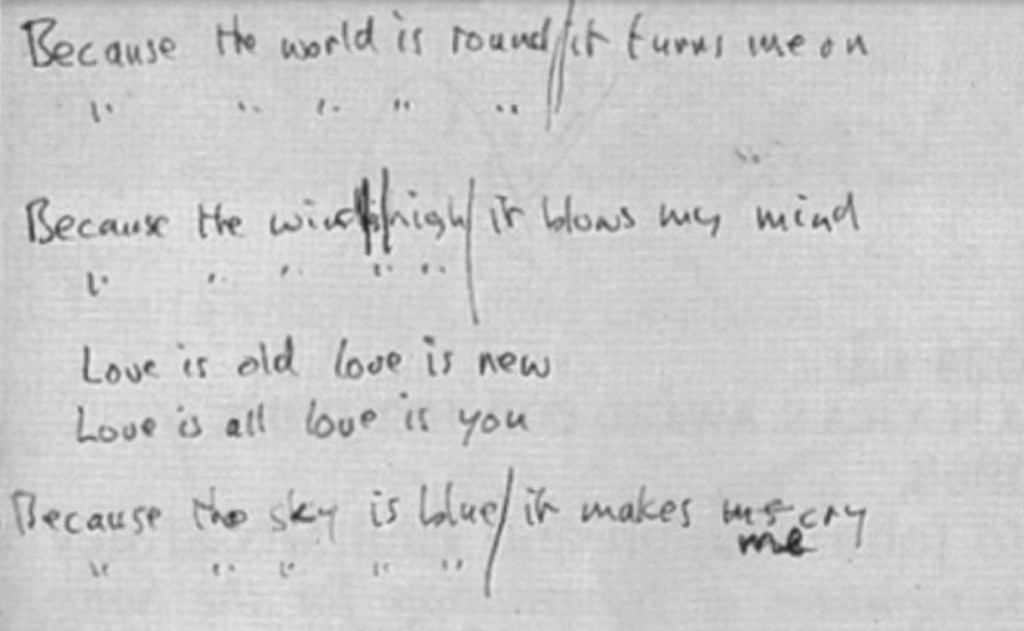
Now, onto the Beatles song I have selected today … from the album Abbey Road, my pick is “Because”. The lyrics are deep, poetic and simply wonderful while the harmony is lush, often heartbreakingly beautiful. The unexpected chords and accidentals are so brilliant, I feel like saying “I saw what you did there and it was very special!”
Composed primarily by John Lennon, “Because” was the final track to be recorded for Abbey Road. The song was inspired by Beethoven’s “Moonlight Sonata” and features the Beatles’ distinctive three-part vocal harmonies.
The story surrounding the song’s creation has to do with John’s wife, Yoko Ono, who is a classically trained pianist. One day in 1969, she was playing “Moonlight Sonata” on the piano in their house and John asked if she could play the chords backwards (a little trick the Beatles were familiar with by playing tapes backwards). Yoko did as she was asked and John wrote “Because” around the backward chords.
The band gathered at Abbey Road Studio on Friday, August 1, 1969, to record the main backing track, which required 23 takes. George Martin played electric harpsichord, John Lennon played guitar, George Harrison utilized a Moog synthesizer, and Paul McCartney played bass. Ringo Starr kept time on cymbals, but they were only heard in the others’ headphones; no percussion appears on the final mix. The Beatles returned to play the vocal tracks three days later. These takes were then layered to sound like nine voices.
This approach took extensive rehearsal, and more than five hours of extremely focused recording to capture correctly. George Harrison and Paul McCartney both said it was their favorite track on Abbey Road. Engineer Geoff Emerick said, “They knew they were doing something special and they were determined to get it right.”
A remixed version of the song with the instrumentation removed (isolated vocals) so as to highlight the three-part harmony was released on 1996’s Anthology 3.
From Abbey Road, here is “Because” by the Beatles.
And from Anthology 3, here is the isolated vocals version of “Because”; those harmonies are sweet!
Lyrics
Ah, because the world is round, it turns me on
Because the world is round,
ah Because the wind is high, it blows my mind
Because the wind is high, ah Love is old, love is new
Love is all, love is you Because the sky is blue, it makes me cry
Because the sky is blue, ah, ah, ah, ah
Source: Musixmatch
Composers/Lyricists: John Lennon, Paul McCartney
Because lyrics © Sony/ATV Tunes LLC, Universal Music Publishing Pty. Ltd.
Big thanks to Jim Adams for hosting another great Song Lyric Sunday this week. Be sure to check out Jim’s site.
Thanks for stopping by. See you on the flip side. 😎
~ Nancy
NAR©2024
All text, graphics and videos are copyright for The Sicilian Storyteller, The Elephant’s Trunk and The Rhythm Section and is not for use by anyone without permission. NAR©2017-present.
Where Is The Answer?
This is Week 33 of Glyn’s Mixed Music Bag and we are
being asked to choose a song by a group or solo artist
whose name begins with the letters O or P. This is my choice.

After meeting in New York City’s Greenwich Village in 1961, folksingers Peter Yarrow, Paul Stookey and Mary Travers decided to form a group and they kept it very simple by calling their trio Peter, Paul and Mary. Playing in folk clubs and on college campuses, they built a youthful following with their lyricism, tight harmonies and spare sound, usually accompanied only by Yarrow and Stookey on acoustic guitars.
With Peter, Paul and Mary’s records and television appearances, they popularized both new and traditional folk songs by such songwriters as Woody Guthrie, Bob Dylan, the Weavers, and Laura Nyro. At the forefront of the folk music revival, the trio created a bridge between folk music and later folk rock.
Prominent in the civil rights movement and the struggle against the Vietnam War, Peter, Paul and Mary included protest songs in a repertoire that also featured plaintive ballads such as “500 Miles” and children’s songs like Yarrow’s “Puff the Magic Dragon.”
After splitting up in 1970 to pursue solo careers, the trio re-formed in 1978 to release the album Reunion. In 1986 they celebrated their 25th anniversary with a series of concerts and released the album No Easy Walk to Freedom.
During the course of their career, Peter, Paul and Mary received five Grammy Awards with multiple wins for “If I Had a Hammer” (1962) and “Blowin’ in the Wind” (1963). Their 1967 recording of John Denver’s “Leaving on a Jet Plane” became a #1 hit in 1969. They also earned a Grammy for the children’s recording “Peter, Paul and Mommy” (1969). Their final studio album, In These Times, appeared in 2003.
The song I have chosen to feature today is the beloved folk song, “Blowin’ in the Wind”, written in 1962 and originally recorded by Bob Dylan.
In the song, the speaker poses a series of huge questions about the persistence of war and oppression, and then responds with one repeated, cryptic reply: “The answer, my friends, is blowin’ in the wind.” Finding an end to human cruelty, the song suggests, is a matter of understanding a truth that’s all around but seemingly impossible to grasp.
Contrary to what many people think, it wasn’t Dylan who made this song a civil rights anthem …. it was Peter, Paul and Mary whose version sold 300,000 copies in its first two weeks of release. The trio’s version, which was the title track of their third album, peaked at #2 on the Billboard charts. The group’s version also went to #1 on the Middle Road charts for five weeks.
It was at the 6th Annual Grammy Awards in 1964 where Peter, Paul & Mary won the two previously mentioned Grammy’s for “Blowin’ in the Wind” …. for Best Folk Recording and Best Performance By A Vocal Group. In 2003, Peter, Paul & Mary’s version of “Blowin’ in the Wind” was inducted into the Grammy Hall of Fame.
Here are Peter, Paul and Mary with Blowin in the Wind”
Bob Dylan’s entire catalogue of songs, which spans 60+ years and is among the most prized next to that of the Beatles, was acquired by Universal Music Publishing Group in December, 2020. The deal covered 600 song copyrights and is estimated to be worth $400 million.
From 1963, this is “Blowin’ in the Wind” by 22 year old Bob Dylan
Big thanks to Glyn for hosting Mixed Music Bag each week; be sure to check out his site.
Thanks for stopping by and spinning some tunes. See you on the flip side. 😎
NAR©2024
All text, graphics and videos are copyright for The Sicilian Storyteller, The Elephant’s Trunk and The Rhythm Section and are not to be used without permission. NAR©2017-present.
I’d Love To Turn You On
Written for Jim Adams’ Song Lyric Sunday

Today’s theme is to feature a song you know all the words to. Easy, right? Yes, especially if you’re a girl like me who’s been singing all her life. I’ve sung with bands, at dinner parties, in church, for school plays and more. I even sang on the radio a couple of times. Big whoopty-damn-doo!! That’s not bragging; it’s just the facts. Everyone is good at something; I suck at math but I have a pretty good voice and a good memory for song lyrics. These days I only sing at home, just like when I was a little kid, and I still know all the words to a ton of songs.
The difficult part was choosing just one song to write about. If I wanted to make things easy for myself, I could have combined today’s theme with next week’s; I’m not saying what it is but in my case the two themes go hand in hand. After much back and forth, I finally chose one song I know all the words to – “A Day in the Life” by The Beatles.
I’m sure almost all of you will be very familiar with this song. John Lennon wrote the melody and most of the lyrics in mid-January 1967 with Paul McCartney contributing the middle-eight section and the pivotal line “I’d love to turn you on”.
The song has multiple themes going on. Number 1, the death of Tara Browne, the Guinness heir, which inspired the first two verses. Browne, a friend of John and Paul, died in a car crash in 1966. John said the song wasn’t a copy of the incident but rather an inspiration. The opening line … “I read the news today, oh boy” … combines English tragedy with a Buddy Holly verbal tic (an involuntary sound or word that’s uttered more than necessary).
The second theme, according to Paul, is about remembering what it was like to wake up late and run up the road to catch a bus to school, having a smoke and going into class where he’d daydream. It was a reflection of his schooldays.
Finally, the third theme – Potholes in Blackburn. The song’s final verse was inspired by an article in the Daily Mail about 4,000 potholes in Blackburn, Lancashire that needed to be filled. Lennon originally read that the town would receive 4,000 plastic circles to hang in the Albert Hall to improve the acoustics. A friend of John’s suggested that they would “fill” the Albert Hall instead.
The song became controversial for its supposed references to drugs. On May 20, 1967, during the BBC Light Programme’s preview of the Sgt. Pepper album, disc jockey Kenny Everett was prevented from playing “A Day in the Life”. The BBC announced that it would not broadcast the song due to the line “I’d love to turn you on”, which, according to the corporation, advocated drug use. Other lyrics allegedly referring to drugs include “found my way upstairs and had a smoke / somebody spoke and I went into a dream”. A spokesman for the BBC stated: “We have listened to this song over and over again. And we have decided that it appears to go just a little too far, and could encourage a permissive attitude to drug-taking.”
Due to the multiple takes required to perfect the orchestral parts and the final chord, the total time spent recording “A Day in the Life” was 34 hours.
Called the greatest Beatles’ song ever written, this is “A Day in the Life” from “Sgt. Pepper’s Lonely Hearts Club Band”. Sing along with me!
Lyrics
I read the news today, oh boy
About a lucky man who made the grade
And though the news was rather sad
Well, I just had to laugh
I saw the photograph
He blew his mind out in a car
He didn’t notice that the lights had changed
A crowd of people stood and stared
They’d seen his face before
Nobody was really sure if he was from the House of Lords
I saw a film today, oh boy
The English Army had just won the war
A crowd of people turned away
But I just had to look
Having read the book
I’d love to turn you on
Woke up, fell out of bed
Dragged a comb across my head
Found my way downstairs and drank a cup
And looking up, I noticed I was late
Found my coat and grabbed my hat
Made the bus in seconds flat
Found my way upstairs and had a smoke
And somebody spoke and I went into a dream
I read the news today, oh boy
Four thousand holes in Blackburn, Lancashire
And though the holes were rather small
They had to count them all
Now they know how many holes it takes to fill the Albert Hall
I’d love to turn you on
Source: LyricFind
Songwriters: John Lennon / Paul McCartney
A Day in the Life lyrics © Kobalt Music Publishing Ltd., Sony/ATV Music Publishing LLC
Big thanks to Jim Adams for hosting another great Song Lyric Sunday this week. Be sure to check out Jim’s site.
Thanks for stopping by. See you on the flip side. 😎
NAR©2024
All text, graphics and videos are copyright for The Sicilian Storyteller, The Elephant’s Trunk and The Rhythm Section and is not for use by anyone without permission. NAR©2017-present.
I’m Special, So Special
This is Week 32 of Glyn’s Mixed Music Bag and we are
being asked to choose a song by a group or solo artist
whose name begins with the letters O or P. This is my choice.

Formed in Hereford, England in March 1978 the Pretenders is an English/American rock group with the fabulous Chrissie Hynde behind the mic. The original band was formed by Hynde, who was the main songwriter, lead vocalist and rhythm guitarist, and included James Honeyman-Scott (lead guitar, backing vocals, keyboards), Pete Farndon (bass guitar, backing vocals), and Martin Chambers (drums, backing vocals, percussion).
Following the unfortunate deaths of Honeyman-Scott (1982) and Farndon (1983), both due to drugs, the band experienced numerous subsequent personnel changes, with Chrissie Hynde as the only consistent member, and Chambers returning after an absence of several years.
Hynde launched a solo career in 2014; after several years without performing, the Pretenders took to the road again in 2017. Chrissie Hynde and Ray Davies of The Kinks share a daughter, Natalie, born in 1983.
The Pretenders produced numerous hit songs including “Brass in Pocket”, “Back On the Chain Gang” and “Don’t Get Me Wrong”, as well as the 1994 hit “I’ll Stand By You”. Their eponymous debut studio album made the band famous with its combination of punk, rock and pop music. The band was inducted into the Rock & Roll Hall of Fame in 2005.
My song today is “Brass In Pocket“.
The phrase “brass in pocket” is British slang for having money in your pants. Chrissie Hynde heard the phrase backstage at one of their gigs in 1978 and immediately liked it. She later used it in the lyrics to their song “Brass In Pocket,” which is about a female singer approaching her first sexual encounter with confidence. The song was a breakthrough for the band and topped the UK charts in early 1980.
“Brass In Pocket” was released as the band’s third single. It was their first big success, reaching #1 on the UK Singles Chart for two weeks in January 1980 (making it the first new #1 single of the 1980s), #2 in Australia during May 1980 (for three weeks) and #14 on the Billboard Hot 100 chart in the United States. It was listed at #389 on Rolling Stone’s “Top 500 Greatest Songs of All Time” in 2021.
In the official video, Hynde portrays a lonely waitress in a backstreet cafe. The rest of the band play customers who arrive in a large pink 1959 Cadillac Fleetwood 60 Special. The three guys peruse the menus but are soon joined by their girlfriends. All six then leave the restaurant.
This is “Brass In Pocket” by the Pretenders.
Lyrics
I got brass in a pocket
I got bottle, I’m gonna use it
Intention, I feel inventive
Gonna make you, make you, make you notice
Got motion, restrained emotion
Been driving, Detroit leaning
No reason, just seems so pleasing
Gonna make you, make you, make you notice
Gonna use my arms, gonna use my legs
Gonna use my style, gonna use my sidestep
Gonna use my fingers, gonna use my, my, my
Imagination
‘Cause I gonna make you see
There’s nobody else here, no one like me
I’m special (special)
So special (special)
I gotta have some of your attention, give it to me
I got rhythm, I can’t miss a beat
I got a new skank, so reet
Got something, I’m winking at you
Gonna make you, make you, make you notice
Gonna use my arms, gonna use my legs
Gonna use my style, gonna use my sidestep
Gonna use my fingers, gonna use my, my, my
Imagination
‘Cause I gonna make you see
There’s nobody else here, no one like me
I’m special (special)
So special (special)
I gotta have some of your attention, give it to me
‘Cause I gonna make you see
There’s nobody else here, no one like me
I’m special (special)
So special (special)
I gotta have some of your attention, give it to me
Oh-oh-oh
Anyway you want
Source: Musixmatch
Songwriters: James Scott / Chrissie Hynd
Brass in Pocket lyrics © Emi Music Publishing, Music Of Big Deal, Hipgnosis Songs Fund Limited
Big thanks to Glyn for hosting Mixed Music Bag every week.
Thanks for joining me today and spinning some tunes.
See you on the flip side. 😎
NAR©2024
All text, graphics and videos are copyright for The Sicilian Storyteller, The Elephant’s Trunk and The Rhythm Section and are not to be used without permission. NAR©2017-present.
Who The Hell Was Bessie?
Today at Song Lyric Sunday, Jim has asked us to choose
a song that begins with the same letter as our first name.
For me that would be the letter N. Here is my song.
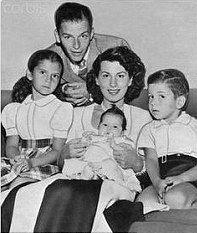
Frank Sinatra Jr; in front Tina Sinatra, 1948
When I say “here is my song” I really mean MY song. From the time I was a baby and able to understand a few words, this song was special to me. As I got older it became even more special … particularly when my dad would sing it. There are a lot of memories attached to this song; I honestly thought it was written for me and that Frank Sinatra was singing it directly to me. You may recall from another of my posts that my dad hated Sinatra; this may be the only song by Frank that Dad liked. My sister Rosemarie really hated my song because she didn’t like any of HER songs; she’d whine that her songs weren’t as pretty and personal as mine and she’d get annoyed every time it was played. But the thing she hated the most was the line “sorry for you, she has no sister”! I guess I can’t blame her for that!
Have you figured out what my song is? Since it was made popular by Frank Sinatra most people wrongly assumed the song was composed specifically for his daughter. Well, that was a pretty big clue so you must know the answer by now! My song choice for today’s Song Lyric Sunday is “Nancy (With the Laughing Face)”.
The music for the song was composed in 1942 by Jimmy Van Heusen with lyrics written by comedian/lyricist Phil Silvers; it was originally called “Bessie (With the Laughing Face)”. Bessie? Who the hell was Bessie? Well, back in 1942 there was a famous lyricist named Johnny Burke who was married to our mysterious Bessie. Jimmy Van Heusen and Phil Silvers wrote the song for their friend Johnny Burke as a surprise for his wife Bessie’s birthday.
All the women at Bessie Burke’s birthday party loved the song so much, they started requesting that it be sung at their parties as well. Apparently Frank Sinatra wasn’t at any of those parties because when his friends Jimmy Van Heusen and Phil Silvers sang the song as “Nancy (With the Laughing Face)” at little Nancy Sinatra’s birthday party, Frank broke down and cried, thinking it had been written especially for his daughter! Johnny Burke, Jimmy Van Heusen and Phil Silvers wisely didn’t correct him.
In 1944, Frank Sinatra recorded the song as “Nancy (With the Laughing Face)” and it became a fan favorite. When I was born several years later, the song became a favorite in our house as well.
This is “Nancy” by Frank Sinatra
Lyrics
If I don’t see her each day, I miss her
Gee, what a thrill each time I kiss her
Believe me, I’ve got a case
On Nancy with the laughin’ face
She takes the winter and makes it summer
But summer could take some lessons from her
Picture a tomboy in lace
That’s Nancy with the laughin’ face
Did you ever hear mission bells ringin’?
Well, she’ll give you the very same glow
When she speaks you would think it was singin’
Just hear her say hello
I swear to goodness you can’t resist her
Sorry for you, she has no sister
No angel could replace
Nancy with the laughin’ face
Keep Betty Grable, Lamour and Turner
She makes my heart a charcoal burner
It’s heaven when I embrace
My Nancy with the laughin’ face
Source: LyricFind
Songwriters: Jimmy Van Heusen/Phil Silvers
Nancy lyrics © Barton Music Corporation, Imagem U.S. LLC, Universal Music Publishing Group
Big thanks to Jim Adams for hosting another great Song Lyric Sunday this week. Be sure to check out Jim’s site.
Thanks for stopping by. See you on the flip side. 😎
NAR©2024
All text, graphics and videos are copyright for The Sicilian Storyteller, The Elephant’s Trunk and The Rhythm Section and is not for use by anyone without permission. NAR©2017-present.
 The Elephant's Trunk