“Rodeo – Hoe-Down” Written by: Aaron Copland Composed: 1942 Release Date: October 16, 1942
Available on: America, The Dream Goes On (1985) Conductor: John Williams Producer: John McClure Arranger: John Williams
Personnel: Boston Pops Orchestra
Composed by Aaron Copland in 1942 for the ballet Rodeo, the “Hoe-Down” features two American square dance tunes and fuses evocative music and dance. Rodeo takes us to the exciting, dramatic world of cowboys, cowgirls and the American West. A hoedown is a dance competition that is often described as noisy and riotous. The music is full of vigor and energy as the cowgirls and boys pair off.
The commission for Rodeo came, surprisingly enough, from the classically oriented Ballet Russe de Monte Carlo, with the music by Copland and the choreography and scenario by Agnes de Mille. The ballet was precedent-setting; the audience demanded 22 curtain calls at its premiere at the Metropolitan Opera House on October 16, 1942. The success of this ballet ensured that dance would thrive as an integral part of American musical theater.
Aaron Copland (1900-1990) was possibly the most famous American composer of the 20th century. He was one of the first serious American composers to carve out his own path amongst the much more famous songwriters and jazz musicians of the 1920s. His music is said to ‘sound like America’ and often features a large, open sound (like the vast American prairies), and complex rhythms (like cowboys on horseback). Copland was born and raised in Brooklyn, NY, the youngest of 5 children all living above their father’s grocery shop. Copland learned piano and started writing down ideas at the age of 8. By the age of 15 he had decided to be a composer and his love of European music led him to Paris to study with the famous music teacher Nadia Boulanger. When he returned home, he began writing music in many different styles including three symphonies, four ballets and several film scores. He also became a great teacher and supporter of young composers. Upon his death, most of his fortune was left to the Aaron Copland Fund for Composers which supports young composers and performing groups. The fund is so large, it will continue to support young musicians for decades.
The music of “Hoe-Down” is about real people …. their folk tunes and customs; it’s full of open plains, a sense of adventure and the American pioneering spirit.
This is Aaron Copland’s “Hoe-Down” from Rodeo, performed by the Boston Pops Orchestra under the baton of John Williams.
May your Saturday be smooth and easy. Thanks for stopping by.
It’s true that Miley Cyrus has become a huge musical star, but did you know she has quite the talented family? We’re all familiar with her famous father, Billy Ray Cyrus, her legendary godmother, Dolly Parton – but what of her four talented siblings?
The youngest child in the Cyrus clan is 24-year-old Noah who has carved out quite an impressive career of her own. In terms of fame, Noah is probably second only to Miley. Her breakout hit, “Make Me (Cry)” earned her a spot on the Billboard Hot 100 right out of the gate at the age of 16. Since that time, her career has only grown. Her unique brand of thoughtful pop has made her one of the most enticing young acts in the game today.
In an interview with American fashion magazine V, Noah Cyrus said this about “Make Me (Cry)” and her video co-performer, Labrinth: “It was really conversational. Labrinthhad a chorus, and we started just going back and forth writing lyrics together. It turned into being about a toxic love.” Teen Vogue described the song as “a gut-wrenching power-ballad that will resonate with anyone who has suffered a broken heart, reinforcing the idea that it’s possible to be lonely even when in a relationship and that being with someone can create more pain than being alone.”
The video depicts the two singers waking up in their respective beds with their partners who are seemingly disinterested in their affection. In alternating shots, we see Noah’s sadness, and then Labrinth’s, and back again as they sing about their significant others. As the song reaches its climax, we can see the duo at the same time in split screen; their raging words give off major “wrecking ball” vibes …. deep thoughts from the mind (and pen) of such a young artist.
This is “Make Me (Cry)” by Noah Cyrus featuring Labrinth
Thanks for stopping by and playing a tune with me.
Welcome to Birthday Thursdays! Each week I will feature someone from the world of music whose birthday falls on this day. There won’t be any chit chat from me, no facts and figures – just some great tunes (and an occasional surprise). Check it out right here every Thursday and enjoy the music.
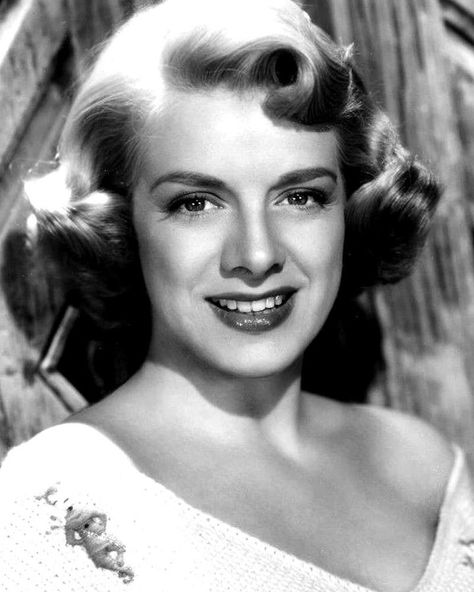
Happy Birthday to Rosemary Clooney Born May 23, 1928 in Maysville, Kentucky
Written for Glyn’s Mixed Music Bag week #21 where we are asked to write about a song by a group or solo singer beginning with the letter I or J.
There was a lot was happening in music in May of 1968 with people making headline news. Gary Puckett and the Union Gap came out with “Young Girl”. Janis Joplin went solo. The Throggs released “Love Is All Around” in the US. Jane Asher reported on a live TV interview that she was breaking up with her boyfriend, Paul McCartney. Hugh Masekela was at #1 on the U.S. singles chart with “Grazing In The Grass” and Cream started a four-week run at #1 on the album chart with Wheels On Fire.
A little further down the listings, the second album from a heavy-and-hard-rocking band out of San Diego, California entered the album chart for the first time – with a bullet at #117! Ok, not the highest of chart debuts, I admit, but some would say this now-legendary set of tunes became the first heavy metal album to hit the charts and opened the floodgates for many a longhaired, guitar-wielding group to blast us with some serious riffs and overlong guitar solos.
The band was Iron Butterfly and the album was called “In-A-Gadda-Da-Vida”, baby.
The track was recorded on May 27, 1968 at Ultrasonic Studios in Hempstead, Long Island, New York. The story goes that the recording which is heard on the album was meant to be a soundcheck for the engineer. However, the engineer had rolled the tape and when the rehearsal was completed, it was agreed that the performance was of sufficient quality that another take was not needed.
According to legend, the group members were so stoned when they recorded the track that they could neither pronounce the title “In the Garden of Eden” nor end the track, so it ended up filling the whole side of the album, coming in at a full 17 minutes of psychedelic rock.
However, another side of the recording story says that the drummer was listening to the track through headphones and could not clearly distinguish what the vocalist was singing. He wrote down the name according to what he heard and in the end they went with “In-A-Gadda-Da-Vida”.
I don’t know about you but I think the first explanation is much more interesting .… and plausible! Well, either way, it didn’t matter. The album that contained the 17-minute title track went on to sell over four million copies in the US alone, with another one million shipped abroad. Not bad for a stoned jam in the afternoon.
The 2-minute, 52 second 45-rpm version of “In-A-Gadda-Da-Vida” was Iron Butterfly’s only song to hit the top 40, reaching #30. The original “In-A-Gadda-Da-Vida” album has the distinction of being the first album to go Platinum in the US, when the Platinum Award was instituted in 1976. In 2009 the song was named the 24th greatest hard rock song of all time by VH1.
Originally released by The Everly Brothers, “Love Hurts“, written in 1960 by Boudleaux Bryant, is a song that delves into the pain and anguish experienced when love goes wrong. The emotional depth conveyed through the lyrics and the haunting melody have made it a beloved and enduring piece of music.
The song’s popularity can be attributed to its universal theme of heartbreak. Love is usually portrayed as a beautiful and uplifting experience, but “Love Hurts” acknowledges the dark side of love, where heartache and emotional turmoil take center stage. This raw honesty has struck a chord with listeners of all generations. “Love Hurts” was never released by the Everly’s as a single and can be found on their album A Date With The Everly Brothers.
The song has been recorded as a duet by Greg Parsons and Emmylou Harris, by Roy Obison in 1961 as the B side to “Running Scared”, by English singer-songwriter Jim Capaldi whose version reached #4 in the UK charts and by the Scottish hard rock band, Nazareth.
Performed as a ballad by Nazareth, “Love Hurts” became the most popular version of the song and the only rendition to become a big hit single, reaching #8 on the Billboard Hot 100 in early 1976.
I’d love to play all the versions of this great song but it is Twofer Tuesday and we can’t have pandemonium erupting on WordPress. After all this time together on The Elephant’s Trunk, I think you can guess which cover I chose to feature today.
This is the wondrous original version of “Love Hurts” by the Everly Brothers.
And this is what it sounded like when Nazareth recorded it:
Another popular Motown sound from the team of Holland-Dozier-Holland is Marvin Gaye’s “You’re A Wonderful One”, recorded and released in 1964 on the Tamla label.
In the song, the narrator praises his “wonderful one” for loving him and for “always (being) around”. Gaye is helped along on this song by The Supremes on background. The great group of session musicians known as The Funk Brothers provided the backing on this number; they incorporated elements of Chuck Berry’s “Memphis” into the intro of this song. “Wonderful One” charted at #15 on the pop charts and #3 on the R&B singles chart.
From February 1964, this is Marvin Gaye with “You’re A Wonderful One”.
And this is what was on the B side – “When I’m Alone I Cry” (a very different sound for Marvin Gaye).
Thanks for joining me today for a little Monday Motown Magic.
“Come, I want to show you my playroom” He stands, holding out his hand. I let him lead me back out to the corridor. On the right of the double doors, where we came in, another door leads to a staircase. We go up to the second floor and turn right. Producing a key from his pocket, he unlocks yet another door and takes a deep breath. “You can leave anytime. It’s fine, whatever you decide.” I tell him to just open the damn door. He opens the door and stands back to let me in. I gaze at him once more. I so want to know what’s in there. Taking a deep breath, I walk in. The first thing I notice is the smell of leather. Suspended from the ceiling is an iron grid, eight foot square at least, and from it hang all manner of ropes, chains, shackles. There’s a startling assortment of paddles, whips, riding crops and funny-looking feathery implements. And it feels like I’ve time-traveled back to the sixteenth century and the Spanish Inquisition.” ~ Excerpts from Chapters 6 & 7, Fifty Shades of Grey, Book 1
The book gets even more interesting …. so I’m told.
There are toys and then there are toys.
There’s a classic soul ballad that speaks to the powerlessness of love. The lyrics describe a person who is willing to do whatever their partner wants them to and be completely under their control. It’s a sensual, titillating, smooth song about the all-encompassing nature of love. But is it “love” or something else, something more? The singer expresses that he would do anything to make his partner happy and would go to any lengths to remain in the relationship. He is a toy, a puppet in her hands.
I wonder if there’s a “safe word” mentioned in the lyrics of this song. “Red” is a common safe word, while “pickle” and “radish” are also popular …. so I’m told. In this song the safe word would probably be “string”, but I’m just speculating.
My featured song for today is “I’m Your Puppet“, a song written by Dan Penn and Spooner Oldham. The best known version is the one recorded by James & Bobby Purify which reached #5 on the US R&B chart and #6 on the Billboard Hot 100 in 1966. The single was nominated for a Grammy Award for Best R&B Performance by a Duo or Group with Vocals in 1967. The song was featured on their 1967 album, James & Bobby Purify.
The duo released a re-recorded version as a single in 1976 which reached #12 on the UK Singles Chart. The single ranked #46 on the Billboard Year-End Hot 100 singles of 1976.
It’s been a long time since I heard this song but when the theme of “toys” was suggested, it was the first song I thought of – not “Red Rubber Ball” or “Pinball Wizard” or even “Puff The Magic Dragon”. And after listening …. really listening and reading the lyrics …. my eyebrows raised a few times. What’s going on here? Is it the sweet and charming song I thought it was almost 60 years ago? You be the judge.
From the album James & Bobby Purify, this is “I’m Your Puppet”.
Lyrics
Pull the string and I’ll wink at you, I’m your puppet I’ll do funny things if you want me to, I’m your puppet
I’m yours to have and to hold Darling you’ve got full control of your puppet
Pull another string and I’ll kiss your lips, I’m your puppet Snap your finger and I’ll turn you some flips, I’m your puppet
Listen, your every wish is my command All you gotta do is wiggle your little hand I’m your puppet, I’m your puppet
I’m just a toy, just a funny boy That makes you laugh when you’re blue I’ll be wonderful, do just what I’m told I’ll do anything for you I’m your puppet, I’m your puppet
Pull them little strings and I’ll sing you a song, I’m your puppet Make me do right or make me do wrong, I’m your puppet
Treat me good and I’ll do anything I’m just a puppet and you hold my string, I’m your puppet
Darling, darling, pull the strings, let me sing you a song any day I’m your puppet baby, you can sing for me all night long
“It Was A Very Good Year” Written by: Ervin Drake Recorded: 1965 Producer: Sonny Burke Conductor: Gordon Jenkins Arranger: Gordon Jenkins Released: December 1965
Available on: September Of My Years (1965) Sinatra At The Sands (1966)
Personnel: Frank Sinatra – vocals Featuring Gordon Jenkins and his Orchestra
Ervin Drake’s “It Was A Very Good Year” was written in 1961 and originally recorded by Bob Shane of The Kingston Trio that same year but it was Frank Sinatra’s rendition in 1965 that made the song legendary with his Grammy Award-winning version.
The nostalgicand melancholic song recounts the type of girls with whom the singer had relationships at various years in his life: when he was 17, “small-town girls … on the village green“; at 21, “city girls who lived up the stair“; at 35, “blue-blooded girls of independent means“. Each of these years he calls “very good“. In the song’s final verse, the singer reflects that he is older and in the autumn of his years, and he thinks back on his entire life “as vintage wine”. All of these romances were sweet to him, like a wine from a very good year.
Sinatra’s version of the song, which won Best Vocal Performance, Male, also took home the Grammy for Best Instrumental Arrangement Accompanying Vocalist by Gordon Jenkins. The song became Sinatra’s first #1 single on The Adult Contemporary chart and reached #28 on Billboard Hot 100.
Ervin Drake commented on Sinatra’s rendition saying, “Someone played it to me down a telephone. It wasn’t a great phone line but I knew I’d heard a masterpiece and I fell in love with it. I’ve never stopped loving it.”
This is Frank Sinatra with “It Was A Very Good Year”
May your Saturday be smooth sailing. Thanks for stopping by.
Today for the first time I am featuring the “friends” aspect of Friends & Family Friday.
The story starts on May 4, 1968, on the British television talent show “Opportunity Knocks,” where a talented 17-year-old Mary Hopkin began performing, going on to win six episodes in a row. Mary had no way of knowing that the iconic British model Twiggy was watching one of those performances on her television at home. That weekend Twiggy was talking to a friend about Mary’s performance on the program, a friend who was soon to establish a record label with his band. That friend was Paul McCartney. Just two days later, Mary received a telegram asking her to call Apple Corps. Hesitant at first, she was persuaded by her mother to call the number on the telegram.
“So I rang up and was put through to this guy with a Liverpool accent” Mary later recalled. It was, of course, Paul McCartney and the next day Mary was on her way to London to sign a contract. The young Welsh singer was one of the first to sign with the Beatles’ Apple label. Mary’s stint with Apple resulted in two albums – Post Card and Earth Song/Ocean Song, a slew of well-crafted singles and an EP released in Indonesia. Mary later admitted her association with Apple ended mainly because of Paul McCartney’s micro-management of her career.
One of Mary Hopkin’s songs on the Apple label is the exquisite “Martha” written by Harvey Andrews – a song about a lonely woman who sits by her phone waiting for someone to call. Martha listens in on her neighbors’ conversations, feeding on their despair. She appears to be a nosy, manipulative and unhappy person who is consumed with the lives of others while neglecting her own. Her behavior is likely the result of a broken heart and a shattered life. The song paints a sad and eerie picture of a woman who has lost her way and is happy only in the misery of others.
This is Mary Hopkin with the hauntingly stunning “Martha”.
Thanks for stopping by and catching some tunes with me.
Welcome to Birthday Thursdays! Each week I will feature someone from the world of music whose birthday falls on this day. There won’t be any chit chat from me, no facts and figures – just some great tunes (and an occasional surprise). Check it out right here every Thursday and enjoy the music.
Happy Birthday to Liberace Born May 16, 1919 in West Allis, Wisconsin
Written for Glyn’s Mixed Music Bag #20, where we are asked to write about a song by a group or solo singer beginning with the letter I or J.
The date was January 24, 1969. Jethro Tull stepped on stage at the Fillmore East to play their inaugural performance in the United States. Tull hadn’t yet reached the point of popularity in The States to warrant a headlining gig; they were the opening act for Blood, Sweat and Tears. That’s who we were there to see. When the opening act started playing, I remember turning to Bill and saying “I could be wrong but I think that guy’s playing a flute!” and that was the beginning of my love affair with Jethro Tull.
Even if their long career stalled at the start of the ‘70s, Jethro Tull would still go down in rock history for that one crucial thing: they proved that the flute could be a killer R&R instrument. Front man Ian Anderson has wielded the instrument – a favorite among middle-school-band girls and wandering minstrels for almost a thousand years – like a madman onstage, aggressively blowing solos usually reserved for guitars or saxophones. But paired with the band’s era-spanning brand of progressive folk music – expertly displayed on 1971’s breakthrough Aqualung album – the flute has become a weapon of mass destruction in Anderson’s hands. Despite the many lineup changes the band has gone through over the years, Jethro Tull’s records have rarely diverted from their ambitious paths. The group infamously won the first-ever Hard Rock/Metal Grammy in 1989. So there!
The track“Aqualung” is a story of homelessness and how society deals with it. Ian Anderson said his wife took photos of the homeless and showed them to him. Many of the lyrics describe actual homeless men. His wife also wrote some lyrics from the photos. Anderson went on to say “Aqualung” is a “guilt-ridden song of confusion about how you deal with beggars, the homeless and our reaction of guilt, distaste, awkwardness, all these things that we feel when we’re confronted with the reality of the situation.You see someone who’s clearly in desperate need of some help, whether it’s a few coins or the contents of your wallet, and you blank them out. The more you live in that business-driven, commercially-driven lifestyle, you can just cease to see them.”
Here’s a bit of history regarding the name of the album/song. An Aqualung is a portable breathing setup for divers (think scuba gear). Anderson’s photos showed a homeless man with breathing problems and the name “Aqualung” came to him. It turns out that Aqualung was a brand name for the deep sea breathing system in a TV show Anderson liked to watch – Sea Hunt. In a 2019 interview, Ian Anderson said, “They tried to sue the hell out of us, the Aqualung Corporation of North America. We apologized profusely and said, ‘Sorry, we didn’t know. We thought ALL underwater breathing apparatus were called Aqualungs because it’s so famous the world over.’ It was an honest mistake. I think they were flattered by the fact that we thought they were the one and only kind of company doing that stuff. They decided not to sue us after all.” Great story!
“Aqualung” was never released as a single simply because it’s too long. Radio at the time was sharply divided between AM, which played the 3-minute pop hits, and FM, where they played what was called deep cuts. The album Aqualung is Jethro Tull’s best-selling with more than seven million units worldwide. It was generally well-received critically and has been included on several music magazines’ best-of lists.
From 1971, this is “Aqualung” by Jethro Tull, from the album of the same name..
And this is Ian Anderson’s Flute Solo from 1976 in Tampa, Florida
Whether solo or with Roxy Music, this is one of the few Bryan Ferry tracks that cracks a wide smile, sending up his jet-set image while celebrating it at the same time. Originally recorded by soul singer Dobie Gray, “The “In” Crowd” often gets confused for a Motown number, thanks to the label’s arranger Gene Page, who gave the single the Motown touch. Before Ferry tackled the tune, Ramsey Lewis Trio recorded a live instrumental version in 1964; later, Cheap Trick performed a cover of Ferry’s cover. Confused yet?
In the US, Gray’s powerful version, complete with brass section, reached #11 on the Hot Rhythm & Blues Singles chartand #13 on the Billboard Hot 100 on February 20, 1965. Outside the US, “The “In” Crowd” went to #25 on the UK Singles Chart and #8 in Canada.
Bryan Ferry’s 1974 singles release reached #13 on the UK Singles Chart. His album cover for “Another Time, Another Place”, which featured “The ‘In’ Crowd”, is one of the coolest in a James Bond kind of way.
By Dobie Gray in 1964, here is the original “The “In” Crowd”.
And this is what it sounded like when Bryan Ferry recorded it.
And just because it’s my post and I can do whatever I like 😄 this is the RamseyLewis Trio showing us how to do jazz right.
That’s today’s Twofer Tuesday plus one! Thanks for stopping by!
When you listen to the many great tunes of The Temptations, I’m sure the one thing you don’t know or even imagine as possible is that their first seven singles were commercial failures. In contrast their hit soul/R&B single “The Way You Do The Things You Do”, released in 1964 from their album Meet The Temptations, was a huge success. It peaked at #11 on the Billboard Hot 100 and went to #1 on the Cash Box R&B chart. “The Way You Do The Things You Do” was written by Smokey Robinson and Bobby Rogers of The Miracles; now that you know that I think you’ll hear that familiar Miracles’ influence.
Otis Williams of The Temptations recalled in 2009: “The first time we heard the song, we loved it. The melody swung, and the lyrics had lots of charm.It was typical Smokey talkin’ about how to get a girl and he made it all work. It got a good response whenever we did it live, so our hopes were up. We knew from past experience that even the best tracks don’t always click.”
I guess after seven flops, Otis knew what he was talking about.
From 1964 here are The Temptations with their first hit, “The Way You Do The Things You Do”.
And this is what was on the B side – “Just Let Me Know” written by Berry Gordy, Jr.
Thanks for joining me today for a little Monday Motown Magic.
Today’s theme at Song Lyric Sunday is all about songs that reached #2 on the charts but never got to #1. Be sure to stop by and read Jim’s post, “Fell Short“.
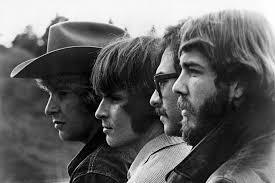
On November 21, 1968, I had the pleasure of seeing the debut performance of Creedence Clearwater Revival at the Fillmore East in NYC; I was actually there for the headliners, Deep Purple, but that’s another story. This post is all about CCR.
Here’s one indisputable fact: Creedence Clearwater Revival was one of the biggest commercial successes of the late 1960s and early ’70s. During a time when psychedelic rock, R&B, Motown soul, funk and metal were all on the rise, CCR’s unique blend of driving ’50s-style R&R and classic Americana imagery made them one of the biggest standouts of the era. With John Fogerty’s singular voice and songwriting skill, CCR was in a league all its own, and audiences on both sides of the Atlantic responded by making them a huge draw for albums, singles, and live performances.
Here’s another indisputable fact: Creedence Clearwater Revival has had the most #2 singles on the Billboard Hot 100 without ever having a #1 hit. Somehow, the band that defined their generation wasn’t able to ever sit atop the singles mountain. If nothing else, CCR’s lack of #1 singles is a testament to how fickle the Hot 100 chart can be and how lucky an artist has to be in order to score a #1 hit. Month after month for years on end, CCR would throw classic song after classic song out into the world, scoring nine top ten hits and five #2 singles without ever cracking the top of the chart.
The lack of a #1 hit never seemed to affect the band’s popularity, however, as they landed two #1 albums with Green River and Cosmo’s Factory. The band continued to sell out large venues as a live act, and its last top 10 hit ‘Sweet Hitch-Hiker’ came even as the band was falling apart. No one could say that CCR wasn’t popular enough to get a #1 song, but for whatever reason, they could never quite scale the mountain.
After Proud Mary and Bad Moon Rising stalled out at #2, John Fogerty believed he had the perfect answer: the title track to the band’s upcoming album Green River. But while the album went all the way to #1, the song “Green River” once again got stuck at #2.
To add insult to injury, CCR was beaten out at #1 by a group that wasn’t even a real band! The Archies were based on the characters from the Archie Comics series, which had its own cartoon series on CBS at the time. Manager Don Kirshner originally created The Monkees but was frustrated that the members began taking control of the project. Cartoons couldn’t talk back so Kirshner got session musicians and songwriters to fill in the rest. Just in case you’re wondering, The Monkees have three #1 hits with ‘I’m A Believer’, ‘Last Train To Clarksville’, and ‘Daydream Believer’.
FYI – the remaining two CCR songs that stalled at #2 were both double-A sides: “Travelin’ Band/Who’ll Stop The Rain” and “Lookin’ Out My Back Door/Long As I Can See The Light”. They were beat out by Simon & Garfunkel’s “Bridge Over Troubled Waters” and Marvin Gaye/Tammi Terrell’s “Ain’t No MountainHigh Enough”, respectively.
From July 1969 this is Credence Clearwater Revival with “Green River’ from the album of the same name.
LYRICS
Well, take me back down where cool water flows, y’all
Although the band members were only together for four years, they managed to accomplish more than many artists do in their entire career – releasing seven studio albums (five of which were on the Billboard Top Ten), and a seemingly endless string of memorable singles (including nine Top Ten hits). The group also performed a historic headlining set at Woodstock and toured the world before disbanding in 1972. In 1993 they were inducted into the R&R Hall of Fame. CCR’s music endures today, on the radio and regularly in films and TV shows. Having sold over 30 million albums in the US alone, Creedence received a rare Diamond certification from the RIAA in 2016, marking 10 million units in sales for their 1976 compilation album, Chronicle: The 20 Greatest Hits.
Big thanks to Jim for hosting another great Song Lyric Sunday.
“The Midnight Cowboy Theme” Written by: John Barry Recorded: 1969 Engineer: Chris Malone Arranger: John Barry
Released: August, 1969
Available on: Midnight Cowboy – Original Motion Picture Score Best of John Barry Multiple recordings released worldwide
Personnel: Toots Thielemans – harmonica Featuring The John Barry Orchestra Various Artists
Although “Everybody’s Talkin’” by Nilsson is the most memorable and popular song from Midnight Cowboy, the film’s actual title song is “The Midnight Cowboy Theme,” a haunting instrumental written by the prolific songwriter John Barry, who has done numerous soundtracks. The theme is immediately recognized by the lonely harmonica which serves as the main instrument. There are lyrics, though the song has rarely been recorded as a vocal.
Midnight Cowboy was one of the first films to make extensive use of pop artists and songs. John Barry supervised the music and composed the score, winning a Grammy for Best Instrumental Theme. The movie is still shown at the cinema school at UCLA as the epitome of how songs should be used in the movies.
John Barry also composed eleven soundtracks for James Bond films between 1963 and 1987 as well as the famous “James Bond Theme” from Dr. No, the first Bond film. He also wrote the award winning scores to the films Dances With Wolves and Out Of Africa as well as the scores for The Lion in Winter, Born Free, and Somewhere in Time.
Midnight Cowboy is the only X-Rated movie to have won an Academy Award for Best Picture.
This is “The Midnight Cowboy Theme”
May your Saturday be smooth sailing. Thanks for stopping by.
Many rock fans will undoubtedly remember the only child of George Harrison when the then 24 year old Dhani Harrison appeared at the Concert For George in 2002. Two years later he was at his father’s 2nd induction into the Rock & Roll Hall of Fame (once as a Beatle and then for his solo work) where Dhani performed “While My Guitar Gently Weeps” alongside Tom Petty, Steve Winwood, Jeff Lynne and Prince.
Dhani Harrison has since released a great deal of work as a solo artist, as part of the bands thenewno2 and Fistful of Mercy. Thenewno2 have been credited with the album design for George Harrison’s “Brainwashed” and “Dark Horse Years” box set, the Concert for George and the menu design for the 2005 Concert for Bangladesh DVD. Dhani Harrison has also scored many movies and television shows.
Of course the physical resemblance to his father is incredible but the similarity in voice and stage presence is undeniably strong. During an interview, George once commented that he said to Dhani “You look more like me than I do”; that was George’s humor to a T. I chose to feature one of the Beatles’ songs on which George sang lead so you can experience just how strong the Harrison family genes really are.
This is Dhani Harrison with “Savoy Truffle” from 2014’s “Georgefest” at the Fonda Theater in Hollywood.
Thanks for joining me today. See you on the flip side. 😎
Welcome to Birthday Thursdays! Each week I will feature someone from the world of music whose birthday falls on this day. There won’t be any chit chat from me, no facts and figures – just some great tunes (and an occasional surprise). Check it out right here every Thursday and enjoy the music.
Happy Birthday to Billy Joel Born May 9, 1949 in New York, New York
Written for Glyn’s Mixed Music Bag #19, where we are asked to write about a song by a group or solo singer beginning with the letter I or J.
Iron Maiden is an institution. Over the course of 48 years they have come to embody a spirit of fearless creative independence, ferocious dedication to their fans, and a cheerful indifference to their critics that’s won them a following that spans every culture, generation, and time-zone. A story of gritty determination and courageous defiance of the naysayers, theirs has been an adventure like no other. Every one of their songs is a story and that for me, as a storyteller, is one of the key ingredients to their success. They are unique and different from every other heavy metal band with song lyrics covering such topics as history, literature, war, mythology, society and religion.
Iron Maidenhas released 41 albums, including 17 studio albums, 13 live albums, four EPs and seven compilations. They have also released 47 singles and 20 video albums, and two video games. The band has played some 2,500 live shows and is still touring today. Iron Maiden has become one of the most influential and revered rock bands of all time.
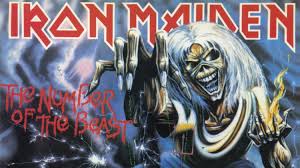
On the evening of October 2, 1982, my husband Bill and I hired a babysitter for our boys and drove into Manhattan for what would be one of our final rock concerts. It had been a while. Now that we had kids, who knew when we would be able to have this experience again. We were all grown up with a different set of priorities but this was one event we could not miss. Performing that night at Madison Square Garden were two British groups Bill and I didn’t have a chance to see B.K. (Before Kids). They were Judas Priest and Iron Maiden. And one of the songs Maiden performed that night was “The Number Of The Beast”.
Upon release in 1982, the song caused controversy in the United States where its religious subject matter caused outrage among religious groups. In spite of this, it remains one of the band’s more popular songs, reaching #18 in the UK singles charts on its original release, and #3 on two successive occasions in 1990 and 2005. It has been performed on almost all of their concert tours.
According to the song’s writer, bassist and band-founder Steve Harris, it was inspired by a nightmare he had after watching the film “Damien: Omen II” late at night, in addition to the poem “Tam o’ Shanter” by Robert Burns. The song opens with a spoken word passage which quotes Revelation 12:12 and Revelation 13:18. The track is known for its very long, high-pitched and guttural wail at the end of the intro, which AllMusic describes as “the most blood-curdling Dickinson scream on record“.
Live from Madison Square Garden in New York City, this is Iron Maiden with “Number Of The Beast”
Leonard Cohen’s career was at a low point when he wrote “Hallelujah” in the early 80s, and his record label had no interest in even releasing the track or the rest of the songs that eventually came out on 1984’s Various Positions. The track was a fan favorite, but it didn’t receive much love until the Velvet Underground’s John Cale created a stripped-down piano version for a 1991 Leonard Cohen tribute album.
Jeff Buckley used Cale’s version as the basis for his stunningly beautiful version of the song on his 1994 LP Grace. The track wasn’t a single, but after Buckley’s tragic death in 1997 the song slowly started to become recognized as a classic. In 2004 Jeff Buckley’s version of “Hallelujah” was ranked #259 on Rolling Stone‘s “The 500 Greatest Songs of All Time”.
This is “Hallelujah” by the man himself, Leonard Cohen
And this is what it sounded like when Jeff Buckley recorded it
In 1960, Berry Gordy signed a talented group of vocalists called The Contours as one of Motown’s first acts. “Do You Love Me?”, recorded in 1962, was The Contours third single, far and away their best-known record. This song blazed its way up the charts and became a smash hit before being goosed all the way up the charts again more than 25 years later thanks to a little movie called Dirty Dancing.
As with many American R&B songs of the 1960s, “Do You Love Me” was recorded by several British Invasion groups. A 1963 version by Brian Poole and the Tremeloes reached number one on the UK Singles Chart. It also became a hit for the Dave Clark Five, reaching #11 on the Billboard Hot 100 in 1964. “Do You Love Me” appeared twice on the Billboard Hot 100 chart, reaching #3 in 1962 and #11 in 1988.
This song is not just a big hit; it’s an enduring classic that’s still going strong!
From 1962, here are The Contours asking an age-old question: “Do You Love Me?”
And this is what was on the B Side – “Move, Mr. Man”
Thanks for joining me today for Monday Motown Magic.
Today’s theme at Song Lyric Sunday is about songs by performers on American Idol.
In case you’re wondering about the title of today’s post, The Original Amateur Hour began on radio in 1934 as “Major Bowes’ Amateur Hour” and ran until the 1946 death of its creator, Major Bowes. Ted Mack, a talent scout who had directed the show under Bowes, revived it in 1948 for ABC Radio and the DuMont Television Network. The show lasted on radio until 1952 and until 1970 on television, where it ran on all four major networks, ending as a Sunday afternoon CBS staple. A success in the early days of television, the program set the stage for numerous programs seeking talented stars, from The Gong Show to Star Search to American Idol to America’s Got Talent.
On June 11, 2002 a new type of TV show aired. Some called it reality TV while others dubbed it a talent show; critics and TV executives alike said it was “unparalleled in broadcasting history …. the most impactful show in the history of television”. As a lover of music and talent and competition, which is what this show was all about, I called it fabulous! For 15 years my husband and I watched together each week as contestants auditioned, performed and were either sent on to the next round or sent packing.
The show, of course is American Idol and the only reason we stopped watching regularly after 15 years was our overall dislike of the new panel of judges. After 22 years, the show is still alive and well and making Simon Cowell and Ryan Seacrest a ton of money! Here’s something you may not know!
Idol has spawned 345 Billboard chart-toppers and a platoon of pop idols while remaining a TV ratings institution. For an unprecedented eight consecutive years, from the 2003-04 television season through the 2010-11 season, either its performance show or results show was ranked #1 in US television ratings – not bad at all for a little talent show.
While there are many American Idol winners who have gone on to become major music stars, I have often felt not winning (while spirit-crushing at the time) was just the impetus a young singer needed to become a household name; Adam Lambert, Jennifer Hudson, Katharine McPhee, Chris Daughtry, Clay Aiken and Kelly Pickler are perfect examples of artists whose loss on Idol was exactly what they needed to jumpstart their careers. Such is the case for my featured performer today, one of my personal favorite also-rans from American Idol.
Haley Reinhart first rose to prominence after placing third in the 10th season of American Idol. In July 2011, Reinhart signed a recording deal with Interscope Records. Her debut album, Listen Up!, was released on May 22, 2012, to critical acclaim and she subsequently became the first AI alumna to perform at Lollapalooza. She is the only Season 10 contestant who has over one million views on six of her YouTube performance videos: her renditions of Adele’s “Rolling In the Deep”, Elton John’s “Bennie and the Jets”, Ben E. King’s “I (Who Have Nothing)” and her version of “House of the Rising Sun”. In addition, her performance of Billie Holiday’s “God Bless The Child” hit one million views in March 2014 and the video of her American Idol audition performance of the Beatles’ “Oh! Darling” also reached one million views in March 2016. Reinhart was the only contestant in Season 10 who received three standing ovations from the judges in consecutive weeks for “House of the Rising Sun”,“I (Who Have Nothing)” and Led Zeppelin’s “What Is and What Should Never Be”.
Haley Reinhart garnered widespread recognition in 2015 for performing and touring with Scott Bradlee’s Postmodern Jukebox, my favorite part of her career so far. Her most notable collaboration with the band on a jazz cover of Radiohead’s “Creep” spent 58 consecutive weeks on Billboard’s Jazz Digital Songs chart and received high praise from critics. In the same year, she gained additional notice when her cover of Elvis Presley’s “Can’t Help Falling In Love” which was used in a television commercial, became a viral sensation, peaked at #16 on the US Adult Contemporary chart and was later certified Platinum by the Recording Industry Association of America on July 31, 2023. Reinhart won a Cannes Lion for Entertainment and a Clio Award for the song in 2016. Additionally, she made her voice acting debut as Bill Murphy in the Netflix animated comedy, “F Is For Family” on December 18, 2015. She reprised the role as a main cast member in the series’ second, third, fourth, and fifth seasons.
Let’s get back to “Bennie and Jets”. E! Online ranked Reinhart’s cover of as the series’ 14th best performance. TVLine ranked the performance as the 6th best in Idol history and BuzzFeed ranked it 1st on their list of the “17 Most IconicAmerican IdolPerformances of All Time.”
I’ve never really cared for “Bennie and the Jets” but what do I know?! Since Haley Reinhart’s performance garnered so much praise and coverage, I’m featuring it today. You’ll see the judges thought it was ”A-M-A-Z-I-N-G!”
Live from American Idol’s results night, this is Haley Reinhart with “Bennie and the Jets”.
LYRICS
Hey kids, shake it loose together The spotlight’s hitting something That’s been known to change the weather We’ll kill the fatted calf tonight So stick around You’re gonna hear electric music Solid walls of sound
Say, Candy and Ronnie, have you seen them yet Ohh, but they’re so spaced out, B-b-b-b Bennie and the Jets Oh but they’re weird and they’re wonderful Oh Bennie she’s really keen She’s got electric boots a mohair suit You know I read it in a magazine Oh oh, B-b-b-b Bennie and the Jets Bennie, Bennie and the Jets
Hey kids, plug into the faithless Maybe they’re blinded But Bennie makes them ageless We shall survive, let us take ourselves along Where we fight our parents out in the streets To find who’s right and who’s wrong
Say, Candy and Ronnie, have you seen them yet Ohh, but they’re so spaced out, B-b-b-b Bennie and the Jets Oh but they’re weird and they’re wonderful Oh Bennie she’s really keen She’s got electric boots a mohair suit You know I read it in a magazine Oh oh, B-b-b-b Bennie and the Jets Bennie, Bennie and the Jets
Hey kids, plug into the faithless Maybe they’re blinded But Bennie makes them ageless We shall survive, let us take ourselves along Where we fight our parents out in the streets To find who’s right and who’s wrong
Say, Candy and Ronnie, have you seen them yet Ohh, but they’re so spaced out, B-b-b-b Bennie and the Jets Oh but they’re weird and they’re wonderful Oh Bennie she’s really keen She’s got electric boots a mohair suit You know I read it in a magazine Oh oh, B-b-b-b Bennie and the Jets Bennie, Bennie, Bennie, Bennie and the Jets Bennie and the Jets
Big thanks to Jim for hosting another great Song Lyric Sunday and for allowing be to take up residence here for the last 10 weeks. I had a great time coming up with the themes but even I got tired of seeing my name week after week on Jim’s SLS posts, I can just imagine how you feel!
Thanks for stopping by. See you on the flip side. 😎
“Stranger On The Shore” Written by: Acker Bilk, Robert Mellin Recorded: 1961 Producer: Denis Preston Engineer: Adrian Kerridge Arranger: Leon Young
Released: October 1961
Available on: Stranger On The Shore Is This The Blues
Personnel: Acker Bilk – clarinet Featuring The Leon Young String Chorale
Acker Bilk said he thought up the song’s melody in a taxi and named the gentle tune ‟Jenny” in honor of his daughter. Having scored several hits since his first, 1960’s ‟Summer Set”, Bilk was famous enough to be asked to create the theme for a BBC TV children’s series about a French au pair in Brighton. Bilk offered them ‟Jenny” but was asked to change its title to the name of the program, Stranger on the Shore. Its wistful, airy tones, with Bilk’s ‟liquorice stick” accompanied by silken strings, was heard on TV on Sunday afternoons, accompanying the culture-shocked lead character longingly staring out across the English Channel towards her home in France. The song is certified gold by the RIAA (Recording Industry Association of America).
This is “Stranger On The Shore” by Acker Bilk
May your Saturday be smooth sailing. Thanks for stopping by.
When you’re the daughter of one of the most poignant vocalists of all time, it’s nearly impossible not to carry on the tradition. With a voice as crisp as her father’s, Natalie Cole carved a career path of her own with hits including “This Will Be (An Everlasting Love)” and “Inseparable.” She made Grammy Award history by being the first black artist to win Best New Artist in 1976 and the first black woman to win Album of the Year for her tribute album to her father, Unforgettable .… With Love, in 1992.
“This Will Be” was Natalie Cole’s debut single, released in April 1975, and one of her biggest hits, becoming a #1 R&B and #6 pop smash in the United States, also reaching the UK Top 40. She won a Grammy Award for Best Female R&B Vocal Performance, a category that had previously been dominated by Aretha Franklin. It would also help her win the Grammy Award for Best New Artist.
From 1975, this is Natalie Cole and the classic soul sound of “This Will Be”
Welcome to Birthday Thursdays! Each week I will feature someone from the world of music whose birthday falls on this day. There won’t be any chit chat from me, no facts and figures – just some great tunes (and an occasional surprise). Check it out right here every Thursday and enjoy the music.
Happy Birthday to Engelbert Humperdink Born May 2, 1936 inChennai, India
Written for Glyn’s Mixed Music Bag #18, where we are asked to write about a song by a group or solo singer beginning with the letter G or H.
As the 60s slipped into the 70s, an American hard rock band was getting started in Flint, Michigan. Known for such iconic rock hits as “We’re An American Band”, “I’m Your Captain” “Some Kind Of Wonderful” and their cover version of “The Loco-Motion”, the guys called themselves Grand Funk Railroad, culling their name from Michigan’s GTWR (Grand Trunk Western Railroad. Originally comprised of singer/guitarist Mark Farner, singer/drummer Don Brewer and bassist Mel Schacher, the band’s style of rock reflected their blue-collar Michigan surroundings. There were no pretensions, no airs …. just sweaty, longhaired grooves and celebratory tunes for days.
Known for a crowd-pleasing arena rock style, Grand Funk toured extensively and played to packed stadiums worldwide and was well-regarded by audiences despite a relative lack of critical praise. Early in their career, they headlined a much hyped free concert in Hyde Park, wowing the audience while being relatively unknown in the UK. They also opened for Led Zeppelin in their home state of Michigan.
GFR split and reunited numerous times; in 1996 all three members reunited for a summer tour in which they played to over 250,000 people, and a slate of Bosnian relief dates in 1997 including several TV performances. In 1998 they did a 65+ date tour listed as one of the top ten grossing tours of the year.
Grand Funk Railroad’s first number-one hit, 1973′s “We’re An American Band”, came seven albums into the band’s career and was literally written around the lines “We’re coming to your town. We’ll help you party down.”
According to songwriter/drummer Don Brewer, the inspiration came from the band’s day-to-day life. “We’re on planes all the time, flying into these towns. I remember looking down at the ground as we’re coming into a city and that thought came to my mind: ‘We’re coming to your town to party it down’ – because that’s what this band does.” Brewer then added more lyrics about the trials and tribulations of life on the road: “Booze and ladies, keep me right / As long as we can make it to the show tonight.” Prior to writing “We’re An American Band”, Brewer had stuck mostly to drumming.
Released on July 2, 1973, “We’re An American Bane” went to #1 on the US chart, and the album of the same name went to #2 on the Billboard 200. The album jacket was originally covered in gold-colored foil; the initial pressings were in clear, dark yellow vinyl to suggest a “gold” record. The album is #200 of the National Association of Recording Merchandisers definitive 200 albums of all time. Grand Funk Railroad has released 14 studio albums and 5 live albums (10 platinum) with sales totaling over 25 million records sold, 10 million of which were sold in 1970 alone.
The band’s lineup in recent years features Brewer and Schacher, as well as former Kiss member Bruce Kulick on guitar, 38 Special expatriate Max Karl on vocals, and keyboard player Tim Cashion, formerly with the likes of Robert Palmer and Bob Seger.
This is “We’re An American Band” by Grand Funk Railroad.
Big thanks to Glyn for hosting another week of Mixed Music Bag.
While Johnny Cash’s cover of Trent Reznor’s “Hurt” gets all the press, this Neil Diamond tune is just as good. The 1966 Diamond version was about young adult heartbreak, while Cash’s rendition is about going through life and never getting over it. It remains not only one of Cash’s best cover songs, but one of his finest moments on the American Recordings albums.
“Solitary Man” was Neil Diamond’s debut single as a recording artist, having already had moderate success as a songwriter for other artists. By July, the track had become a minor hit, rising to No. 55 on the US pop singles chart. It would then be included on Diamond’s first album, The Feel of Neil Diamond, which he released in August 1966.
The song is a ballad of a loner looking for love; the theme of the song has been closely identified with Diamond himself. In the lyrics, the singer lists some of his relationships and how they each ended. He laments “I know it’s been done, having one girl who loves you.” But he doubts it will happen for him. Indeed, Diamond himself would tell interviewers, “After four years of Freudian analysis, I realized I had written ‘Solitary Man’ about myself.“
Johnny Cash used “Solitary Man” for the title track of his third album under the American Recordings label, American III: Solitary Man, in 2000, featuring guest backing vocals by Tom Petty. The recording received a Grammy Award for Best Male Country Vocal Performance.
From 1966, this is the amazing Neil Diamond with “Solitary Man”.
And this is what it sounded like when Johnny Cash released it 34 years later.
That’s today’s Twofer Tuesday! Thanks for stopping by.
The Motown Sound has something extra-special about it. Berry Gordy, Jr. knew people would be listening on their car stereos and transistor radios and he was going to do what it took to make songs sound good and memorable. Even if you couldn’t put your finger on it, when a Motown song came on, baby, you knew it. Still do.
“Heat Wave” was written by the songwriting team of Holland-Dozier-Holland and was first made popular by the group “Martha and the Vandellas”. Released as a single on the Motown subsidiary Gordy label, this song garnered a Grammy Award nomination, the first Motown group to ever do so.
Founded in 1957 by friends Annette Beard, Rosaline Ashford and Gloria Williams, the group eventually included Martha Reeves who moved up in ranks as lead vocalist after Williams’ departure in ’61. During their nine-year run from 1963-1972, “Martha and the Vandellas” charted over 26 hits recorded in the styles of doo-wop, R&B, pop, blues, rock and roll and soul. In 1995 the group was inducted into the Rock & Roll Hall of Fame.
“Heat Wave” was one of the first songs to exemplify the style of music later termed as the “Motown Sound”.
Here are Martha and the Vandellas performing their 1963 hit, “Heat Wave”.
And this is what was on the B Side: A Love Like Yours (Don’t Come Knocking Everyday)
Thanks for joining me today for a dose of Monday Motown Magic.
Today’s theme at Song Lyric Sunday is all about songs performed with orchestras and/or choirs.
Formed in London in 1968, Led Zeppelin developed their style by drawing from a variety of influences, including blues and folk music. The band was comprised of vocalist Robert Plant, guitarist Jimmy Page, bassist and keyboardist John Paul Jones and drummer John Bonham. With a heavy guitar-driven sound, they are cited as one of the forerunners of hard rock and heavy metal music. Zeppelin has been credited as significantly impacting the nature of the music industry, particularly in the development of album-oriented rock and stadium rock.
Led Zeppelin is one of the best-selling musical groups of all time, with total sales estimated at over 300 million records sold worldwide. The group achieved eight consecutive UK #1 albums and six #1 albums on the US Billboard 200, with five albums certified diamond in the United States. Rolling Stone magazine once describedZeppelin as “the heaviest band of all time”, “the biggest band of the 70s”, and “unquestionably one of the most enduring bands in rock history”. Led Zeppelin was inducted into the Rock & Roll Hall of Fame in 1995; the museum’s biography of the band states that they were “as influential during the 1970s as the Beatles were during the 1960s”. That’s quite a statement.
There are so many great songs that fit into this category and I changed my mind several times before finally making my decision. For me this is the quintessential presentation of a legendary song which has withstood the test of time over and over again.
The performance I have chosen to feature today is what I consider to be an indelible moment in time. On December 2, 2012, Led Zeppelin received the Kennedy Center Honors; it’s an award bestowed upon those considered to have contributed greatly to American culture. In a world where awards are handed out like lollipops, The Kennedy Center Honors are a big deal.
Every December, the awards climax with a gala event at the Kennedy Center Opera House in Washington, D.C., and in 2012 the show included an emotional performance by Heart’s Ann & Nancy Wilson, with Jason Bonham on drums.
Did I say “emotional”? It’s almost startlingly so. It’s the looks the members of Led Zeppelin give each other during the performance. It’s Robert Plant’s eyes watering as he watches Ann Wilson singing a song he famously has a difficult relationship with. It’s the gospel choir paying tribute to Led Zeppelin’s original drummer John Bonham in the most unexpected way. It’s Jason Bonham lifting his eyes towards the heavens as the song climaxes. It’s extraordinary.
This is no hype; you’ll know what I mean when you see the reaction from Robert Plant, Jimmy Page and John Paul Jones watching from the best seats in the house. The song is one you all know; it has been called “the single-most important and celebrated song Led Zeppelin ever recorded”.
From the Kennedy Center in Washington DC, this is Ann & Nancy Wilson with orchestra and choirs performing the epic “Stairway To Heaven”.
LYRICS
There’s a lady who’s sure all that glitters is gold And she’s buying a stairway to Heaven
When she gets there she knows, if the stores are all closed With a word she can get what she came for
Ooh, ooh, and she’s buying a stairway to Heaven
There’s a sign on the wall, but she wants to be sure ‘Cause you know sometimes words have two meanings
In a tree by the brook, there’s a songbird who sings Sometimes all of our thoughts are misgiven
Ooh, it makes me wonder Ooh, makes me wonder
There’s a feeling I get when I look to the West And my spirit is crying for leaving
In my thoughts I have seen rings of smoke through the trees And the voices of those who stand looking
Ooh, it makes me wonder Ooh, really makes me wonder
And it’s whispered that soon if we all call the tune Then the piper will lead us to reason
And a new day will dawn for those who stand long And the forests will echo with laughter
Oh-oh-oh-oh-whoa
If there’s a bustle in your hedgerow, don’t be alarmed now It’s just a spring clean for the May queen Yes, there are two paths you can go by, but in the long run There’s still time to change the road you’re on
And it makes me wonder Ohh, whoa
Your head is humming, and it won’t go, in case you don’t know The piper’s calling you to join him
Dear lady, can you hear the wind blow? And did you know Your stairway lies on the whispering wind?
And as we wind on down the road Our shadows taller than our soul There walks a lady we all know Who shines white light and wants to show How everything still turns to gold And if you listen very hard The tune will come to you at last When all are one, and one is all To be a rock and not to roll
“By The Time I Get To Phoenix” Written by: Jimmy Webb Recorded: August 29, 1967 Producer(s): Al De Lory, Nick Venet Arranger/Conductor: Al De Lory
Released: October 23, 1967
Available on: By The Time I Get To Phoenix
Personnel: Glen Campbell – vocals, acoustic guitar James Burton – acoustic guitar, electric guitars Joe Osborne – bass Jim Gordon – drums
The inspiration for “By the Time I Get to Phoenix” originated in Jimmy Webb’s breakup with his partner, Susan Horton. Their relationship, which peaked in mid-1965, was also the primary influence for “MacArthur Park”, another Webb composition. Webb called the song a “succinct tale” with anO. Henrytypetwist at the end which consists merely of the guy saying,‘She didn’t really think that I would go,’but he did.” Although the protagonist in the song plans to leave his lover, Webb did not leave Horton; their breakup was a mutual agreement.
Glen Campbell’s version topped RPM magazine’s Canada Country Tracks, reached number two on Billboard’s Hot Country Singles chart and won two awards at the 10th Annual Grammys. BMI named it the third most performed song from 1940 to 1990. The song was ranked #20 on BMI’s Top 100 Songs Of The Century. It was #450 on Rolling Stone magazine’s Top 500 Songs of All Time. And perhaps the greatest accolade …. Frank Sinatra called it “the greatest torch song ever written”.
This is the exquisite “By The Time I Get To Phoenix” by Glen Campbell.
May your Saturday be smooth sailing. Thanks for stopping by.
Music is in the bloodline of the Nelson family. Country giant Willie Nelson passed his songwriting prowess on to his sons Lukas and Micah Nelson, both of whom are musicians. Today I’ll be focusing on Lukas, the frontman of Lukas Nelson & Promise of the Real. The band appears as the backing band for Bradley Cooper’s character in the 2018 edition of A Star Is Born, with Lukas also co-writing and co-producing songs for the film. From 2015 to 2019, they toured as the backing band for Neil Young. With Young, the band recorded two studio albums (The Monsanto Years and The Visitor), a soundtrack album (Paradox) and two live albums (Earth and Noise &Flowers). For his work on A Star Is Born, Lukas won the BAFTAFilm AwardForOriginal Music in 2019 and a Grammy Award in 2020 for Best Compilation Soundtrack For Visual Media, sharing both awards with Bradley Cooper and Lady Gaga.
Lady Gaga assists Nelson on “Find Yourself.” Her powerful vocals can be heard in the background of the chorus. Nelson and Gaga’s voices perfectly complement one another and, though this is just one of several collaborations between the pair, it’s undoubtedly the best.
This is “Find Yourself” by Lukas Nelson & Promise of the Real.
Thanks for stopping by and spinning some tunes with me.