
This week at Glyn Wilton’s Mixed Music Bag,
he’s asking us to write about a song in which
the title or a line mentions the current month.
Here’s my December artist and their song.
Tag: Suicide
Descent Into Madness
Melissa is our host for dVerse Prosery Monday. She has asked us to write a prose story of up to 144 words using the quote “I pray to God that she may lie forever with unopened eye” by Edgar Allan Poe. Here is my prose in exactly 144 words.

It was no secret that Frederick’s father committed suicide, due, in no small part, to his wife’s constant belittling. The note he left read “The vile bitch! I pray to God that she may lie forever with unopened eye”.
Not wanting his mother to be alone, and despite his wife Helene’s protests, Frederick moved his mother into their home. He hoped the two women might provide some companionship for each other but they soon began arguing.
Helene could do nothing right in her mother-in-law’s eyes. The old woman went so far as to flaunt Helene’s inability to have a baby, goading her on by calling her wretched, a desiccated vessel, a disappointing failure.
Now the pain and humiliation had taken its toll and Helene began her descent into madness. One day while Frederick was at work, she bludgeoned his mother to a bloody pulp.
NAR©2024
144 Words
This is “Song by Edgar Allan Poe”
All text, graphics and videos are copyright for The Sicilian Storyteller, The Elephant’s Trunk and The Rhythm Section and are not to be used without permission. NAR©2017-present.
Lower Forty Soliloquy
Written for The Unicorn Challenge where we are asked to be creative
in 250 words or less, using this image as inspiration. This is my story

“Where you been, girl? You got anythin’ goin’ on in that head of yours besides them nonsense rhymes? Your Ma’s been cookin’ all day and she sure coulda used your help with them black-eyed peas but you was nowhere to be found. You best not-a been hangin’ ‘round that good-for-nuthin’ boy again, girl. If I told you once, I told you a thousand times … keep away from him! There’s somethin’ not right with that boy! He’ll bring nuthin’ but misery. You start messin’ around with him and you’re gonna live to regret it. Then try and find yourself a decent husband! No man I know wants used goods!
Now stop makin’ excuses, girl! I’m your Pa and I know when you’re lyin’ … just like you was lyin’ about not bein’ out by the river. You know how I know that? ‘Cause somebody done seen ya. I see by the look in your eyes that it’s true. Yeah, you was seen by that new preacher man. And that ain’t all, girl. He said you was with that troublemaker and you had your heads together like you was plottin’ somethin’ real private-like.
I swear, girl, you ain’t got a lick a sense between ya. Stop this dang foolishness ‘cause it’s gonna lead to no good! C’mon now, girl … dinner’s waitin‘.
Anna, your cookin’ is fit for a king!
What you goin’ on about, woman? Jesus! I seen that boy just yesterday. Now, why’d he go do a fool thing like that!”
NAR©2024
250 Words

This is “Ode To Billie Joe” by Bobbie Gentry
NB: Bobbie Gentry remarked that the message in Ode To Billie Joe revolved around the “nonchalant way” the family discussed Billie Joe’s suicide. She also said she included the verse about something being thrown off the bridge because it established a relationship between Billie Joe and the daughter, providing “a possible motivation for his suicide after meeting with her“. Gentry told The New York Times in 1969: “I had my own idea what was thrown off the bridge while I was writing it, but it’s not that important. Actually it was something symbolic. But I’ve never told anyone what it was.” The last time Bobbie Gentry appeared in public was at the Academy of Country Music Awards on April 30, 1982, almost 42 years ago to the day. Since that time, she has not recorded, performed or been interviewed. A 2016 news report stated that Gentry lives a secluded lifestyle in Los Angeles; she has refused to speak to reporters about Ode To Billie Joe or to give interviews.
All text, graphics and videos are copyright for The Sicilian Storyteller, The Elephant’s Trunk and The Rhythm Section and is not for use by anyone without permission. NAR©2017-present.
ALL’S WELL THAT ENDS
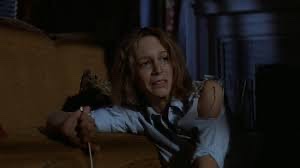
Papers and leaves were snatched by the gusty autumn wind and scattered about the street like so many pieces of flotsam and jetsam. It was getting dark and Frederick knew he had to find his wife Helene before something bad happened, before she hurt herself – or worse. Helene had been terribly distraught this morning – more so than usual – and judging by the quantity of bourbon missing from the bottle, she was also probably quite drunk. Another horrible fight with his mother, Frederick assumed.
Shoving his hands into his coat pockets, Frederick hunched his shoulders against the cold harsh wind. As he searched the streets for Helene his mind began to wander back to a time years ago when things were better, back to when Helene was whole. How happy they had been, just the two of them so in love. They bought a cute brownstone soon after getting married, living there blissfully by themselves, making plans for the future.
When Helene learned she was pregnant they were ecstatic; she even began knitting a baby blanket. Then the miscarriage happened, followed by three more. Four babies lost and a multitude of dreams crumbled and forgotten. Helene had to have a hysterectomy and fell into a depression. No babies ever for the young couple – only the two of them alone in a sad empty house. Frederick urged Helene to consider adoption, but she refused and her depression deepened. How could one woman bear a sorrow so heavy?
A few months later Frederick’s father committed suicide, due in no small part to his mother’s constant badgering and belittling. Not wanting his mother to be alone and despite Helene’s protests, Frederick moved his mother in with them. He thought Helene and his mother might provide some companionship for each other but the two women soon began arguing. Helene could do nothing right in Frederick’s mother’s eyes. She even went so far as to flaunt Helene’s inability to have a baby, goading her on by calling her a dried up empty vessel, a disappointing failure.
As Frederick walked rapidly through the streets, he tried to figure out what had happened earlier. He had arrived home from work to find the door wide open and the house in disarray. Dishes were shattered on the kitchen floor. The phonograph had been knocked over, his mother’s favorite record in smithereens. Frederick had called out but no one answered. He’d frantically raced through the house, stopping at the entrance to his mother’s room; her door was slightly open and he could see she was asleep, curled up in her bed. Helene’s coat and purse were hanging on a rack by the front door but she was nowhere in sight.
Suddenly Frederick snapped back to the present as he spied Helene at the train station; she was standing perilously close to the edge of the platform. Cautiously he walked toward her and whispered her name. Helene whirled around and Frederick was shocked to see the crazed look in her eyes and the cuts on her face. Helene tried to run but Frederick caught her. He cradled her in his arms as they walked home.
When they reached the house, Helene began giggling like a little girl and told Frederick she had a surprise for him. Bewildered, he followed her up the stairs to his mother’s room. Helene motioned for Frederick to be quiet as she tip-toed to the bed. She threw back the covers, revealing his mother’s bloody body, knitting needles deeply embedded in her neck. Frederick recoiled in horror. Helene grabbed her knitting needles and lunged at him, stabbing him repeatedly while screaming maniacally “This is your fault! You brought her here! This is all your fault! ALL YOUR FAULT!!”
Frederick collapsed to the floor in a bloody heap. The last thing he saw was Helene plunging out the bedroom window.
NAR © 2019
 The Elephant's Trunk