Welcome back to “That’s Entertainment!” –
The A To Z Challenge.
I hope you enjoy my musical selections.
Let’s see what’s up today!
Tag: Roy Orbison
Lucky, Otis, Charlie, Nelson and Lefty
This is Week 41 of Glyn’s Mixed Music Bag and we are
being asked to choose a song by a group or solo artist whose
name begins with the letters S or T. This is my choice.
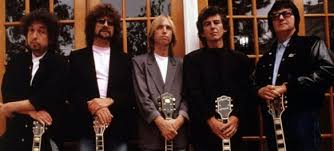
Bob Dylan, Jeff Lynne, Tom Petty, George Harrison and Roy Orbison. Five musical giants on their own; together, a seemingly unstoppable supergroup. In their all-too-short career together, they created some incredible music, had a great time and brought a lot of joy into our lives.
They are, of course, the beloved American-British group known as the Traveling Wilburys. Formed out of friendship and spontaneity, the Traveling Wilburys would never have referred to themselves as a supergroup. Though comprised of some of the biggest names in modern music, the band was much more nonchalant than that.
It all began in 1988, when George Harrison and co-producer Jeff Lynne were tasked with recording a B-side for George’s Cloud Nine album. In need of a place to record on the fly, the two, along with friends Roy Orbison and Tom Petty, were invited over to Bob Dylan’s home studio. The resulting track was “Handle With Care,” a collaborative effort which was just too good to use as a B-side. George later said, “I liked the song so much and the way that it turned out with all these people on it that I just carried it around in my back pocket for ages thinking, ‘Well, what can I do with this thing?’ And the only thing I could think of to do was to record another nine. Make an album.”
As each member of the Wilburys was busy with their own projects, the five friends found a ten-day time frame in which to write and record an album together. Posing as a band of half-brothers (each with his own Wilbury moniker), the group enlisted Monty Python’s Michael Palin to write a fictional history of the group for the LP’s liner notes. George Harrison was “Nelson Wilbury,” Bob Dylan was “Lucky“, Roy Orbison was “Lefty“, Tom Petty was “Charlie T, Jr.”, and Jeff Lynne was “Otis”. Although not an official member of the Traveling Wilburys, Jim Keltner was the session drummer and percussionist on both their albums and was given the nickname “Buster Sidebury”. Traveling Wilburys Vol. 1 was released in October 1988 to wide critical and commercial acclaim.After hitting #3 on the Billboard Top 200 chart, the certified double platinum album earned a Grammy for Best Rock Performance by a Duo or Group.
Sadly, Roy Orbison passed away in December of 1988. The band reunited for one more album, dedicating it to their late friend, and wryly titling the 1990 LP, Traveling Wilburys Vol. 3. In 2007, a retrospective box set, The Traveling Wilburys Collection, was released. Proving the timeless appeal of the Wilburys’ music, the deluxe title hit #1 in six territories and peaked at #9 on the Billboard 200. At the time, The Traveling Wilburys Collection held the record of having the highest debut of a box set in the United States, as well as the biggest first week in sales for a box set in the UK.
The world lost an incredible talent when George Harrison died on November 29, 2001; on October 2, 2017, Tom Petty passed away. Now only Bob Dylan and Jeff Lynne remain. The Wilburys never toured and were only together for a brief, magical time; however, the member’s mutual admiration for each other and genuine joy in the studio still shine through in their recordings.
This is the Wilburys’ largest selling single, “Handle With Care”
One of my favorite Wilburys songs is “The Wilbury Twist“, the final track on their 1990 album Traveling Wilburys Vol. 3. The song was also released in March 1991 as a single from that album and shows off the very humorous side of the group. The original music video featured cameos from many contemporary celebrities including Jimmy Nail, Woody Harrelson, Whoopi Goldberg, Fred Savage, Milli Vanilli, Cheech Marin, John Candy, Eric Idle. and others. The band and special cameos were filmed at the Wilshire Ebell Theatre in Los Angeles.
Here is “The Wilbury Twist”
For my last song, I’ve chosen the one that is probably the best known. The video was filmed in Los Angeles in December 1988. Set in a moving passenger car pulled by a steam locomotive, it features the guys playing guitars and Jim Keltner playing the brushes. Roy Orbison had died after recording his vocals but before the video was made, so a shot of a guitar sitting in a rocking chair and a photo of him are shown when his vocals are heard. In the US, the single peaked at #63 on the Billboard Hot 100 chart and at #2 on the Album Rock Tracks chart. In the UK, the single peaked at #52 on the UK Singles Chart.
This is “End of the Line”
Big thanks to Glyn for hosting Mixed Music Bag every week. Please be sure to follow the link and check out Glyn’s site.
Thanks for joining me today and spinning some tunes.
See you on the flip side. 😎
NAR©2024
All text, graphics and videos are copyright for The Sicilian Storyteller, The Elephant’s Trunk and The Rhythm Section and are not to be used without permission. NAR©2017-present.
The Big O
Written for Song Lyric Sunday. This week Jim Adams has asked his
readers to write about a song by an artist who is no longer living.
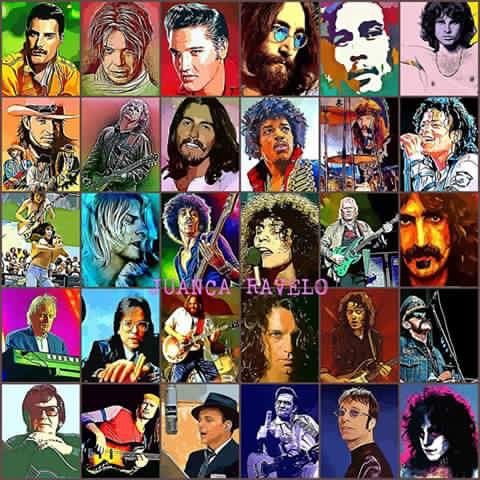
Sadly, there’s an endless list of artists who fit the bill for today’s theme from Jim Adams, aptly (and brilliantly) titled “Turn Me On, Dead Man”. There are so many greats to choose from, I decided to go with someone who consistently touches my heart every time I hear him sing …. The Big O.
Roy Orbison was born April 23, 1936, in Vernon, Texas to a working-class family, growing up immersed in musical styles ranging from rockabilly and country to zydeco, Tex-Mex and the blues. His dad gave him a guitar for his sixth birthday and he wrote his first song, “A Vow of Love”, when he was 8 years old. In high school, Orbison played the local circuit with a group called the Teen Kings. When their song “Ooby Dooby” came to the attention of Sun Records’ producer Sam Phillips, Orbison was invited to cut a few tracks. In addition to a highly collectible album called Roy Orbison at the Rockhouse, their collaboration yielded a re-recording of “Ooby Dooby” that became Orbison’s first minor hit.
After Roy Orbison landed a record deal with the Nashville-based label Monument in 1960, he began perfecting the sound that would define his career. His big break came after he tried to pitch his composition “Only the Lonely” to both Elvis Presley and the Everly Brothers and was turned down by both. Deciding to record the song himself, Orbison used his vibrato voice and operatic style to create a recording unlike anything Americans had heard at the time. Reaching as high the #2 spot on the Billboard singles chart, “Only the Lonely” has since been deemed a pivotal force in the development of rock music. Between 1960 and 1965, Orbison recorded nine Top 10 hits and another ten that broke into the Top 40, including “Running Scared,” “Crying,” “It’s Over” and “Oh, Pretty Woman“.
As distinctive as his three-octave voice was, Roy Orbison’s unglamorous style has been described as “geek chic.” Stricken with both jaundice and bad eyesight as a child, Orbison had sallow skin, a shy demeanor and wore thick eyeglasses. On a fateful day during his 1963 tour with the Beatles, Orbison left his glasses on the plane before a show, which forced him to wear his prescription sunglasses for that night’s show. Although he considered the incident “embarrassing”, the look became an instant trademark.
Roy Orbison’s unhip underdog look suited his music well, as his lyrics were marked by incredible vulnerability. At a time when rock music went hand-in-hand with confidence and machismo, Orbison dared to sing about insecurity, heartache and fear. His stage persona went a long way toward challenging the traditional ideal of aggressive masculinity in rock & roll.
Although the first half of the 1960s saw the rise of Roy Orbison’s star, the second half of the decade brought harder times. Tragedy struck when Orbison’s wife, Claudette, was killed in a motorcycle accident in 1966, and again when his two eldest sons died in a house fire in 1968. Following those incidents, a devastated Orbison failed to generate many hits and with the rise of the psychedelic movement in rock & roll, the market for rockabilly had all but dried up.
In 1980, however, Roy Orbison experienced a return to his musical career when the Eagles invited him to join them on their “Hotel California” tour. That same year, he rekindled his relationship with country music fans by performing a memorable duet with Emmylou Harris on “That Lovin’ You Feeling Again,” which went on to win a Grammy. When Van Halen covered “Oh, Pretty Woman” in 1982, rock fans were reminded that gratitude for the song was owed to Roy Orbison. By the late 1980s, Orbison had staged a successful comeback, joined the all-star supergroup The Traveling Wilburys alongside Tom Petty, Bob Dylan, George Harrison and Jeff Lynn, was inducted into the Nashville Songwriters Hall of Fame and initiated into the Rock & Roll Hall of Fame.
On December 6, 1988, Roy Orbison died of a heart attack. His posthumously- released comeback album, Mystery Girl, reached #5 on the charts, becoming the highest-charting solo album of his career. Although he was only 52 years old when he died, Roy Orbison lived to see his rightful place in music history restored.
My featured song for today is Roy Orbison’s deeply moving hit “Crying”. Recorded and released in 1961, “Crying” tells the story of the one who got away, that old flame that’s so very hard to forget. It’s a beautiful song with a haunting melody, perfect for Orbison’s octaves-spanning voice. “Crying” reached #1 on the US Cashbox chart for one week on October 7, 1961. On the rival Billboard Hot 100 it peaked at #2 where “Hit the Road Jack” by Ray Charles kept it from #1. Despite not reaching the summit in the latter publication, Billboard ranked the record as the #4 song of 1961. In 2002, “Crying” was honored with a Grammy Hall of Fame Award. In 2010, Rolling Stone magazine ranked it 69th on their list of the 500 greatest songs of all time.
There’s no other song by Roy Orbison that touches my heart and soul as deeply as “Crying”. There are also a number of videos for “Crying” but none quite like this.
Here is Roy Orbison with “Crying”.
LYRICS
I was alright for a while, I could smile for a while
Then I saw you last night, you held my hand so tight
When you stopped to say, “Hello”
You wished me well, you couldn’t tell
That I’d been crying over you
Crying over you then you said, “So long”
Left me standing all alone
Alone and crying,
Crying, crying, crying
It’s hard to understand
That the touch of your hand
Can start me crying
I thought that I was over you
But it’s true, so true
I love you even more than I did before
But darling what can I do?
For you don’t love me and I’ll always be
Crying over you
Crying over you
Yes, now you’re gone
And from this moment on
I’ll be crying, crying, crying, crying,
Crying, crying, over you
Source: LyricFind
Songwriters: Joe Melson/Roy Orbison
Crying lyrics © Barbara Orbison Music Company, BMG Rights Management, Orbi-Lee Music, R-Key Darkus, Sony/ATV Music Publishing LLC

Big thanks to Jim Adams for hosting another great Song Lyric Sunday this week. Be sure to follow the link and check out Jim’s site.
Thanks for stopping by. See you on the flip side. 😎
NAR©2024
All text, graphics and videos are copyright for The Sicilian Storyteller, The Elephant’s Trunk and The Rhythm Section and is not for use by anyone without permission. NAR©2017-present.
Twofer Tuesday 5.21

Originally released by The Everly Brothers, “Love Hurts“, written in 1960 by Boudleaux Bryant, is a song that delves into the pain and anguish experienced when love goes wrong. The emotional depth conveyed through the lyrics and the haunting melody have made it a beloved and enduring piece of music.
The song’s popularity can be attributed to its universal theme of heartbreak. Love is usually portrayed as a beautiful and uplifting experience, but “Love Hurts” acknowledges the dark side of love, where heartache and emotional turmoil take center stage. This raw honesty has struck a chord with listeners of all generations. “Love Hurts” was never released by the Everly’s as a single and can be found on their album A Date With The Everly Brothers.
The song has been recorded as a duet by Greg Parsons and Emmylou Harris, by Roy Obison in 1961 as the B side to “Running Scared”, by English singer-songwriter Jim Capaldi whose version reached #4 in the UK charts and by the Scottish hard rock band, Nazareth.
Performed as a ballad by Nazareth, “Love Hurts” became the most popular version of the song and the only rendition to become a big hit single, reaching #8 on the Billboard Hot 100 in early 1976.
I’d love to play all the versions of this great song but it is Twofer Tuesday and we can’t have pandemonium erupting on WordPress. After all this time together on The Elephant’s Trunk, I think you can guess which cover I chose to feature today.
This is the wondrous original version of “Love Hurts” by the Everly Brothers.
And this is what it sounded like when Nazareth recorded it:
That’s today’s Twofer Tuesday!
See you on the flip side. 😎
NAR©2024

All text, graphics and videos are copyright for The Sicilian Storyteller, The Elephant’s Trunk and The Rhythm Section and are not for use by anyone without permission. NAR©2017-present.
 The Elephant's Trunk