My fancy words are not necessary today. All I wish to say is βI have not forgottenβ.
NAR Β© 2022
π Nancy is a storyteller, music blogger, humorist, poet, curveballer, noir dreamer π
My fancy words are not necessary today. All I wish to say is βI have not forgottenβ.
NAR Β© 2022

Becoming a stripper wasnβt my lifeβs ambition, rather a steppingstone while I figured out what to do with myself.
I was attending classes at NYU during the day and working at a dive bar in New Jersey at night. It was a grueling job with very little pay, lousy tips, sticky floors and lots of pervs hitting on me. After much thought, I decided to take a break from school and look for more desirable employment. I was a class act β clean, pretty and always dressed to the nines. I deserved better than a sleazy Jersey joint.
While looking through the classifieds, I came across an ad that read βHigh-end cocktail lounge seeking hostessesβ. No name was listed but the address was well-known β Billionairesβ Row, the wealthiest and most exclusive section of Manhattan. I called the number in the ad; it turned out to be βThe Sapphire Gentlemenβs Clubβ, the most elite lounge in Manhattan. I went for an interview the next day and started working that night.
Everyone from the kitchen staff to Luca, the manager, treated all the girls with dignity and respect β a far cry from the dumpster in Jersey. The clientele was equally gracious. Iβd been watching the dancers here interact with the guests. The Sapphire was a one-way contact club; the girls could touch the customers, sit in their laps, etc. but the men could not touch the girls.
After a few nights Luca asked if I was interested in dancing. I knew I could make a lot of money so I agreed. When he told me Iβd need a stage name, I chose Blaine, my hometown in Ohio. βI like it!β Luca said. βHowβs this for a catchphrase: βCome make it rain for Blaine!β?β
My first night on stage was thrilling. The house lights dimmed and Luca announced me. When the spotlight hit me, I was standing with my back to the room; I wore stiletto heels, a sparkling G-string and nothing else. A hush fell over the room. As Journeyβs song βLovinβ, Touchin,β Squeezinβ began to pulsate, I grabbed the pole and peeked provocatively over my shoulder at the crowd, my long auburn hair cascading down my back. I danced with total abandon and money rained down.
Luca told me a prominent customer requested I join him at his private table in the darkened balcony. I froze; this was not what I bargained for. Luca was quick to calm my fears saying everything would be alright and a bodyguard would be discreetly positioned two feet away.
Julius, one of the bodyguards, escorted me upstairs. I was surprised to see an elderly man at the table; he looked and talked liked an older version of Mr. Rogers. I whispered βHelloβ not sure what to do next. I resisted the temptation to call him “Fred”.
He looked at me and smiled. βBlaine, lovely to meet you.β He stood up, removed his suit jacket and wrapped it around my naked body. βMy name is Walter Ashcroft. Please join meβ.
A waitress appeared with a bottle of champagne and two glasses. I declined saying it was against company policy to drink while working. βOh, I donβt think Luca would objectβ Walter said. βAfter all, I own this establishment. In fact, I own every building on this street.β
I glanced up at Julius who simply nodded once in agreement.
βWhat do you want me to do, Mr. Ashcroft?β I questioned, curious as to what would happen next.
βMy dear, I realize Iβm old enough to be your grandfather but please call me βWalterβ. All I want is someone to talk to. Tell me about yourself. You are an enchanting entertainer but I donβt think this is all you want to do. Tell me, Blaine. What are your goals in life?β
I found myself telling Walter about my life in Ohio, college, New Jersey, my dream to someday own my own business. I even divulged my real name: Doris Freeman. He listened attentively, encouraging me to continue talking. After about an hour he announced it was time for him to leave. I returned his jacket and he took both my hands in his. After Walter left I looked down; there were five $100 bills nestled in my hands!
This went on for one week. I found my talks with Walter to be the highlight of my night and it wasnβt because of the money; I genuinely liked him. He spoke very little and hung on my every word. He was the epitome of the perfect gentleman.
Finally one evening Walter asked me a question: “So, tell me, Blaine. What is this business youβve been dreaming about?β
βYou know the Russian Tea Room, right? An important man like you, of course you know it! Someday I want to own a place just like that β a haven of fine cuisine and decadent desserts, especially elegant afternoon tea for ladies of high society. Crazy, isnβt it?β
βNot at all. Thereβs nothing crazy about dreaming big. How do you think I got here?β
That was the last time I saw Walter; he suddenly just stopped coming into the club. When I questioned Luca, he sadly informed me that Walter had passed away. It sounds ridiculous but I cried like a baby. I had become quite attached to that man, strange as it may seem. And I know he genuinely cared for me. As the days went by I tried not to think about Walter but I just couldnβt forget him.
Things just werenβt the same after that and even though I still enjoyed my job, something was missing. Iβd find myself glancing up at the darkened balcony hoping to see Walter, knowing that was an impossibility. Several weeks went by and I was still in a funk. Why could I not forget that man?! I seriously considered quitting the club and going back to school. I had some money saved up so I knew I’d be okay until something came along. The last thing I wanted was to become a career dancer. Did I really want to do this for another fifteen years only to be replaced by younger girls when my looks started to fade? Or should I take Walter’s advice to dream big?
One night Luca approached me and said a messenger had dropped something off for me. He handed me a little flat leather box which contained a business card for Hamilton Barrow, Esq. On the back was written very neatly βDream big, Blaine. Hamilton is expecting your call. Affectionately, Walter.β I’m not embarrassed to admit seeing Walter’s name felt like a warm hug from an angel.
That afternoon I called Hamilton Barrow; he was very British and quite proper. βAh, yes. Miss Freeman. It appears that Walter Ashcroft named you as a beneficiary in his will.β
“Thatβs incredible! Walter was such a sweet old guy but I don’t understand why he’d name me.β
βWell, Miss Freeman, it’s not our place to wonder why. In any event, I believe what I’m trying to say is that βsweet old guyβ made it rain. Can you come to my office this afternoon?β
Bewildered, I agreed. When I arrived at Mr. Barrowβs office, he handed me a thin grey linen envelope. Inside was a check made out to me. I nearly fainted looking at the number of zeros.
βThere must be some mistakeβ I mumbled.
βI assure you there is no mistake, Miss Freeman. Walter Ashcroft did not make mistakes. He left you a considerable amount of money, a fortune some might say, with the instructions to βDream Bigβ.β
This was my chance to see my life’s ambition come true. βGod bless you, dear Walter. I wonβt let you down. And no matter how successful I become I will never forget you.β
“Good luck, Miss Freeman” Mr. Barrow declared.
“Thank you, Mr. Barrow. Tell me: how does the name ‘Ashcroft’s’ sound to you?”
“Quite appropriate, Miss Freeman. Quite appropriate.” I even detected a slight twinkle in his eye.
And for the first time in weeks I felt truly happy.
NAR Β© 2022

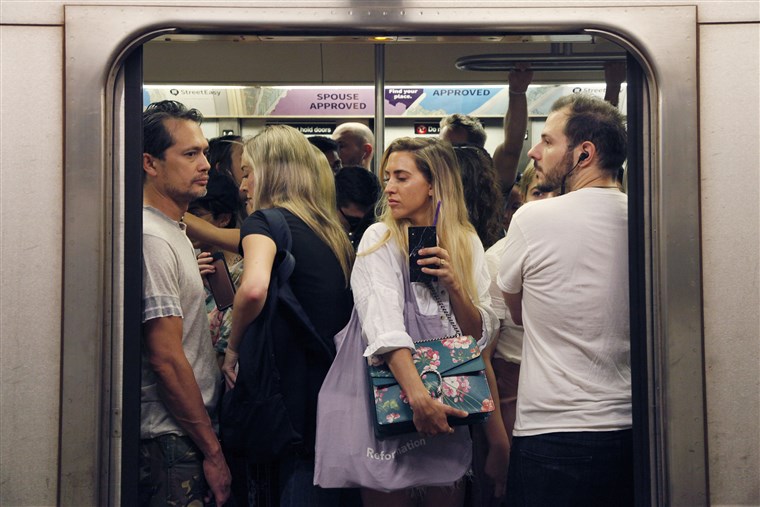
Cattle, not people! That’s what it felt like to me when I was riding the subways of New York City. Just when you think another person can’t possibly fit, at least a dozen manage to squeeze their way in. It’s kind of like the clown car at the circus, only not the least bit amusing.
The first half of my morning commute from New Rochelle in Westchester County into “the city” was quite pleasant. I’d buy a muffin and a freshly brewed cup of coffee at Britain and McCain’s, then hop on the Metro North New Haven line. At the time I worked on Church Street in the financial district of lower Manhattan. The 7:18 AM train was brightly lit, clean, perfectly climate-controlled and the seats were nicely spread out making for a comfortable and relaxing ride. I’d always see the same friendly faces, fellow suburbanites with their briefcases and newspaper tucked under an arm. A nod or a wave was all that was necessary; no need for casual conversation as everyone was looking forward to a peaceful trek to work. It was all quite civilized. It took 40 minutes to get to Grand Central Terminal where I’d then hustle to catch the subway to Church Street.
Grand Central β an awe-inspiring wonder of architecture and one of the busiest terminals in the world β has always been a whirling hub of activity with harried commuters scurrying about like so many little ants rushing to catch their train. Finding a seat on one of the countless subway trains was a continuous battle. Any shred of human decency was discarded at the terminal doors as people trampled each other in the hopes of securing a place to sit or, at the very least, a spot against a wall on which to lean. If you were unable to find neither seat nor wall, you’d have no choice but to position yourself in the aisles where you could hang onto the hand straps suspended from the ceiling or stand shoulder-to-shoulder like disgruntled sheep crammed in a stall with no place to go. And if anyone should stumble and fall, God help them because no one else would! Livestock on the road to the slaughterhouse; is it any wonder so many people were frustrated and disillusioned by their daily commute and in turn hated their jobs?
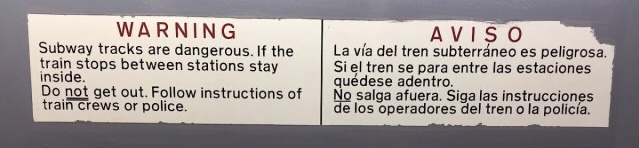
Most days there were unexplained delays and the 20-minute ride to Church Street took much longer than that. The unvoiced question dangled in the stifling air: how long will we be stuck this time? People would hang their heads in defeat and heave a sigh of resignation knowing they were at the mercy of the subway puppeteers. I stared at this sign for so many mindless hours I can still recite the entire message in both English and Spanish:

For people with claustrophobia, just being underground is a nightmare; similarly being jammed on a subway is a hellish experience, especially in the heat of summer. The worst part was when the train would stall in the tunnel and all the power would go out β no lights, no air conditioning, no nothing β just the overwhelming conglomeration of the stench of body odor, bad breath, urine and other bodily secretions along with the complaining gripes and groans, pisses and moans of those stuck in the train. And as if that weren’t bad enough, you’d suddenly become aware of the alarming feel of creepy, unwelcome hands fondling your ass or some horny pervert rubbing against you β and you were incapable of moving an inch. I recall being frozen in place praying for the lights to quickly come back on and the train to start up. For any normal person, being groped regardless the situation is a humiliating and despicable ordeal; having it happen while trapped in a dark, crowded, sweaty, smelly subway car is indescribably terrifying β enough to put anyone over the brink. I came close to losing it more times than I care to remember. Crying out “Get your filthy hands off me!” would generally elicit snickering, laughing or the occasional tsk of commiseration and disapproval.
That was the typical morning subway expedition; by the time I arrived at the office I felt like I needed a shower. When the workday was done at 5:00 PM, the mass exodus would begin and the subway horror show would start again. It didn’t take me too long to realize I couldn’t endure these conditions indefinitely and I discovered an unusual survival strategy; I started taking the train four stations deeper into the bowels of Manhattan from Church Street to Canal Street, a 10-minute subway ride in the opposite direction from Grand Central Station and further away from the comfort and serenity of the New Haven Line. My reasoning behind this backwards maneuver was really quite simple: Canal Street was the originating point for the trip to Grand Central and I would always find a seat. If I waited to get on at Church Street the train would already be full. I’d head straight for the somewhat secluded two-seater in the corner. I didn’t care how long the trip took, how crowded the train became or how many times we got stuck; as long as I was sitting in the corner I felt safe. I could close my eyes and pretend to be asleep or hide my nose in a book; I finished quite a few chapters on that 30-minute ride while tucked away in those coveted corner seats.
For some reason, though, I would inevitably attract the undesirables. Many a ponderous man would wedge himself into the seat next to me, breathing heavily and reeking of garlic. Why, when there were plenty of empty seats, would I end up with Jabba the Hutt plopping down next to me? I would stay put and do my best to cope with a most unpleasant situation. There was also the occasional sicko (although one is more than enough) who would position himself directly in front of me, his manhood at full attention mere inches from my face. Those were the times I prayed for death. If I could have hung myself from one of the ceiling hand straps I gladly would have done so, drifting off into unconsciousness while visions of Lorena Bobbitt danced in my head. Instead I would prop my briefcase vertically on my lap and hide behind it. By some source of divine intervention the lights never went out during one of those close encounters of the worst kind.
It’s been more than 40 years since I worked in Manhattan; I loved my job and the people I worked with but after seven years I’d had enough of the commute. Kudos to those who travel the trains for twenty or more years; I have no idea how they do it! I don’t miss riding the subway one bit and if I have to go into Manhattan these days, I drive. I’ll gladly take on any maniac behind the wheel of a taxi or a truck rather than deal with the neanderthal subway passengers. I’m just thankful my days of riding the New York City cattle cars ended while I still had my dignity and sanity intact.
NAR Β© 2020

Death comes suddenly to some; for others it takes a lifetime.
It was Good Friday of 1946; Kathleen O’Brien walked through a narrow cobblestone passage way to St. Brigid’s Church. She hated walking by Sully’s Bar with its overpowering stench of booze and abundance of seedy characters hanging around but she was late for services (a terrible habit) and this was a convenient shortcut. She was twenty-two years old β no longer a kid β yet she’d rather die than admit to her mother that she missed the Veneration of the Cross. It was bad enough she was late for everything.
Seeing an unfamiliar man drinking a beer and leaning against the wall outside Sully’s, Kathleen quickened her pace. She heard him chuckle and say “What’s ya hurry, toots?” She walked even faster, opening the side door of the church; it creaked loudly. The elderly priest paused in mid-sentence and made a grand gesture of looking in Kathleen’s direction; he stared at her over his glasses, giving her a withering scowl. Embarrassed, she quickly found a seat at the end of a pew next to Mrs. Callahan who huffed at having to make room for this rude latecomer.
As is the tradition on Good Friday, everyone remained after services for a period of silent prayer. It was a time to reflect and meditate, one of Kathleen’s favorite parts of Holy Week. When the ushers opened the church doors the sense of peacefulness and solemnity was instantly shattered by the loud music and drunken laughter emanating from Sully’s Bar. “Some people have no respect” thought Kathleen angrily. “An Irish pub shouldn’t even be open on Good Friday!“
As she began her walk home Kathleen noticed the same man from the bar standing at the corner. Had he been waiting for her or was this just a coincidence? Warily Kathleen took a step when suddenly the man started walking right toward her. She was taken aback as he stood in her path and extended his hand. “Name’s Harry Selkin and you’re one fine lookin’ dame. Ya need somebody like me to walk ya home. It can be dangerous for a good Catholic girl like yourself to be alone in this neck of the woods.”
“Where do you get off saying something like that to me?” Kathleen snapped. “And how do you know I’m a good Catholic girl anyway?”
“Well, I ain’t no Einstein but I seen ya practically runnin’ to St. Brigid’s like ya pants was on fire and I’m guessin‘ ya ain’t no altar boy β not with them gorgeous legs.” Harry replied in a very ‘Bogey’ sort of way. He smiled and his tough guy persona became surprisingly charming. Kathleen found it hard not to laugh just a little at this roguish stranger and she shocked herself by allowing him to walk her home.
Harry and Kathleen were as different as a gorilla and a swan but there was an undeniable chemistry between them and they started falling in love. No one was more surprised than Kathleen; Harry was like no man she had ever met. Sure, he was rough around the edges but she loved how his face lit up like a kid whenever he ate dessert, especially his favorite β homemade apple pie. Kathleen was known for her baking skills and would make a pie for Harry every couple of days.
They had a whirlwind courtship and Harry popped the question, much to Kathleen’s delight β and her parent’s chagrin. At first they tolerated the relationship thinking it would blow over, but the more serious it got the more concerned they became. There was a major obstacle her parents couldn’t overlook β the fact that Harry was Jewish. Kathleen’s father was dead set against Harry, calling him names like ‘Christ killer’ and ‘kike’. He was enraged when Kathleen announced that she and Harry were going to get married with or without his blessing. Her mother was crushed. “Jesus, Mary and Joseph! Can’t you see he’s no good for you? I don’t trust him at all, Katy girl, not at all!” she warned, crying into her apron. Kathleen hated defying her parents but would not be dissuaded; she was in love! Her father said she was a blind fool and if she married “that good-for-nothing bum” she was dead to him. With a heavy heart Kathleen closed the door of her childhood home behind her and never looked back.
Harry and Kathleen got married in city hall, the judge and his clerk their only guests and witnesses. After a weekend honeymoon in Niagara Falls the couple settled into Harry’s tiny apartment β a walk-up on the fifth floor and almost within arm’s reach of the elevated train. Kathleen was startled by the scream of the locomotive but Harry said she’d get used to it.
The dilapidated condition of the apartment shocked Kathleen but she was determined to turn it into a lovely home for them. She sewed curtains and towels for the kitchen and bought bed coverings from the thrift store. She also bought sacks of apples from the fruit stand to make Harry’s beloved apple pies. She read in her cookbook that it was alright to freeze apples until you were ready to use them β a handy tip Kathleen didn’t know.
Harry worked the graveyard shift as a printer at the local newspaper, seven days a week from midnight till 8:00 AM. His fingers were permanently stained with black ink. The first morning he came home from work and saw the newly decorated apartment, he got angry at Kathleen for spending his hard-earned money on unnecessary things. Uncaring, he left ink stains on the bedspread when he sat down to remove his shoes. However his mood lightened considerably when he eyed the sacks of apples and Kathleen forgave his angry outburst when she saw that boyish grin.
While Harry slept during the day Kathleen cleaned, shopped and cooked. She wanted a vacuum cleaner but Harry said it was too expensive and the noise would keep him awake so she settled for a carpet sweeper. Their only chance to be together was at breakfast and dinner time β and of course for coffee and dessert. Kathleen suggested a few times that it would be nice if Harry worked during the day so they could be like a normal couple and spend more time together but her words fell on deaf ears.
She also longed for a baby. Each time she thought she was pregnant it turned out to be a false alarm. She saw a doctor who wasn’t very encouraging; he shrugged his shoulders, gave her ambiguous explanations and performed a couple of routine tests. He told her it was just one of those things; not all couples could get pregnant. When Kathleen finally got up the nerve to mention to Harry what the doctor said, he laughed and said it wasn’t his fault she couldn’t get pregnant; “Just ask that sweet little Frenchie I knocked up during the war” was his mean-spirited reply. Kathleen felt like she’d been kicked in the gut. When she cried that she needed something else to fill her lonely days Harry yelled to “go get a job and start earnin’ ya keep around here! Who needs another mouth to feed anyways?” Kathleen was reeling; how could he say such hurtful things? Heartbroken, she eventually gave up on having a baby and found a job as a presser in a shirt factory. The work was exhausting and she still had to maintain the apartment and cook for Harry.
What happened to the guy she married? Harry was constantly annoyed about something or other and drank more now than usual. He got mean when he drank and and Kathleen bore the brunt of his anger. When he demanded sex every night before going to work, she kept her mouth shut but she was silently screaming. This was no way to exist, like a piece of property and not a person. She’d lie awake at night remembering her mother’s warning words. The only thing in her God-forsaken life that she truly enjoyed was baking and she did it all for Harry. She would fantasize about how lovely it would be to have her own little bake shop; she’d make lots of delicious cakes and pies for her large following of loyal customers β not just for her selfish husband. She knew she could do it if she only had the chance.
A few weeks after Kathleen began working she started complaining about backaches and being very tired β probably from constantly lifting the heavy pressing machines at work. Harry, as usual, was unsympathetic and said she better toughen up because no way was she giving up that job.
One morning Kathleen asked Harry if he could bring down the mixing bowl she kept on top of the fridge so she could make an apple pie. He was tired from working all night and wanted to get to sleep but he obliged her at the prospect of dessert. Harry put down his bottle of beer and got the step-stool out of the closet. As he started to climb, Kathleen hoisted a five pound sack of frozen apples, wincing at the pain in her back, and bashed Harry as hard as she could on the back of his head. He fell backwards onto the kitchen floor, his lifeless eyes staring up at the ceiling.
Kathleen hurriedly tore open the sack of apples and dumped them into a pot on the stove. She shoved the empty apple sack into the garbage bag, bunched it all up and threw it down the incinerator chute outside their apartment door. Placing a new bag in the garbage can, she looked at Harry’s body and felt sick to her stomach, vomiting in the sink. She washed her hands and face, then placed a call to the police.
“HELP!” Kathleen screamed into the phone. “My husband fell! I think he’s dead!” Then she calmly sat at the kitchen table and waited, crying over misspent years. The police and ambulance arrived quickly; after examining Harry, he was officially declared dead. Blunt force trauma, they said, obviously from smashing his head on the kitchen floor. Everyone was very conciliatory and sympathetic and they respectfully removed Harry’s body. “If there’s anything we can do, Mrs. Selkin, please let us know” the officers said as they left Kathleen alone in the quiet apartment.
Kathleen cleaned up the kitchen and called her boss at the shirt factory to say she wouldn’t be able to work that day. Her boss barked that if she didn’t come in to work she shouldn’t bother coming back at all. Kathleen simply said “Goodbye”. She put the pot of apples in the fridge and after changing her clothes she went to the funeral parlor to make arrangements for Harry.
When she got home she received a phone call from her doctor. “Mrs. Selkin, I’m calling because your test results came back; you and Mr. Selkin will be thrilled to know you’re pregnant. Congratulations, Mrs. Selkin!” Kathleen swayed in stunned disbelief and grabbed onto the edge of the table. She managed a weak “Thank you” and hung up the phone. “Pregnant” she whispered in awe and her slight smile slowly grew into a broad grin. She gently touched her belly, truly happy for the first time in years.
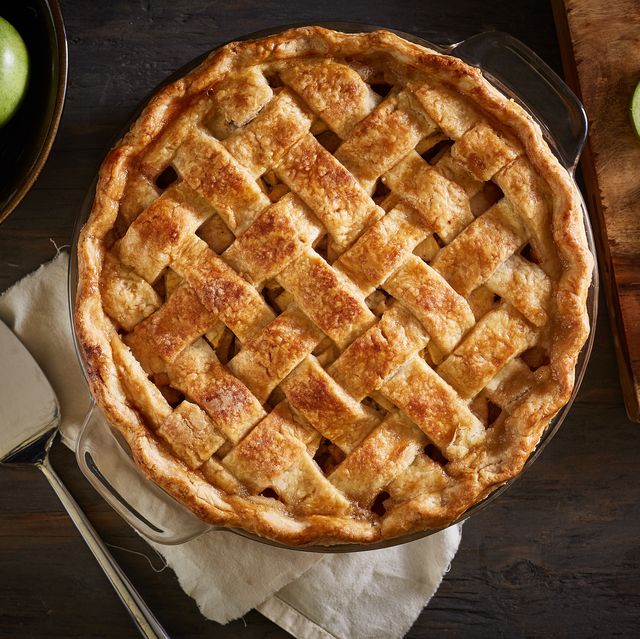
The next morning Kathleen baked a large apple pie with the same apples she used to bash in Harry’s head. When the pie was done and still warm, she placed it in a box and delivered it to the nice policemen. On the way home she stopped in the little bakery near her apartment and inquired about a job. It was a start, a new beginning for her and her baby.
NAR Β© 2020

Every morning I take the train to work in lower Manhattan from Far Rockaway, New York and back home again in the evening. Along with a multitude of fellow commuters, I ride the underground transit system (affectionately know as ‘the subway”) for a total of three hours round trip. Thatβs a long time to observe the parade of weirdos entering and exiting the train.
Riding the subway for as long as I do, itβs easy to become familiar with my fellow passengerβs quirks and foibles β even assigning them made up names to go with their peccadilloes. And let me tell you β people are strange!
Far Rockaway is where the commute originates so Iβm always guaranteed a seat. A couple I call Marge and Homer gets on the same train as me. I have determined from their heated conversations that they have been engaged for about six years. Marge is ready to get married; Homerβs not. She talks about her biological clock; he talks about nothing but his upcoming promotion at work. Then Marge reminds Homer heβs been saying the same thing for five years now and their discussion becomes more heated with every chug of the subway.
First stop: enter Malodorous Man. This guy is always guaranteed a seat in the corner all by himself. The fact that he desperately needs a shower would be enough to keep people away but he also brings his breakfast on the train β a raw onion which he peels and eats with gusto as one would an apple.
At our next stop Mr. Obsessive gets on. He immediately takes out a can of disinfectant and sprays it in the direction of Malodorous Man who indignantly shouts βHey, Iβm eatinβ here!β.
Mr. Obsessive goes to HIS seat (where no one else dares sit because everyone knows itβs HIS seat), cleans it and begins his routine. First he unties his shoe laces making sure they are of equal length. Satisfied that they are, he reties his laces, then adjusts his socks so they reach the exact same height on both legs. He smooths his trousers, unbuttons and re-buttons his jacket, aligns the amount of shirt cuff visible from his jacket sleeves, straightens his tie and adjusts his hat repeatedly. Finally all is well in OCD Land.
At stop number three Malodorous Man departs and the Tattoo Twins get on, a teenage boy and girl covered from the neck down with multicolored tattoos. They lean against the door and start making out while Mr. Obsessive huffs in disapproval.
Totally out of character Marge suddenly declares to Homer that sheβs βhad enoughβ and moves to another seat next to Bob the Builder, a good-looking construction worker. Homerβs not happy about this; perhaps heβs noticed the same thing I have: whenever Bob the Builder enters the train he winks at Marge and pats his impressive tool belt. Bob and Marge begin a quiet conversation while Homer fumes.
Next stop and Mr. Obsessive fearfully sidles, past the Tattoo Twins who reach out and knock his perfect hat right off his head. Shocked by this unnecessary assault, Mr. Obsessive stares at the now unwearable hat, sniffs in disdain and scurries off the train.
Impulsively, a jilted Homer jumps up and punches Tattoo Boy in the nose who retaliates by shoving Homer backwards on his ass. A few passengers give Homer a thumbs up. Somewhat embarrassed yet proud of himself, Homer glances over at Marge for her approval. She, however, is too involved with Bob the Builder to notice. Homer tells Marge βitβs our stopβ but she shakes her head and snuggles closer to Bob. Homer huffs off and looks back just as Marge fondles the tip of Bobβs hammer.
Welcome to the daily subway sideshow where everyone is strange except me β or am I?
NAR Β© 2019

NEW YORK CITY, 1920
βManga il cibo sul tuo piatto, Sophia, o lo mangerai dal pavimento.β
(βEat the food on your dish, Sophia, or you will eat it off the floor.β)
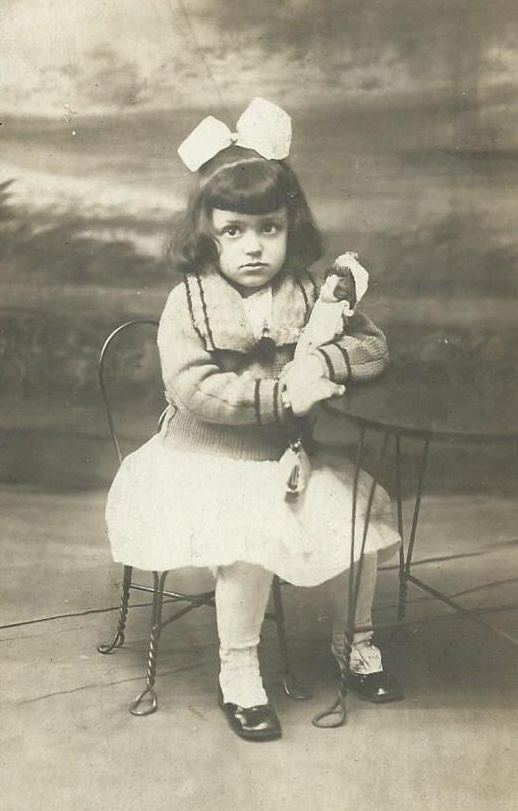
Without changing her expression or taking her huge brown eyes off her father Vincenzoβs face, three year old Sophia picked up a meatball, extended her arm over the side of her high chair and very calmly let it drop to the floor.
Silence. Everyone sat in suspended animation as Vincenzo deliberately put down his knife and fork and removed the napkin which was tucked into the neck of his shirt. Slowly he stood up, went behind Sophiaβs chair and grabbed the back of her dress. He lifted her up and holding her feet with his other hand, lowered her face to the floor. Sophiaβs mouth touched the meatball and she turned her face away, but Vincenzo pushed her face into the food, forcing her to take it into her mouth. Satisfied, he sat her back in her chair, returned to his seat and resumed eating. Sophia languidly chewed the meatball.
Hesitantly everyone resumed eating except Sophiaβs mother Francesca who sat watching her daughter. At the end of the meal as the women cleared the table, Francesca placed a napkin over her daughterβs mouth so she could dispose of the uneaten meatball. βMai piΓΉ, Sophia. Fai il tuo dovere!β Francesca said. (βNever again, Sophia. Do your duty!β)
Francesca was a frail woman and as Sophia grew she helped her while Vincenzo worked 12 hours a day on construction. When Sophia was 11, Francesca came down with a terrible case of scarlet fever which affected her heart and kidneys and left her housebound. Early every morning Sophia would cook breakfast for the family and pack lunch for her father before she left for school. At lunchtime she would come home to check on Francesca and make something for them to eat before going back to school. After school she would stop at the pharmacy to buy Francescaβs medicine. Sometimes she would surprise her mother with a piece of her favorite candy. First she would care for her mother, then cook dinner before her father came home from work. When dinner was finished she would do her homework and get ready for bed. Since Francesca was sick, Vincenzo slept in Sophiaβs room while she slept on the small sofa. It was the right thing to do β her duty β because her father worked so hard and needed his rest.
Eventually the family began struggling financially. Vincenzo decided that it would be best if Sophia left school and took a job in a sewing factory. Sophia would have preferred to stay in school, but she knew it was her duty to help the family. Francescaβs sisters would take turns checking on her while Sophia was at work. Occasionally they would bring food but they all had large families and were struggling themselves. Sophia still woke up very early to make breakfast and prepare lunch for herself, Vincenzo and Francesca. She worked from 8:00 until 6:00, then came home to cook dinner, clean up and care for her mother. It was a hard life but Sophia knew it was her duty.
Sophia was an excellent seamstress and her work was always done quickly and perfectly. In the time it took the others to sew one blouse, she completed four. And because her work was beyond compare, she earned more money. She was promoted to making dresses and suits and the other girls were jealous, calling her βyour majestyβ and βprincessβ. One girl was so envious of Sophia she began working hurriedly and carelessly, accidentally cutting off most her pinky with the large shears. It was not Sophiaβs fault but everyone treated her like it was.
One Sunday after Mass Sophiaβs cousin Gaetano introduced her to his friend Paolo Rossi. By now Sophia was 20 and had never been on a date. She was too busy doing her duty. The young couple were immediately attracted to each other, began dating and married in 1940, just after the start of the war. One year later their first baby was born and fortunately men with children were not being drafted so Paolo was able to remain at home. Tragically, the baby developed nephritis and died at the age of two β and a grieving father, now childless, was drafted.
Sophia was devastated; no husband, no baby. She devoted all her time to caring for Francesca. The days were grim but thankfully Paolo returned home safely and two more babies followed β healthy girls. The young family, Francesca and Vincenzo moved to a house in the Bronx and Paolo found work in a mechanicβs shop while Sophia stayed at home with the girls and her mother. Five years later Francesca died and Vincenzo became ill. Of course the ever-dutiful Sophia cared for him until his death.
In 1970 Paolo suffered his first heart attack. Three more followed over the years. He developed aortic and abdominal aneurysms and struggled with emphysema and bronchitis until his death in 1996. Sophia cared for him as a dutiful wife for all those years.
Dear readers, in case you havenβt realized by now I was one of those little baby girls born to Sophia and Paolo. Throughout my childhood and youth, my mother was constantly busy cleaning, cooking, sewing. She was a dutiful mother and took very good care of us, but I never felt a true motherβs love.
The first time I met my boyfriendβs mother, she was ironing. She immediately stopped her work, brewed a pot of coffee and placed a crumb cake on the table. We sat and talked for hours. That was an afternoon of fun and laughter and I felt the love in that room. I married that boy whose mother did everything out of love, not out of a sense of duty.
Sophia died in 2010. On her headstone was intricately carved her life-long creed: βFAI IL TUO DOVEREβ.
NAR Β© 2019