This is Week 45 of Glyn’s Mixed Music Bag and we are
asked to choose a song by a group or solo artist whose
name begins with the letters U, V or W. This is my choice.
Tag: Mixed Music Bag
ROAD HOGS
This is Week 44 of Glyn’s Mixed Music Bag and we are
being asked to choose a song by a group or solo artist whose
name begins with the letters S or T. This is my choice.
Stroke Me
This is Week 43 of Glyn’s Mixed Music Bag and we are
being asked to choose a song by a group or solo artist whose
name begins with the letters S or T. This is my choice.
Change Is In The Wind
This is Week 42 of Glyn’s Mixed Music Bag and we are
being asked to choose a song by a group or solo artist whose
name begins with the letters S or T. This is my choice.

It’s 1990. The Berlin Wall has just come down. The Soviet Union is on the verge of collapse. A heavy metal band from West Germany releases a power ballad called “Wind of Change.” The song becomes the soundtrack to the peaceful revolution sweeping Europe — and one of the biggest rock singles ever. According to some fans, it’s the song that ended the Cold War.
Looking back to 1970, the working-class town of Hannover, Germany, was decidedly not a bastion of R&R music, but Klaus Meine and brothers Rudolf and Michael Schenker changed the way the world perceived Hannover … and even the rest of Germany. As originators of the hard rock band the Scorpions, the trio created top ten hits and generated worldwide attention through both their musical talent and controversial album covers. By 1994, with 15 albums to their credit, the band was deemed “the greatest German rock export”.
Singer Klaus Meine first performed in a band called the Mushrooms. His budding musical career was interrupted, however, by a stint in the German Army. Upon his return to civilian life at age 23, he met a 16-year-old guitarist named Michael Schenker who, four years earlier, had started playing guitar for a young German band. Together they formed a band called Copernicus.
Soon after forming Copernicus, Michael Schenker got an offer from his brother Rudolf to join a band called the Scorpions. Although Rudolf was the Scorpions original singer, he extended the invitation to Meine after seeing his work with Copernicus. On December 31, 1970, rhythm guitarist Rudolf Schenker, lead guitarist Michael Schenker, and singer Klaus Meine kicked off what would become an international R&R force for decades.
The band’s success inspired the release of a live album and a one-hour video movie about the tour titled Worldwide Live. They took part in a record-breaking rock festival in Brazil called Rock in Rio, where they played for 350,000 people. The German rockers went on to play behind the Iron Curtain in Budapest in 1987, thus becoming one of the first Western bands to venture into the Eastern Bloc.
The Scorpions continued to break international, geographical, and political boundaries. The band returned to the Soviet Union in 1989 to play in the Moscow Music Peace Festival at Lenin Stadium. They performed in front of 100,000 people, and the experience provided the inspiration for their super hit single on the Crazy World album —”Wind of Change” which took Crazy World to mega-platinum status. During the Persian Gulf War, troops adopted “Wind of Change” as their anthem.
The single reached #1 in 13 countries and won the ASCAP Award as one of the most performed songs of 1992. Soon after the Berlin Wall fell, the Scorpions played to more than 300,000 fans in the Roger Waters’ production of Pink Floyd’s The Wall —Live in Berlin ’90. By 1994, Crazy World stood as the best-selling rock album in Germany … ever; with estimated sales of 14 million copies sold worldwide, it is one of the best-selling singles of all time.
This is “Wind of Change” by the Scorpions, 1989
From Crazy World this is “Wind of Change”, 1991
LYRICS
I follow the Moskva
Down to Gorky Park
Listening to the wind of change
An August summer night
Soldiers passing by
Listening to the wind of change
The world is closing in
Did you ever think
That we could be so close, like brothers
The future’s in the air
I can feel it everywhere
Blowing with the wind of change
Take me to the magic of the moment
On a glory night
Where the children of tomorrow dream away (dream away)
In the wind of change
Walking down the street
Distant memories
Are buried in the past forever
I follow the Moskva
Down to Gorky Park
Listening to the wind of change
Take me to the magic of the moment
On a glory night
Where the children of tomorrow share their dreams (share their dreams)
With you and me
Take me to the magic of the moment
On a glory night (the glory night)
Where the children of tomorrow dream away (dream away)
In the wind of change (the wind of change)
The wind of change
Blows straight into the face of time
Like a stormwind that will ring the freedom bell
For peace of mind
Let your balalaika sing
What my guitar wants to say
Take me to the magic of the moment
On a glory night
Where the children of tomorrow share their dreams (share their dreams)
With you and me (with you and me)
Take me to the magic of the moment
On a glory night
Where the children of tomorrow dream away (dream away)
In the wind of change (in the wind of change)
Written by: Klaus Meine
Lyrics © BMG Rights Management
Lyrics Licensed & Provided by LyricFind
Big thanks to Glyn Wilton for hosting Mixed Music Bag every week. Please be sure to follow the link and check out Glyn’s site.
Thanks for joining me today and spinning some tunes.
See you on the flip side. 😎
NAR©2024
All text, graphics and videos are copyright for The Sicilian Storyteller, The Elephant’s Trunk and The Rhythm Section and are not to be used without permission. NAR©2017-present.
Lucky, Otis, Charlie, Nelson and Lefty
This is Week 41 of Glyn’s Mixed Music Bag and we are
being asked to choose a song by a group or solo artist whose
name begins with the letters S or T. This is my choice.
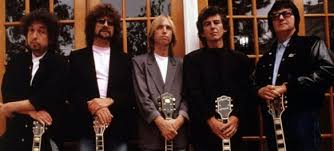
Bob Dylan, Jeff Lynne, Tom Petty, George Harrison and Roy Orbison. Five musical giants on their own; together, a seemingly unstoppable supergroup. In their all-too-short career together, they created some incredible music, had a great time and brought a lot of joy into our lives.
They are, of course, the beloved American-British group known as the Traveling Wilburys. Formed out of friendship and spontaneity, the Traveling Wilburys would never have referred to themselves as a supergroup. Though comprised of some of the biggest names in modern music, the band was much more nonchalant than that.
It all began in 1988, when George Harrison and co-producer Jeff Lynne were tasked with recording a B-side for George’s Cloud Nine album. In need of a place to record on the fly, the two, along with friends Roy Orbison and Tom Petty, were invited over to Bob Dylan’s home studio. The resulting track was “Handle With Care,” a collaborative effort which was just too good to use as a B-side. George later said, “I liked the song so much and the way that it turned out with all these people on it that I just carried it around in my back pocket for ages thinking, ‘Well, what can I do with this thing?’ And the only thing I could think of to do was to record another nine. Make an album.”
As each member of the Wilburys was busy with their own projects, the five friends found a ten-day time frame in which to write and record an album together. Posing as a band of half-brothers (each with his own Wilbury moniker), the group enlisted Monty Python’s Michael Palin to write a fictional history of the group for the LP’s liner notes. George Harrison was “Nelson Wilbury,” Bob Dylan was “Lucky“, Roy Orbison was “Lefty“, Tom Petty was “Charlie T, Jr.”, and Jeff Lynne was “Otis”. Although not an official member of the Traveling Wilburys, Jim Keltner was the session drummer and percussionist on both their albums and was given the nickname “Buster Sidebury”. Traveling Wilburys Vol. 1 was released in October 1988 to wide critical and commercial acclaim.After hitting #3 on the Billboard Top 200 chart, the certified double platinum album earned a Grammy for Best Rock Performance by a Duo or Group.
Sadly, Roy Orbison passed away in December of 1988. The band reunited for one more album, dedicating it to their late friend, and wryly titling the 1990 LP, Traveling Wilburys Vol. 3. In 2007, a retrospective box set, The Traveling Wilburys Collection, was released. Proving the timeless appeal of the Wilburys’ music, the deluxe title hit #1 in six territories and peaked at #9 on the Billboard 200. At the time, The Traveling Wilburys Collection held the record of having the highest debut of a box set in the United States, as well as the biggest first week in sales for a box set in the UK.
The world lost an incredible talent when George Harrison died on November 29, 2001; on October 2, 2017, Tom Petty passed away. Now only Bob Dylan and Jeff Lynne remain. The Wilburys never toured and were only together for a brief, magical time; however, the member’s mutual admiration for each other and genuine joy in the studio still shine through in their recordings.
This is the Wilburys’ largest selling single, “Handle With Care”
One of my favorite Wilburys songs is “The Wilbury Twist“, the final track on their 1990 album Traveling Wilburys Vol. 3. The song was also released in March 1991 as a single from that album and shows off the very humorous side of the group. The original music video featured cameos from many contemporary celebrities including Jimmy Nail, Woody Harrelson, Whoopi Goldberg, Fred Savage, Milli Vanilli, Cheech Marin, John Candy, Eric Idle. and others. The band and special cameos were filmed at the Wilshire Ebell Theatre in Los Angeles.
Here is “The Wilbury Twist”
For my last song, I’ve chosen the one that is probably the best known. The video was filmed in Los Angeles in December 1988. Set in a moving passenger car pulled by a steam locomotive, it features the guys playing guitars and Jim Keltner playing the brushes. Roy Orbison had died after recording his vocals but before the video was made, so a shot of a guitar sitting in a rocking chair and a photo of him are shown when his vocals are heard. In the US, the single peaked at #63 on the Billboard Hot 100 chart and at #2 on the Album Rock Tracks chart. In the UK, the single peaked at #52 on the UK Singles Chart.
This is “End of the Line”
Big thanks to Glyn for hosting Mixed Music Bag every week. Please be sure to follow the link and check out Glyn’s site.
Thanks for joining me today and spinning some tunes.
See you on the flip side. 😎
NAR©2024
All text, graphics and videos are copyright for The Sicilian Storyteller, The Elephant’s Trunk and The Rhythm Section and are not to be used without permission. NAR©2017-present.
A Hoboken Skinny Malink
This is Week 40 of Glyn’s Mixed Music Bag and we are
being asked to choose a song by a group or solo artist whose
name begins with the letters S or T. This is my choice.

With the exception of children, I have yet to meet anyone who has not heard of Frank Sinatra or listened to one of his songs, even in passing. And if you don’t know who Frank Sinatra is, you will probably recognize the names of some of the superstars who sang with him on his highly successful Duets album, artists such as Anita Baker, Tony Bennett, Bono, Natalie Cole, Gloria Estefan, Aretha Franklin, Kenny G, Julio Iglesias, Liza Minnelli, Carly Simon, Barbra Streisand and Luther Vandross. Frank also recorded with popular music sensations Stevie Wonder, Chrissie Hynde, Gladys Knight, Willie Nelson, Elvis, Nancy Sinatra and countless others. And at the age of 54, Sinatra was collaborating with Bob Gaudio, the renowned producer/songwriter behind the genius of the Four Seasons.
Surely some of those names will ring a bell …. and it they don’t, Google them and look up Frank Sinatra while you’re at it because today’s post is a little different. I’m not going to spend my time writing about Frank; instead, I’m going to feature some rare videos by the people who knew him the best followed by a couple of my favorite Sinatra songs. Sit back and enjoy the videos.
Quincy Jones talks about Frank Sinatra and racism in Las Vegas:
Dionne Warwick and Larry King reminisce about Frank Sinatra and Solid Gold:
The best Frank Sinatra story you will ever hear, told by comedian and Frank’s frequent warm-up act, Tom Dreesen:
Dennis Miller tells some funny stories about dinner with Sinatra:
And saving the best for last, this is Richard Burton’s speech about Frank Sinatra:
Now for some music. It would be impossible to play all the Sinatra songs I love so I’m going with four which I think are top notch musically and showcase his incredible talents. Frank was incomparable, as you’ll see in this next video.
This is a live recording of a 1962 concert at Monaco’s Royal Hall; in attendance were Prince Rainier and Princess Grace. The performance was the second night of a two-night charity event to raise money for the United World Colleges Fund. Frank isn’t just singing this song; he’s acting out the story of a guy in a bar who’s hit rock bottom because his girl has left him and the only one around who’ll listen at 2:45 in the morning is the bartender. This is superb storytelling put to music.
Here’s “One For My Baby” live from Monaco, just Frank and a piano.
What kind of New Yorker would I be if I didn’t include Frank’s iconic tribute to my home town? Fuhgeddaboudit! This is “New York, New York”.
Here is an absolutely gorgeous song that recounts the type of girls with whom the singer had relationships at various years in his life. I love this song by Frank; it’s the incredibly lovely and melancholy “It Was A Very Good Year”.
My last song has become synonymous with Frank Sinatra. Other people may have recorded it …. maybe the composer Paul Anka …. but other than him I can’t think of anyone else, not that it matters. I’m really not interested in who else sang it. Even though it’s been said that Sinatra hated this song, it will always belong to him.
Live from Madison Square Garden in NYC, this is “My Way”.
In his six decade career, Frank Sinatra won 11 Grammy Awards, an Oscar for “From Here To Eternity”, and an Emmy Award for “Frank Sinatra: A Man and His Music”. He was honored at the Kennedy Center Honors in 1983, was awarded the Presidential Medal of Freedom by Ronald Reagan in 1985, and the Congressional Gold Medal in 1997. Sinatra possessed one of the best voices of the 20th century. His voice had a broad range and he knew how to make the most of its power, joy, sentimentality, humor and sensuality. He has sold over 150 million records, making him one of the bestselling recording artists of all time. Ironically, he never learned how to read music but had a great ear, a remarkable sense of phrasing and an innate feeling for music. He has left behind an unparalleled catalogue and legacy of music and film.
Big thanks to Glyn for hosting Mixed Music Bag every week. Please be sure to follow the link and check out Glyn’s site.
Thanks for joining me today and spinning some tunes.
See you on the flip side. 😎
NAR©2024
All text, graphics and videos are copyright for The Sicilian Storyteller, The Elephant’s Trunk and The Rhythm Section and are not to be used without permission. NAR©2017-present.
Sultry Rhythm Redefined
This is Week 39 of Glyn’s Mixed Music Bag and we are
being asked to choose a song by a group or solo artist whose
name begins with the letters Q or R. This is my choice.

Roxy Music became a successful act in Europe and Australia during the 1970s with the success of their 1972 self-titled debut studio album. The band was formed in England in 1970 by Bryan Ferry … who became the lead vocalist and principal songwriter … and bassist Graham Simpson. The other longtime members are Phil Manzanera (guitar), Andy Mackay (saxophone and oboe), and Paul Thompson (drums and percussion). Other members included Brian Eno (synthesizer and “treatments“) and Eddie Jobson (synthesizer and violin).
In 2011, Roxy Music played a series of 40th-anniversary shows and in 2019, was inducted into the Rock & Roll Hall of Fame. In 2022, the group re-formed for a tour to mark the 50th anniversary of their debut studio album.
My featured song today is “Avalon” from their final studio album of the same name; it was certified Platinum in the United States on December 2, 1992 … exactly ten years after its release in 1982.
On the cover photo of the album Avalon, we see the back of a knight’s helmet; resting on his hand is a falcon. They look out over clouds and what seems like the rising sun to a strip of land in the distance – a goal so prized it might as well be Avalon, the paradise where the knight could find rest. And comfort. Even, perhaps, love.
Bryan Ferry was always a ladies man, that is, a man who lived for love. The dark suit, the white shirt, the hair cut just so across the forehead. It’s all atmosphere, all sensuality. The ethereal saxophone. The rhythm that redefined “sultry”.
This is “Avalon” by Roxy Music.
Lyrics
Now the party’s over, I’m so tired
Then I see you coming, out of nowhere
Much communication, in a motion
Without conversation, or a notion
Avalon
When the samba takes you, out of nowhere
With the background fading, out of focus
Yes the picture’s changing, every moment
And your destination, you don’t know it
Avalon
When you bossa nova, there’s no holding
But you have me dancing, out of nowhere
Avalon
Avalon
(Ooh, ooh, yeah)
Avalon
Avalon (Ooh)
Avalon (Ooh)
Avalon (Ooh)
Avalon (Ooh)
Avalon (Ooh)
Avalon
Avalon
Avalon (Ooh)
Avalon
Source: Musixmatch
Songwriters: Bryan Ferry
Avalon lyrics © BMG Rights Management (UK) Limited
Big thanks to Glyn for hosting Mixed Music Bag every week. Please be sure to follow the link and check out Glyn’s site.
Thanks for joining me today and spinning some tunes.
See you on the flip side. 😎
NAR©2024
All text, graphics and videos are copyright for The Sicilian Storyteller, The Elephant’s Trunk and The Rhythm Section and are not to be used without permission. NAR©2017-present.
Girl Power
This is Week 38 of Glyn’s Mixed Music Bag and we are
being asked to choose a song by a group or solo artist whose
name begins with the letters Q or R. This is my choice.

Perhaps the best remembered of the “girl groups” of the early ’60s were Veronica (Ronnie) Bennett, her sister Estelle and their cousin Nedra Talley, also known as the Ronettes. In towering black beehive hairdos and dark eye makeup, the Ronettes were a classic mid-sixties girl group with a sultry twist – vulnerable but tough, sexy but sweet.
A trio of sassy, glamorous young women from the Washington Heights section of New York City, the Ronettes exemplified the girl group ideal, exuding both youthful innocence and worldly sensuality. They were the perfect vehicle for the eccentric, visionary producer Phil Spector, who combined his innovative “Wall of Sound” production techniques with the Ronettes’ rich voices to create such teen classics as “Be My Baby,” “Baby I Love You,” and “Walking in the Rain”. To attain the “Wall of Sound”, Spector’s arrangements called for large ensembles (including some instruments not generally used for ensemble playing, such as electric and acoustic guitars), with multiple instruments doubling or tripling many of the parts to create a fuller, richer tone.
Lead singer Ronnie’s romantic relationship with Phil Spector began in 1963 as an affair while Phil was married. He divorced his wife in 1965 and married Ronnie in 1968, becoming controlling, paranoid and abusive during their relationship. Notorious behavior included making Ronnie drive with a life-size dummy of himself alongside her; he kept her imprisoned in their house and threatened her with murder. She eventually escaped in 1972 and he eventually did commit murder, shooting actress Lana Clarkson in 2003 (click the link for the sordid details). On May 29, 2009, Phil Spector was sentenced to 19 years to life and died in a prison hospital in January 2021.
Ronnie Spector and her bandmates spent 15 years battling Phil for royalties they were owed, eventually successfully; in 2000 a New York court ruled that Phil owed them $2.6m. This decision was reversed in 2002 after judges found that the record deal the group initially signed meant that Phil Spector had rights to the recordings, but in 2006 the New York state supreme court awarded the group a lump sum and ordered Phil to continue paying them yearly royalties. There were further legal complaints later that decade, with Phil accused of withholding royalty payments.
Although the Ronettes are now known almost exclusively for their work with Spector, they actually got their start a few years earlier. As young teenagers, the girls began harmonizing together and won one of the famed Apollo Theater’s talent contests. Ronnie said she, Estelle and Nedra liked to play up their hot image; in 1961, their looks and moves got them hired as dancers at New York’s fashionable Peppermint Lounge, ground zero of the then-current Twist craze. They got a record deal with Colpix and recorded their first single, “I Want A Boy”, credited to Ronnie and the Relatives. The next single “I’m On the Wagon”, listed the girls as the Ronettes. Between their other activities, the girls found themselves in the recording studio backing artist such as Bobby Rydell, Del Shannon and Joey Dee.
There are conflicting stories as to how Phil Spector and the Ronettes actually met but after hearing the girls, Phil was hot to produce a record with them. Spector was taken with Ronnie’s hard but sweet sound and saw the “bad girls” in beehives as an act he could build an image around. Up until that time, girl groups rarely had an identity and never had their photos on the sleeves of their 45s. That changed with the Ronettes.
The first single on Spector’s Philles label in July 1963 was a classic – the Barry/Greenwich/Spector “Be My Baby”. Ronnie’s seductive vocal delivery, along with her now legendary “woh-oh-oh-oh” and Spector’s “Wall of Sound” drove the single to chart success. By October, 1963 it was at #2 and became an international hit as it reached #4 on the English Charts.
The Ronettes’ career took off after they recorded “Be My Baby“. The following January, the group began its first tour of England, where they spent time with the Beatles and the Rolling Stones. The Stones opened for the Ronettes on that tour, and the Ronettes would open for the Beatles on their 1965 tour of U.S. stadiums.
The Ronettes split up in 1967, the victims of changing musical tastes and Phil Spector’s shifting interests and controlling behavior. After leaving Phil in ’72, Ronnie formed a new Ronettes lineup before beginning a solo career.
In 2006, the Library of Congress inducted “Be My Baby” into the United States National Recording Registry. It’s safe to say there was no other girl group like the Ronettes.
Ronnie Spector, 1943-2022. Rest In Peace, Ronnie. ❤︎
From 1963, here are the Ronettes with their classic “Be My Baby”.
Lyrics
The night we met I knew I needed you so
And if I had the chance I’d never let you go
So won’t you say you love me?
I’ll make you so proud of me
We’ll make ’em turn their heads every place we go
So won’t you, please (be my, be my baby)
Be my little baby? (My one and only baby)
Say you’ll be my darlin’ (be my, be my baby)
Be my baby now (my one and only baby)
Whoa-oh-oh-oh
I’ll make you happy, baby, just wait and see
For every kiss you give me, I’ll give you three
Oh, since the day I saw you
I have been waiting for you
You know I will adore you ’til eternity
So won’t you, please (be my, be my baby)
Be my little baby? (My one and only baby)
Say you’ll be my darlin’ (be my, be my baby)
Be my baby now (my one and only baby)
Whoa-oh-oh-oh
So come on and, please (be my, be my baby)
Be my little baby? (My one and only baby)
Say you’ll be my darlin’ (be my, be my baby)
Be my baby now (my one and only baby)
Whoa-oh-oh-oh
Be my little baby? (My one and only baby)
Oh-oh-oh (be my, be my baby)
Oh (my one and only baby)
Whoa-oh-oh-oh (be my, be my baby)
Oh-oh-oh (My one and only baby)
Oh (be my, be my baby)
Source: LyricFind
Songwriters: Ellie Greenwich / Jeff Barry / Philip Spector
Be My Baby lyrics © Abkco Music Inc., Sony/ATV Music Publishing LLC, Universal Music Publishing Group
Big thanks to Glyn for hosting Mixed Music Bag every week. Please be sure to follow the link and check out Glyn’s site.
Thanks for joining me today and spinning some tunes.
See you on the flip side. 😎
NAR©2024
All text, graphics and videos are copyright for The Sicilian Storyteller, The Elephant’s Trunk and The Rhythm Section and are not to be used without permission. NAR©2017-present.
Over the Rainbow
This is Week 37 of Glyn’s Mixed Music Bag and we are
being asked to choose a song by a group or solo artist whose
name begins with the letters Q or R. This is my choice.

Disillusioned and fed up with the chaotic state of Deep Purple in the mid-’70s, guitarist Ritchie Blackmore made the stunning announcement in May 1975 that he was quitting the group he had founded and led for over seven years in order to start from scratch.
Teaming up with up-and-coming American vocalist Ronnie James Dio, Blackmore built Rainbow around the singer’s former band, Elf. Featuring bassist Craig Gruber, keyboard player Mickey Lee Soule, and drummer Gary Driscoll, the group’s 1975 debut Ritchie Blackmore’s Rainbow was quickly embraced by European fans and yielded their first hit single, “Man on the Silver Mountain”.
Blackmore and Dio were dissatisfied with the album’s sound, however, and decided to re-vamp Rainbow (by then sufficiently established to do without Blackmore’s name) by drafting bassist Jimmy Bain, keyboard player Tony Carey, and former Jeff Beck Group drummer Cozy Powell. It was with this lineup that they entered Musicland studios in February 1976 to record the landmark Rising opus – once voted the greatest heavy metal album of all time in a 1981 Kerrang! magazine readers’ poll. Capturing Blackmore and Dio at the peak of their creative powers, Rising chronicled both the guitarist’s neo-classical metal compositions at their most ambitious and the singer’s growing fixation with fantasy lyrical themes – a blueprint he would adopt for his entire career thereafter. Following its release, the band embarked upon a successful world tour, culminating in a sold-out European jaunt which spawned a best-selling live album entitled On Stage, released in 1977.
By the time they returned with the equally acclaimed Long Live Rock ’n’ Roll album, Rainbow had established themselves as one of Europe’s best-selling groups and top concert draws. But the volatile relationship between Blackmore and Dio had already begun to deteriorate, as the American-born singer became increasingly frustrated with standing in the guitarist’s shadow. To make matters worse, Blackmore had been so impressed with Long Live Rock ’n’ Roll’s success as a single, that he began to consider altering the band’s sound in order to pursue a more mainstream hard rock approach … a change in which Dio was not interested. A chance meeting with Tony Iommi of Black Sabbath (recently split for good from unreliable frontman Ozzy Osbourne) helped Dio make up his mind and he officially quit Rainbow in early 1979 to join Black Sabbath.
Rainbow A.D. (After Dio) had two more frontmen … Brit Graham Bonnet and American Joe Lynn Turner; however that’s another story for another time … and no less tumultuous. Blackmore was a very difficult person to work with, or so I’ve read.
“Man On the Siver Mountain”, Rainbow’s first hit with Ronnie James Dio, has been described by Blackmore as “a semi-religious song with the man on the silver mountain as a kind of God figure people are crying out to. It’s about spiritual enlightenment, reaching the top and calling on your inner strength … like finding inner peace and confidence. The man on the silver mountain I think is finding my higher self.”
I wouldn’t know anything about that; I just think it’s an awesome metal track. Here is “Man On the Silver Mountain” by Rainbow.
Lyrics
I’m a wheel, I’m a wheel
I can roll, I can feel
And you can’t stop me turning
Cause I’m the sun, I’m the sun
I can move, I can run
But you’ll never stop me burning
Come down with fire
Lift my spirit higher
Someone’s screaming my name
Come and make me holy again
I’m the man on the silver mountain
I’m the man on the silver mountain
I’m the day, I’m the day
I can show you the way
And look I’m right beside you
I’m the night, I’m the night
I’m the dark and the light
With eyes that see inside you
Come down with fire
Lift my spirit higher
Someone’s screaming my name
Come and make me holy again
I’m the man on the silver mountain
I’m the man on the silver mountain
Come down with fire
Lift my spirit higher
Someone’s screaming my name
Come and make me holy again
I’m the man on the silver mountain
I’m the man on the silver mountain
Just look at me and listen
I’m the man, the man, give you my hand
Come down with fire
Lift your spirit higher
I’m the man on the silver mountain
I’m the man on the silver mountain
I’m the night and the light
I’m the black and the white
The man on the silver mountain
Source: LyricFind
Songwriters: Ritchie Blackmore / Ronnie Dio
Man on the Silver Mountain lyrics © Sony/ATV Music Publishing LLC, Warner Chappell Music, Inc
Big thanks to Glyn for hosting Mixed Music Bag every week. Please be sure to follow the link and check out Glyn’s site.
Thanks for joining me today and spinning some tunes.
See you on the flip side. 😎
NAR©2024
All text, graphics and videos are copyright for The Sicilian Storyteller, The Elephant’s Trunk and The Rhythm Section and are not to be used without permission. NAR©2017-present.
Where Is The Answer?
This is Week 33 of Glyn’s Mixed Music Bag and we are
being asked to choose a song by a group or solo artist
whose name begins with the letters O or P. This is my choice.

After meeting in New York City’s Greenwich Village in 1961, folksingers Peter Yarrow, Paul Stookey and Mary Travers decided to form a group and they kept it very simple by calling their trio Peter, Paul and Mary. Playing in folk clubs and on college campuses, they built a youthful following with their lyricism, tight harmonies and spare sound, usually accompanied only by Yarrow and Stookey on acoustic guitars.
With Peter, Paul and Mary’s records and television appearances, they popularized both new and traditional folk songs by such songwriters as Woody Guthrie, Bob Dylan, the Weavers, and Laura Nyro. At the forefront of the folk music revival, the trio created a bridge between folk music and later folk rock.
Prominent in the civil rights movement and the struggle against the Vietnam War, Peter, Paul and Mary included protest songs in a repertoire that also featured plaintive ballads such as “500 Miles” and children’s songs like Yarrow’s “Puff the Magic Dragon.”
After splitting up in 1970 to pursue solo careers, the trio re-formed in 1978 to release the album Reunion. In 1986 they celebrated their 25th anniversary with a series of concerts and released the album No Easy Walk to Freedom.
During the course of their career, Peter, Paul and Mary received five Grammy Awards with multiple wins for “If I Had a Hammer” (1962) and “Blowin’ in the Wind” (1963). Their 1967 recording of John Denver’s “Leaving on a Jet Plane” became a #1 hit in 1969. They also earned a Grammy for the children’s recording “Peter, Paul and Mommy” (1969). Their final studio album, In These Times, appeared in 2003.
The song I have chosen to feature today is the beloved folk song, “Blowin’ in the Wind”, written in 1962 and originally recorded by Bob Dylan.
In the song, the speaker poses a series of huge questions about the persistence of war and oppression, and then responds with one repeated, cryptic reply: “The answer, my friends, is blowin’ in the wind.” Finding an end to human cruelty, the song suggests, is a matter of understanding a truth that’s all around but seemingly impossible to grasp.
Contrary to what many people think, it wasn’t Dylan who made this song a civil rights anthem …. it was Peter, Paul and Mary whose version sold 300,000 copies in its first two weeks of release. The trio’s version, which was the title track of their third album, peaked at #2 on the Billboard charts. The group’s version also went to #1 on the Middle Road charts for five weeks.
It was at the 6th Annual Grammy Awards in 1964 where Peter, Paul & Mary won the two previously mentioned Grammy’s for “Blowin’ in the Wind” …. for Best Folk Recording and Best Performance By A Vocal Group. In 2003, Peter, Paul & Mary’s version of “Blowin’ in the Wind” was inducted into the Grammy Hall of Fame.
Here are Peter, Paul and Mary with Blowin in the Wind”
Bob Dylan’s entire catalogue of songs, which spans 60+ years and is among the most prized next to that of the Beatles, was acquired by Universal Music Publishing Group in December, 2020. The deal covered 600 song copyrights and is estimated to be worth $400 million.
From 1963, this is “Blowin’ in the Wind” by 22 year old Bob Dylan
Big thanks to Glyn for hosting Mixed Music Bag each week; be sure to check out his site.
Thanks for stopping by and spinning some tunes. See you on the flip side. 😎
NAR©2024
All text, graphics and videos are copyright for The Sicilian Storyteller, The Elephant’s Trunk and The Rhythm Section and are not to be used without permission. NAR©2017-present.
I’m Special, So Special
This is Week 32 of Glyn’s Mixed Music Bag and we are
being asked to choose a song by a group or solo artist
whose name begins with the letters O or P. This is my choice.

Formed in Hereford, England in March 1978 the Pretenders is an English/American rock group with the fabulous Chrissie Hynde behind the mic. The original band was formed by Hynde, who was the main songwriter, lead vocalist and rhythm guitarist, and included James Honeyman-Scott (lead guitar, backing vocals, keyboards), Pete Farndon (bass guitar, backing vocals), and Martin Chambers (drums, backing vocals, percussion).
Following the unfortunate deaths of Honeyman-Scott (1982) and Farndon (1983), both due to drugs, the band experienced numerous subsequent personnel changes, with Chrissie Hynde as the only consistent member, and Chambers returning after an absence of several years.
Hynde launched a solo career in 2014; after several years without performing, the Pretenders took to the road again in 2017. Chrissie Hynde and Ray Davies of The Kinks share a daughter, Natalie, born in 1983.
The Pretenders produced numerous hit songs including “Brass in Pocket”, “Back On the Chain Gang” and “Don’t Get Me Wrong”, as well as the 1994 hit “I’ll Stand By You”. Their eponymous debut studio album made the band famous with its combination of punk, rock and pop music. The band was inducted into the Rock & Roll Hall of Fame in 2005.
My song today is “Brass In Pocket“.
The phrase “brass in pocket” is British slang for having money in your pants. Chrissie Hynde heard the phrase backstage at one of their gigs in 1978 and immediately liked it. She later used it in the lyrics to their song “Brass In Pocket,” which is about a female singer approaching her first sexual encounter with confidence. The song was a breakthrough for the band and topped the UK charts in early 1980.
“Brass In Pocket” was released as the band’s third single. It was their first big success, reaching #1 on the UK Singles Chart for two weeks in January 1980 (making it the first new #1 single of the 1980s), #2 in Australia during May 1980 (for three weeks) and #14 on the Billboard Hot 100 chart in the United States. It was listed at #389 on Rolling Stone’s “Top 500 Greatest Songs of All Time” in 2021.
In the official video, Hynde portrays a lonely waitress in a backstreet cafe. The rest of the band play customers who arrive in a large pink 1959 Cadillac Fleetwood 60 Special. The three guys peruse the menus but are soon joined by their girlfriends. All six then leave the restaurant.
This is “Brass In Pocket” by the Pretenders.
Lyrics
I got brass in a pocket
I got bottle, I’m gonna use it
Intention, I feel inventive
Gonna make you, make you, make you notice
Got motion, restrained emotion
Been driving, Detroit leaning
No reason, just seems so pleasing
Gonna make you, make you, make you notice
Gonna use my arms, gonna use my legs
Gonna use my style, gonna use my sidestep
Gonna use my fingers, gonna use my, my, my
Imagination
‘Cause I gonna make you see
There’s nobody else here, no one like me
I’m special (special)
So special (special)
I gotta have some of your attention, give it to me
I got rhythm, I can’t miss a beat
I got a new skank, so reet
Got something, I’m winking at you
Gonna make you, make you, make you notice
Gonna use my arms, gonna use my legs
Gonna use my style, gonna use my sidestep
Gonna use my fingers, gonna use my, my, my
Imagination
‘Cause I gonna make you see
There’s nobody else here, no one like me
I’m special (special)
So special (special)
I gotta have some of your attention, give it to me
‘Cause I gonna make you see
There’s nobody else here, no one like me
I’m special (special)
So special (special)
I gotta have some of your attention, give it to me
Oh-oh-oh
Anyway you want
Source: Musixmatch
Songwriters: James Scott / Chrissie Hynd
Brass in Pocket lyrics © Emi Music Publishing, Music Of Big Deal, Hipgnosis Songs Fund Limited
Big thanks to Glyn for hosting Mixed Music Bag every week.
Thanks for joining me today and spinning some tunes.
See you on the flip side. 😎
NAR©2024
All text, graphics and videos are copyright for The Sicilian Storyteller, The Elephant’s Trunk and The Rhythm Section and are not to be used without permission. NAR©2017-present.
We’re Having A Heatwave
Written for Glyn Wilton’s Mixed Music Bag week #31 and
our final week showcasing the letters M & N. I chose M.

I’ve chosen to close out July with a 1963 high octane hit by an incredible Motown girl group.
In 1957 friends Annette Beard, Rosaline Ashford and Gloria Williams formed the group known as the Del-Phis; eventually Martha Reeves joined the group. In 1961 the group’s name was changed to The Vels. Right around this time Gloria Williams left the group and Martha Reeves moved up in ranks as lead vocalist. In 1967 the name was changed for a third time to Martha and the Vandellas. During a nine-year run from 1963-1972, the group charted over 26 hits recorded in the styles of doo-wop, R&B, pop, blues, rock and roll and soul. In 1995, Martha and the Vandellas was inducted into the Rock & Roll Hall of Fame.
“Heat Wave” was written in 1963 by the songwriting team of Holland-Dozier-Holland and was a hit for Martha and the Vandellas. Released as a single on the Motown subsidiary Gordy label, the song garnered a Grammy Award nomination …. the first Motown group to ever do so. The single reached #1 on the Billboard Hot R&B chart …. where it stayed for four weeks …. and peaking at #4 on the Billboard Hot 100. Billboard named the song #12 on their list of 100 Greatest Girl Group Songs.
Instrumentation for “Heatwave” was done by The Funk Brothers, a group of Detroit-based session musicians who performed the backing to most Motown recordings from 1959 until 1972 when the company moved to Los Angeles.
“Heat Wave” was one of the first songs to exemplify the style of music later termed as the “Motown Sound”. Here are Martha and the Vandellas with their 1963 hit, “Heat Wave”.
Lyrics
Whenever I’m with him
Something inside starts to burning
And I’m filled with desire
Could it be the devil in me
Or is this the way love’s supposed to be?
It’s like a heat wave
It’s burning in my heart
I can’t keep from burning
It’s tearing me apart
Whenever he calls my name so softly and plain
Right then, right there, I feel that burning flame
Has high blood pressure got a hold on me?
Is this the way love’s supposed to be?
It’s like a heat wave
It’s burning in my heart
I can’t keep from burning
It’s tearing me apart
Sometimes I stare in space
Tears all over my face
I can’t explain it, don’t understand it
I ain’t never felt like this before
Now this funny feeling has me amazed
Don’t know what to do, my head’s in a haze
It’s like a heat wave
Yeah yeah
Yeah yeah
Ha oh yeah
Yeah yeah
Yeah yeah
Oh yeah
I feel it burning right here in my heart
Don’t you know it’s like a heat wave?
Yeah yeah
Yeah yeah
Oh
Don’t you know it’s like a heat wave
Burning right here in my heart?
Source: Musixmatch
Songwriters: Dozier Holland Dozier
Heatwave lyrics © Stone Agate Music
Big thanks to Glyn for hosting Mixed Music Bag every week.
Thanks for joining me today and spinning some tunes.
See you on the flip side. 😎
NAR©2024
All text, graphics and videos are copyright for The Sicilian Storyteller, The Elephant’s Trunk and The Rhythm Section and are not to be used without permission. NAR©2017-present.
Wacka, Wacka, Macca!
Written for Glyn’s Mixed Music Bag Week #30 where we
are asked to write about a song by a group or solo singer
beginning with the letter M or N. This is my contribution.

When I was a teenager, my father and I would have the same disagreement at least every other week. It all revolved around my father’s comments regarding Frank Sinatra. His words never changed: “If you want to listen to Frank Sinatra, go ahead. I’ll be in another room.”
And, even though I knew what he was going to say, I asked anyway: “Why don’t you like Frank Sinatra, Dad? He’s a great singer!” My father would reply “I know he’s a great singer and performer but he’s a lousy, no-good womanizing bum who hangs out with gangsters and is a disgrace to his Italian roots. I like Sinatra, the “artist” but I have no use for Sinatra, the “man”!”
Of course, I couldn’t resist fanning the flames just a bit more by saying something like “Frank Sinatra doesn’t even know you exist! It’s not his personal life but his artistic contributions that people should care about.” And we’d dance around that argument for half an hour or so until my mother finally threatened us with bodily harm.
So, isn’t it ironic that I am now saying something quite similar to what my father said all those years ago?
And it’s all about my featured artist today. I never dreamed I would be featuring Paul McCartney today (or any other day). If I were to rank The Beatles in order by my personal favorite, Paul would come in 5th! All kidding aside, I’m not a fan of Paul McCartney, the “man”, but I freely admit that he is one of the most talented musicians to have graced us with his work. Today I’m showcasing two of his pieces from his incredibly prolific solo career.
The first song is called “Don’t Let the Sun Catch You Crying” which is done very much in the style of a jazzy Billy Joel. This is NOT the Gerry and the Pacemakers’ hit we all know and love. Written in 1946 by Joe Greene, this number is included on the 1990 LP by McCartney called “Tripping the Live Fantastic.“ Let’s have a listen.
This is “Don’t Let the Sun Catch You Crying” by Paul McCartney.
The second song is a piece entitled “Used To Be Bad” which harkens back to the sounds of The Steve Miller Band and ZZ Top (not surprising since it was co-written by McCartney and Miller). This one is a bluesy number which keeps going from start to finish and can be found on McCartney’s 1997 “Flaming Pie” LP. Upon its release, the time was ripe for McCartney to deliver an album steeped in Beatles lore and that’s exactly what he claimed “Flaming Pie” was all about.
This is “Used To Be Bad” by the one and only Macca.
I hope you enjoyed hearing a little McCartney today as well as my personal reflection and the videos I chose for you. I hope you Paul lovers aren’t too pissed off!

Big thanks to Glyn for hosting Mixed Music Bag every week.
Thanks for joining me today and spinning some tunes.
See you on the flip side. 😎
NAR©2024
All text, graphics and videos are copyright for The Sicilian Storyteller, The Elephant’s Trunk and The Rhythm Section and are not to be used without permission. NAR©2017-present.
Hoople Head
Written for Glyn’s Mixed Music Bag week #27 where we are asked
to write about a song by a group or solo singer beginning with
the letter M or N. Here is my group for this week.
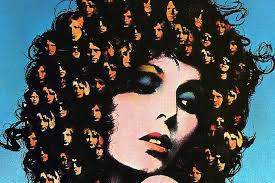
Formed in 1967, Mott the Hoople wanted to make music like Bob Dylan and the Rolling Stones. They never quite achieved the level of success of their idols but they were still important to British music at the start of the 1970s. They initially had limited commercial success, although they were popular in mid-sized venues in London and were always considered to be a good live band. Fans caused so much damage at their 1971 concert at the Royal Albert Hall that rock concerts were banned from the iconic venue. By the beginning of 1972, following poor album sales, an aborted tour and an onstage fight in Switzerland, Mott the Hoople were on the brink of breaking up.
Sometimes in life, quality is more important than quantity, and even if you don’t have a huge number of fans, if your hardcore group of fans includes David Bowie, you must still have some hope. Such was the case for Mott the Hoople. After hearing of the band’s troubles, Bowie offered to give them his song “Suffragette City”. They declined the offer thinking that it would not get them the kind of radio airplay that they needed to sell more records but took him up on his offer of “All The Young Dudes”. The single release became their greatest hit and a classic of the glam rock genre; the album of the same name that followed, produced by Bowie and Mick Ronson, got to #21 in the album chart. This was their fifth album and it was where they moved away from standard 1960s rock music and jumped firmly onto the glam rock band wagon.
David Bowie’s production gave Mott the Hoople a hit album at their fifth attempt but unfortunately without him they were not able to maintain this level of success. Their sixth album actually charted higher than All The Young Dudes but they split up in 1975. Mott the Hoople was one of those groups who were absolutely brilliant live on stage but could not quite recapture that magic in a studio.
In 2009 they played a 5 night sell out reunion residency at the Hammersmith Apollo in London. The crowd were on their feet through the entirety of each show and apparently lead singer Ian Hunter commented that it was the first time he had ever had a standing ovation for an entire concert. The surviving members of the band have continued to play sporadically since. Not bad for a band that never had a #1 hit single or album.
Despite being commercially unsuccessful, Mott the Hoople influenced some serious musical players such as Queen, REM and, of course, David Bowie. The Clash, The Sex Pistols, The Smiths and the New York Dolls all cite Mott as influencing them.
Mott the Hoople was one of our favorite groups; we loved their sound, their delivery, their attitude and the fun they brought to live shows. We saw them perform live twice .… August 3, 1973 at the Felt Forum with the New York Dolls and again on May 7, 1974 at the Uris Theatre with Queen. The Uris (now known as the Gershwin Theatre) was newly opened when Mott and Queen performed there; it’s Broadway’s largest theater, with almost 2,000 seats across two levels. Over the years, it has hosted musicals, dance companies and concerts. It’s a beautiful place. Unfortunately, the theatre sustained significant damage by the fans during one of Mott’s shows …. fortunately not the one we attended. Here’s a clip from the New York Times:
“Mott the Hoople arrived on Broadway Tuesday night for the first of six shows, the first hard rock group ever to appear there, and the Uris Theater will probably never be the same again. Cigarette burns in the rugs and seats, spilled drink stains on the floor and torn upholstery were just part of the mess after their final show leaving people wondering how something like this could happen.”
Really …. who could blame them? That type of wonton destruction and disregard for property is disgraceful. You’d think the owners of the Uris Theatre would have been prepared after hearing about the damage at Royal Albert Hall three years earlier. Still, there’s no excuse and we were shocked to hear the reports just days after we were there.
This is Mott the Hoople’s greatest hit song … “All The Young Dudes” written by David Bowie.
This next song tells us about the protagonist who is in a rock band and his friends, Jack and Jane, who work as a banker and clerk. They all come home from work, sit by the fire, and listen to classical music together. The song talks about different aspects of life, such as working hard and dealing with difficult people, but also acknowledges that life is short. The song is “Sweet Jane”; written and originally recorded in 1970 by Lou Reed, it was covered by Mott the Hoople in 1973.
This is Mott the Hoople with Lou Reed’s “Sweet Jane”.
“All The Way From Memphis” is a single written by Mott the Hoople’s front man, Ian Hunter. It was released as the lead track from the album Mott in 1973. The song is based on true events and describes the unglamorous side of rock stardom …. the tale of a guitar lost in transit (shipped to Oriole, Kentucky instead of Memphis, Tennessee) and what seemed like a paltry and unenthusiastic concert audience. Despite the album’s popularity, the song never charted in the US although it did receive considerable airplay on album-oriented rock stations. The Mott album reached the Top 40 of the Billboard 200, peaking at #35.
This is “All The Way From Memphis” by Mott the Hoople, featuring the great Andy Mackay from Roxy Music on sax.
Big thanks to Glyn for hosting Mixed Music Bag every week.
Thanks for joining me today and spinning some tunes.
See you on the flip side. 😎
NAR©2024
All text, graphics and videos are copyright for The Sicilian Storyteller, The Elephant’s Trunk and The Rhythm Section and are not to be used without permission. NAR©2017-present.
Just A Spoonful
Written for Glyn’s Mixed Music Bag week #26
where we are asked to write about a song by a group
or solo singer beginning with the letter K or L.
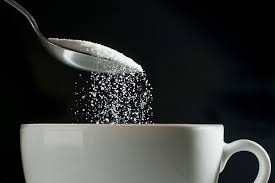
The Lovin’ Spoonful was an American band formed in 1964 by singer John Sebastian with guitarist Zal Yanovsky, drummer Joe Butler and bassist Steve Boone, cementing the quartet’s official lineup.
While they were a band that blossomed from the Greenwich Village folk scene in the 1960s, the group’s name was inspired by the blues song, “Coffee Blues” …. the classic song by Mississippi John Hurt. The song supposedly has a deeper, more suggestive meaning if listened to closely enough.
“Coffee Blues” was always a big crowd pleaser because of Mississippi John Hurt’s particularly innocent delivery and his guileless way of presenting it. His audience was frequently filled with beautiful college women …. a group for which he always had appeal.
By 1969, after only five short years together, The Lovin’ Spoonful called it quits. In those few years as a group, the band had amassed a number of hits, including “Summer in the City”, “Do You Believe In Magic?” “Did You Ever Have to Make Up Your Mind?” and “Daydream”.
My first featured song today and favorite Lovin’ Spoonful song is “Summer in the City”, a classic rock number that captures the excitement, energy, and heat of a bustling urban summer. The song opens with a distinctive drumbeat that immediately sets the tone for the fast-paced tempo and catchy melody. John Sebastian’s smooth, soulful voice sings about the hustle and bustle of the city streets, with the sound of car horns and sirens in the background adding to the urban ambiance. As the song progresses, Sebastian describes the heat and humidity of the city, urging listeners to “stay cool” amidst the oppressive weather. The chorus features a memorable hook that perfectly captures the vibe of a city summer: “Hot town, summer in the city/Back of my neck getting dirty and gritty.”
Overall, “Summer in the City” is a quintessential summer anthem that has stood the test of time, evoking the excitement and chaos of city life during the hottest months of the year.
This is “Summer In The City” by the Lovin’ Spoonful
My second-favorite song by the Lovin’ Spoonful is “Did You Ever Have to Make Up Your Mind?”, a catchy and lighthearted pop song that explores the dilemma of choosing between two potential love interests. The song opens with a bouncy guitar riff and John Sebastian’s playful singing, setting the tone for a fun and flirtatious track.
The lyrics describe the difficulty of making a choice between two people, with Sebastian asking: “Did you ever have to make up your mind?/Pick up on one and leave the other behind?” The song captures the excitement and confusion of young love, while offering advice on how to navigate this tricky situation: “One of these days you know you gotta make up your mind/But you better decide before you run out of time.”
Overall, “Did You Ever Have to Make Up Your Mind?” is a fun and upbeat song that captures the excitement and confusion of young love. It’s a timeless classic that continues to resonate with listeners of all ages, offering a lighthearted perspective on the challenges of navigating the complexities of romance.
This is “Did You Ever Have To Make Up Your Mind?” by the Lovin’ Spoonful.
Before ending I thought it might be fun to feature “Coffee Blues”, the song from which the Lovin’ Spoonful got their name. That’s all I’m going to say about the song; let’s see if you can figure out what makes it so suggestive a song.
This is “Coffee Blues” by Mississippi John Hurt
Big thanks to Glyn for hosting Mixed Music Bag every week.
Thanks for joining me today and spinning some tunes.
See you on the flip side. 😎
NAR©2024
All text, graphics and videos are copyright for The Sicilian Storyteller, The Elephant’s Trunk and The Rhythm Section and are not to be used without permission. NAR©2017-present.
Sex On Fire
Written for Glyn’s Mixed Music Bag week #25
where we are asked to write about a song by a group
or solo singer beginning with the letter K or L
Kings of Leon is an American rock band formed in Nashville, Tennessee, in 1999. The band is composed of brothers Caleb, Nathan and Jared Followill, and their cousin Matthew Followill. The band’s early music was a blend of Southern rock and garage rock with blues influences, but it has evolved throughout the years to include a variety of genres and a more alternative, arena rock sound. Kings of Leon achieved initial success in the United Kingdom with nine Top 40 singles, two BRIT Awards in 2008, and all three of the band’s albums at the time peaked in the top five of the UK Albums Chart. Their third album, Because of the Times, reached #1.
After the release of their 4th album, Only by the Night in September 2008, the band achieved chart success in the United States. The singles “Sex On Fire”, “Use Somebody” and “Notion” all peaked at #1 on the Hot Modern Rock Tracks chart. The album was their first platinum-selling album in the United States and the best-selling album of 2008 in Australia, being certified platinum nine times. The group has 12 Grammy Award nominations, including 4 wins.
“Sex on Fire” has been described as alternative rock. The song was written about lead singer Caleb’s then-girlfriend (and now-wife), model Lily Aldridge. In an interview with Australian radio station Triple J, Nathan Followill explained that the band never intended the song to be named “Sex on Fire” and that it was not intended to be about sexuality.
The song received generally positive reviews. Digital Spy rated the song 4/5 stars, describing it as “a truly stirring single“. Planet Sound also rated the song 9/10. However, Caleb Followill originally thought the song was “terrible” and it was almost ditched during recording.
In the United Kingdom, “Sex on Fire” entered the official UK Singles chart at #1 on September 14, 2008 and went on to an unbroken 42 weeks on the chart. In Germany, the single debuted at #97 on the German Singles chart; in its 32nd week on the chart, the song finally reached its peak of number 33. As of February 2011, the song had been on the chart for 60 weeks, a huge effort for a single that didn’t even reach the top 20.
This is “Sex On Fire” by Kings Of Leon
Big thanks to Glyn for hosting Mixed Music Bag every week.
Thanks for joining me today and spinning some tunes.
See you on the flip side. 😎
NAR©2024
All text, graphics and videos are copyright for The Sicilian Storyteller, The Elephant’s Trunk and The Rhythm Section and are not to be used without permission. NAR©2017-present.
Fade To Green
Written for Glyn’s Mixed Music Bag week #24 where we are
asked to write about a song by a group or solo singer
beginning with the letters K or L. Here’s my piece.

While many of you will likely be familiar with the song, I think most of you will be hard-pressed to name the group who performed it.
The Lemon Pipers was a 1960s bubblegum/psychedelic pop band from Oxford, Ohio known chiefly for their song “Green Tambourine“, which reached #1 in the US in 1968.
The band was made up of singer Ivan Browne, guitarist William Bartlett, keyboardist R.G. Nave, drummer William Albaugh and bassist Steve Walmsley. Most of the group’s songs were written by Shelley Pinz and Paul Leka.
Though they produced primarily bubblegum pop, the Lemon Pipers actually wanted to play more psychedelic, drug influenced music. Their recording label did not agree and threatened to fire them unless they played more mainstream, commercially viable pop. Several of the tracks on their Green Tambourine album show strong influences of folk rock, among other things, showing that the band wasn’t completely the pop outfit it appeared to be.
The Lemon Pipers eventually did gain artistic control over their work, but by that time they had all but faded into obscurity.
This very psychedelic song tells the story of a busker who plays for change. Throw some coins in his green tambourine and he’ll play you a tune. Lyricist Shelley Pinz wrote the words after seeing a street musician in front of the Brill Building in Manhattan who used a tambourine to collect money as he performed.
The music to this song was written by Paul Leka whose other claim to fame is “Na Na Hey Hey, Kiss Him Goodbye”. In addition to the titular tambourine, the arrangement features an electric sitar, orchestral strings and a vibraslap …. an unusual percussion instrument similar to a jawbone that produces a rattling sound when struck. Another hook is the heavy, psychedelic tape echo applied to the word “play” in each chorus and at the end, fading into a drumroll (“Listen while I play play play play play play play my green tambourine“).
Released toward the end of 1967, “Green Tambourine” spent 13 weeks on the US Billboard Hot 100, peaking at #1 on February 3, 1968, and sold over a million copies. The record remained on the chart for three months. It was also the first US #1 hit for the Buddah label. It was the only substantial hit for the Lemon Pipers.
This is “Green Tambourine” by the Lemon Pipers
Big thanks to Glyn for hosting Mixed Music Bag every week.
Thanks for joining me today and spinning some tunes.
See you on the flip side. 😎
NAR©2024
All text, graphics and videos are copyright for The Sicilian Storyteller, The Elephant’s Trunk and The Rhythm Section and are not to be used without permission. NAR©2017-present.
I Like It Kinky
Written for Glyn’s Mixed Music Bag Week #23
where the theme is ‘songs by a group or solo singer
beginning with the letter K or L’. Here’s my group.
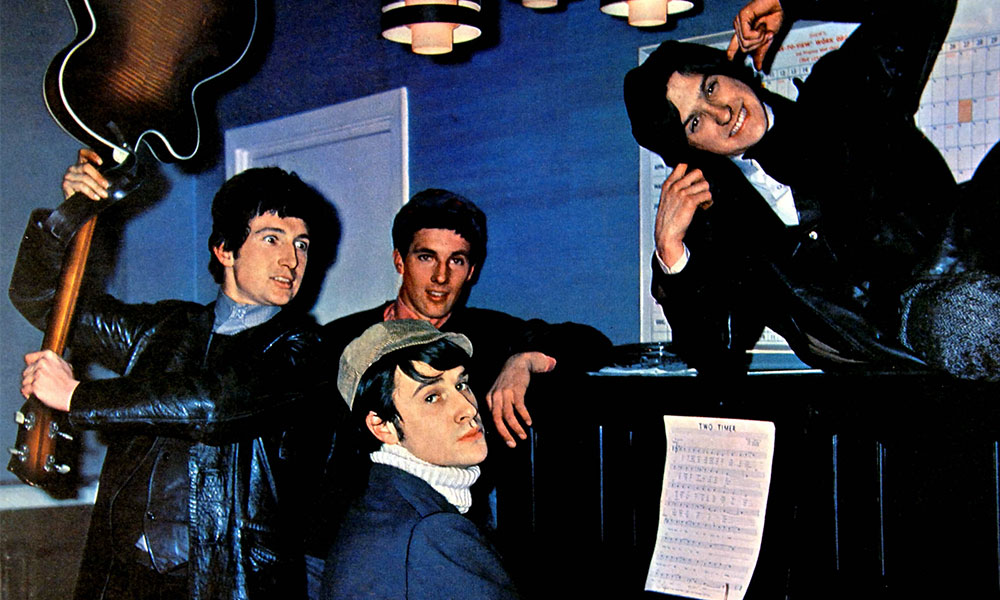
Wickedly satirical, wryly observant and fiercely independent, the Kinks ran counter even to the counterculture! While other major 60s bands were on drug-fueled psychedelic jam sessions, the Kinks kept their focus close to home. They dissected England with witty, literate lyrics set to pop-rock that gained them a cult following that only grows.
While we could never be called cult-followers, Bill and I are huge Kinks fans and saw them perform in concert more times than any other group. The Kinks have left an unimpeachable legacy of classic songs, many of which formed the building blocks of popular music as we know it today.
Founded in 1964 in Muswell Hill, North London, by brothers Ray and Dave Davies, the Kinks first gained prominence on the heels of the well-received and highly influential single “You Really Got Me”. The group originally consisted of lead singer/guitarist Ray Davies, lead guitarist Dave Davies, bassist Pete Quaife and drummer Mick Avory. Quaife left [twice] in the late 1960s and Avory left in 1984 as the result of a long-running dispute with Dave Davies, leaving only Ray and Dave as the core of the original group.
With Ray’s songwriting skills, Dave’s impressive guitar work and Mick Avory’s tight and steady drumming, the band became one of the best and most significant groups of British pop and the “British Invasion”, lasting longer than any of their peers, apart from the Rolling Stones. Their catalogue of songs has been covered by Van Halen, The Pretenders, The Black Keys, The Stranglers, Queens of the Stone Age and many more.
So, what about all those concerts we went to? Bill helped me with this list as I didn’t think I would have remembered all the dates …. and I didn’t! The 1st time we saw the Kinks was in October, 1969, at our old stomping grounds, the Fillmore East. The 2nd time was June, 1970, at the Capitol Theater in Port Chester, NY; that was a great show which also featured Grand Funk Railroad and Mott The Hoople. In November, 1971, we saw the Kinks at Carnegie Hall and then again at Stony Brook University where they shared the stage with Yes. Our 5th Kinks concert was again at Carnegie Hall in March, 1972, and later that year we saw them two more times …. once with the Beach Boys at the Nassau Coliseum (fun!) and again at the Felt Forum of Madison Square Garden. The 8th time seeing the Kinks was with Argent in March of ’73 at St. John’s University. In 1974 we saw them for the 9th time, again at the Felt Forum. Our 10th and final Kinks concert took place at Hofstra University in May, 1977. I was pregnant with our first child and we decided it was time to settle down and act responsibly. That’s 10 performances in 8 years; not bad!
As you can imagine, it’s very difficult to choose one Kinks’ song as my all-time favorite …. so I won’t. Here are three songs I really like a lot so turn up the volume and settle in.
#1 – Ray Davies claimed that he was inspired to write “Lola” after Kinks manager Robert Wace spent a night in Paris dancing with a cross-dresser. The lyrics to this one are so deliciously clever and can be interpreted a couple of different ways. “Lola” reached #1 on the UK Singles Chart and #9 on the Billboard Hot 100. The track has since become one of the Kinks’ most popular songs and was ranked #386 on Rolling Stones’ 2021 edition of “The 500 Greatest Songs Of All Time”. This is ”Lola”:
#2 – There’s not a single thing wrong with this beautiful and melancholy tribute to the stars of Hollywood’s Silver Screen. Record World called “Celluloid Heroes” one of Ray Davies’ finest compositions, however it failed to chart. That doesn’t matter one bit to me; it still is a fabulous song! This is “Celluloid Heroes”:
#3 – Released in August, 1964, “You Really Got Me” went to #1 on the UK singles chart and later in the year to #7 on the US charts. The track is taken from the Kinks’ self-titled album The Kinks. This is “You Really Got Me”:
Big thanks to Glyn for hosting Mixed Music Bag every week.
Thanks for joining me today and spinning some tunes.
See you on the flip side. 😎
NAR©2024
All text, graphics and videos are copyright for The Sicilian Storyteller, The Elephant’s Trunk and The Rhythm Section and are not to be used without permission. NAR©2017-present.
A Little Bit Louder Now
Written for Glyn’s Mixed Music Bag week #22
where we are asked to write about a song by a group
or solo singer beginning with the letter I or J.

There is only one band in the history of American music that had a proven influence on both The Beatles and the rapper Ice Cube and had a hit in six straight decades, from the ‘50s to the ‘00s. That band is the mighty Isley Brothers, one the most influential bands in American musical history.
Formed in the mid-’50s as a teenage gospel quartet by the four eldest Isley Brothers (O’Kelly, Rudolph, Ronald and Vernon), the original group quit performing when Vernon was tragically killed at age 13 while riding his bike. In 1957, at the urging of their parents, the remaining three brothers moved to New York City to make it as a R&R band. The first song they wrote together was something called “Shout!”— a massive smash that had multiple lives thanks to its inclusion on the Animal House soundtrack – and is probably playing at an event near you, right now.
From that first single and album in 1959, the Isley Brothers repeatedly redefined what their music was and what it was called; they dominated the black music charts like no band before or since. The Isley Brothers can count both Jimi Hendrix (who toured with them in the early ‘60s) and Elton John (whose band backed the Isleys up in the UK) as backing musicians. They have arguably the most legendary run of albums in R&B history. After early R&R success (and an incredible detour with Motown), the band released all of their albums independently on their own T-Neck Records, reinventing R&B over and over again in the process.
In 1973, the younger brothers Ernie and Marvin joined the band alongside their brother in law, Chris Jasper. Ernie Isley is one of the most well-known and respected guitarists and song writers in the history of the business and together the brothers wrote and produced many of the hits that we know and love today.
The Isley Brothers were inducted into the Rock & Roll Hall of Fame in 1992, in a class with their old backing guitarist, Jimi Hendrix. The band received a lifetime achievement Grammy in 2014 and have sold millions of records the world over; 16 of their albums hit the Top 40 and all of them are powerhouses on the R&B charts. They have bridged cultural differences by blending Soul and R&B with Funk, bringing a new style of music to the mainstream and having a lasting impact on countless artists to follow. Their music has transcended through generations and their reach has extended to the modern day where their music is frequently sampled all throughout hip hop and modern pop. They are, in many respects, the most important and influential band in the history of American music, the only band who could be sampled by Notorious B.I.G. and covered by The Yardbirds! What a career!
Released in 1959, “Shout!” is an electrifying anthem that broke the mold of R&R and R&B, becoming an enduring symbol of musical joy and freedom. The song’s inception, inspired by a live improvisation on Jackie Wilson’s “Lonely Teardrops,” captured a spontaneous burst of energy and emotion. The studio recording, characterized by its gospel-infused harmonies and a simple yet profound chorus urged listeners to release their inhibitions and “shout a little bit louder now”.
Though “Shout” didn’t immediately climb the charts, its influence and popularity grew over time, becoming a live performance staple for the Isley Brothers. Covered by numerous artists across a variety of genres, “Shout” has demonstrated its versatile appeal and enduring legacy. It’s more than just a song …. it’s an anthem of liberation and celebration.
Here now are the Isley Brothers with their iconic recording of “Shout!”
Big thanks to Glyn for hosting Mixed Music Bag every week.
Thanks for joining me today and spinning some tunes.
See you on the flip side. 😎
NAR©2024
All text, graphics and videos are copyright for The Sicilian Storyteller, The Elephant’s Trunk and The Rhythm Section and are not for use by anyone without permission. NAR©2017-present.
Do You Hear What I Hear?
Written for Glyn’s Mixed Music Bag #20, where we are asked to write about a song by a group or solo singer beginning with the letter I or J.

The date was January 24, 1969. Jethro Tull stepped on stage at the Fillmore East to play their inaugural performance in the United States. Tull hadn’t yet reached the point of popularity in The States to warrant a headlining gig; they were the opening act for Blood, Sweat and Tears. That’s who we were there to see. When the opening act started playing, I remember turning to Bill and saying “I could be wrong but I think that guy’s playing a flute!” and that was the beginning of my love affair with Jethro Tull.
Even if their long career stalled at the start of the ‘70s, Jethro Tull would still go down in rock history for that one crucial thing: they proved that the flute could be a killer R&R instrument. Front man Ian Anderson has wielded the instrument – a favorite among middle-school-band girls and wandering minstrels for almost a thousand years – like a madman onstage, aggressively blowing solos usually reserved for guitars or saxophones. But paired with the band’s era-spanning brand of progressive folk music – expertly displayed on 1971’s breakthrough Aqualung album – the flute has become a weapon of mass destruction in Anderson’s hands. Despite the many lineup changes the band has gone through over the years, Jethro Tull’s records have rarely diverted from their ambitious paths. The group infamously won the first-ever Hard Rock/Metal Grammy in 1989. So there!
The track “Aqualung” is a story of homelessness and how society deals with it. Ian Anderson said his wife took photos of the homeless and showed them to him. Many of the lyrics describe actual homeless men. His wife also wrote some lyrics from the photos. Anderson went on to say “Aqualung” is a “guilt-ridden song of confusion about how you deal with beggars, the homeless and our reaction of guilt, distaste, awkwardness, all these things that we feel when we’re confronted with the reality of the situation. You see someone who’s clearly in desperate need of some help, whether it’s a few coins or the contents of your wallet, and you blank them out. The more you live in that business-driven, commercially-driven lifestyle, you can just cease to see them.”
Here’s a bit of history regarding the name of the album/song. An Aqualung is a portable breathing setup for divers (think scuba gear). Anderson’s photos showed a homeless man with breathing problems and the name “Aqualung” came to him. It turns out that Aqualung was a brand name for the deep sea breathing system in a TV show Anderson liked to watch – Sea Hunt. In a 2019 interview, Ian Anderson said, “They tried to sue the hell out of us, the Aqualung Corporation of North America. We apologized profusely and said, ‘Sorry, we didn’t know. We thought ALL underwater breathing apparatus were called Aqualungs because it’s so famous the world over.’ It was an honest mistake. I think they were flattered by the fact that we thought they were the one and only kind of company doing that stuff. They decided not to sue us after all.” Great story!
“Aqualung” was never released as a single simply because it’s too long. Radio at the time was sharply divided between AM, which played the 3-minute pop hits, and FM, where they played what was called deep cuts. The album Aqualung is Jethro Tull’s best-selling with more than seven million units worldwide. It was generally well-received critically and has been included on several music magazines’ best-of lists.
From 1971, this is “Aqualung” by Jethro Tull, from the album of the same name..
And this is Ian Anderson’s Flute Solo from 1976 in Tampa, Florida
Big thanks to Glyn for hosting Mixed Music Bag every week.
Thanks for stopping by and hanging with me today.
See you on the flip side. 😎
NAR©2024
All text, graphics and videos are copyright for The Sicilian Storyteller, The Elephant’s Trunk and The Rhythm Section and are not for use by anyone without permission. NAR©2017-present.
Put Them In The Iron Maiden
Written for Glyn’s Mixed Music Bag #19, where we are asked to write about a song by a group or solo singer beginning with the letter I or J.
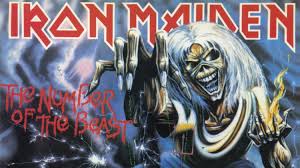
Iron Maiden is an institution. Over the course of 48 years they have come to embody a spirit of fearless creative independence, ferocious dedication to their fans, and a cheerful indifference to their critics that’s won them a following that spans every culture, generation, and time-zone. A story of gritty determination and courageous defiance of the naysayers, theirs has been an adventure like no other. Every one of their songs is a story and that for me, as a storyteller, is one of the key ingredients to their success. They are unique and different from every other heavy metal band with song lyrics covering such topics as history, literature, war, mythology, society and religion.
Iron Maiden has released 41 albums, including 17 studio albums, 13 live albums, four EPs and seven compilations. They have also released 47 singles and 20 video albums, and two video games. The band has played some 2,500 live shows and is still touring today. Iron Maiden has become one of the most influential and revered rock bands of all time.
On the evening of October 2, 1982, my husband Bill and I hired a babysitter for our boys and drove into Manhattan for what would be one of our final rock concerts. It had been a while. Now that we had kids, who knew when we would be able to have this experience again. We were all grown up with a different set of priorities but this was one event we could not miss. Performing that night at Madison Square Garden were two British groups Bill and I didn’t have a chance to see B.K. (Before Kids). They were Judas Priest and Iron Maiden. And one of the songs Maiden performed that night was “The Number Of The Beast”.
Upon release in 1982, the song caused controversy in the United States where its religious subject matter caused outrage among religious groups. In spite of this, it remains one of the band’s more popular songs, reaching #18 in the UK singles charts on its original release, and #3 on two successive occasions in 1990 and 2005. It has been performed on almost all of their concert tours.
According to the song’s writer, bassist and band-founder Steve Harris, it was inspired by a nightmare he had after watching the film “Damien: Omen II” late at night, in addition to the poem “Tam o’ Shanter” by Robert Burns. The song opens with a spoken word passage which quotes Revelation 12:12 and Revelation 13:18. The track is known for its very long, high-pitched and guttural wail at the end of the intro, which AllMusic describes as “the most blood-curdling Dickinson scream on record“.
Live from Madison Square Garden in New York City, this is Iron Maiden with “Number Of The Beast”
Big thanks to Glyn for hosting Mixed Music Bag every week.
Thanks for stopping by and hanging with me today..
See you on the flip side. 😎
NAR©2024
All text, graphics and videos are copyright for The Sicilian Storyteller, The Elephant’s Trunk and The Rhythm Section and are not for use by anyone without permission. NAR©2017-present.
We’re Coming To Your Town!
Written for Glyn’s Mixed Music Bag #18, where we are asked to write about a song by a group or solo singer beginning with the letter G or H.
As the 60s slipped into the 70s, an American hard rock band was getting started in Flint, Michigan. Known for such iconic rock hits as “We’re An American Band”, “I’m Your Captain” “Some Kind Of Wonderful” and their cover version of “The Loco-Motion”, the guys called themselves Grand Funk Railroad, culling their name from Michigan’s GTWR (Grand Trunk Western Railroad. Originally comprised of singer/guitarist Mark Farner, singer/drummer Don Brewer and bassist Mel Schacher, the band’s style of rock reflected their blue-collar Michigan surroundings. There were no pretensions, no airs …. just sweaty, longhaired grooves and celebratory tunes for days.
Known for a crowd-pleasing arena rock style, Grand Funk toured extensively and played to packed stadiums worldwide and was well-regarded by audiences despite a relative lack of critical praise. Early in their career, they headlined a much hyped free concert in Hyde Park, wowing the audience while being relatively unknown in the UK. They also opened for Led Zeppelin in their home state of Michigan.
GFR split and reunited numerous times; in 1996 all three members reunited for a summer tour in which they played to over 250,000 people, and a slate of Bosnian relief dates in 1997 including several TV performances. In 1998 they did a 65+ date tour listed as one of the top ten grossing tours of the year.
Grand Funk Railroad’s first number-one hit, 1973′s “We’re An American Band”, came seven albums into the band’s career and was literally written around the lines “We’re coming to your town. We’ll help you party down.”
According to songwriter/drummer Don Brewer, the inspiration came from the band’s day-to-day life. “We’re on planes all the time, flying into these towns. I remember looking down at the ground as we’re coming into a city and that thought came to my mind: ‘We’re coming to your town to party it down’ – because that’s what this band does.” Brewer then added more lyrics about the trials and tribulations of life on the road: “Booze and ladies, keep me right / As long as we can make it to the show tonight.” Prior to writing “We’re An American Band”, Brewer had stuck mostly to drumming.
Released on July 2, 1973, “We’re An American Bane” went to #1 on the US chart, and the album of the same name went to #2 on the Billboard 200. The album jacket was originally covered in gold-colored foil; the initial pressings were in clear, dark yellow vinyl to suggest a “gold” record. The album is #200 of the National Association of Recording Merchandisers definitive 200 albums of all time. Grand Funk Railroad has released 14 studio albums and 5 live albums (10 platinum) with sales totaling over 25 million records sold, 10 million of which were sold in 1970 alone.
The band’s lineup in recent years features Brewer and Schacher, as well as former Kiss member Bruce Kulick on guitar, 38 Special expatriate Max Karl on vocals, and keyboard player Tim Cashion, formerly with the likes of Robert Palmer and Bob Seger.
This is “We’re An American Band” by Grand Funk Railroad.
Big thanks to Glyn for hosting another week of Mixed Music Bag.
Thanks for stopping by.
See you on the flip side. 😎
NAR©2024
All text, graphics and videos are copyright for The Sicilian Storyteller, The Elephant’s Trunk and The Rhythm Section and is not for use by anyone without permission. NAR©2017-present.
Let Them Eat Pie
Written for Glyn’s Mixed Music Bag #17, where we are asked to write about a song by a group or solo singer beginning with the letter G or H.
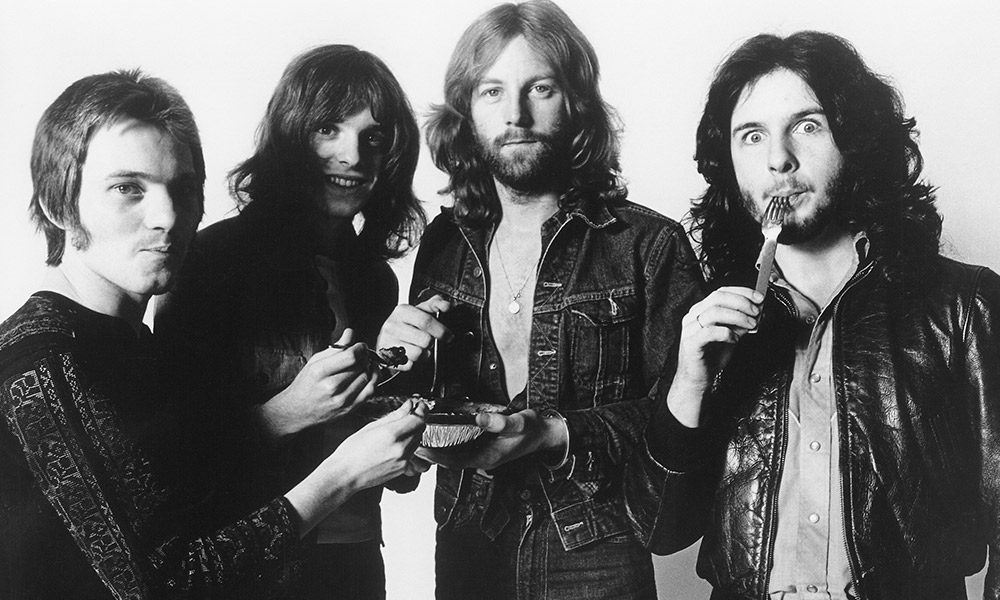
Frustrated with a number of things but mostly his image as a teen idol, Steve Marriott finally had enough. It was New Year’s Eve, 1969, when he threw down his guitar and walked off the stage at London’s Alexandra Palace, quitting his band, Small Faces. Marriott was a talented musician and vocalist who wanted to be taken seriously for his music …. not his looks.
After quitting, Steve Marriott called two friends – one was Peter Frampton – another frustrated teen idol who had recently quit his band, Herd – and the other was 17-year-old drummer Jerry Shirley. Marriott asked his friends if he could join the band they were forming and, to sweeten the pot, said he’d bring with him Greg Ridley, a well-respected bass player from the band Spooky Tooth, who was also looking to make a change. Well, of course, Frampton and Shirley couldn’t turn down an offer like that and so the newest “supergroup” (as the press called them) was created. The guys in the band hated being called a supergroup …. they were worried about expectations being set too high and dooming them to failure. In retaliation they chose a name they were more comfortable with …. Humble Pie.
Their debut album, “As Safe As Yesterday Is”, was released in August 1969, along with the single, “Natural Born Bugie”, which reached #4 in the UK singles charts; the album peaked at #16 in the UK album charts. “As Safe As Yesterday Is” was one of the first albums to be described by the term “heavy metal” in a 1970 review in Rolling Stone magazine.
In 1971 Humble Pie released their most successful record to date, “Rock On“, as well as a live album recorded at the Fillmore East in New York entitled “Performance Rockin’ the Fillmore”. The live album reached #21 on the US Billboard 200 and was certified gold by the Recording Industry Association of America. Culled from four sets recorded on May 28 and 29, 1971 (the original LP was essentially a sampler of songs from several raucous shows), “Performance Rockin’ the Fillmore” was released that November as a double album set. Humble Pie was second on the bill, after Fanny and before headliner Lee Michaels, a fact hardly anyone seems to remember. I will testify to that because I was in the audience at the Fillmore East on May 28, 1971 and the only group I remember seeing was Humble Pie. That was just one month before the legendary Fillmore closed its doors …. the end of an era in the history of rock.
Peter Frampton’s final recording with Humble Pie in 1971 was, by some irony, the band’s most successful, and is widely acknowledged as one of the most influential live albums of the decade. Humble Pie produced 11 studio albums and 2 live albums.
“I Don’t Need No Doctor” from “Performance Rockin’ the Fillmore” was an R&B song written by Nick Ashford, Valerie Simpson and Jo Armstead, first released by Ashford in August 1966; it went nowhere. The song has been recorded by Ray Charles, John Mayer, rock bands New Riders of the Purple Sage, Great White and Styx, metal band W.A.S.P. and others. Humble Pie’s version became an FM radio standard in the US, peaking at #73 on the Billboard Hot 100 and propelling the album up the charts.
Live from the Fillmore East in my hometown of New York City, this is the single version of “I Don’t Need No Doctor” by Humble Pie.
Personnel
Steve Marriott– guitar, vocals, harmonica
Peter Frampton – guitar, vocals
Greg Ridley – bass guitar, vocals
Jerry Shirley – drums
Technical team
Live recording by Fedco Audio Labs
Engineer: Eddie Kramer
Assistant Engineer: David Palmer
Re-mixed at Electric Lady Studies, New York
Produced by The Pie
In 1991 Steve Marriott died in an accidental house fire at the age of 44; bassist Greg Ridley died in 2003 at the age of 56 from complications from pneumonia. Peter Frampton continues to enjoy success as a solo artist and Jerry Shirley is still behind the kit, touring with the current members of Humble Pie.
The Fillmore East didn’t last all that long, from March 8, 1968 to June 27, 1971, but a ton of great music was played there. It was our personal music Mecca. Pretty much every legendary 1960s band …. except the Beatles, the Rolling Stones, Cream and Dylan …. graced the stage and I was in attendance for a lot of those shows. It was epic.
Big thanks to Glyn for hosting Mixed Music Bag every week.
Thanks for stopping by.
See you on the flip side. 😎
NAR©2024
All text, graphics and videos are copyright for The Sicilian Storyteller, The Elephant’s Trunk and The Rhythm Section and is not for use by anyone without permission. NAR©2017-present.
Me And Mr. Hall
Written for Glyn’s Mixed Music Bag #16, where we are asked
to write about a song by a group or solo singer
beginning with the letter G or H.
Besides my husband, during my lifetime I’ve been madly in love with three other men: George Harrison, Daryl Hall and Rick Springfield. They were all so very talented, gorgeous and sexy! I would cut out their pictures from music magazines, make scrapbooks, hang posters in my bedroom and mail them letters. My missives were never answered but I’m sure that’s only because they were so busy making music. I would imagine myself as Mrs. Harrison or Hall or Springfield, which got weird because by the time Daryl Hall and Rick Springfield were dominating the billboard charts I had been married for about 10 years! Things could have gotten strained between me and my husband during that time but they didn’t because he’s a very understanding, realistic man and didn’t feel threatened at all. It also didn’t hurt that I had about as much chance of meeting Daryl or Rick as I did winning the Miss Universe pageant.
Well, dear George has passed away but Daryl and Rick are very much alive and I bet they’re kicking themselves for not answering my letters seeing as how I’m now such a bigshot storyteller, poet and music blogger! I saw Rick recently on TV and I must say I was shocked; maybe it was the lighting but he really hasn’t aged well and someone should gift him with a jar of Crepe Erase. But Daryl is another story; he still sounds fantastic, looks gorgeous and is one big hunk of burning love. And what’s more …. Daryl’s Garage where he does live shows and podcasts is 90 minutes from where I live and his house in Connecticut is only one hour away. (We stalkers fans have to stay on top of things like that!) I just might get my “I ❤️ Daryl Hall Tank Top” autographed after all!
Since the letters for Glyn’s April MMB are G and H, I immediately wrote about George Harrison last week. Unfortunately, Rick Springfield is out of luck and will have to wait another 6 months before I can write about him. But no worries! You can all breathe a sigh of relief because today is all about Daryl Hall (and some other guy named John Oates).
Did you know that Daryl Hall & John Oates are the number-one selling duo in music history? They’re bigger than Simon & Garfunkel, Sonny & Cher, Ike & Tina Turner, Sam & Dave, The Righteous Brothers, Loggins & Messina and The Everly Brothers. (The statistics are impressive and are readily available on Wiki, if you’re interested.) During their time together (starting in 1970), they released 18 studio albums and 63 singles. They also broke up their act and got back together numerous times until October 2022 when they officially called it quits; sadly, they are currently in the middle of an ugly legal battle. But what sweet music they made together!
When the original version of this song first came out, I was a newlywed and I thought this was possibly the sexiest, most titillating and steamy subject for a song I’d ever heard. It’s the story of an affair between a married man and his equally married lover who meet every day at the same café where they hold hands and whisper sweet words of love. They know their affair is wrong but it’s much too strong to stop.
Some of you may recall that I wrote about this song a while back for Jim Adams’ Song Lyric Sunday; it’s just so nice, I had to feature it twice! You may also remember that the original singer of this song is a guy named Billy Paul who recorded his song in 1972. So why feature a cover of someone else’s song and not an original Hall & Oates song? Because it’s a great song and after all these years, I still “have a thing going on” for Daryl Hall.
For all the obvious reasons, here is my pick of the day by Hall & Oates …. from 2003 it’s “Me And Mrs. Jones”.
Well, no offense John Oates, but three’s a crowd and for me there’s only room for Daryl. He’s certainly come a long way and still has plenty of mileage left in a career that’s taken him from the streets of Philly to the halls of R&R in Cleveland. And the best is yet to come …. especially for me. My hubby, who isn’t the least bit threatened by the likes of Daryl Hall, is taking me to see him live, up-close and personal at the Mohegan Sun arena in July! Now, I just need to find that old tank top …. and you better believe I will wear it!
Thanks to Glyn for another great Mixed Music Bag and thank you for stopping by.
See you on the flip side. 😎
PS: I almost forgot! For all you purists reading this right now, I simply could not leave without playing one Hall & Oates original; after all, they are the #1 selling duo in music history! This song debuted on the Billboard Top 40 on February 5, 1977 at #38 and by the end of March it had become Hall & Oates’ first of six #1 singles on the Billboard Hot 100. At the end of 1977, Billboard ranked it as the 23rd biggest hit of the year. From the album Bigger Than Both Of Us, here is Hall & Oates’ first #1 hit, “Rich Girl”.
All text, graphics and videos are copyright for The Sicilian Storyteller, The Elephant’s Trunk and The Rhythm Section and is not for use by anyone without permission. NAR©2017-present.
It’s The (Not So) Quiet Beatle
Written for Glyn’s Mixed Music Bag #15, where we are asked to write about a song by a group or solo artist beginning with the letter G or H.

This was a no-brainer for me; not only does my featured performer’s first name start with the letter G, his last name starts with the letter H. It’s almost as if I had a sign from the heavens, divine intervention. Yes, as soon as I saw this week’s MMB challenge, I knew who and what I would write about. And if you know me or follow my blogs then you know, too! As the title of my post says “It’s The (Not So) Quiet Beatle” so, unless you’ve been in a 50-year-long coma or stranded on a desert island since infancy, you’ve already figured out that my featured artist today is George Harrison, the multi-talented musician born February 25, 1943 in Liverpool.
George was the youngest of four children born to Harold, a bus conductor, and Louise, a shop assistant. His earliest musical influences included Cab Calloway, Hoagy Carmichael, Carl Perkins, Elmore James and Lonnie Donegan. One day while riding his bicycle, George heard Elvis Presley’s “Heartbreak Hotel” playing from a nearby house and the song piqued his interest in Rock & Roll. At first his father was apprehensive about George’s interest in pursuing a music career but he was willing to let his son give it a go. He bought him his first guitar and had one of his friends teach George how to play a couple of old songs; like many others at the time, George started a skiffle* group with his brother and a friend. At the age of 14 George met Paul McCartney on the bus to school and the pair bonded over their shared love of music. Paul introduced George to John Lennon and the rest, my friends, is the stuff that dreams are made of. [*a genre of folk music with influences from American folk music, blues, country, bluegrass and jazz]
While there’s a plethora of songs to choose from George’s days with the Beatles, I will be focusing on a few songs from his prolific solo career. These songs may be lesser known but they will all be fun, clever, amusing and uniquely special …. just like George. As he said, “Didn’t want to be a star, wanted just to play guitar in this cockamamie business”.
I hope you enjoy my selections today.
Chris O’Dell is probably the most well-known woman in Beatledom. Not only did she land a job at Apple Studios, she was an assistant and facilitator to the Beatles and other acts including Derek & the Dominos, the Rolling Stones, Dylan, Santana etc., etc. Besides Freda Kelly (the Beatles’ personal secretary), Chris O’Dell knew more about the guys in the band than their own wives. She was on the roof during that famous concert; not just anyone got invited to the roof! You had to be really popular and Chris O’Dell had that market cornered as a super-groupie, something she proudly wrote about in her bio. She was such a favorite among the rock stars, she had songs written about her …. like this one which George Harrison wrote in Los Angeles in April 1971 while waiting for O’Dell to ‘pay him a visit‘ 😉😉 at his rented home. For whatever reason, she never showed and George wrote a light-hearted number which provides insight into the Los Angeles music scene at the time. Chris O’Dell went on to write her memoirs in a book called “Miss O’Dell”, named after George’s song. George recorded several versions of the song but this one is my favorite. The string of numbers you hear George reciting at the end of the song was Paul McCartney’s actual phone number.
From George Harrison’s album “Living In A Material World”, this is “Miss O’Dell”. I dare you not to smile.
This next song was George Harrison’s humorous send-up of the “He’s So Fine”/”My Sweet Lord” silly little plagiarism court case. The lyrics have a playful reference to the case (“My expert tells me it’s OK”) and, at one point, Eric Idle chimes in with some very funny Motown song references. In case you’re not familiar with the legal goings-on, in 1981 George Harrison was ordered to pay $587,000 for ‘subconsciously plagiarizing’ the Chiffons’ 1963 hit single “He’s So Fine” during the creation of his own song “My Sweet Lord”. Harrison reflected in his biography “I wasn’t consciously aware of the similarity to ‘He’s So Fine’.” I don’t think the law suit had much of a negative impact on George’s pocket or popularity.
From 1976 (and featuring a full cast of characters), this is the funny, campy, in-your-face “This Song” from George Harrison’s album “Thirty Three And 1/3”.
My last song today is from George Harrison’s 1987 album “Cloud Nine”. “When We Was Fab”, one of the first songs cowritten by George and Jeff Lynne, looks back to his Beatles days and contains various musical and lyrical references to the 1960s, including quotations from songs by Bob Dylan and Smokey Robinson. This beauty of a tune harkens back to several well-know Beatles songs, particularly from their psychedelic period. Beatles drummer Ringo Starr is fittingly behind the kit on this recording and is prominently featured in the video. Pay attention to this one; there’s a lot of little things going on that are easy to miss.
From “Cloud Nine”, this is “When We Was Fab”.
I hope you enjoyed a look at a different side of George Harrison …. the funny, sharp-witted, clever and not-so-quiet side that he enjoyed in this cockamamie business.
Thanks to Glyn and his Mixed Music Bag weekly prompts. See you next time.
NAR©2024

All text, graphics and videos are copyright for The Sicilian Storyteller, The Elephant’s Trunk and The Rhythm Section and is not for use by anyone without permission. NAR©2017-present.
Jersey Boys
Written for Glyn’s Mixed Music Bag #13, Monthly Challenge Week 13
where we are asked to write about a song by a group or solo singer
beginning with the letter E or F.

What do Bruce Springsteen, Frank Sinatra, Jon Bon Jovi, Zakk Wilde, Count Basie, Southside Johnny, Tony Bennett, Dankig, Ricky Nelson and Paul Simon all have in common? I’ll give you a few minutes to mull that over.
OK, time’s up.
So, what do all those guys have in common? They are all from the illustrious Garden State …. New Jersey, USA. Yes, they are all Jersey Boys. However, they are not the Jersey Boys; that distinction goes to the Four Seasons, my featured group for this week and one of the best-selling bands of all time.
Evolved from a Newark, New Jersey vocal group called the Varietones and briefly known as the Four Lovers, the Four Seasons developed a harmony-based style that shared the same Italian American doo-wop origins as New York’s Dion and the Belmonts.
Frankie Valli, best known for his soaring falsetto, was the band’s lead singer, alongside Bob Gaudio on keyboards and vocals, Tommy DeVito on lead guitar and vocals and Nick Massi on electric bass and vocals. And no drums. “But Nancy” you ask, bewildered, “aren’t the Four Seasons known for their kickass drumming?” Yes, kids, that’s true and there’s a very good explanation. Read on.
The only member of the Four Seasons who played drums was Frankie Valli and he’ll tell you himself he wasn’t very good at it. Since they never had a member of the group to sit behind the kit, they always used session drummers. The most popular studio drummer at the time was Buddy Saltzman who, from 1955 through 1968 was the most used studio drummer in recording history. Let me repeat that: from 1955 through 1968, Buddy Saltzman was the most used studio drummer in recording history. Saltzman once said, “All I ever wanted to do was play drums and provide for my family.” Without a doubt, Buddy Saltzman fulfilled his goals in spades and in the process he helped create some of the coolest and longest-lasting music of the twentieth century.
Bob Gaudio, along with producer Bob Crewe, became the Four Season’s chief songwriter as the group cranked out R&B and R&R hits, first for Vee Jay and then for Philips Records. Among the top-10 hits from the group’s golden period was the song I’m showcasing today – “Dawn (Go Away)” from 1964.
“Dawn” was the group’s first record on the Philips label and would have been a runaway #1 hit in the US if not for those pesky Beatles. “Dawn” entered the Top 40 on February 8, 1964 and climbed to #3 the week of February 22, behind “I Want To Hold Your Hand” and “She Loves You”. It stayed at #3 for three weeks when it was bumped to #4 by “Please Please Me”. By March 28 it was at #5 as “Twist And Shout” entered the Top 5. On April 4, “Dawn” was out of the Top 10 and the Beatles held all five top positions. Boy! Talk about tough competition! In February 1964, 60% of the singles sold in the US were by the Beatles; the second-biggest seller was the Four Seasons. I wonder what Frankie Valli was thinking during that time.
Written by Bob Gaudio and Sandy Linzer, “Dawn” was called a self-deprecating song, with Frankie Valli constantly telling the girl that he’s not good enough for her: “Think what the future would be with a poor boy like me.” As Frankie Valli explained, “We sang songs about men and their situations with women, and about how things don’t always go the way you want them to.”
I chose to feature “Dawn (Go Away)” today to highlight the impact of the British Invasion on American artists and because it’s a damn fine song but a big reason for going with “Dawn” is Buddy Saltzman, the previously mentioned session drummer. Buddy’s really kicking it in this song; he accented the recording with bombastic around-the-kit fills as well as the softer ghost notes while never using a cymbal once. I don’t have to tell you to listen for the drums; they’re in your face in the best possible way …. Buddy Saltzman’s way.
There’s a ton more to be said about the Four Seasons but I’d much rather listen to their music.
From 1964, this is “Dawn (Go Away)”
In 1967 Frankie Valli began a parallel solo career. Due to the competition from groups from the UK, his popularity and that of the group declined in the mid 60s but rebounded in the 70s when both Valli and the Four Seasons had #1 singles before being relegated to the oldies circuit.
So where are the band members now? Incredibly, Frankie Valli celebrated his 89th birthday last year and is still performing! Bob Gaudio turned 81 in 2023 and is generally retired but still appears at various Four Seasons-related events. Tommy DeVito died in 2020 at the age of 92 after battling COVID. He had quit the group in 1970 but reunited with the band on several occasions. Nick Massi passed away from cancer on Christmas Eve in 2000, age 73.
The story of the Four Seasons was dramatized in the long-running Tony Award-winning Broadway musical Jersey Boys. The group’s original line-up was inducted into the Rock and Roll Hall of Fame in 1990, the Vocal Group Hall of Fame in 1999 and the New Jersey Hall of Fame in 2017. They are one of the best-selling musical groups of all time, having sold an estimated 100 million records worldwide.
That’s my story and I’m not even going to bore you about the time I met Frankie Vallie 20 years ago on the set of “The Sopranos”. He was Rusty Millio; this episode should have been called “Rusty (Go Away)”.
Thanks to Glyn for hosting another month of Mixed Music Bag.
All text, graphics and videos are copyright for The Sicilian Storyteller, The Elephant’s Trunk and The Rhythm Section and is not for use by anyone without permission. NAR©2017-present.
He Ain’t Heavy….
Written for Glyn’s Mixed Music Bag #12 …. “Future Islands” …. Monthly Challenge Week 12 where we are asked to write about a song by a group or solo singer beginning with the letter E or F.
This is something that I can’t say very often so I’m going to say it loud and clear:
I’M A LITTLE TOO YOUNG to remember sitting around the radio listening to the tunes of my featured group but I’m well familiar with them and their many songs just the same. They were extremely important in the development and acceptance of R&R music; it’s a known fact this group strongly influenced the Beatles, Simon and Garfunkel, the Hollies, the Beach Boys, the Bee Gees and other groups; in fact, their records are included in John Lennon’s personal juke box.
I’m talking about the Everly Brothers, the American rock duo known for their steel-string acoustic guitar playing and close harmony singing. The duo, consisting of Don and Phil, grew up in a musical family in Knoxville, Tennessee; they combined elements of R&R, country and pop, becoming pioneers of country rock.
The brothers began writing and recording their own music in 1956 and their first hit song, “Bye Bye Love”, came in 1957, written by Felice and Boudleaux Bryant. That song hit #1 later in the year and additional hits quickly followed, including “Wake Up, Little Susie” and “All I Have To Do Is Dream”. When Phil and Don enlisted in the US Marine Corps Reserve in 1961, their output dropped off; additional hit singles continued through 1962, with “That’s Old Fashioned (That’s The Way Love Should Be)” being their last top-10 hit.
No need to drag out your old transistor radio; I’ve got those top three Everly Brothers tunes right here. Let’s go in order, starting with “Bye, Bye Love”. Here are Phil & Don, the Everly Brothers.
“Wake Up, Little Susie”
“All I Have To Do Is Dream”
Thanks for joining me today and thanks to Glyn for hosting Mixed Music Bag.
See you on the flip side. 😎
NAR©2024
All text, graphics and videos are copyright for The Sicilian Storyteller, The Elephant’s Trunk and The Rhythm Section and is not for use by anyone without permission. NAR©2017-present.
Going Long Hair
For Glyn’s Mixed Music Bag #11, Monthly Challenge Week 11 where we are asked to write about a song by a group or solo artist beginning with the letter E or F.
Today I’m going out on the proverbial limb by doing something completely different. We’re going long-hair, and I’m not talking about hard rock metal bands. Sit up straight and pay attention, boys and girls; we’re going classical!
In his seven-section Requiem, the French composer Gabriel Fauré distilled some of the most beautiful melodies he ever composed. The creation was a musical tribute to his father who died in 1885, three years before work on the piece began.
As with much of Western classical music, Requiem owes its roots to Christian faith. Traditionally, it is a prayerful lament for the dead; however, Fauré’s Requiem was altogether different because, unlike his contemporaries, Fauré had no clear religious beliefs.
In place of the somber nature of most requiems, Fauré’s is noted for its calm, serene and peaceful outlook. Anyone looking for morose themes is barking up the wrong tree. Instead, here you will find musical solace in a work that focuses not on the morbid, but on the restful and fear-free nature of death.
Of all seven sections of Fauré’s Reqiuem, the Pie Jesu, Agnus Dei and In Paradisum emerge as the most glorious, filled with rich, soulful melodies. The work garnered the praise of many other composers who thought it divine. It was performed at Fauré’s own funeral in 1924.
I’ve been a member of choirs all my life and have sung Fauré’s Requiem countless times, especially during Holy Week leading up to Easter. Since we are rapidly approaching that time of the season, I will be attending a performance of both Faure and Mozart’s Requiems presented by the Taconic Opera this Sunday, March 17. It just so happens that my son David will be singing lead tenor. I am incredibly and unceasingly proud of him.
Please bear in mind …. you don’t have to be a classic music buff or at all religious to listen/enjoy a requiem, especially one as breathtaking as Fauré’s. Here are the Pie Jesu (Pious Jesus) , Agnus Dei (Lamb of God) and In Paradisum (Into Paradise).
This is VOICES8 performing Faure’s “Pie Jesu”
This is “Agnus Dei” performed by Netherlands Radio Chorus / Rotterdam Philharmonic Orchestra
Performed by the Winchester Cathedral Choir, this is “In Paradisum”
I hope you have enjoyed today’s change of pace. You can check out Taconic Opera here if you are so inclined.
May you be peaceful.
NAR©2024

All text, graphics and videos are copyright for The Sicilian Storyteller, The Elephant’s Trunk and The Rhythm Section and is not for use by anyone without permission. NAR©2017-present.
A NEW WORLD RECORD

Written for Glyn’s Mixed Music Bag #10, March Monthly Challenge Week 10 where we are asked to write about a song by any group or solo singer beginning with the letter E or F.
The only problem with songs like “Telephone Line”, “Mr. Blue Sky”, “Don’t Bring Me Down”, “Livin’ Thing” or “Evil Woman” is trying to figure out which one I want to listen to first. These days with online streaming services such as Amazon Music, YouTube, Spotify, etc., it’s so easy for us to listen to tunes wherever, whenever we want.
The songs titles I mentioned are just a handful of the great hits by ELO, that little rock band formed in 1970 in Birmingham, England by Jeff Lynne, Roy Wood and Bev Bevan. Their idea was to create a band that used orchestral instruments such as woodwinds, horns, and strings as the main focus rather than guitars. It was a crazy idea but it took off and the group achieved global success.
Over the years, just like all groups, there were disagreements, splits, total breakups. Apart from a brief reunion in the early 2000s, ELO remained largely inactive until 2014, when Jeff Lynne re-formed the band as Jeff Lynne’s ELO.
I had no idea which song to feature today so I read the names to my 4-year-old granddaughter and asked her to choose one .… that’s the truth! Of course, like any 4-year-old, she said “Mr. Blue Sky” (she laughed at that title) but since I wrote about that one not long ago for Jim Adams’ Song Lyric Sunday, I decided to go with a different one.
“Livin’ Thing” was written and produced by Jeff Lynne; it appears on ELO’s 1976 album “A New World Record” and was also released as a single. Music critics have said it’s “an extremely catchy record that has all the vocal and instrumental hooks to keep you listening”. Who am I to argue with that? And if you’re wondering about the meaning of the song, who better to ask than the guy who wrote it? Jeff Lynne has this to say: “’Livin’ Thing’ is simply a love song. Everybody would always say, oh, that’s about a whale or it’s about orgasms or it’s about whatever, lots of different things. It wasn’t really about that at all. It was just about love.” Nice one, Jeff.
This is “Livin’ Thing” by ELO:
Lyrics
Sailin’ away on the crest of a wave, it’s like magic
Oh, rollin’ and ridin’ and slippin’ and slidin’, it’s magic
And you and your sweet desire
You took me, oh (higher and higher, baby)
It’s a livin’ thing
It’s a terrible thing to lose
It’s a givin’ thing
What a terrible thing to lose
I’m takin’ a dive
Dive
Makin’ believe this is what you’ve conceived
From your worst day (I’m takin’ a dive)
Oh, movin’ in line, then you look back in time
To the first day (I’m takin’, I’m takin’)
And you and your sweet desire (don’t you do it, don’t you do it)
You took me, oh (higher and higher, baby)
It’s a livin’ thing
It’s a terrible thing to lose
It’s a givin’ thing
What a terrible thing to lose
I’m takin’ a dive
All the same
Hey
Takin’ a dive, ’cause you can’t halt the slide
Floating downstream (I’m takin’ a dive)
Oh, so let her go, don’t start spoiling the show
It’s a bad dream (I’m takin’, I’m takin’)
And you and your sweet desire (don’t you do it, don’t you do it)
You took me, oh (higher and higher, baby)
It’s a livin’ thing
It’s a terrible thing to lose
It’s a givin’ thing
What a terrible thing to lose
It’s a livin’ thing
It’s a terrible thing to lose
It’s a givin’ thing
Source: Musixmatch
Songwriters: Jeff Lynne
Livin’ Thing lyrics © Emi Blackwood Music Inc.
NAR©2024
All text, graphics and videos are copyright for The Sicilian Storyteller, The Elephant’s Trunk and The Rhythm Section and is not for use by anyone without permission. NAR©2017-present.
Just Mama
This is the final challenge this month from Glyn at Mixed Music Bag, which is to write about a band or singer that starts with the Letters C or D.
Ellen Naomi Cohen was born in Baltimore, Maryland on September 19, 1941, the granddaughter of Russian-Jewish immigrants. Her family was subject to significant financial stress and uncertainty during her childhood years. Ellen’s father ran a lunch wagon and her mother was a nurse. Sometime in high school Ellen began calling herself “Cass”. She became interested in acting and shortly before graduation, moved to New York to further her acting career. After the death of one of her friends, she took on his name and Cass Elliot was born.
You may know her better as “Mama Cass”, from her time with the Mamas and the Papas.
Cass Elliot was known for her sense of humor and optimism and was considered by many to be the most charismatic member of the group. Her powerful, distinctive voice was a major factor in their string of hits. If you want to know more about the Mamas and the Papas, there’s plenty to read in Wiki.
After the group broke up, Cass Elliot released five solo albums; for this post I will feature Cass Elliot’s biggest hit as well as my favorite song by Mamas and the Papas.
“Dream a Little Dream of Me“, a 1931 song with music by Fabian Andre, Wilbur Andre and Wilbur Schwandt and lyrics by Gus Kahn, enjoyed its highest-charting success when it was covered in 1968 by Cass Elliot with the Mamas and the Papas. Gus Kahn’s sentimental, bucolic lyrics citing “birds singing in the sycamore tree”, “stars shining” and “night breezes” are a lullaby, specifically a romantic one of parting lovers.
This is a solo Cass Elliot with “Dream a Little Dream of Me” from her album “Mama’s Big Ones”.
“Creeque Alley” is an autobiographical hit single written by John and Michelle Phillips in late 1966, narrating the story of how the Mamas and the Papas was formed, and its early years. It also recounts Cass Elliot’s life after leaving high school and moving to NYC to pursue an acting career.
The title of the song, which does not occur in the lyrics, is derived from Creque or Crequi (pronounced “creaky“) Alley, home to a club in the Virgin Islands where the New Journeymen, John and Michelle Phillips’ original group, spent time on vacation. The lyric “Greasin’ on American Express cards” refers to that time during which they could only make ends meet by using their credit cards, and the lyric “Duffy’s good vibrations, and our imaginations, can’t go on indefinitely” refers to Hugh Duffy, the owner of the club on Creeque Alley.
The Phillips’ lyrics mention, directly or indirectly, many artists and bands who were part of the folk music scene at the time, including fellow band members Cass Elliot and Denny Doherty, Zel Yanovsky and John Sebastian of the Lovin’ Spoonfull, Roger Mcguinn of the Byrds and Barry McGuire of the New Christy Minstrels. Michelle Phillips is referred to in the lyrics by her nickname Michi (“John and Michi were getting kind of itchy, just to leave the folk music behind”).
The song peaked at #5 on the U.S. Billboard pop singles chart the week in 1967, becoming their last Top 10 hit. It made #9 on the UK Singles Chart, #4 on the Australian and #1 on the Canadian charts.
This is “Creeque Alley” by the Mamas and the Papas.
Lyrics
John and Mitchy were gettin’ kind of itchy
Just to leave the folk music behind
Zal and Denny workin’ for a penny
Tryin’ to get a fish on the line
In a coffee house Sebastian sat
And after every number they’d pass the hat
McGuinn and McGuire just a gettin’ higher
In L.A., you know where that’s at
And no one’s gettin’ fat except Mama Cass*
Zally said Denny, you know there aren’t many
Who can sing a song the way that you do, let’s go south
Denny said Zally, golly, don’t you think that I wish
I could play guitar like you
Zal, Denny and Sebastian sat (at the Night Owl)
And after every number they’d pass the hat
McGuinn and McGuire still a gettin’ higher
In L.A., you know where that’s at
And no one’s gettin’ fat except Mama Cass
When Cass was a sophomore, planned to go to Swarthmore
But she changed her mind one day
Standin’ on the turnpike, thumb out to hitchhike
Take me to New York right away
When Denny met Cass he gave her love bumps
Called John and Zal and that was the Mugwumps
McGuinn and McGuire couldn’t get no higher
But that’s what they were aimin’ at
And no one’s gettin’ fat except Mama Cass
Mugwumps, high jumps, low slumps, big bumps
Don’t you work as hard as you play
Make up, break up, everything is shake up
Guess it had to be that way
Sebastian and Zal formed the Spoonful
Michelle, John, and Denny gettin’ very tuneful
McGuinn and McGuire just a catchin’ fire
In L.A., you know where that’s at
And everybody’s gettin’ fat except Mama Cass
Di di di dit dit dit di di di dit, whoa
Broke, busted, disgusted, agents can’t be trusted
And Mitchy wants to go to the sea
Cass can’t make it, she says we’ll have to fake it
We knew she’d come eventually
Greasin’ on American Express cards
It’s low rent, but keeping out the heat’s hard
Duffy’s good vibrations and our imaginations
Can’t go on indefinitely
And California dreamin’ is becomin’ a reality
Source: LyricFind
Songwriters: John Phillips / Michelle Gilliam
Creeque Alley lyrics © Universal Music Publishing Group
*“And no one’s getting fat except Mama Cass” refers to making money and has nothing to do with gaining weight. By the end of the song, hinting at Cass Elliot’s struggles with recording success, the lyrics changes to “And everybody’s getting fat except Mama Cass”.
On July 27, 1974, Cass Elliot finished two weeks of solo concerts at the London Palladium and went on a 24-hour celebration binge. She first attended the 31st birthday party for Mick Jagger after which she went to a brunch in her honor presented by Georgia Brown. While there, according to biographer Eddi Fiegel, Elliot was blowing her nose frequently, coughing and having trouble breathing. Next she attended a cocktail party hosted by American entertainment journalist Jack Martin. She seemed in high spirits but also appeared physically exhausted and sick. She left that party at 8:00 pm on Sunday, July 28, saying she was tired and needed to get some sleep.
Elliot retired to an apartment owned by singer-songwriter Harry Nilsson who allowed her to stay there. Several hours after Elliot left Jack Martin’s cocktail party, she died in her sleep at age 32. According to autopsy results, she died of a heart attack, and there were no drugs in her system. Four years later, the Who’s drummer Keith Moon died in the same bedroom, also aged 32 years.
Cass Elliot’s ashes are buried in Mount Sinai Memorial Park Cemetery in Los Angeles.
NAR©2024

All text, graphics and videos are copyright for The Sicilian Storyteller, The Elephant’s Trunk and The Rhythm Section and is not for use by anyone without permission. NAR © 2017-present.
 The Elephant's Trunk