I'm With The Banned, In The Groove

IN THE GROOVE: I’M WITH THE BANNED (November 28, 2023)

Since 1934 when the FCC was created, countless recordings have been banned or censored for a variety of reasons, including “provocative or sexually suggestive lyrics, inciting violence or promoting hate and political or religious beliefs and/or associations”.

Come with me as I reveal the most powerful number to close out the month. Let’s see which one I saved for last and who made it (in)famous.

Welcome now to the final week of “I’m With the Banned”. I gave much thought to whether I wanted to post this song or not. Surely I could find another song, any song, but this one. But then I realized to exclude this song would be a travesty, another kick in the gut to all those who struggled, fought and died in one of the most disgusting and ignoble ways because all they wanted was to escape slavery, be free and be treated as a human being. This song and the story behind it is compelling and I will not sweep it under the rug or hide it away like so much of our history. It deserves to stand alone which is why it’s the only song I posted today. I beg you to please read the entire post before jumping ahead to the video; what you read may be shocking but the insight I hope you gain will be immeasurable and unforgettable. Thank you.

🙈 🙉 🙊

Strange Fruit – Billie Holiday

In March 1939, a 23-year-old Billie Holiday walked up to the mic at West 4th’s Cafe Society in New York City to sing her final song of the night. Per her request, the waiters stopped serving and the room went completely black, save for a spotlight on her face. And then she sang softly in her raw and emotional voice: “Southern trees bear strange fruit, Blood on the leaves and blood at the root, Black body swinging in the Southern breeze, Strange fruit hanging from the poplar trees…”

When Billie finished, the spotlight turned off. When the lights came back on, the stage was empty. She was gone. And per her request, there was no encore. This was how Billie Holiday performed “Strange Fruit,” which she would determinedly sing for the next 20 years.

Strange Fruit” was written and composed by Abel Meeropol, a white Jewish communist, teacher and civil rights activist from The Bronx, New York who wrote it first as a poem, then later as a song.

His inspiration? Meeropol came across a 1930 photo that captured the lynching of two black men in Indiana. The visceral image haunted him for days and prompted him to put pen to paper. After he published “Strange Fruit” in a teachers union publication, Meeropol composed it into a song and passed it on to a nightclub owner, who then introduced it to Billie Holiday. She recorded it and it became her signature piece.

Abel Meeropol chose the words “Strange Fruit” to compare the hanging bodies to the fruit of trees. Such lynchings had reached a peak in the southern US at the turn of the 20th century and the vast majority of victims were black. The song has been referred to as “a declaration” and “the beginning of the civil rights movement”.

While civil rights activists and black America embraced “Strange Fruit,” the nightclub scene, which was primarily composed of white patrons, had mixed reactions. At witnessing Billie Holiday’s performance, audience members would applaud wildly, while those less sympathetic would bitterly walk out.

One individual who was determined to silence Billie Holiday was Federal Bureau of Narcotics commissioner Harry Anslinger. A known racist, Anslinger believed that drugs caused black people to overstep their boundaries in American society and that marijuana-smoking black jazz singers created the devil’s music.

When Anslinger forbid Billie to perform “Strange Fruit,” she refused, causing him to devise a plan to destroy her. Knowing that she was a drug user, he had some of his men frame her by selling her heroin. When Billie was caught using the drug, she was thrown into prison for the next year and a half. Upon her release in 1948, federal authorities refused to reissue her cabaret performer’s license. Billie Holiday’s nightclub days, which she loved so much, were over.

Before we go any further, let me make something very clear: While it’s true Billie Holiday was a drug addict and an alcoholic, she was in every sense of the word a victim who really didn’t stand much of a chance. Born to unwed teenage parents who didn’t want to be bothered with her, Billie was shuffled around from one “aunt” to another. Her life was predestined for grief, loneliness and hardships from day one and all the fame she realized couldn’t save her from her demons …. or the law. Let’s continue.

In 1959, Billie checked herself into the hospital suffering from heart and lung problems and cirrhosis of the liver due to heavy drinking. She had been a drug addict for a long time and was now in a very bad way. Still Harry Anslinger was ruthlessly relentless. Bent on ruining her, he had his men go to the hospital and handcuff Billie to her bed. The coldhearted Anslinger forbid doctors to offer her further treatment. She died within days. Harry Anslinger accomplished what he set out to do and he killed Billie Holiday in the process.

Despite her tragic demise, Billie Holiday has a lasting legacy in the world of jazz and pop music. She garnered 23 Grammys posthumously and was inducted into the National Rhythm & Blues Hall of Fame. Among the many songs that Billie Holiday is celebrated for, “Strange Fruit” will always be one of her defining works. It allowed her to take what was originally an expression of political protest and transform it into a work of art for millions to hear. In 1999 Time magazine designated “Strange Fruit” the “song of the century.”

This is the one and only Billie Holiday performing “Strange Fruit”.

As I often do, I’d like to add a personal note: my parent’s ashes are interred at St. Raymond’s Cemetery in The Bronx, New York. The last time I was there doing some ‘spring cleaning‘, I went in search of my long lost uncle’s gravesite. Reading the names on the headstones, I stopped short and gave a little gasp. There, not more than 15 feet from my parent’s gravesite was Billie Holiday’s grave. I was overcome with such emotion, I cannot put it into words. Just thinking what this woman went through made me feel so incredibly sad. I was standing at the feet of a legend, someone I greatly admired for many years. Billie’s headstone was covered with trinkets, cards, letters and mementos from fans and admirers who come from near and far every day to pay their respects. A cemetery worker told me so many people stop by to leave remembrances, he has to clear off the headstone every other day. The items I saw on her headstone had been dropped off that morning alone. There are bins stacked in a storage room at the cemetery containing all the trinkets left on Billie Holiday’s headstone. What a powerful message that sends to the world.

I took this photo last year while at St. Raymond’s Cemetery. What an incredible morning that was for me. Before leaving, I placed a flower on Billie Holiday’s grave.

This is the final installment of I’m With The Banned. Thank you for reading about these historic songs and artists and for listening to their pivotal messages.

I’ll be back here again Thursday with birthday wishes.

Take good care, my friends.

See you on the flip side.

I’m The Sicilian Storyteller

NAR © 2023

I'm With The Banned, In The Groove, Sixties

IN THE GROOVE: I’M WITH THE BANNED (November 21, 2023)

Since 1934 when the FCC was created, countless recordings have been banned or censored for a variety of reasons, including “provocative or sexually suggestive lyrics, inciting violence or promoting hate and political or religious beliefs and/or associations”.

The ban on most, if not all of these songs has been lifted; however, in some countries, certain types of music are still banned. They are considered illegal and carry severe penalties if the law is broken. Incredible, isn’t it?

Come join me as I reveal some of these controversial songs, why they were banned and the artists who made them (in)famous.

Eve of Destruction – Barry McGuire

Eve of Destruction” is a protest song written in 1965 by P.F. Sloan.  Several artists have recorded it, but the most popular recording was by Barry McGuire. Here’s an interesting segue and a perfect example of 6º of separation: McGuire recorded “California Dreamin‘” for one of his albums on which the Mamas & the Papas sang backup. McGuire is mentioned several times along with John Sebastian of the Lovin’ Spoonful and Roger McGuinn of The Byrds in the Mamas & the Papas hit song “Creeque Alley“, my favorite song by the M&P. I left the link in case you want to check it out. It’s a very cool song with lots of interesting lyrics that chronicle the events leading up to the 1965 creation of the Mamas and the Papas.

Eve of Destruction” references social issues of its period, including the Vietnam War, the draft, the threat of nuclear war, the civil rights movement, the American space program and turmoil in the Middle East. 

The American media helped popularize “Eve of Destruction” by using it as an example of everything that was wrong with the youth of that time.  Due to its controversial lyrics, some American radio stations claimed it was an aid to the enemy in Vietnam and banned the song. It was also banned by some British radio stations.

As we’ve seen since I started this segment, banning did not have a grossly negative impact on the popularity of these controversial songs. In the first week of its release, the single of “Eve of Destruction” was at No. 103 on the Billboard charts. It reached its peak of #37 on the Billboard album chart during the week ending September 25. That same day the single went to #1 on the chart, and repeated the feat on the Cashbox chart, where it had debuted at No. 30. McGuire would never again break into the top 40 of the Billboard Hot 100.

Let’s listen to that very popular and controversial song from 1965. This is Barry McGuire and “Eve of Destruction”:

Here’s an interesting and quirky interview which asks the burning question: “Whatever happened to Barry McGuire?”

https://nzetc.victoria.ac.nz/tm/scholarly/tei-Salient36101973-t1-body-d17.html

 Did you read all the social issues mentioned in the second paragraph of this post? My goodness …. most of those topics are still in the news today! The more things change, the more they stay the same. With a new year just around the corner, let’s hope and pray that we will see safer, happier, healthier and kinder times for our world.

🙈 🙉 🙊

Ohio – Crosby, Stills, Nash & Young

CSN&Y’s song “Ohio” is about the events of May 4, 1970, when the US National Guard shot and killed four unarmed students at Kent State University in Ohio, leaving 9 other students injured. The shootings occurred after several days of confrontations between authorities and protestors against the Vietnam War. Protestors were especially upset that President Richard Nixon, who had called them ”bums”, had announced the expansion of the Vietnam War into Cambodia.

The shootings were the cover story of the May 15 Issue of Life magazine; when Neil Young read the story and saw the photos, he was compelled to write a song about the events.

Bandmate David Crosby recalled: “He was silent for a long time, then picked up his guitar and 20 minutes later had this song”. All the band members got together to record the song in Los Angeles on May 21. “Ohio” was released on June 4, exactly one month after the shootings.

“Ohio” became a protest anthem as Americans got fed up with the war in Vietnam. What you hear at the end of the song is David Crosby’s impassioned vocals yelling “why?” and “how many more?” His emotion was genuine. “Ohio” was a high point for the band. They were reacting to the reality and dealing with it on the highest level they could by being relevant and immediate. The song named names and pointed a finger. In the song, Neil Young likens the National Guard troops to ‘tin soldiers‘ controlled by President Nixon.

The CSN&Y album “Déjà Vu” had been out for just three months when “Ohio” was released as a single. In 1971, it was included on their live album “4 Way Street” which went to #1 in the US and sold over 4 million copies. ”Teach Your Children Well” was climbing the charts when the band sacrificed it by releasing the far more urgent “Ohio”.

On August 4, 1974 when Richard Nixon announced he would be resigning as President, CSN&Y were on tour in New Jersey; they announced the new from the stage before playing “Ohio”.

“Ohio” was banned by some AM radio stations, including many in the state of Ohio for challenging the Nixon Administration. The song received a great deal of airplay, however, on underground FM stations in bigger cities and in college towns. I remember hearing the song all the time so, once again, so much for banning music. Today the song is played often on classic rock stations. In 2009 “Ohio” was inducted into the Grammy Hall of Fame.

Let’s listen now to CSN&Y performing “Ohio”.

To all my friends who will be celebrating Thanksgiving this week, I wish you a beautiful day with your loved ones. Be well, my friends. Be safe and keep your families close.

Next Tuesday will be our final edition of I’m With The Banned; in December we will say good bye to all this sturm und drang and welcome in a month of glorious holiday music!

Be well and take care, my friends.

See you on the flip side.

I’m The Sicilian Storyteller

NAR © 2023

I'm With The Banned, In The Groove

IN THE GROOVE: I’M WITH THE BANNED (November 14, 2023)

Since 1934 when the FCC was created, countless recordings have been banned or censored for a variety of reasons, including “provocative or sexually suggestive lyrics, inciting violence or promoting hate and political or religious beliefs and/or associations”.

The ban on most, if not all of these songs has been lifted; however, in some countries, certain types of music are still banned. They are considered illegal and carry severe penalties if the law is broken. Incredible, isn’t it?

Come join me as I reveal some of these controversial songs, why they were banned and the artists who made them (in)famous.

Creep – Radiohead

Last month was the 31st anniversary of the debut single release of “Creep” by the English rock band Radiohead. “Creep” is what I like to call an “angst love song“; it’s about loving someone who you mean absolutely nothing to, being totally ignored and feeling like a creepy weirdo because you just can’t get that person out of your head.

The original lyrics contain the line “so fucking special”. Obviously, that wasn’t going to fly with the censors so a cleaned-up version was recorded for radio with the line “so very special” (which makes me think of Dana Carvey’s “Church Lady” routine on SNL).

I neither like nor dislike Radiohead but this song blew my mind the first time I heard it and I still think it’s a great song. The music is quite sophisticated with unexpected chords and key changes. As far as the lyrics go, I think they’re brilliant and I have no problem with the curse word. I don’t appreciate gratuitously throwing the F Bomb around so often that it loses its “gravitas”; that is doing a great word a grave injustice. That’s not what’s going on with this song. Sometimes this perfect “mother of all curse words” is a must and everything else either falls short or is overkill.

Let’s listen to one of my favorite recordings from the early 90s – Radiohead performing the uncensored version of “Creep”:

🙈 🙉 🙊

Ding-Dong! The Witch Is Dead! – Ella Fitzgerald

Hold on. Back up.

Am I talking about the 1939 song written by Harold Arlen for The Wizard of Oz? The same song Ella Fitzgerald recorded in 1961?

You bet your sweet Munchkins I am!

If seeing this little ditty on the list of banned songs doesn’t blow your mind, nothing will!

Who would have ever thought “Ding-Dong! The Witch Is Dead” would become a #2 hit on the British charts? Well, that’s exactly what happened in the spring of 2013 — even though the song was banned by the BBC.

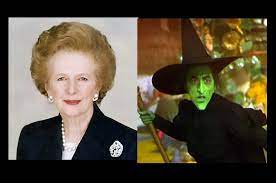
Why was this seemingly innocuous song banned, you ask? Well, because of a deliberate campaign in 2013 to boost the song to the top of the charts after the death of Prime Minister Margaret Thatcher. The BBC deemed the song inappropriate because it was “clearly a celebration of death.” And in this case, the BBC was correct!

This is the divine Ella Fitzgerald singing “Ding-Dong! The Witch Is Dead!”

Guess what! We made it through four banned songs since starting up last week and I haven’t heard anyone’s teeth fall out yet! Now honestly, it hasn’t been that bad, has it? 😬

And I’ll let you in on a little secret: today you heard the only curse word you will hear for the remainder of this segment. The songs I have planned for the coming two weeks will stand on their powerful message alone without the need of expletives …. and they are very powerful songs.

It’s my goal here in The Rhythm Section to always entertain and inform …. never to offend. To that end, I hope I was successful in bringing you some good entertainment today.

I’ll be back here in two days for Birthday Thursdays; I hope you’ll stop by to see who we’re celebrating this week.

Till then, be well and stay safe.

See you on the flip side.

I’m The Sicilian Storyteller

NAR © 2023
I'm With The Banned, In The Groove

IN THE GROOVE: I’M WITH THE BANNED (November 7, 2023)

Since 1934 when the FCC was created, countless recordings have been banned or censored for a variety of reasons, including “provocative or sexually suggestive lyrics, inciting violence or promoting hate and political or religious beliefs and/or associations”.

The ban on most, if not all of these songs has been lifted; however, in some countries, certain types of music are still banned. They are considered illegal and carry severe penalties if the law is broken. Incredible, isn’t it?

Come join me as I reveal some of these controversial songs, why they were banned and the artists who made them (in)famous.

A Day In The Life – The Beatles

This song is the final track on the Beatles 1967 album “Sgt. Pepper’s Lonely Hearts Club Band”, written by John Lennon and Paul McCartney. It became controversial and ultimately banned for its supposed references to drugs. On May 20, 1967, during the BBC Light Programme’s preview of the Sgt. Pepper album, disc jockey Kenny Everett was prevented from playing “A Day in the Life”. The BBC announced that it would not broadcast the song due to the line “I’d love to turn you on”, which, according to the corporation, advocated drug use.

Other lyrics allegedly referring to drugs include “found my way upstairs and had a smoke / somebody spoke and I went into a dream“. A spokesman for the BBC stated: “We have listened to this song over and over again and we have decided that it appears to go just a little too far and could encourage a permissive attitude to drug-taking.

Lennon and McCartney denied that there were drug references in “A Day in the Life” and publicly complained about the ban at a dinner party at the home of their manager, Brian Epstein, where they were celebrating their album’s release. Lennon said that the song was simply about “a crash and its victim” and called the line in question “the most innocent of phrases”.

I’m going to let you decide for yourselves. Here is the phenomenal “A Day in the Life” by the Beatles:

🙈 🙉 🙊


Brown Eyed Girl – Van Morrison

Our second featured song was written by Northern Irish singer-songwriter Van Morrison in March 1967. It was released as a single in June of the same year, peaking at #10 on the Billboard Hot 100.

“Brown Eyed Girl” spent a total of 16 weeks on the charts and is considered to be Morrison’s signature song. We all know it and love it. Why would a song like this get put on the banned list?

Well, what some people may not know is the original name of this masterpiece was “Brown Skinned Girl” and was about an interracial couple – apparently a very big no-no to the censorship board back then. The title was changed by Morrison because he thought it would make it more “radio friendly”, and it did; when you listen to the words of this song, there isn’t a hint about a mixed-race couple. Some stations banned the song’s line “Making love in the green grass”; an edited version was eventually released, altering the line to “laughin’ and a-runnin’, hey, hey.”

What a bunch of hooey balooey!

Van Morrison has been a favorite of mine for a long time and I love his work; this delightful song is no exception. Let’s listen now to “Brown Eyed Girl” by Sir Van Morrison.

Now that wasn’t so bad for my new category and probably not exactly what you expected, was it? I wonder how many of you got nervous when you saw the word ‘BANNED’! No need.

Here’s the thing: I could have gone with any debauched and salacious video on YouTube; there are plenty to choose from but that’s not what The Rhythm Section is about. I’m no stranger to cursing; when done by a master such as George Carlin it is an art-form. Disgusting, non-stop gutter talk, such as demonstrated by Andrew Dice Clay, is just boring filth and totally necessary. When cursing, one needs to paint with a fine brush, placing every word precisely where it belongs. The result is magical … and often hysterical. No, I will never pooh-pooh the appropriate use of foul language.

The objective here is to be entertained and to learn about and listen to music that has been banned for social, religious or political issues …. not to look at naked private parts swinging in the breeze. Let’s keep that private, shall we?

Thanks for joining me today for the first installment of I’m With The Banned. I’d love to know what you thought of today’s post and these two (in)famous songs. Join me next Tuesday for two more.

Time to head on outta here before the Feds come looking for me!  

Catch me next week …. if you can! 😁

See you on the flip side.

I’m The Sicilian Storyteller

NAR © 2023