
With exactly 67¢ in his pocket, Dr. George Powers made his daily trek to McDonald’s for a morning cup of coffee. He would walk from his rent-controlled Greenwich Village apartment, buy his coffee and sip it while flipping though his dogeared copy of “The Complete Organ Method”.
On this particular morning, George trudged through the slush in his beat up boots, 67¢ jingling in his pocket. Placing the coins on the counter, he ordered his usual.
“Sorry” said the girl taking orders. “The price is now 69¢.”
Befuddled, George exclaimed “I’ve been a patron here for years. The price is always 67¢!”
Apologizing, the girl explained that she didn’t set the prices. George scooped up his 67¢ muttering “oughta be a law” and trudged back home.
George was, to put it nicely, frugal. He saw how difficult the Great Depression had been on his parent’s life and livelihood. His father was always saying “Never trust banks!” Fortunately George was an excellent student, earning a scholarship to college and a grant to continue his studies for a Doctorate in Music.
Upon graduating high school, George was drafted to serve during WWII; he was never deployed and spent every day of his four years in the army at Fort Benning, Georgia. One day he noticed a baby grand piano in the corner of a lounge area and asked if it would be okay for him to practice. He was granted permission and in exchange would sometimes play for officer’s dinners. George’s self-imposed rigorous study habits in school carried over to his time in the army, waking at 3AM every day and practicing the piano for almost two hours before 5AM wake up call.
After the army, George enrolled in college, working weekends as assistant organist at Trinity Church in Greenwich Village. He was lucky; the church was close enough to his apartment and school so he didn’t have to pay for public transportation. The following year the organist retired; George replaced him and began teaching organ lessons. At the same time he attended graduate school, earning his Doctorate in Music. He made a decent salary yet continued his frugal lifestyle of eating cheese sandwiches, wearing the same clothes and drinking water from the tap. His only splurge was a morning cup of McDonald’s coffee.
George’s favorite student was Brad Ridgeway; he reminded George of a young version of himself. Brad worked in the mailroom at Dun & Bradstreet; his salary was so meager he could only afford to live at the YMCA. He was determined to become a great organist one day but music school was not in his budget. Brad’s parents worked for Walmart in his hometown of Columbus, Ohio and he wouldn’t dream of asking them for money. Times were tough but he just kept on pushing through one day at a time.
Despite their considerable age difference, Brad thought of George as his best friend; he didn’t realize it at the time but George felt the same way about him. When a very affordable furnished apartment not far from George became available, Brad was able to move out of the Y and settle into a place of his own. He wasn’t crazy about the furnishings but beggars can’t be choosers.
Occasionally on lesson days Brad would walk to George’s apartment building straight from work and the two of them would continue to Trinity Church. They looked like the cartoon characters Mutt and Jeff. At 6’3, Brad towered over the 5’8″ George. The duo was oblivious to the stares of people on the street and sometimes got so caught up in talking about music, they’d walk right by the church and have to backtrack half a city block or more.
One day at his lesson, Brad noticed that George had really let himself go. The soles of his shoes were falling apart, his sweater was threadbare in places, his eyeglasses were taped together in the center and he needed a haircut. In addition, his coat wasn’t warm enough and Brad was concerned about George’s deep persistent cough; he really did not look well at all. Brad asked George if everything was alright, if there was anything he could do. George just shrugged it off, mumbling something about “this damn weather” and the long-term effects of a case of childhood tuberculosis.
At the end of the lesson George handed Brad a tiny sealed manila envelope and earnestly said “Son, hold on to this. Open it only if something should happen to me. Keep it safe and don’t tell anyone. It’s for your eyes only.” Brad slipped the mysterious enveloped into his pocket; that was the first time George ever called him “son” and that made him think of his parents, now gone. Brad knew better than to ask any questions; if George wanted him to know more, he’d tell him.
About a month later, George uncharacteristically missed one of Brad’s lessons. Brad waited at the church for about twenty minutes, then went to George’s apartment to check on him. The landlord informed him that “the old guy” had passed away in his sleep three days earlier. Shattered, Brad slowly walked home; hours later he remembered the envelope. Grabbing the plant in his kitchen where he had hidden the envelope, Brad stuck his fingers in the dirt and pulled out a small plastic bag containing the envelope. He opened it and found a scrap of paper and a key; written on the paper was “G.C.T. 520”.
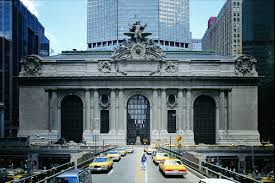
Brad was stumped by the initials G.C.T. For days he tried to decipher the note, with no luck. One morning while reading the newspaper, Brad’s eyes landed on a short article on the bottom of the page. As he read the headline, Brad couldn’t believe what he saw: “Construction Work to Begin at G.C.T.” As he read on, Brad discovered the three letters stood for Grand Central Terminal – the largest commuter train terminal in New York.
Brad raced to the bus stop and boarded a bus for Grand Central. On the way there he figured out “520” could only be a locker number. Running through the terminal, he finally came upon row after row of lockers. He located #520 and with trembling fingers unlocked it to discover it was crammed with small brown paper bags.
Loosening the tape and peeking inside one bag, Brad’s eyes nearly popped out when he saw it was stuffed with money! Scrawled on the bags in George’s handwriting was “NEVER TRUST BANKS!” Shocked, Brad slammed the locker door and locked it. He scrambled around the area hoping to find a discarded shopping bag or cardboard box. He eyed a big bag tossed on top of a garbage can, swiped it and went back to the locker. Methodically he filled the large bag with all the small bags, tossed his sweater on top to conceal the contents of the bag and returned home as quickly as possible.
Safely back in his apartment, Brad emptied the shopping bag onto his bed and began counting the money bags; there were 75 bags and each one contained 50 $100 bills. George, in his frugality had stashed away $375,000 and put it all aside for Brad. Dumbstruck, Brad slowly sat on the edge of his bed, disbelief washing over him.
Little did Brad know that was just the beginning of his shocking news.
A couple of days after finding the money at Grand Central, Brad received a call from a man who identified himself as a lawyer and the executor of George’s will. “George’s will? What more could George possibly have to leave anyone?” Brad wondered. The lawyer asked Brad to come by his office which he did the following day. When Brad arrived at the office, he was handed an old battered suitcase; the lawyer told Brad the suitcase was left to him by George and its contents were now his. Brad was given the key for the suitcase and left the lawyer’s office.
Once back in his apartment, Brad placed the suitcase on the kitchen table and unlocked it. There was a note resting atop a layer of newspapers. The note read:
“Dear Brad. For all the years as my student, you were the only
person I felt I could count on. I know you struggled financially
and life was rough for you so it seemed only fitting that I leave
you what I could. In this suitcase are my cherished organ books;
I want you to have them. Whatever else is in this case
I can no longer use. It is yours. Bless you and don’t forget –
NEVER TRUST BANKS!
Fondly, George”
I’m asking myself at this point, dear readers, if you have figured out that in addition to his beloved organ books, George had placed the remainder of his money in the suitcase and had given it to the lawyer for safekeeping?
If you are wondering if this story is fact or fiction, I can tell you without a shred of doubt that it is true; I have not changed the facts, only embellished them for your reading pleasure. You see, in early 2000 I began organ lessons with Dr. George Powers at Trinity Church. Eighteen months later, 911 happened and all lower Manhattan was closed off: I wasn’t able to get down to Greenwich Village for lessons. Shortly after that, knee surgery sidelined me and I was forced to give up the organ all together.
During those 18 months I got to know Brad and a couple of George’s other students casually in passing. On Easter Sunday 2010, I received a call from the secretary at Trinity Church; she was informing all George’s students of his death. Brad had been George’s student for quite a few years and I believe George did the right thing leaving his money to Brad; neither one had any relatives, only each other.
By the time all the money had been counted, Brad had inherited an astonishing $2.5 million in cold cash! This information was revealed to me by another of George’s students while we were attending a memorial service for George at Trinity Church. As it turns out, the student I was talking to was the wife of George’s lawyer.
After the memorial service, I never spoke to any of George’s students again and I never found out what became of Brad Ridgeway. Despite George’s opinion of banks, I hope Brad made some wise investments and is enjoying a very comfortable life!
Dedicated to the memory of Dr. George Powers.
NAR © 2023
I hope you enjoyed that incredible story
of Dr. George Powers and Brad Ridgeway.
Please join me today for a new edition of
At The Movies.
I look forward to sharing another great video with you.
https://rhythmsection.blog/
 The Elephant's Trunk
Wow! What an incredible true story. You just never know.
LikeLiked by 1 person
That’s the perfect way to look at it, Bridgette. You just never know! Thanks for sharing your thoughts.
LikeLiked by 1 person
I really hope that was a true story.
LikeLiked by 1 person
As I said in the telling of my story of George and Brad, it is all true, Deb.
What’s the point in making a statement like that if it wasn’t true?
LikeLiked by 1 person
Well that’s a relief
LikeLiked by 1 person
Really enjoyed this story, Nancy. What an interesting and memorable person!
LikeLiked by 1 person
Thank you, Michele! George was all that, for sure. He had some interesting stories to tell about his childhood and he would get totally swept away talking about music. Sometimes half my lesson would be spent listening to George talk instead of playing the organ and at first I resented that. Then I realized hearing what this man had to say about music and the great composers was a lesson in itself. I was very fortunate to have known him for the relatively short time he was physically in my life.
LikeLiked by 1 person
Thank you for sharing him with us. Truly inspiring. ✨
LikeLiked by 1 person
I love reading true stories. Your version of this could be made into a film. Pitch it to some movie director and let us know when it’s going to be in theaters.
LikeLiked by 1 person
Thank you, Manette! You are most gracious indeed and I love your sense of humor! I appreciate you sharing your thoughts here today.
LikeLiked by 1 person
True stories never disappoint. Thank-you for this delightful and well-written one!
LikeLiked by 1 person
My pleasure, Susan. I’m so glad to hear to you enjoyed the story of George! Thanks for sharing your thoughts today.
LikeLiked by 1 person
Loved this story, Nancy. Great fun to read.
LikeLiked by 1 person
Thanks, Misky. I’m thrilled to read that, luv!
LikeLike
That was absolutely epic. I was shocked AND delighted to hear it’s all true. Fairy tales ARE real!!
LikeLiked by 1 person
Thanks so much, Liz! It’s hard to imagine someone sitting on all that money! I saw first hand how little George spent on anything. He saved practically every dime he earned … a practice I’m not familiar with! 😂
LikeLiked by 1 person
I was transported into the World of George and Brad, ..by your story, and the way you told the true tale, …loved every word, …and add my hopes to yours that Brad is living a happy and prosperous life, …✨👏✨🦋✨
LikeLiked by 1 person
What a lovely comment, Penn! Thanks so much for sharing your thoughts today.
George was a wonderful man, just very set in his way, traumatized by the Depression and afraid of losing all his hard earned money.
I remember one time I didn’t practice for my lesson and it showed. When George asked me why I hadn’t practiced, I said I didn’t have time. I’ve never forgotten George’s response: “You have all there is”. 💫
LikeLiked by 2 people
He sounds a marvellous teacher, ….wish we all could’ve met a George, ..teacher wise, ..(not money wise)…✨
LikeLiked by 1 person
Agreed! The things that makes me upset are when I think of the good nutrition he missed out on, improvements in dressing himself and a much needed better health care regime, all of which he denied himself because of his reluctance to spend money. That’s very sad.
LikeLiked by 1 person
Very interesting story. Truth is stranger than fiction
LikeLiked by 1 person
Thanks, Sadje. The mindset of people who lived through the Depression is very difficult to change. George was a perfect example. In all other regards, he was a prince among men.
LikeLiked by 1 person
You’re welcome! Yes, we are molded by our circumstances
LikeLike
An amazing story of a wonderful person, and you ended it with one of my favourite pieces of music. Delightful, Nancy.
LikeLiked by 1 person
I’m so glad to read that, Keith. It’s also great fun to play but difficult as hell! Hands and feet going all over the place! Thanks for sharing your thoughts today, my friend.
LikeLiked by 1 person
Life makes movie scripts grab their bags and exit the room, eh?!
I love your choice of title…it is such an apt metaphor for the, unseen by mortal eyes, weaving of Fates.
All served with your calm yet vibrant ink, Nancy.
And to top it off, you are serving it with a big slice of real life!
👏🌹
Le storie che il tuo cuore custodisce, cara…
LikeLiked by 1 person
Grazie, Nick! Someone needed to write a story about George; why not me? He was an interesting guy, Midwest upbringing, tough-as-nails and set in his waye … and when he played the organ it was magical.
People are strange. He could have lived like a king … or at the very least just taken better care of himself, but his mind was like a steel trap.
You’re right about the stories the heart holds; they are often better than anything we can make up. ❤︎
LikeLiked by 1 person
And I am glad you did, Nancy!
The organ is such a majestic instrument… and the feeling when one’s body and soul is met with that all-embracing-deep-resonance is …a spiritual experience.
You are fortunate to have had the opportunity to create music in such an instrument.
Brava, cara.
LikeLiked by 1 person
It is quite impressive, especially with all it’s pipes … some as big as underground conduits and others the diameter of your little finger. It can also be very off-putting with it’s multiple manuals, foot pedals and stops. Both organ and organist need to be in top working order!
It was an incredible experience for me! 🌹
LikeLiked by 1 person
Wow. A wonderful (and well written) true story. 🌹
Talking of organs. Did you know that I have played on Charles Wesley’s organ? 😁
LikeLiked by 2 people
Now for someone who may not know who Charles Wesley was, that question could be quite a provocative conversation starter! 🤣 🤣 If you give me an opening like that, I’m gonna slide right in!
I’m impressed, Lesley, and something I’d love to hear more about; he was a prolific hymn writer (I’m a former choir director). Freaky small world!
Thanks for that tidbit and for sharing your thoughts today. Glad you enjoyed my story. 🎼
LikeLike